Surf and Fog; Monhegan Maine — History & Analysis
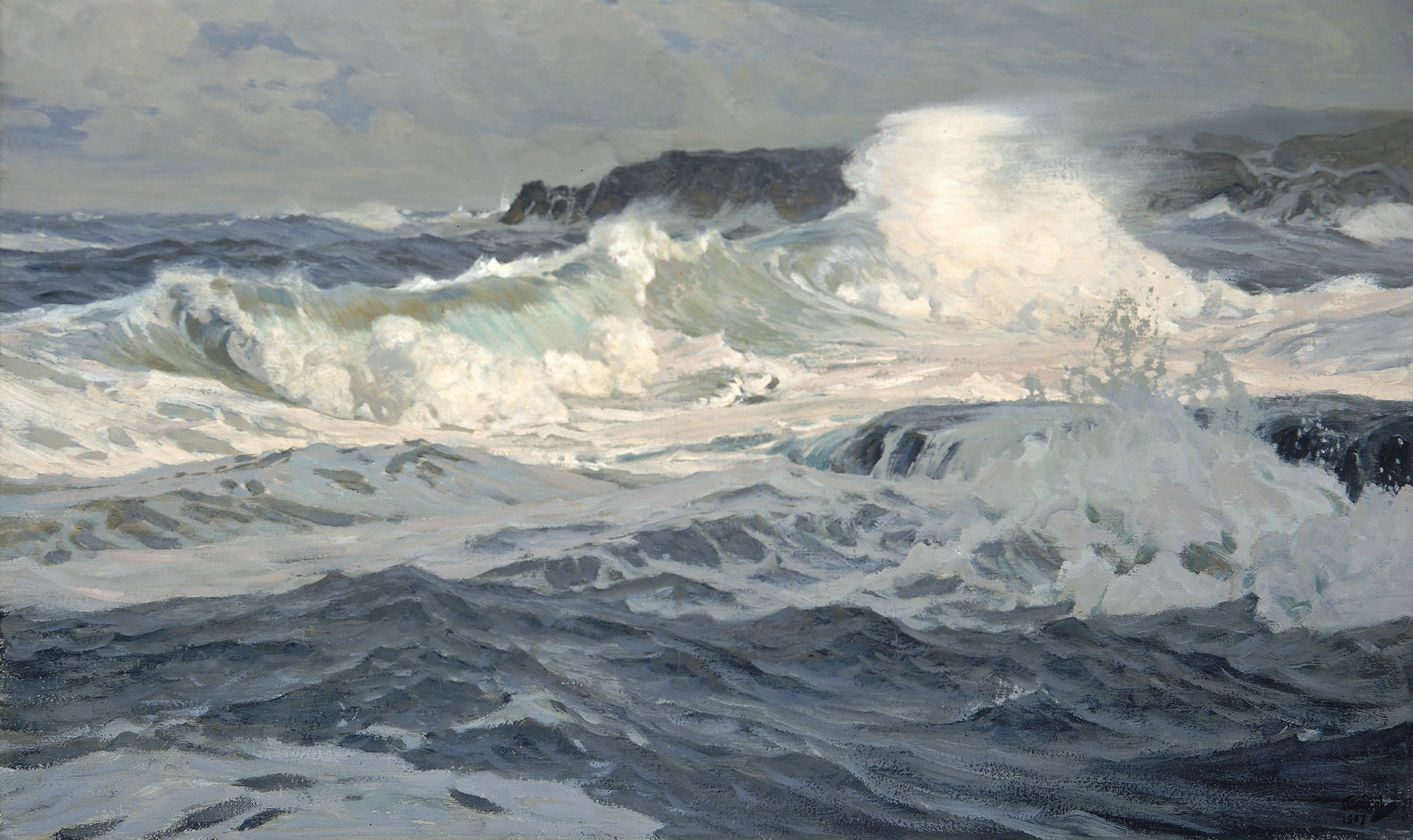
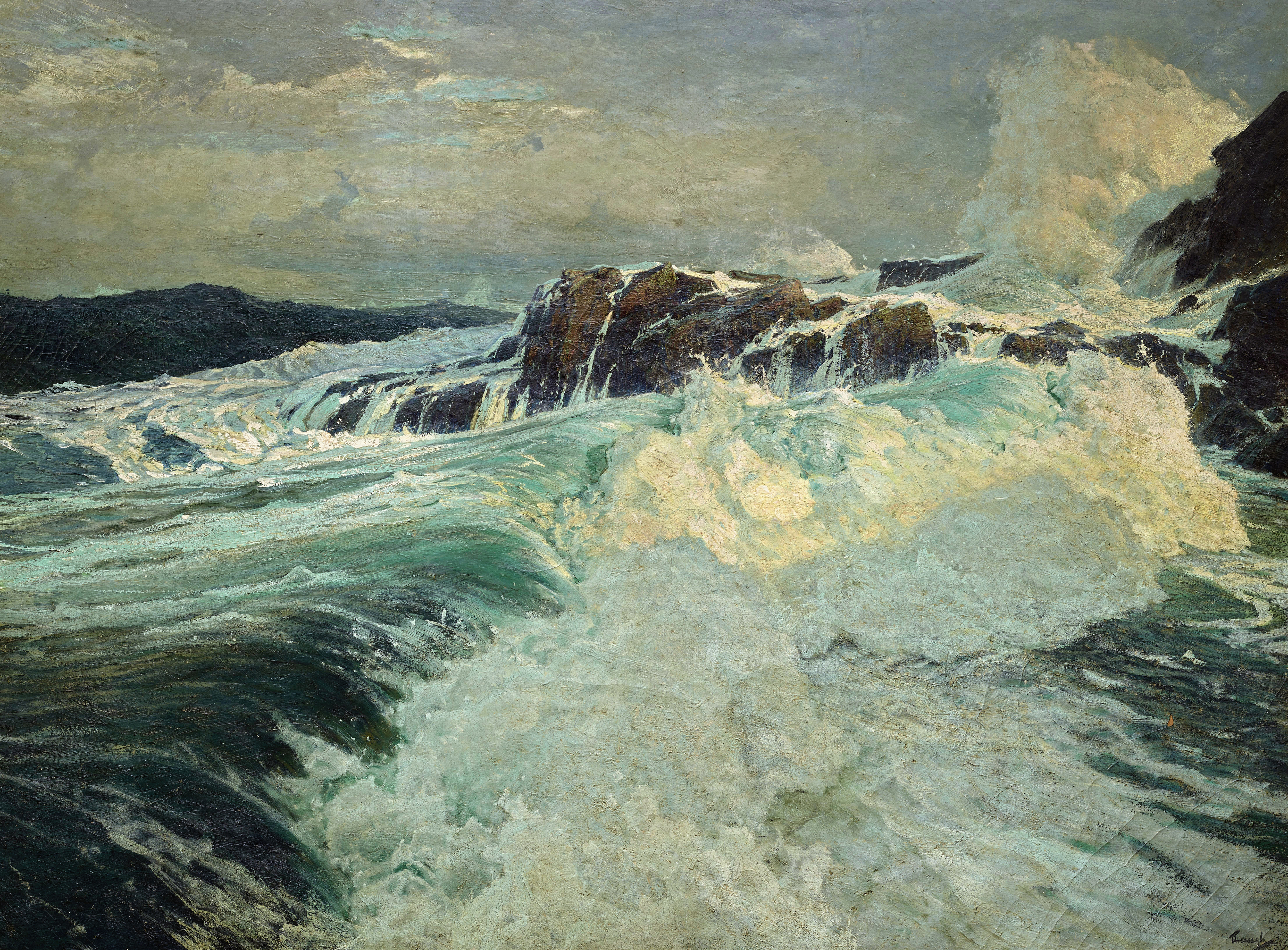
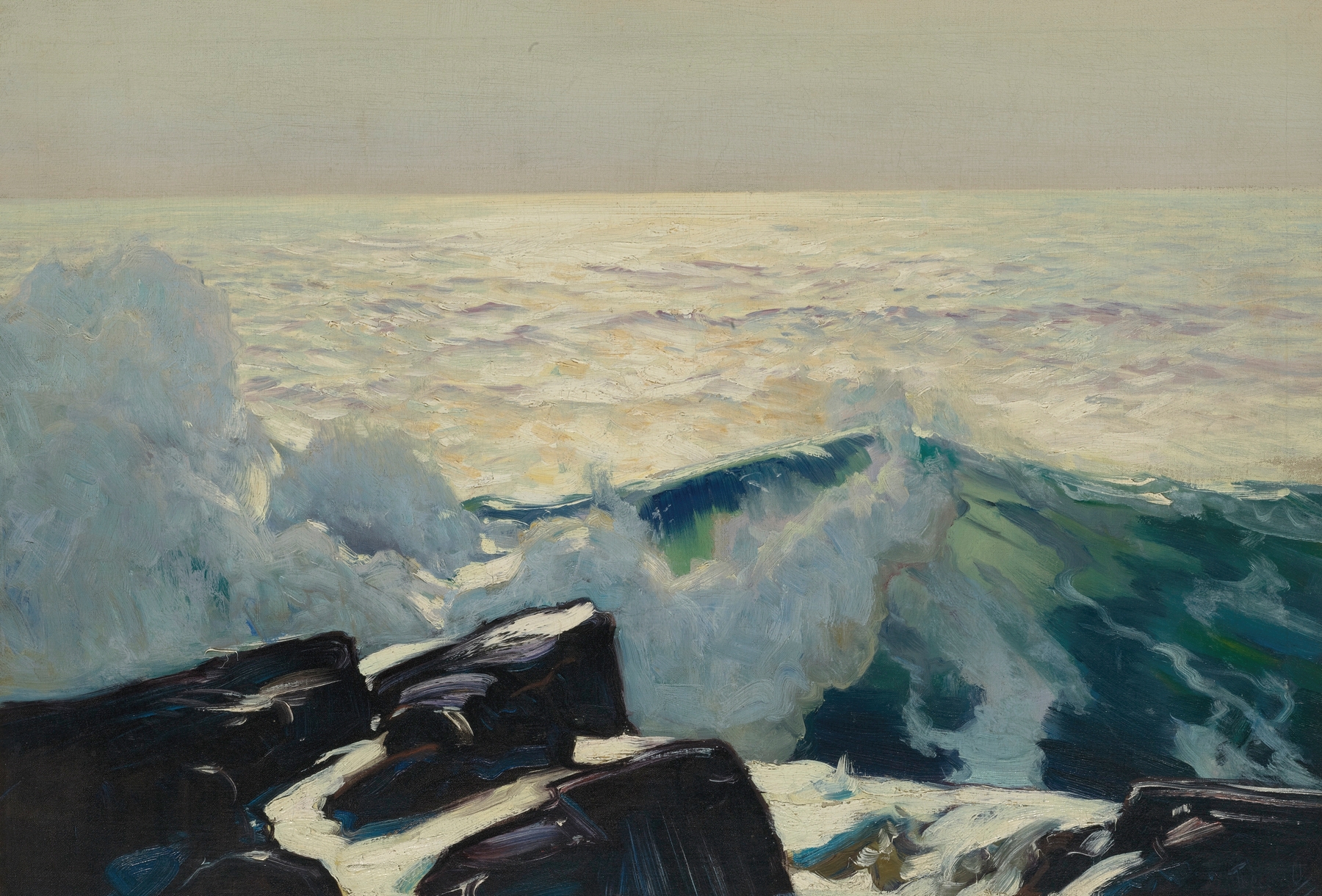
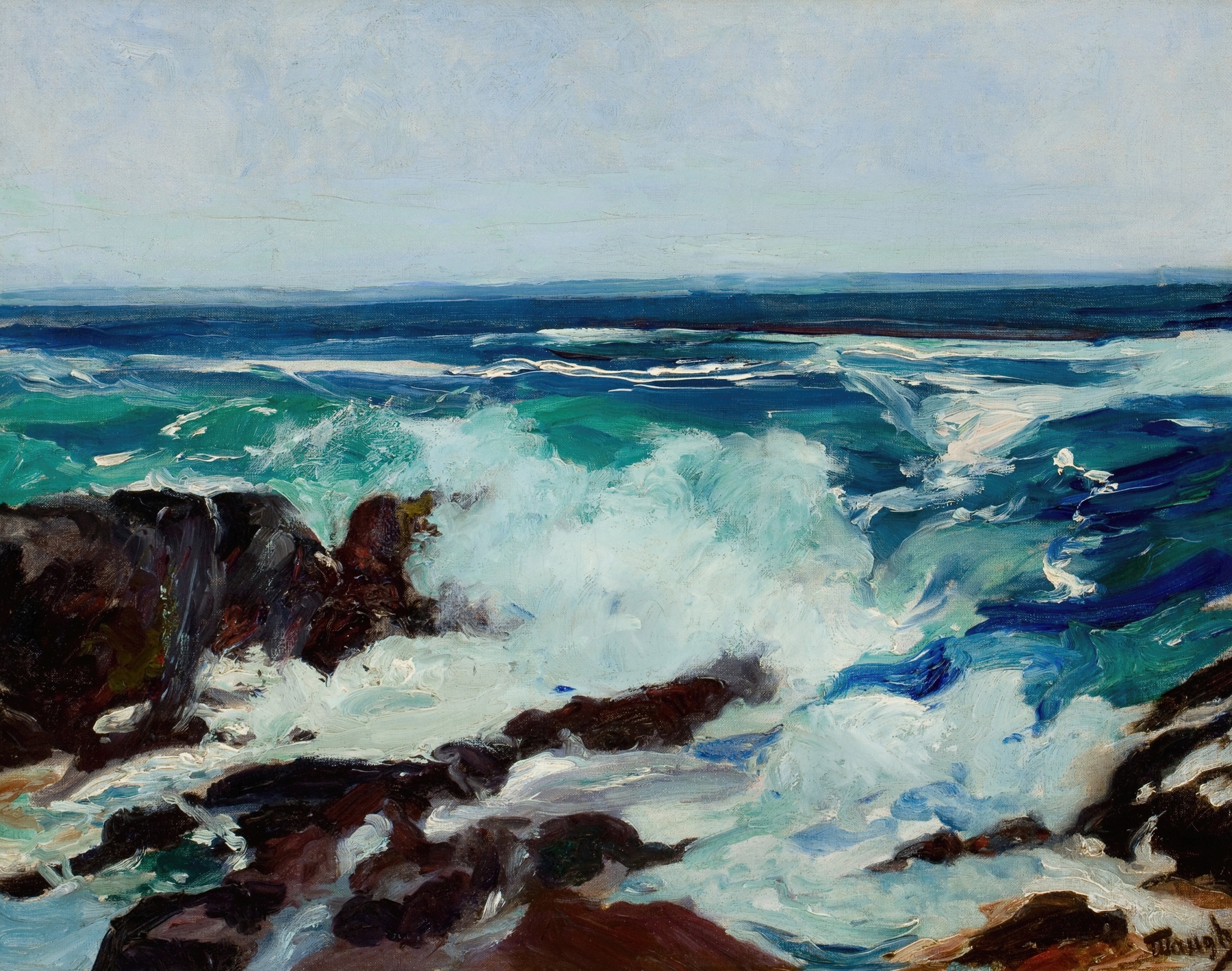
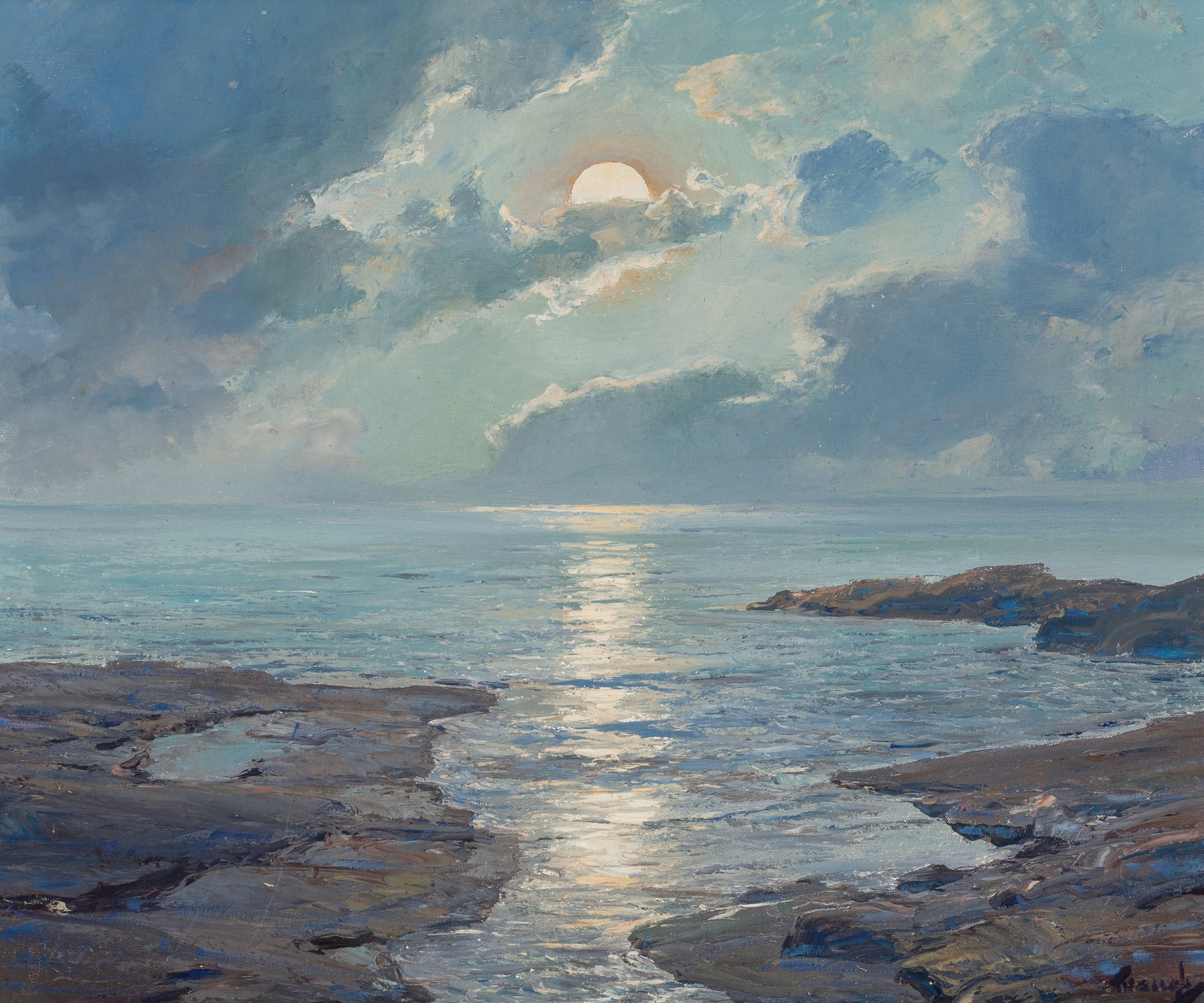
Did the painter know this moment would outlive them? The fog swirls around the jagged coastline, its ethereal tendrils mingling with the crashing waves, a dance between the elements that reveals nature’s quiet power. Time freezes, capturing an ever-shifting scene where water and air collide in a harmonious embrace, a revelation of beauty in the chaos. Look to the left at the tumultuous waves, each curl and crest painted with a deft hand that captures their motion and energy. The muted palette of grays and blues evokes the chill of the air, while patches of white highlight the frothy surf, guiding your gaze through the depth of the scene.
Notice how the fog blurs the horizon, creating an almost mystical boundary where land meets sea, inviting contemplation about the unknown beyond. Each brushstroke seems deliberate, as if to immortalize this fleeting moment. Within this work lies a tension between calm and turmoil; the serene fog cloaks the violence of the surf, suggesting a duality of nature's fury and tranquility. The interplay of light and shadow not only shapes the landscape but also reflects the artist's introspection, hinting at deeper emotional currents beneath the surface.
Such contrasts mirror the complexities of existence itself, acknowledging both the chaos of life and the solace found in nature's embrace. Frederick Judd Waugh created this piece in 1910 while living on Monhegan Island, a place renowned for its rugged beauty and dramatic seascapes. This period was significant in his career as he transitioned from traditional marine painting to a more emotional, expressive interpretation of nature. With the impressionist movement influencing artists around him, Waugh sought to capture the ephemeral moments of light and atmosphere, a pursuit that would leave a lasting impact on American landscape painting.