The Invading Surf — History & Analysis
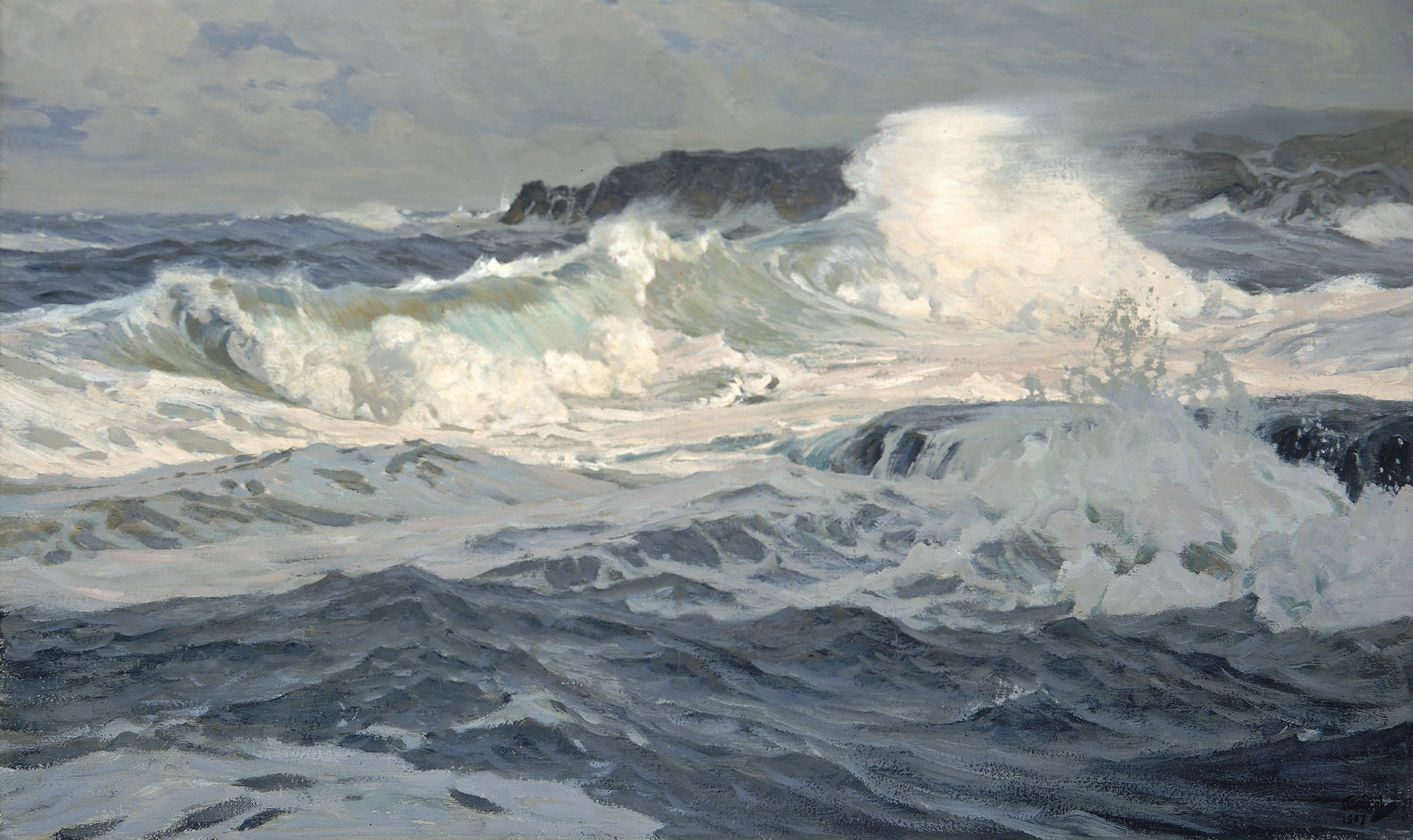
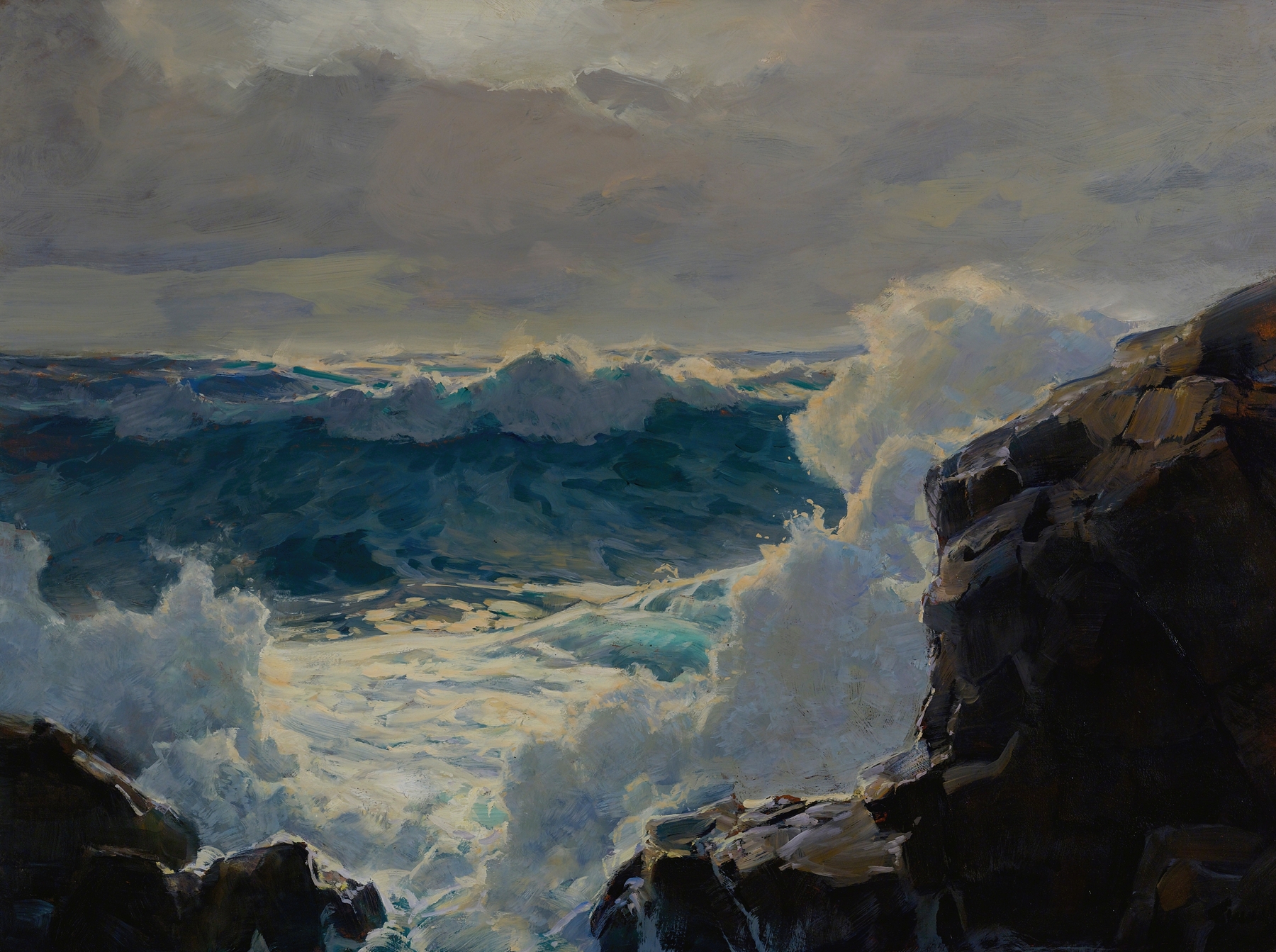
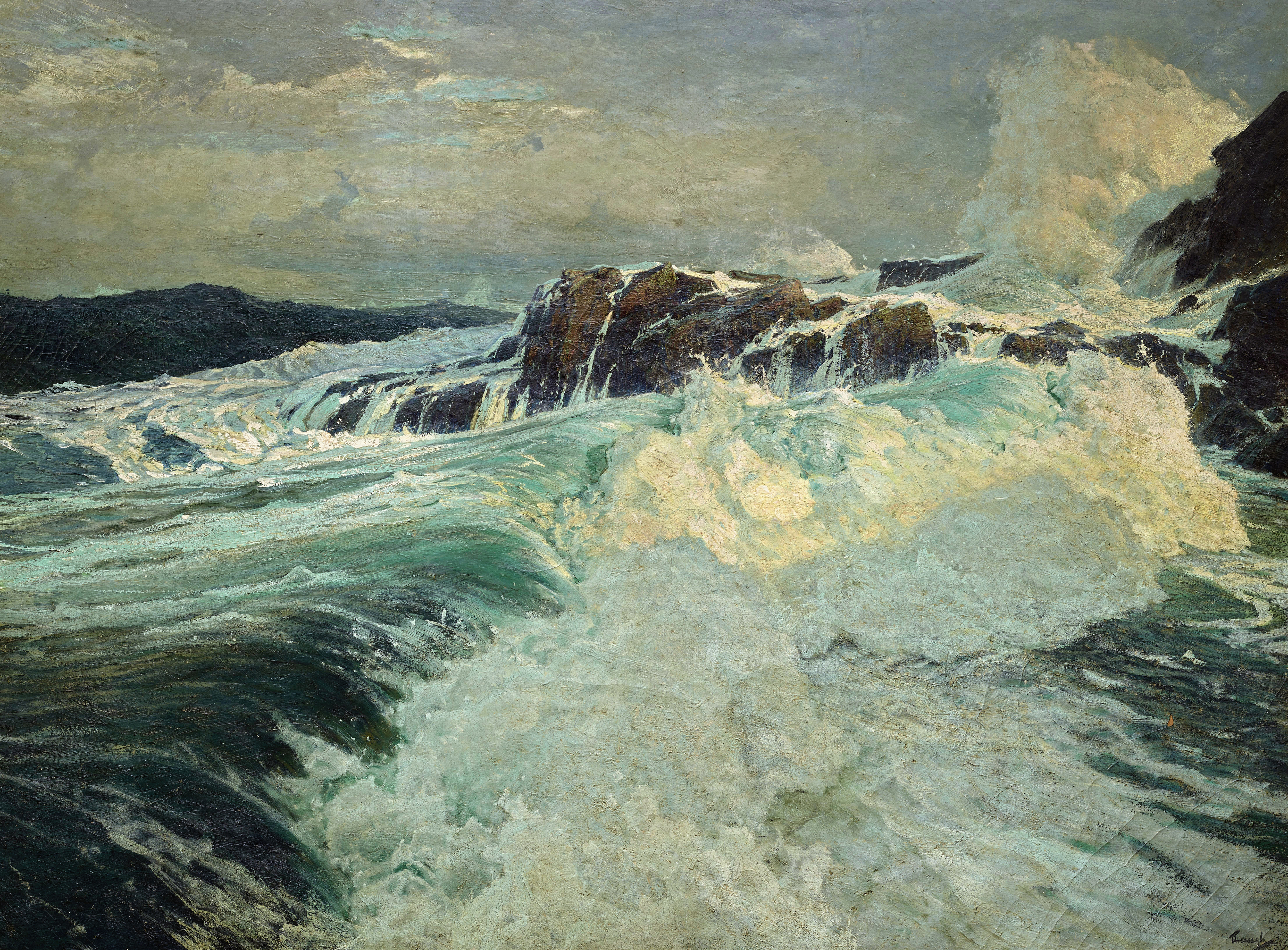
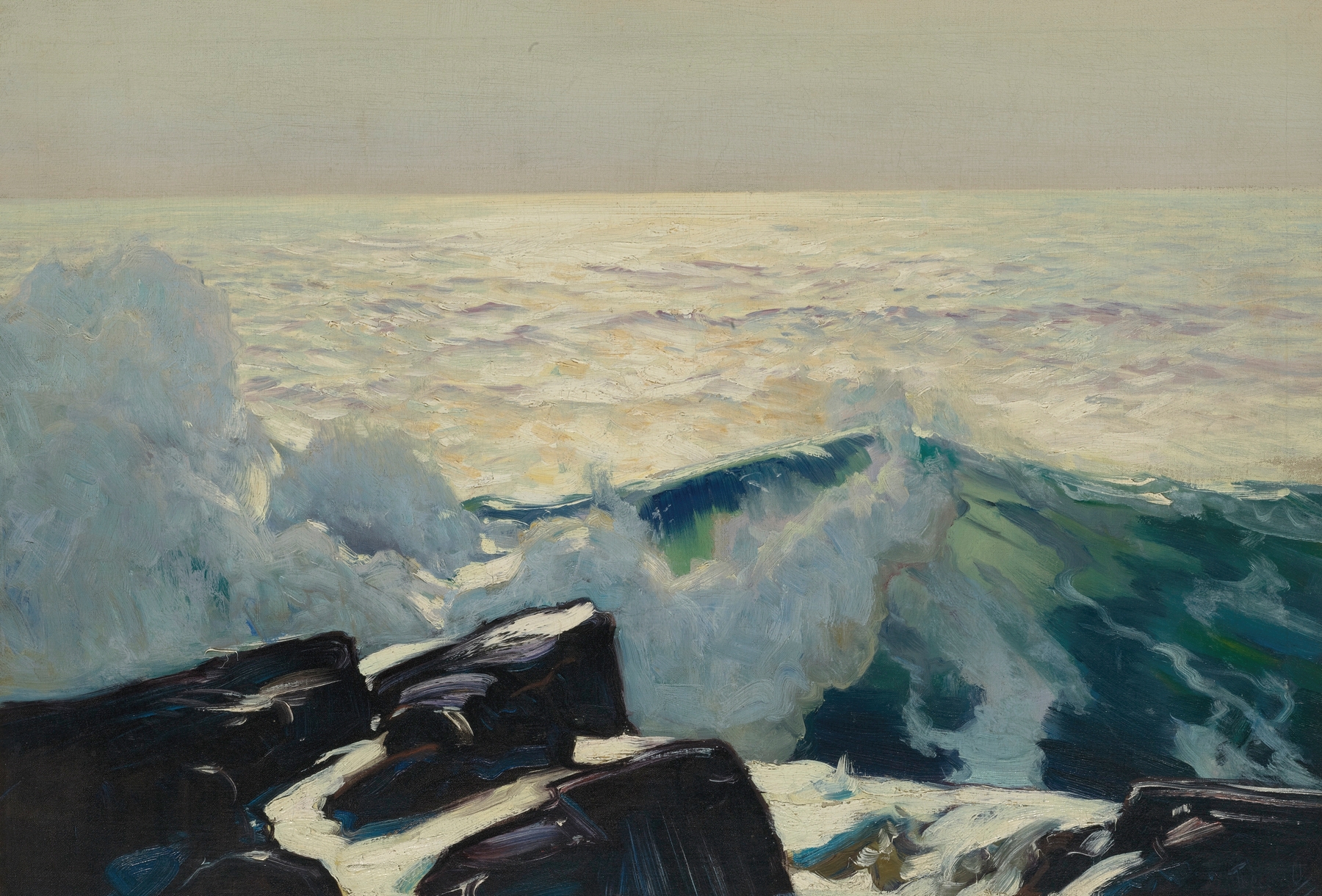
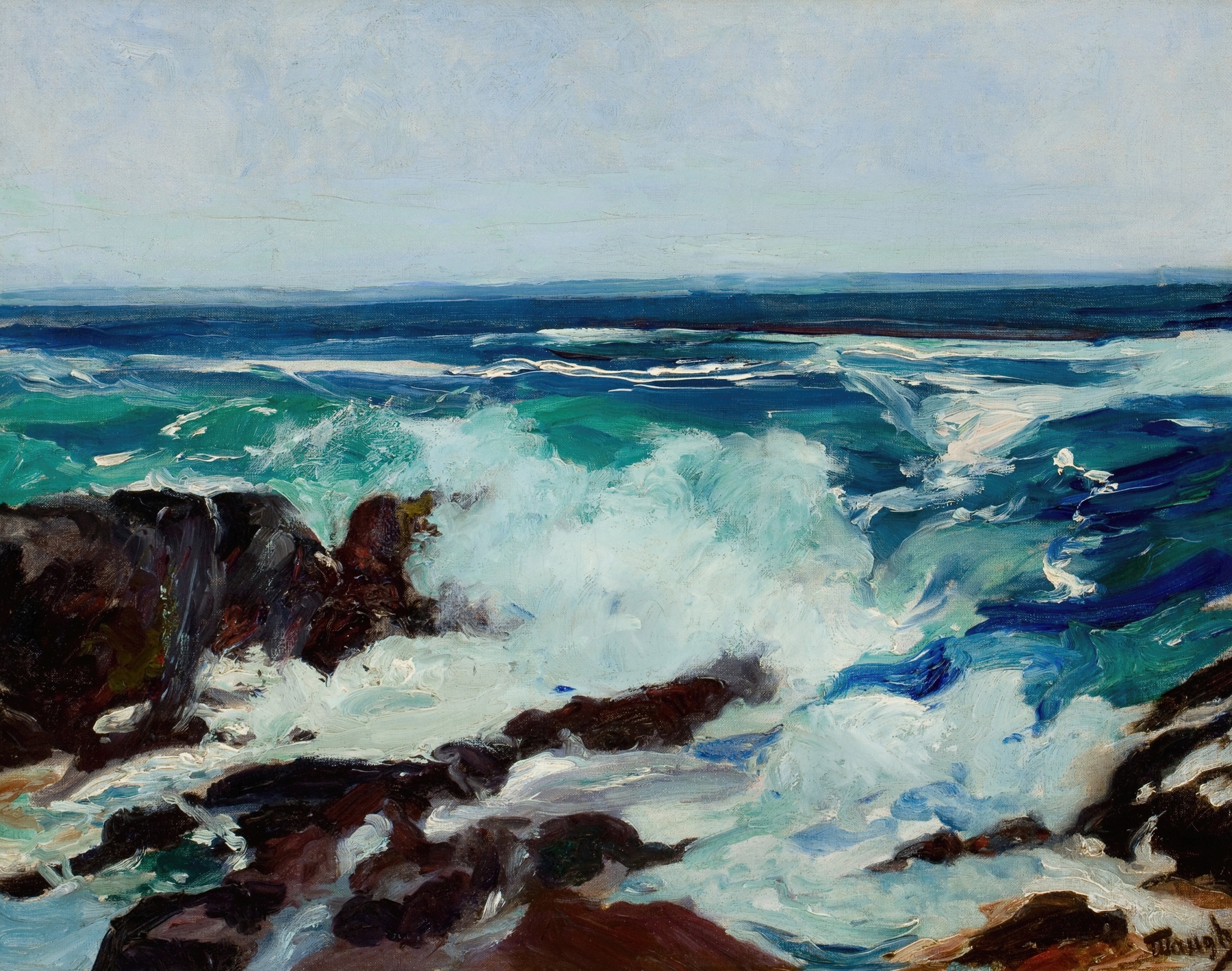
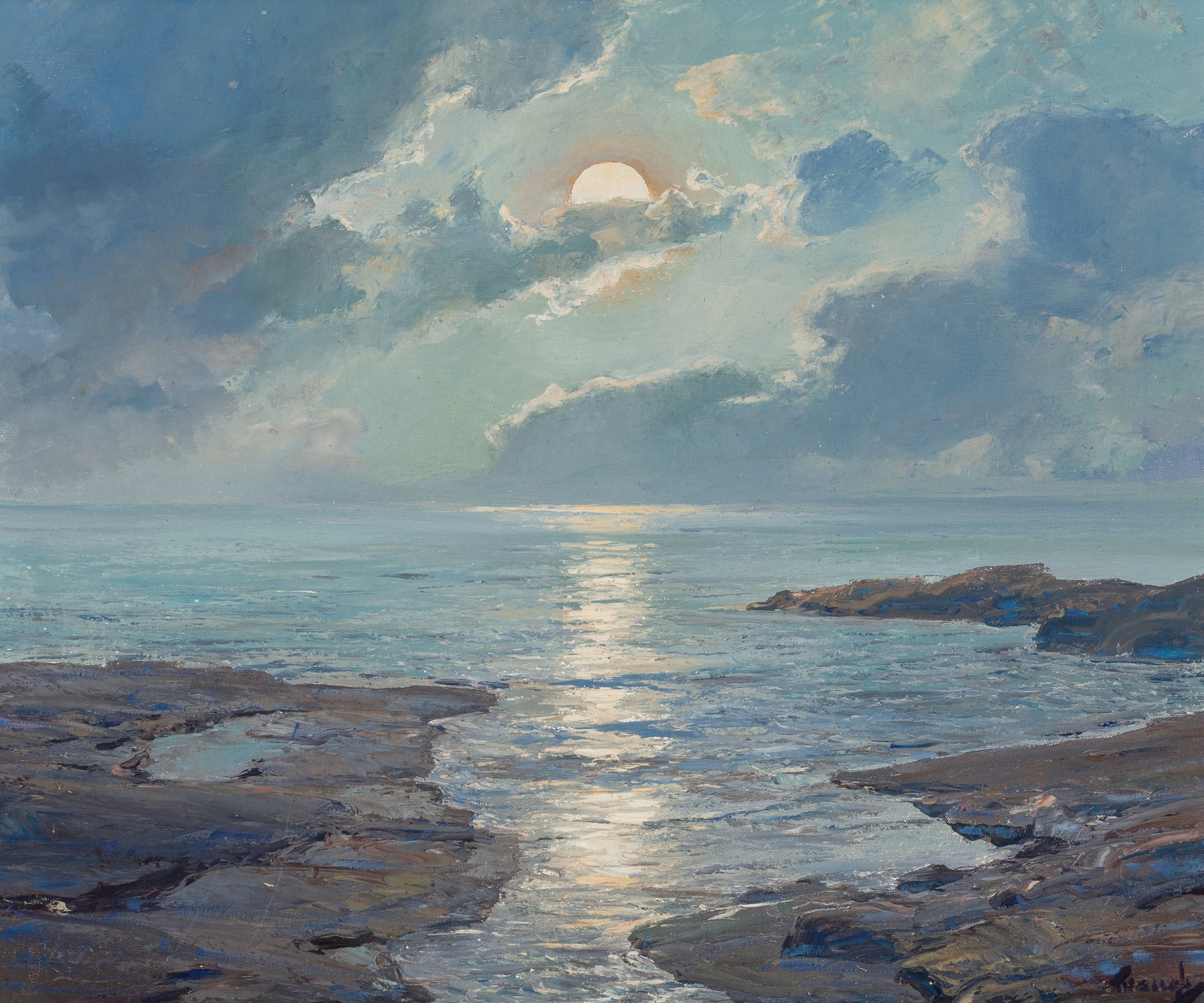
“The canvas doesn’t lie — it simply waits.” Within its depths, one can find the relentless power of nature, where divinity unfurls in waves. Look to the vibrant blues and greens that ebb and flow across the surface, mirroring the ocean’s undying rhythm. The tumultuous white crests of the surf cascade like divine beings charging forth, each brushstroke a testament to the artist's mastery of movement. Notice how the light glimmers on the water, creating a dance of reflections that pulls the eye toward the horizon, where the promise of calm lies just beyond the chaos.
Amongst the crashing waves, a tension resides between the ferocity of the surf and the serenity of the distant sky. The contrast of turbulent motion against the stillness of the air evokes a sense of duality: the eternal struggle between chaos and harmony. This relationship captures an essence of divinity, suggesting that beauty can emerge even from the most violent of forces, inviting the viewer to contemplate their own place within this vast, tumultuous world.
Frederick Judd Waugh painted this piece during an era that celebrated the sublime in nature, influenced by both Romanticism and a burgeoning interest in marine subjects. As an established artist in the early 20th century, he sought to convey the spiritual connection between humanity and the sea, reflecting the tumult of a world grappling with modernity while yearning for the timeless. In the absence of a precise date for this work, it stands as a testament to his commitment to portraying the ocean’s majesty and mystery.