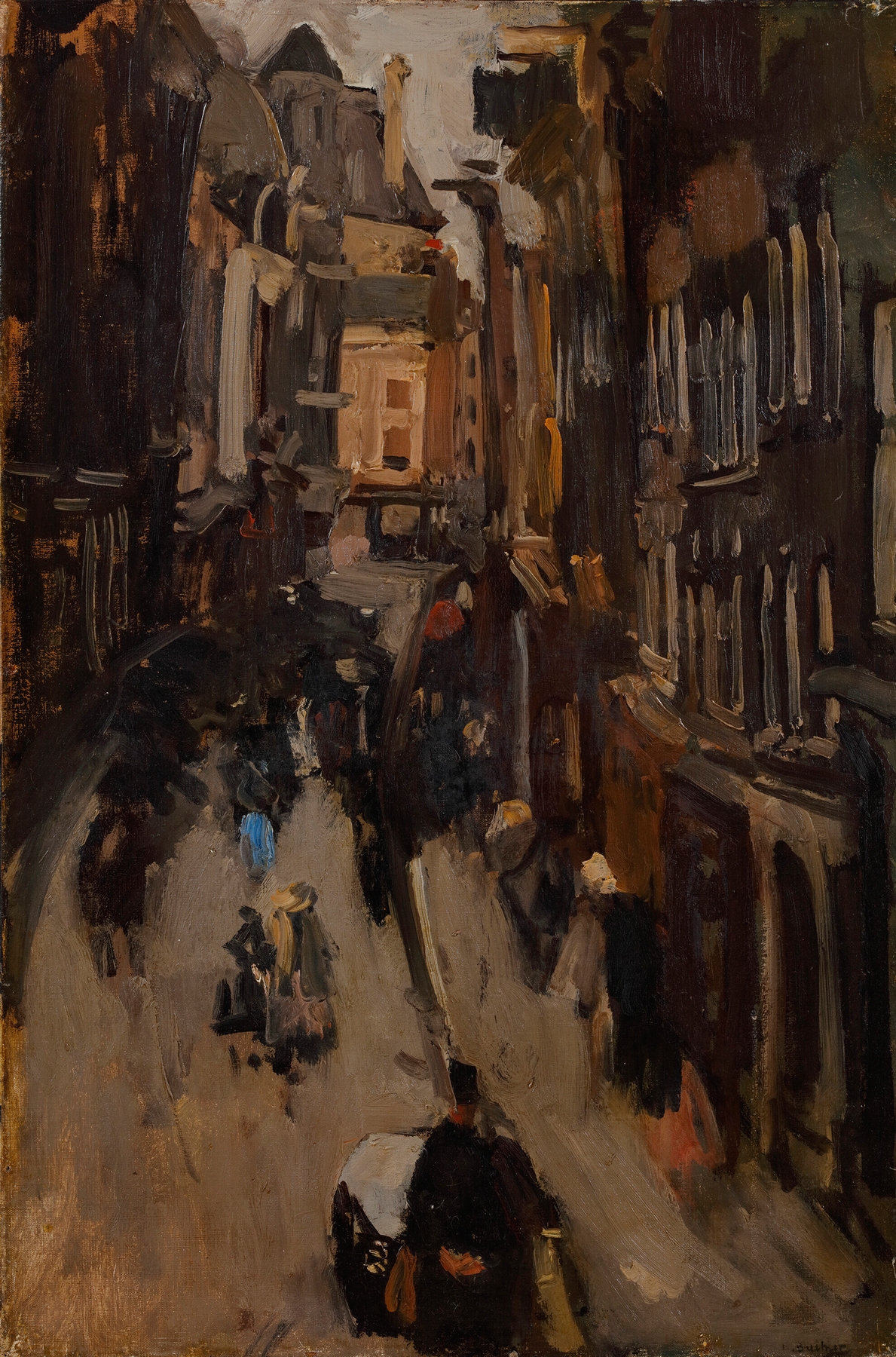
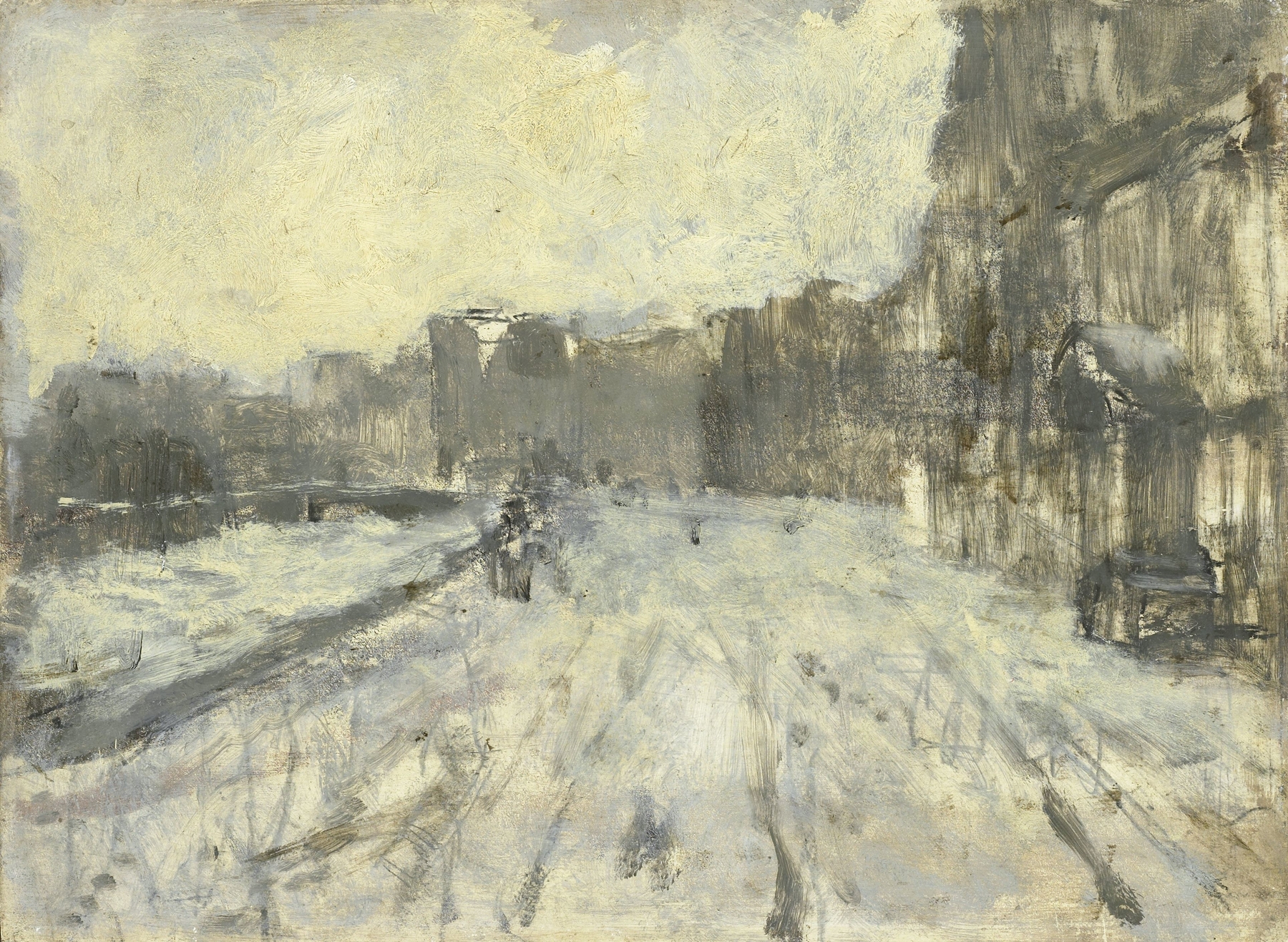
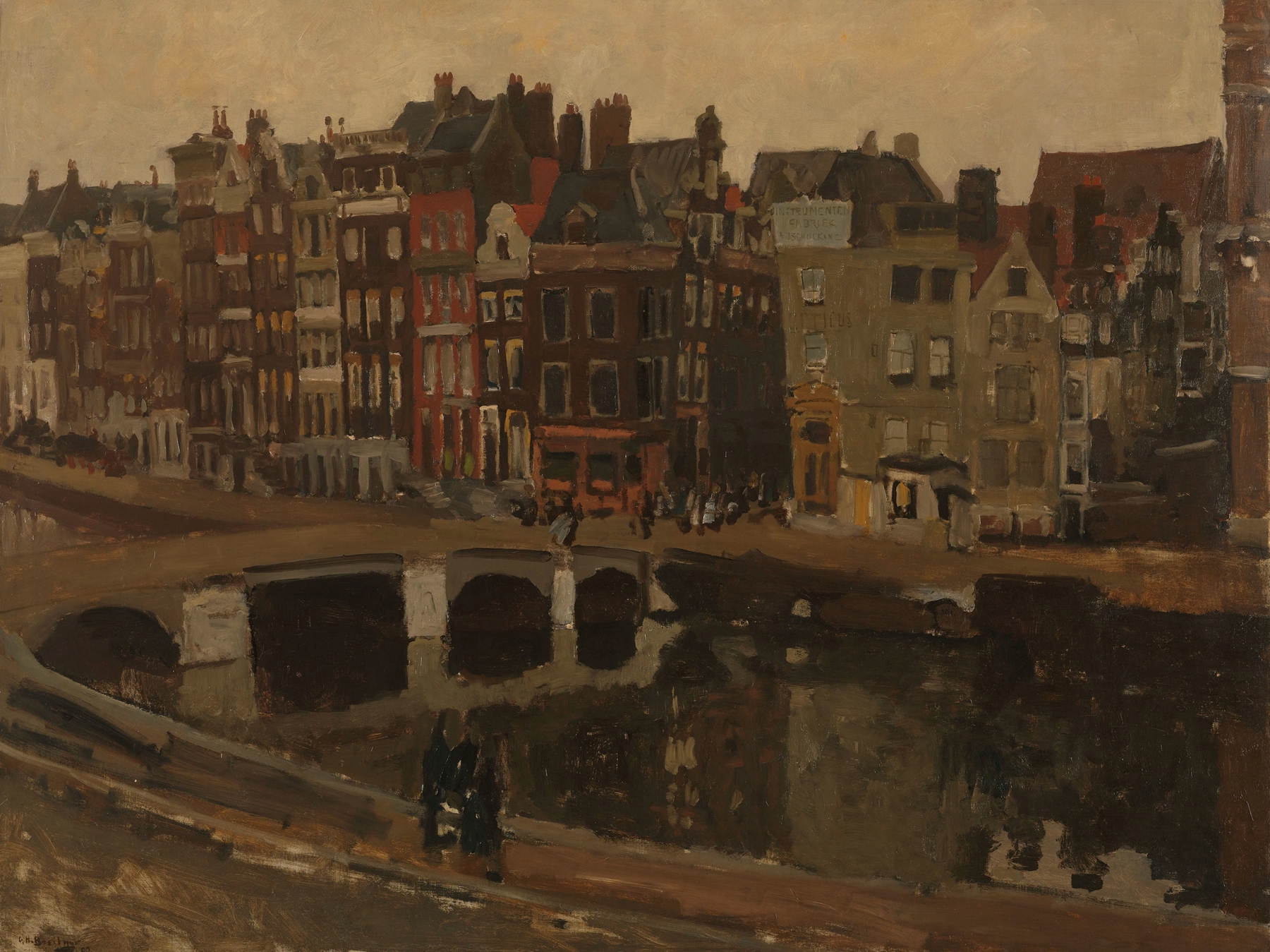
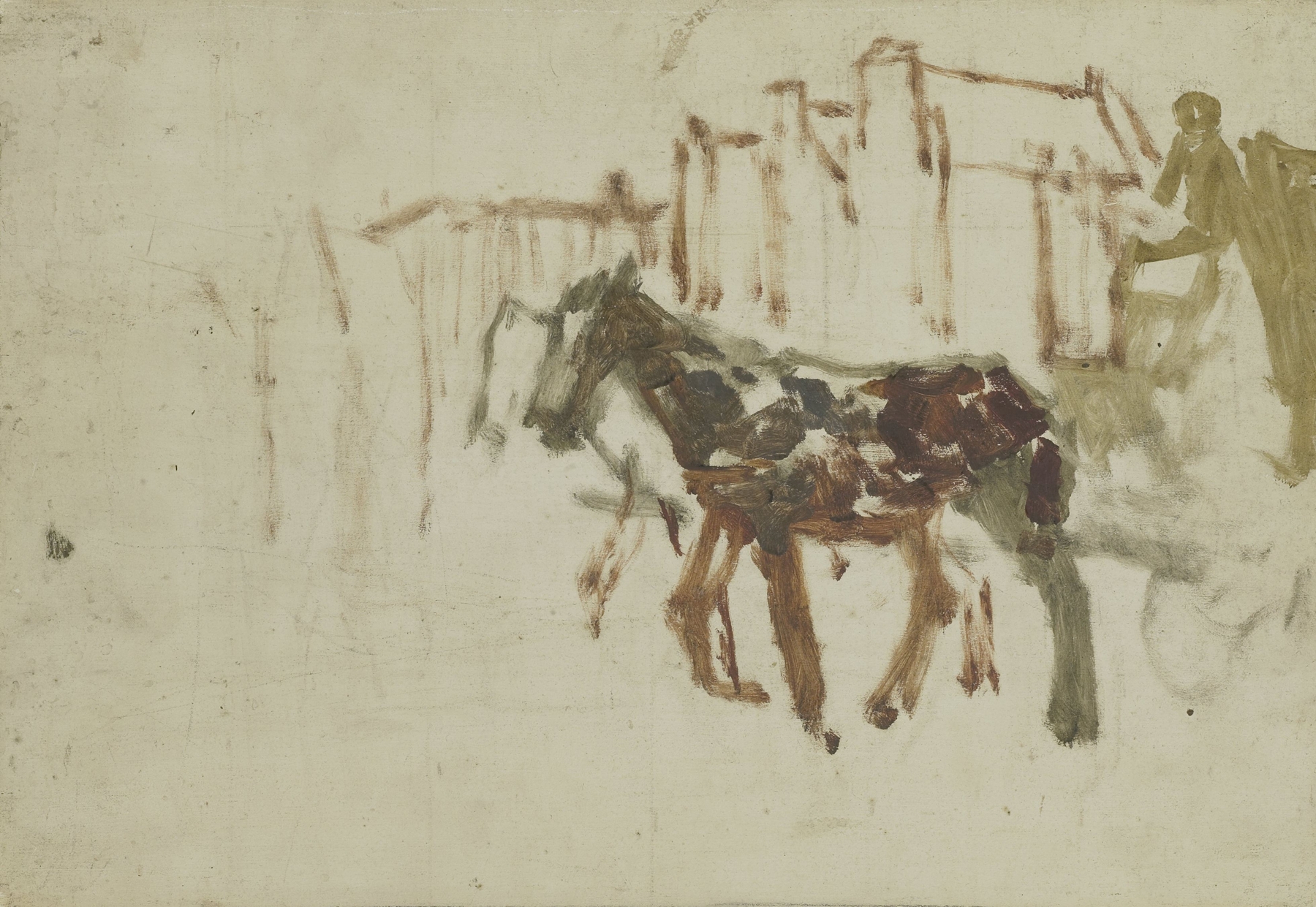
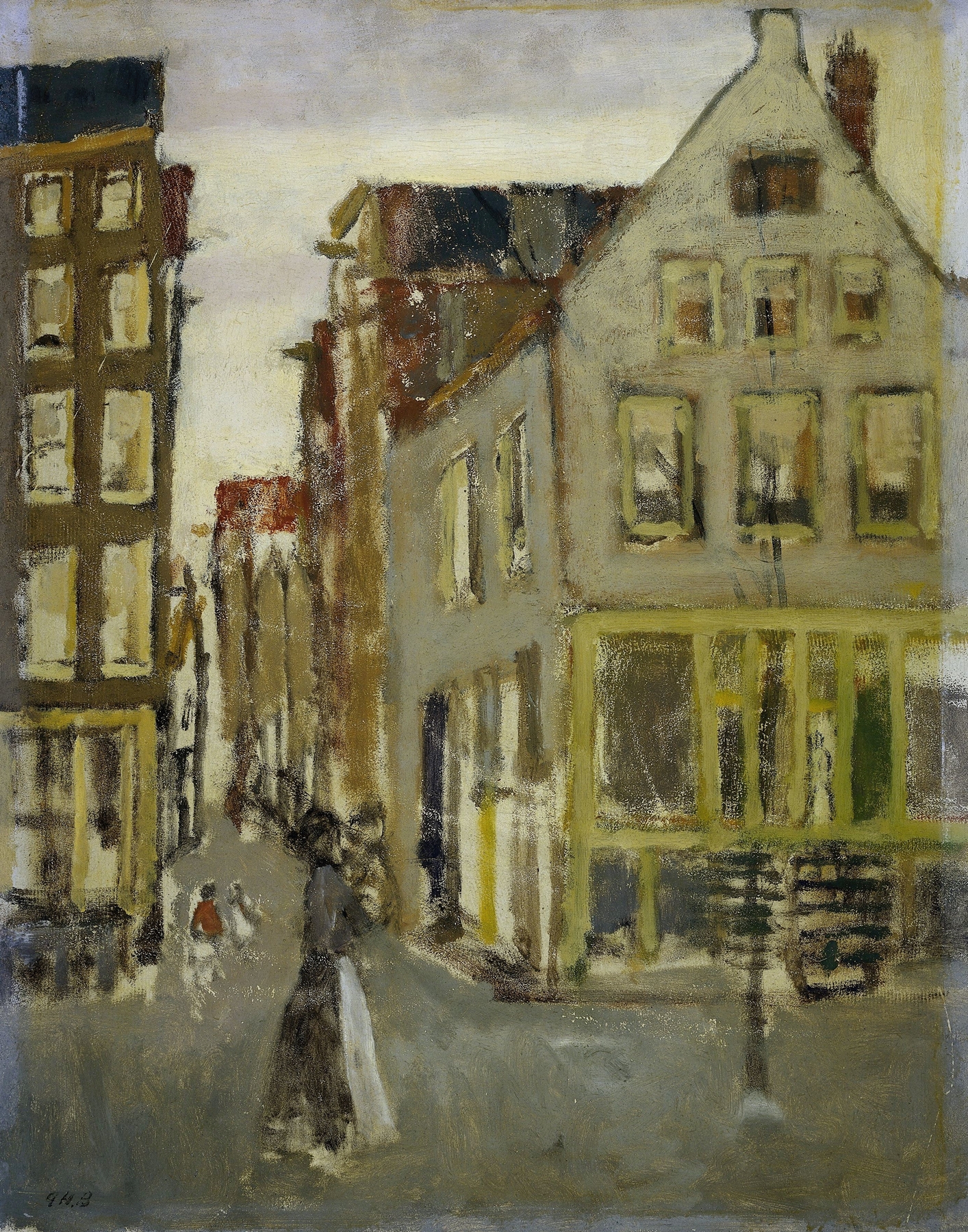
The Baanbrugsteeg looking from the Haarlemmerdijk towards the Vinkenstraat and the Brouwersgracht — History & Analysis
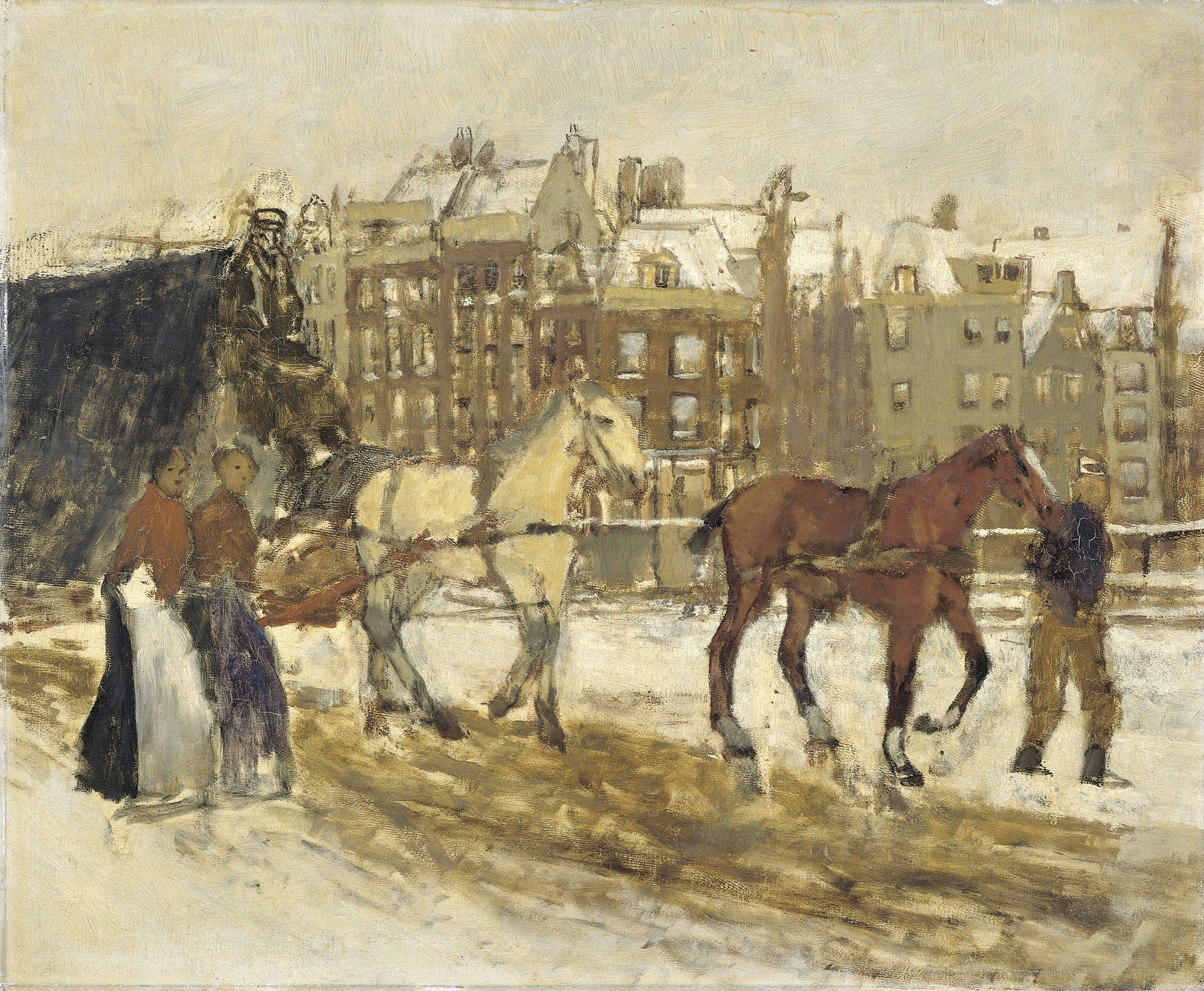
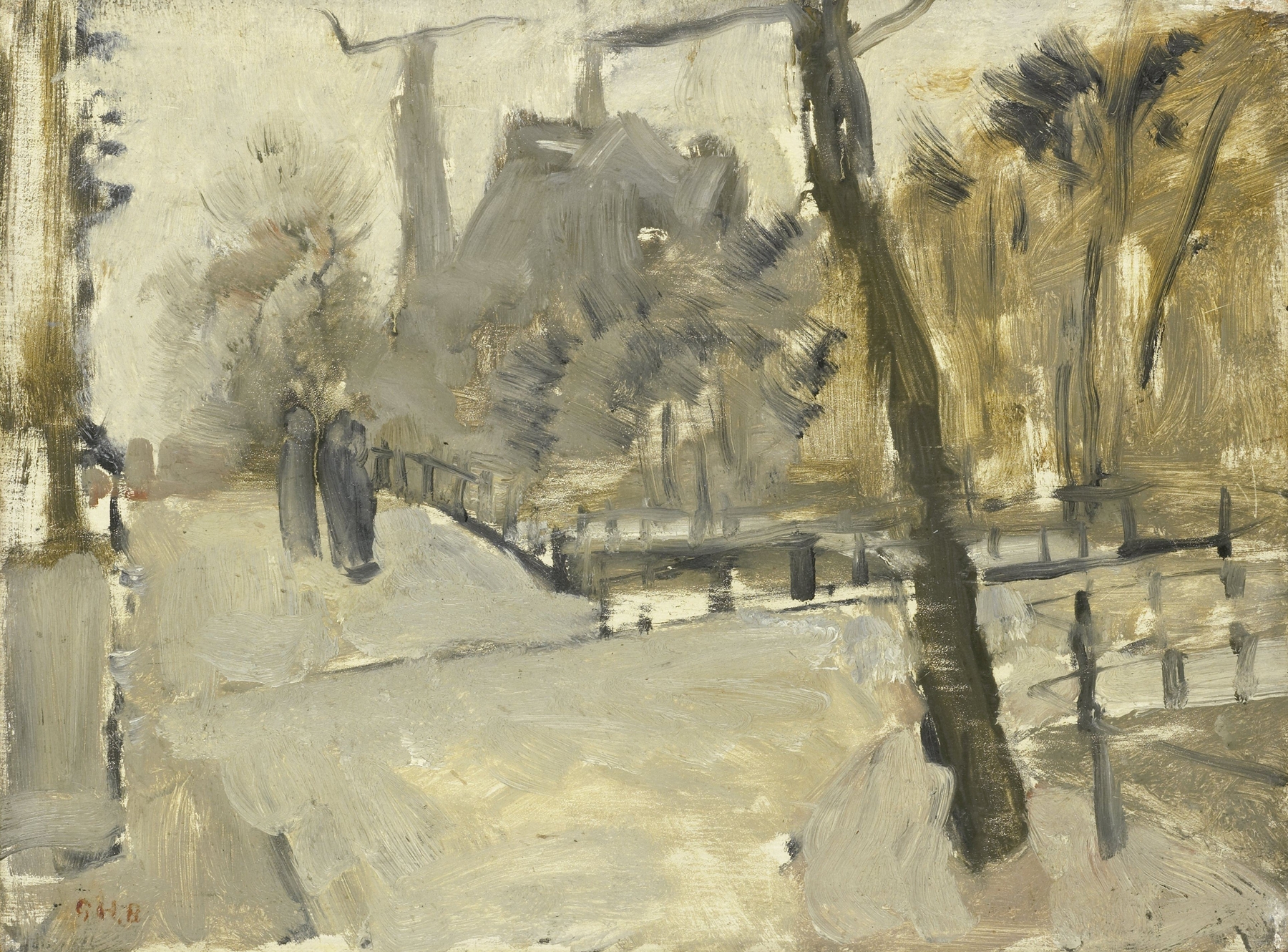
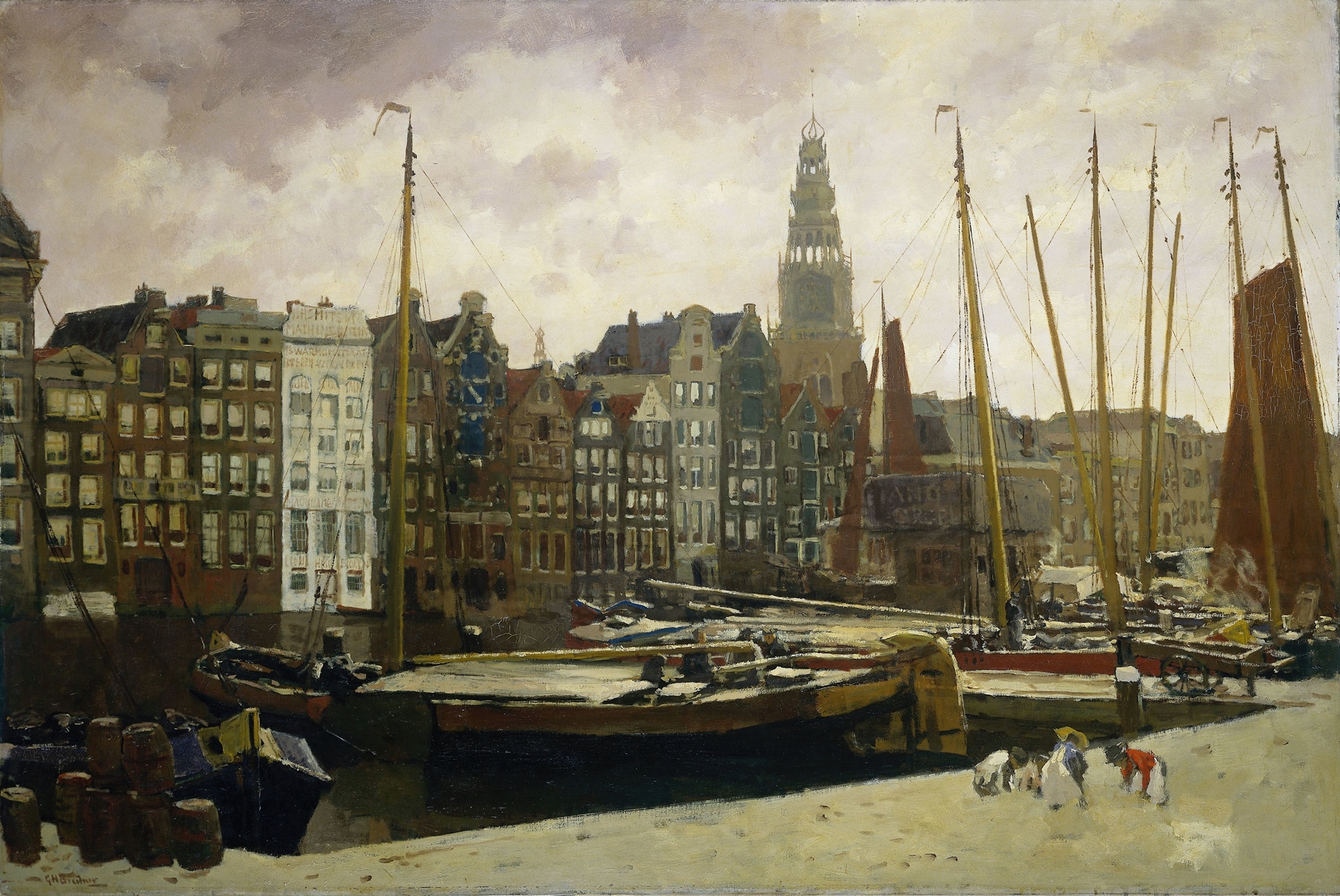
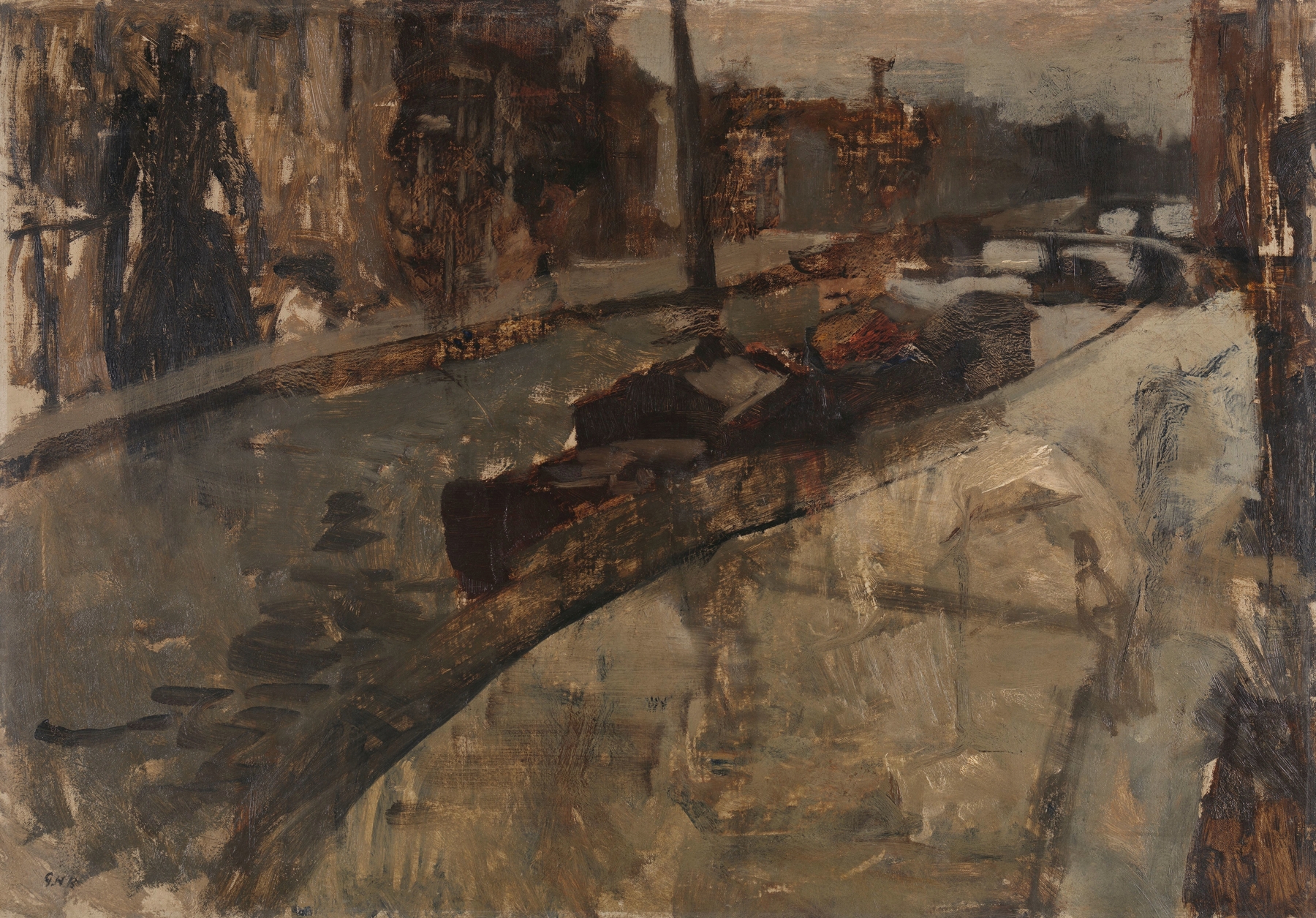
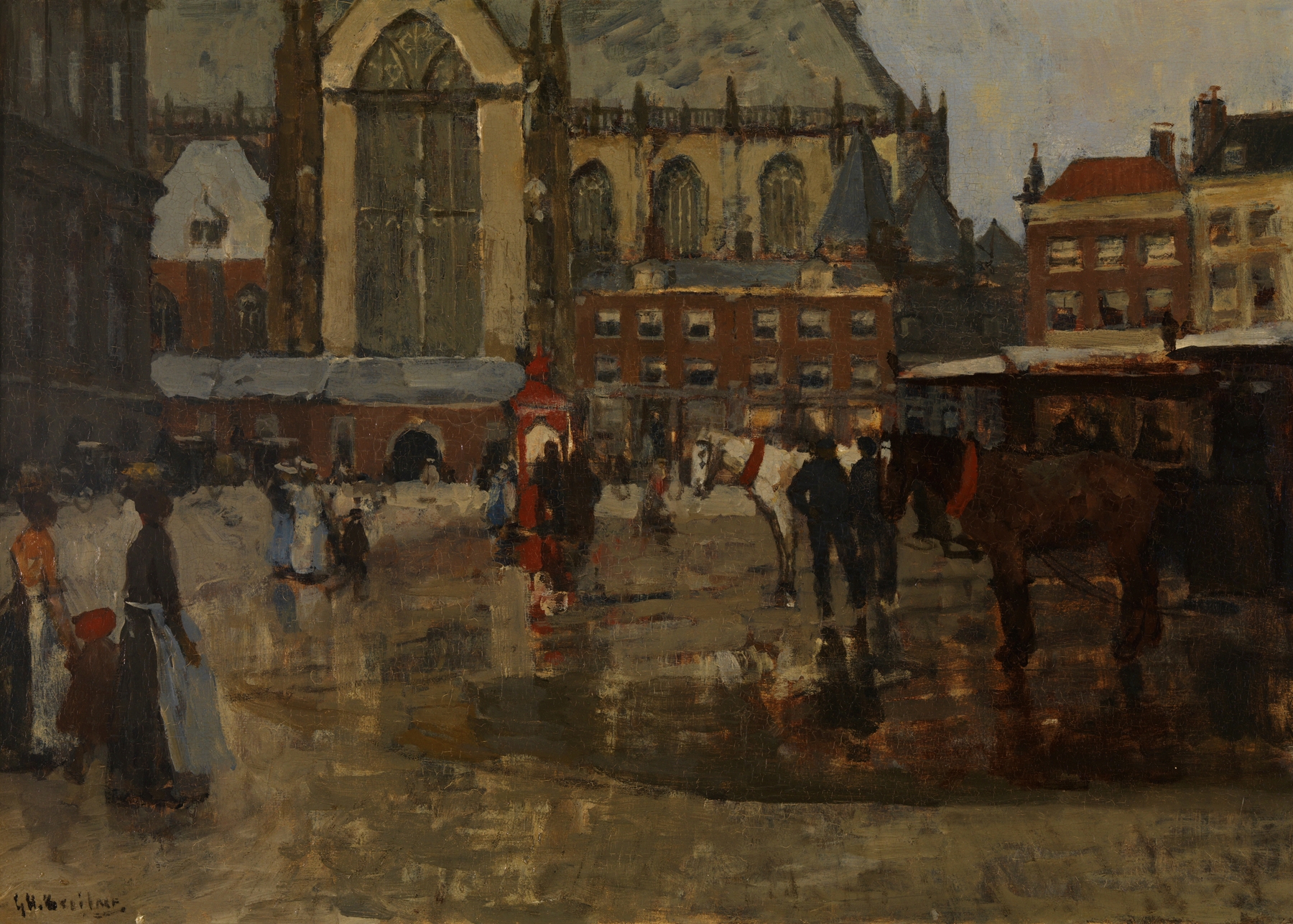
Can beauty exist without sorrow? In George Hendrik Breitner's work, the interplay of light and shadow reveals a poignant truth about life in the bustling city. Look to the left where the soft glow of the afternoon sun casts a golden hue upon the water, shimmering as it flows through the canal. The delicate brushwork captures the movement of the waves, while the sturdy outlines of the buildings stand resolute against the backdrop.
Notice how the reflections distort the reality above, blurring the edge between concrete and nature, inviting the viewer to delve deeper into the scene's essence. Amidst the vibrant colors and dynamic composition, the painting conveys an underlying tension between tranquility and the busyness of urban life. The stillness of the water contrasts sharply with the bustling streets represented by figures, suggesting a momentary pause in a world that rarely stops. The viewer senses a lingering melancholy—an acknowledgment of the past hidden within the present beauty.
In the early 1900s, Breitner painted this piece in Amsterdam, where he was deeply engaged with capturing the city's essence through his lens. At this time, he was known for his innovative approach to urban scenes, embracing the effects of light and atmosphere as key elements. As industrialization surged, his work reflected not just the charm of the city but also the complexities of modern life, revealing the tension that lies in every beautiful moment.