The Rokin, Amsterdam — History & Analysis
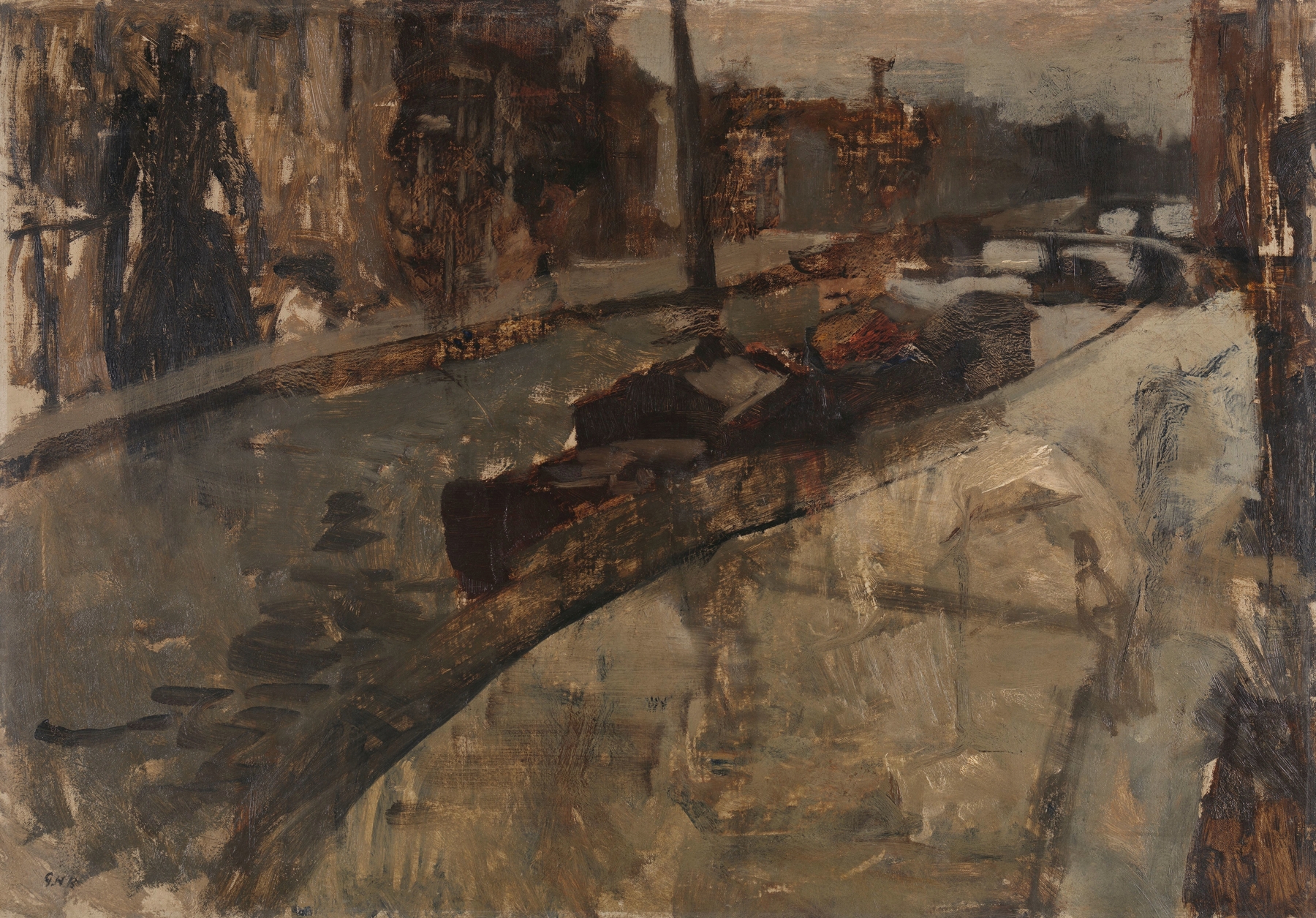
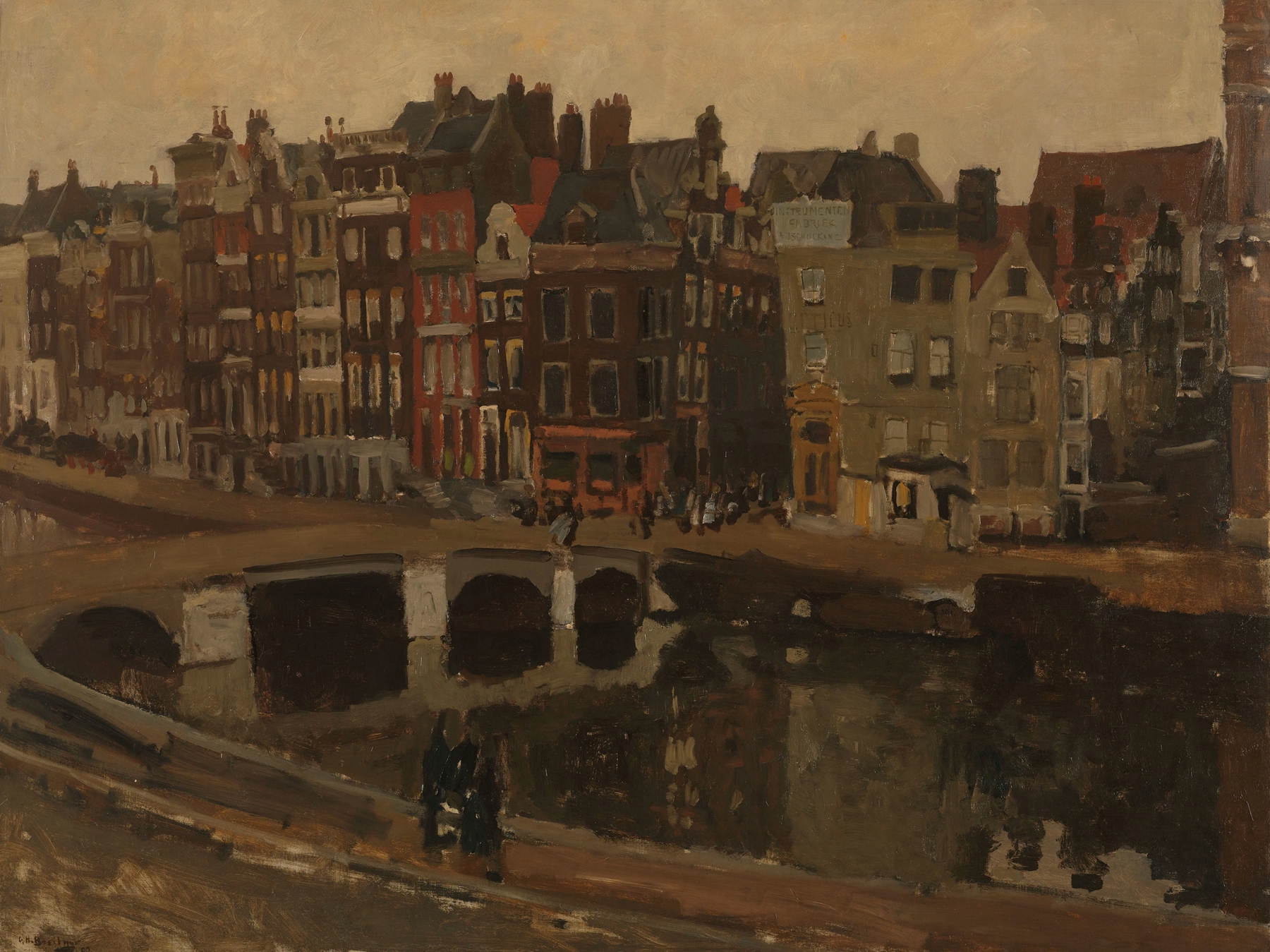
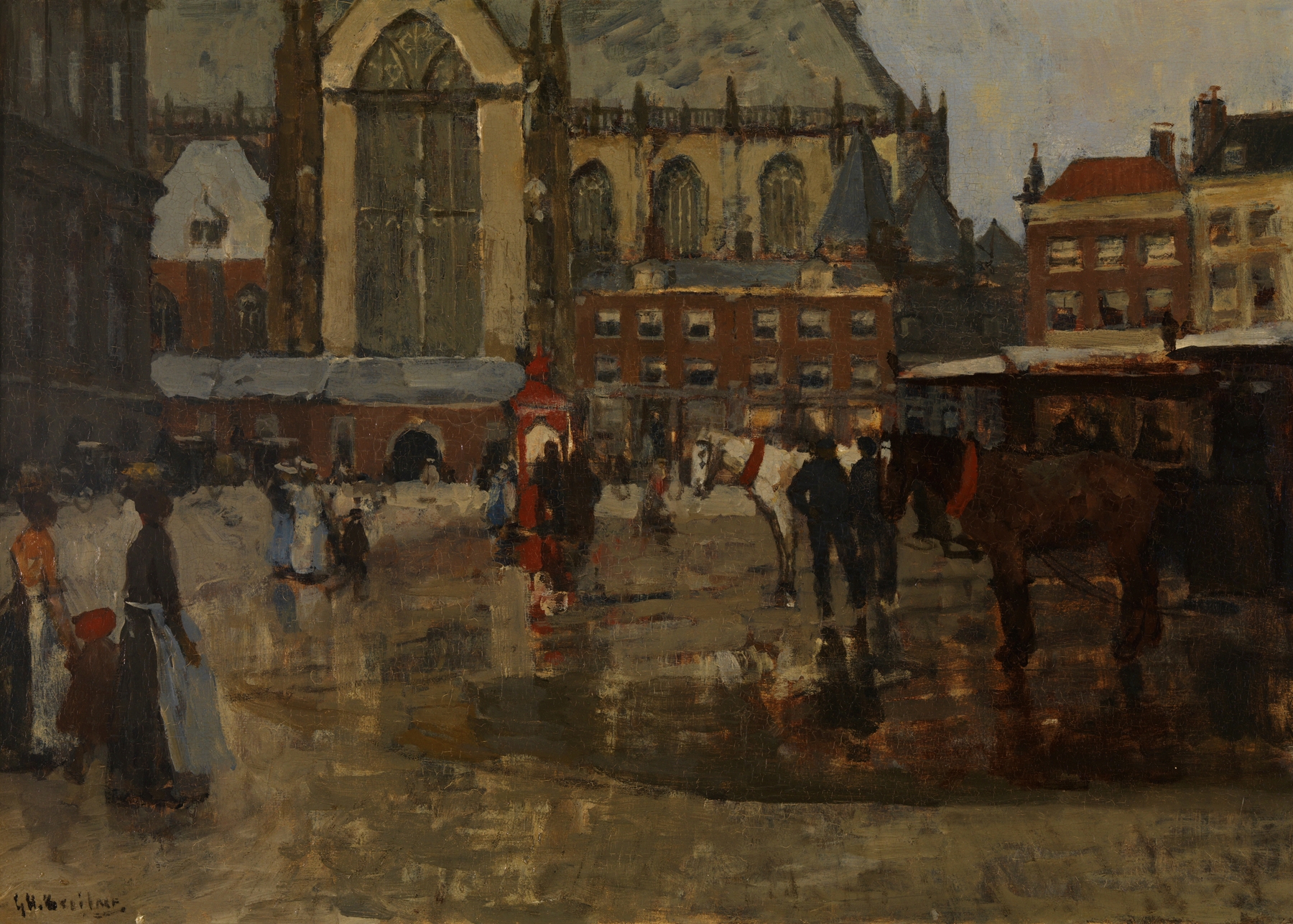
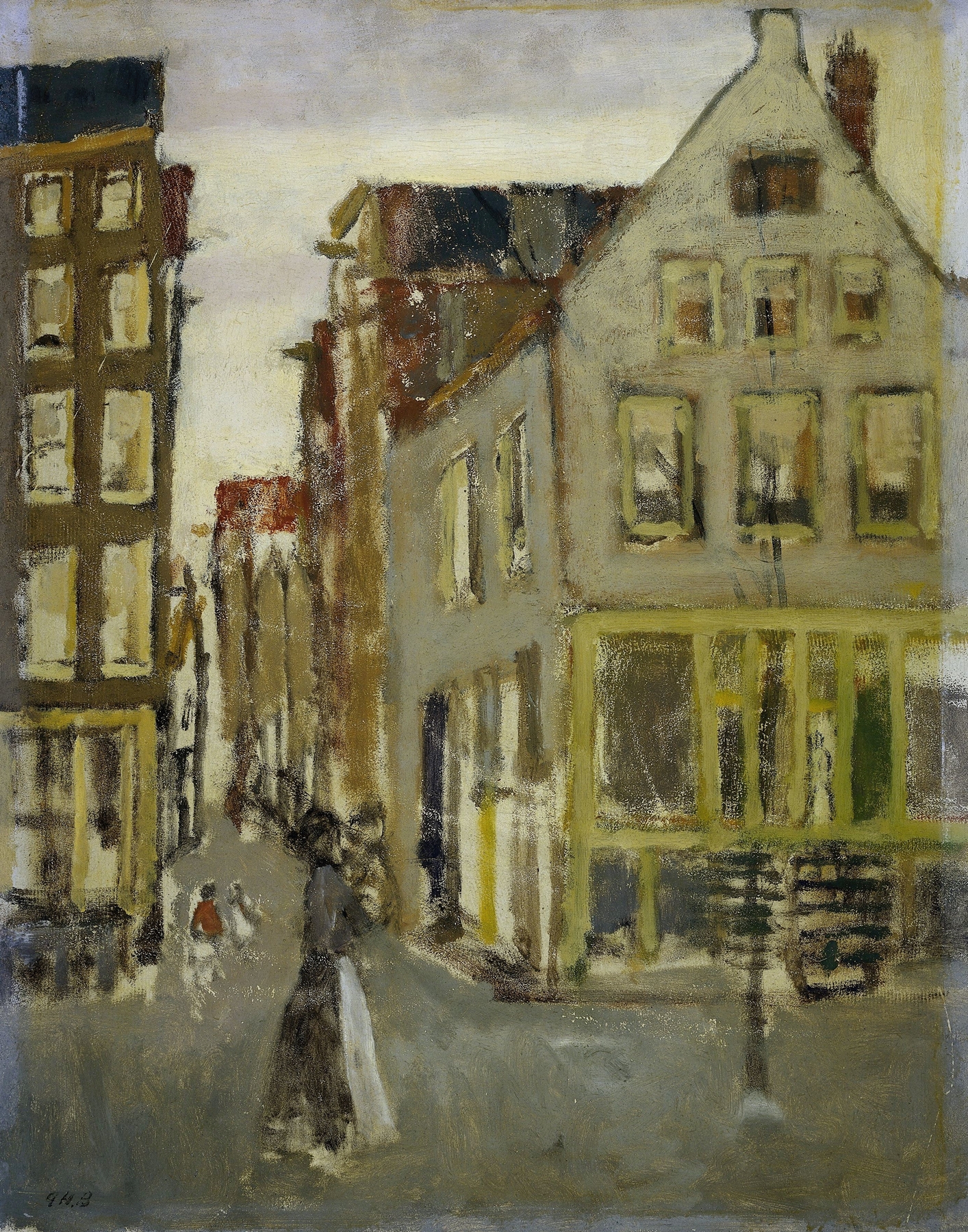
Can beauty exist without sorrow? In The Rokin, Amsterdam, the question lingers in the air, inviting contemplation of the delicate balance between hope and despair. Focus on the center of the canvas where a solitary figure stands, poised at the edge of a bustling canal. The reflections of the water shimmer with shades of blue and gray, creating a sense of movement that contrasts with the stillness of the individual.
The artist employs broad, expressive brushstrokes to capture the vibrancy of life around the figure, while a soft diffused light bathes the scene, suggesting an early morning awakening or the quiet after a storm. Notice how the architecture, with its weathered facades, speaks of time and endurance, hinting at the stories held within those walls. The juxtaposition between the lively activity of the pedestrians and the contemplative stance of the lone individual evokes a subtle tension — a longing for connection amid the busyness of existence. The choice of muted colors reinforces this dichotomy, whispering of past sorrows while celebrating the beauty of the present.
In 1923, Breitner was deeply embedded in Amsterdam's art scene, capturing the city's essence through his lens. It was a period of personal introspection for him, as he grappled with the complexities of modern life and his own evolving artistic vision. This work reflects both the vibrancy of the city and the artist's quest for meaning amid the bustle, showcasing his evolution into a master of urban landscapes.