The Beach Scheveningen — History & Analysis

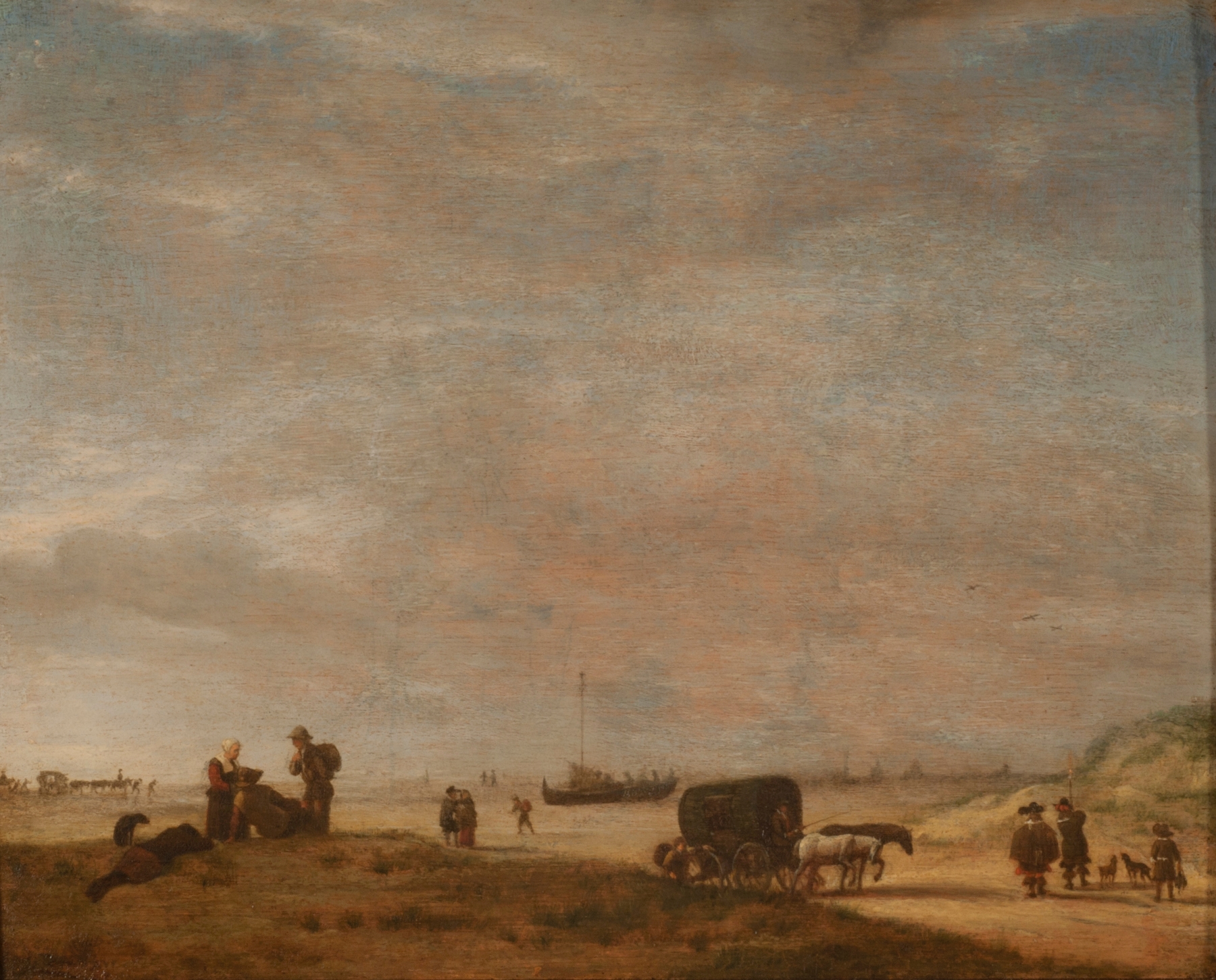
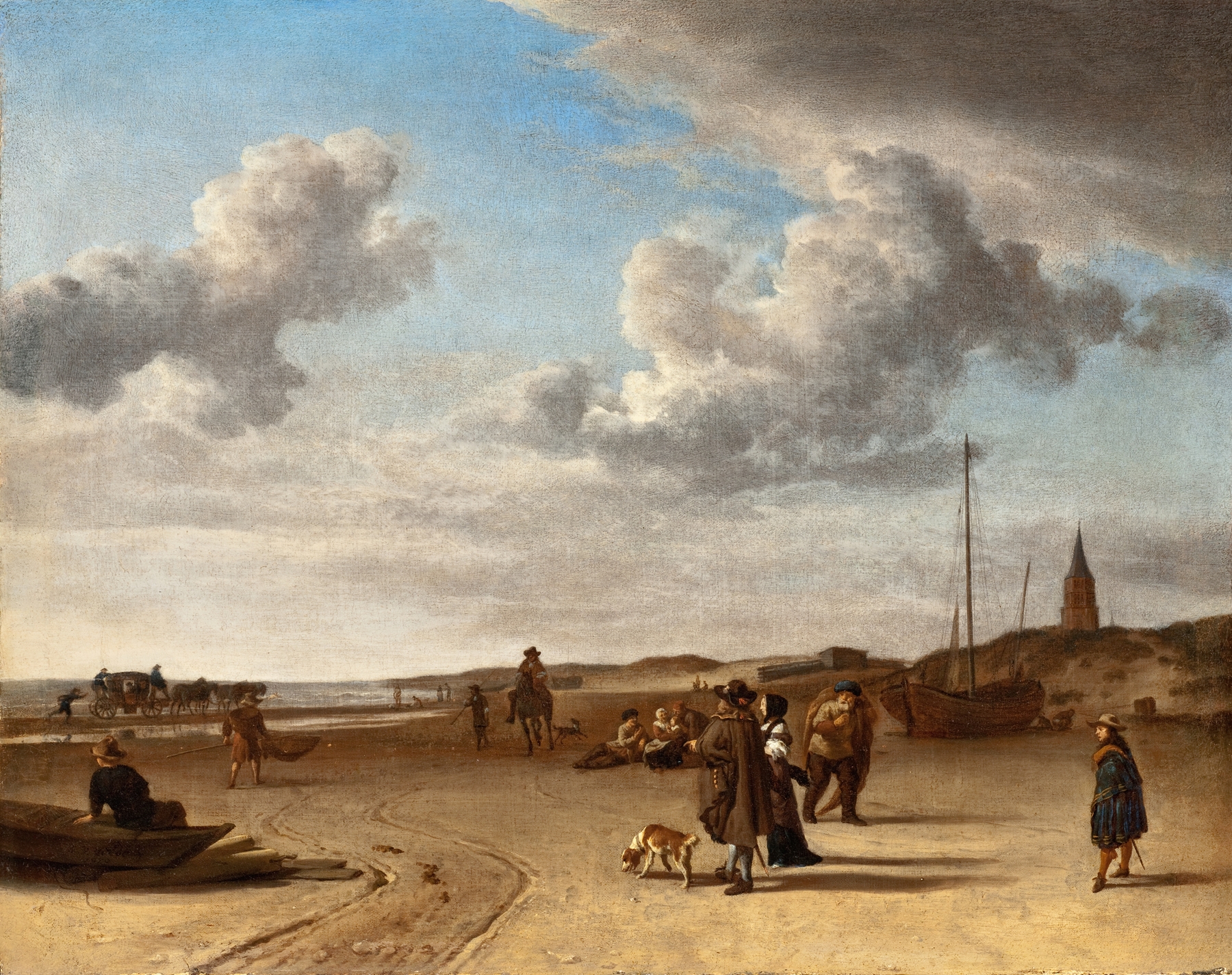
Where does light end, and longing begin? In the gentle embrace of dawn, the horizon whispers secrets of distant shores and uncharted desires. Look to the left at the soft, undulating waves, their blues and greens merging seamlessly with the sky, where clouds drift lazily under the golden sun. The figures scattered along the beach engage in various pursuits—some gather seashells, while others chat animatedly—each gesture punctuated by the shimmering reflections dancing on the water’s surface.
Notice how the light falls upon the sand, creating a warm glow that contrasts with the cool tones of the sea, evoking a sense of tranquility amid the everyday activities depicted. Delve deeper, and you’ll find an undercurrent of yearning in the composition. The solitary sailor, poised in the foreground, gazes out toward the horizon, his stance both contemplative and achingly hopeful—a symbol of aspiration in the face of an uncertain future. The interplay between the lively beachgoers and the vast expanse of water hints at a tension between the comforts of home and the allure of adventure, embodying a desire for freedom that resonates with the shifting societal tides of the era.
Adriaen van de Velde painted this evocative scene in 1670, a time marked by both artistic evolution and political turmoil in the Netherlands. As the Baroque period flourished, artists explored new themes of nature and humanity, while the world around them faced the strains of revolution and change. In this vibrant coastal moment, Velde both captured the spirit of his time and created a timeless reflection on the human condition.