The big Inn at Fredensborg — History & Analysis
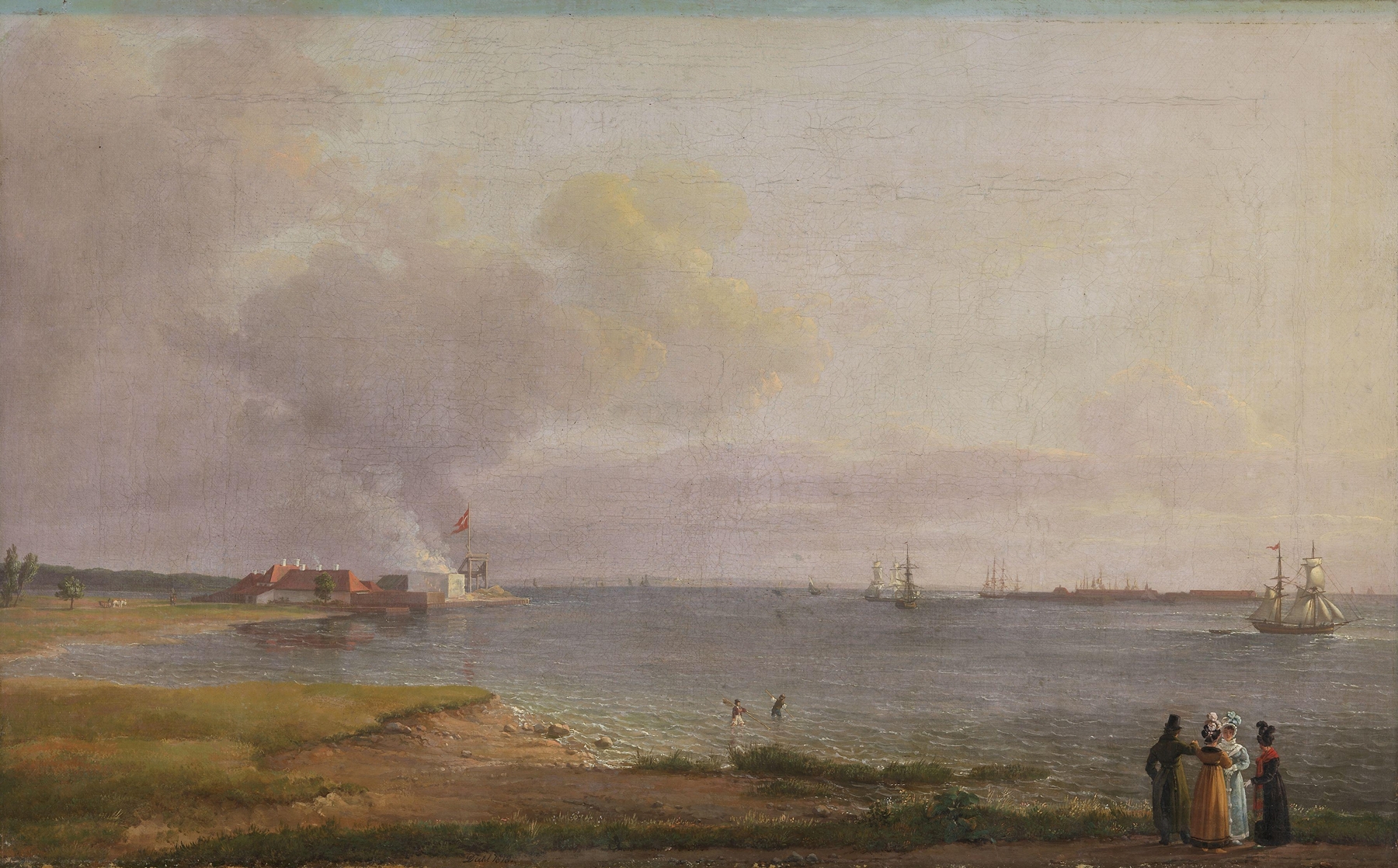
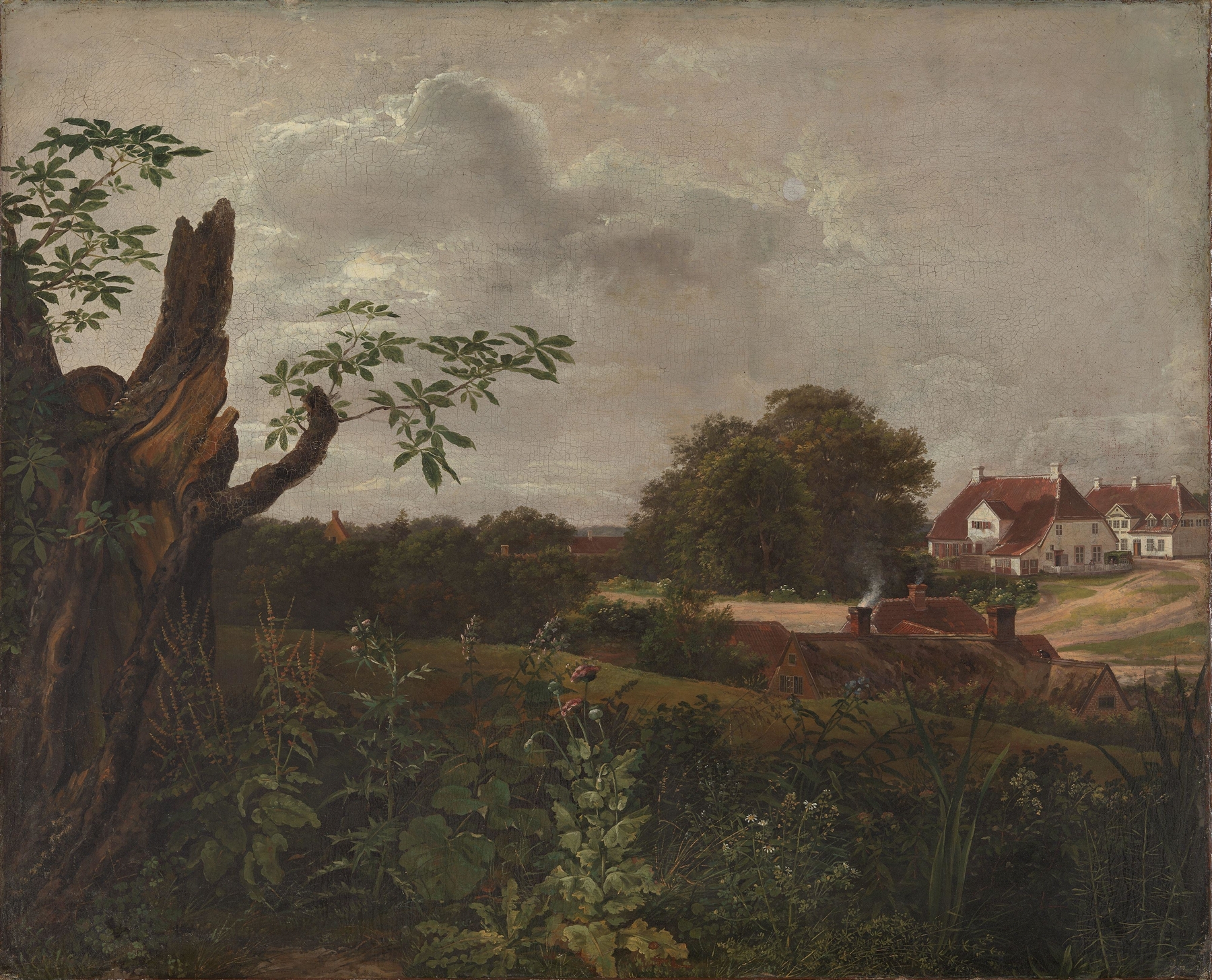
Can beauty exist without sorrow? In Johan Christian Dahl’s *The Big Inn at Fredensborg*, the canvas captures a haunting stillness that resonates with a sense of emptiness, inviting viewers to ponder the interplay between light and shadow in the human experience. Focus on the sprawling inn located in the center, its architecture detailed yet solitary, surrounded by a landscape that feels both inviting and desolate. Notice how the soft hues of twilight envelop the scene, casting an ethereal glow that dances along the walls and thatched roofs. The gentle gradients in the sky reflect a melancholic beauty, while the sparse figures moving toward the inn suggest an anticipation steeped in quiet longing, hinting at the stories they carry. Delve deeper into the subtle contrasts that Dahl masterfully weaves into the artwork. The vibrant colors of the sunset contrast sharply with the muted tones of the inn and landscape, emphasizing a division between the warmth of human connection and the chill of isolation. The absence of bustling activity evokes a poignant stillness, suggesting that even in places of gathering, the soul can be enveloped in solitude. The careful placement of distant trees frames the scene, hinting at the need for reflection amid the noise of life. In 1817, Dahl painted this piece during his time in Denmark, where he was deeply influenced by the Romantic movement. During this period, he explored themes of nature, light, and emotion. The artwork reflects his dedication to capturing the sublime beauty of the Nordic landscape while grappling with the underlying emptiness that defined the human condition in a rapidly changing world.