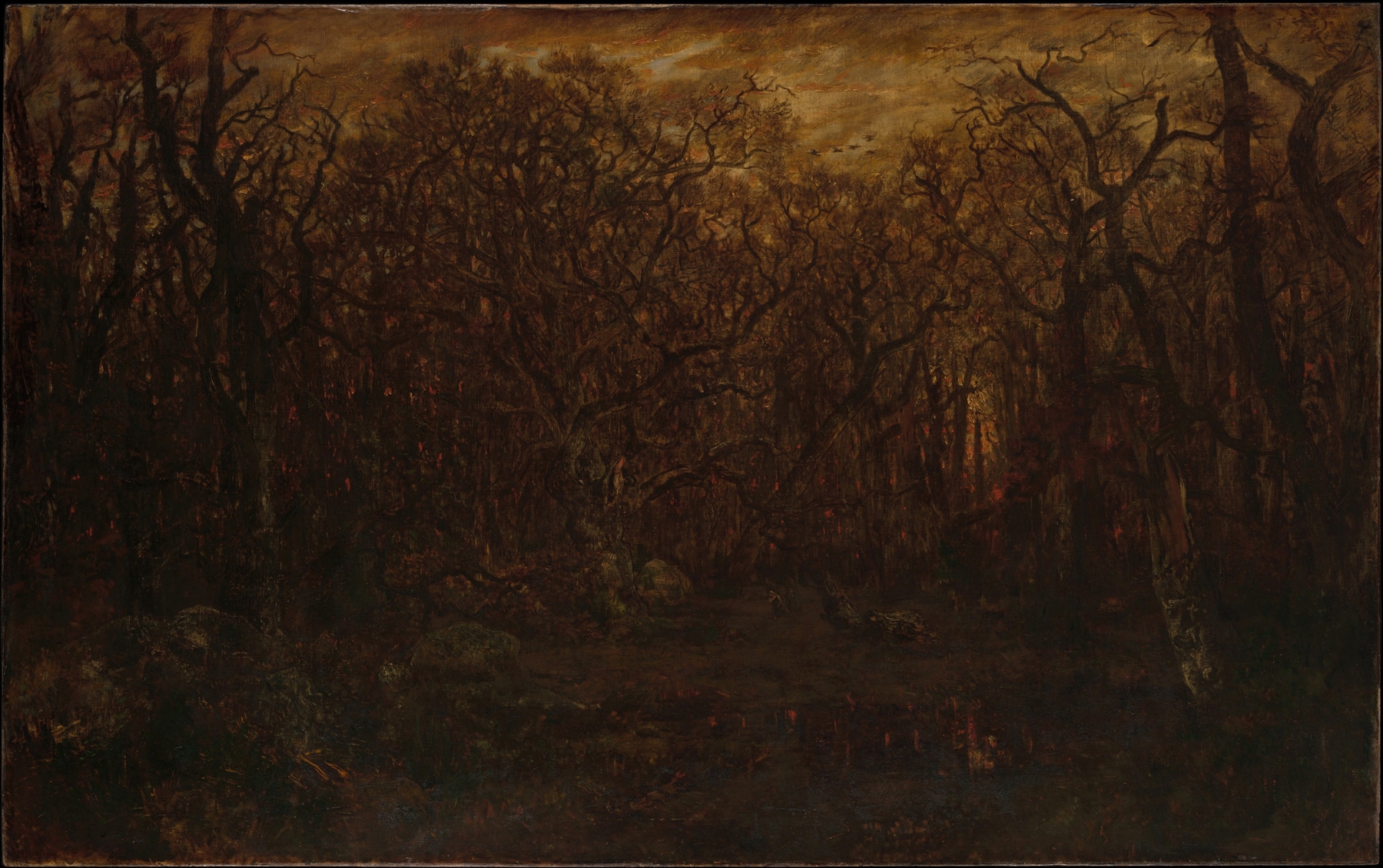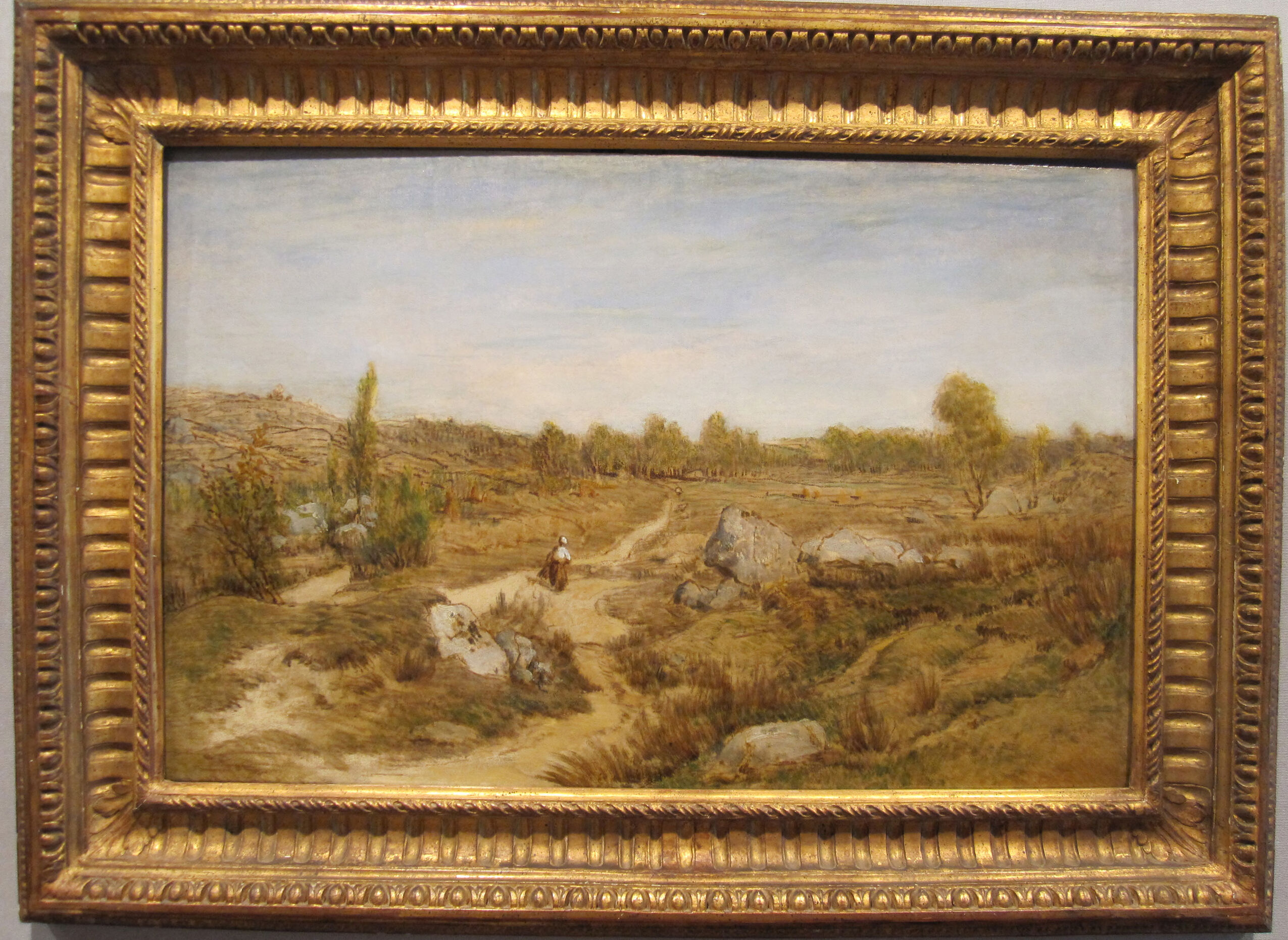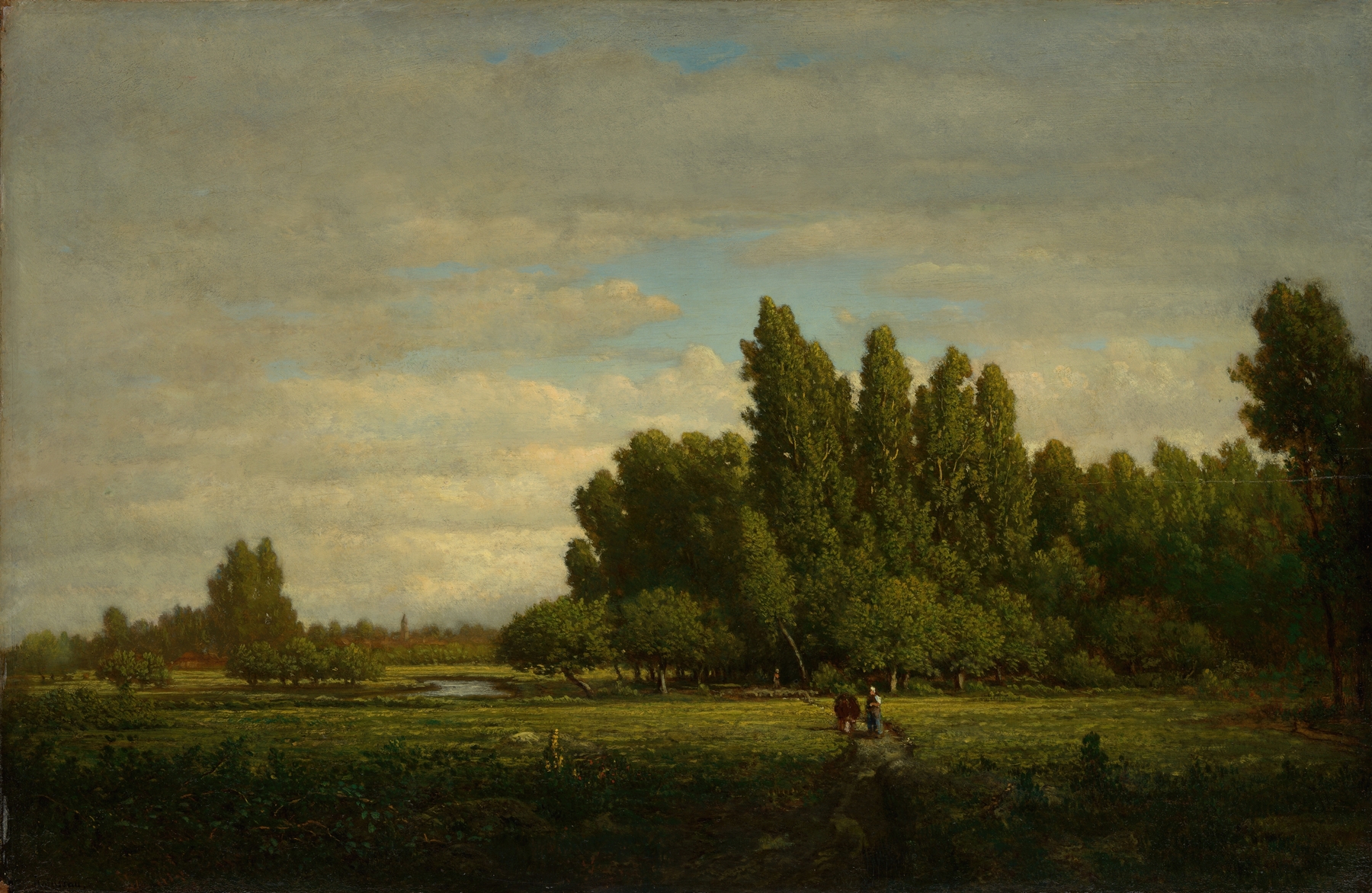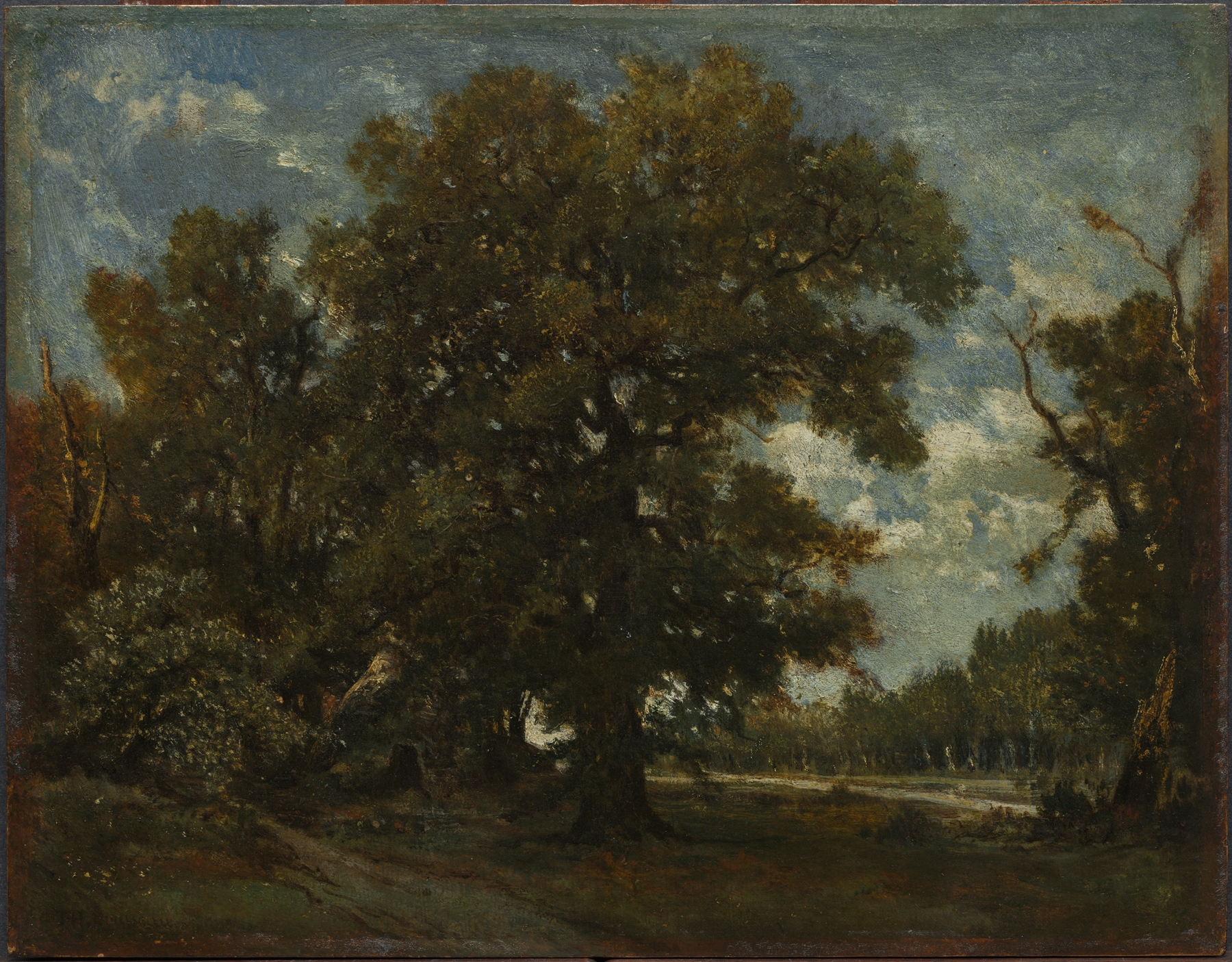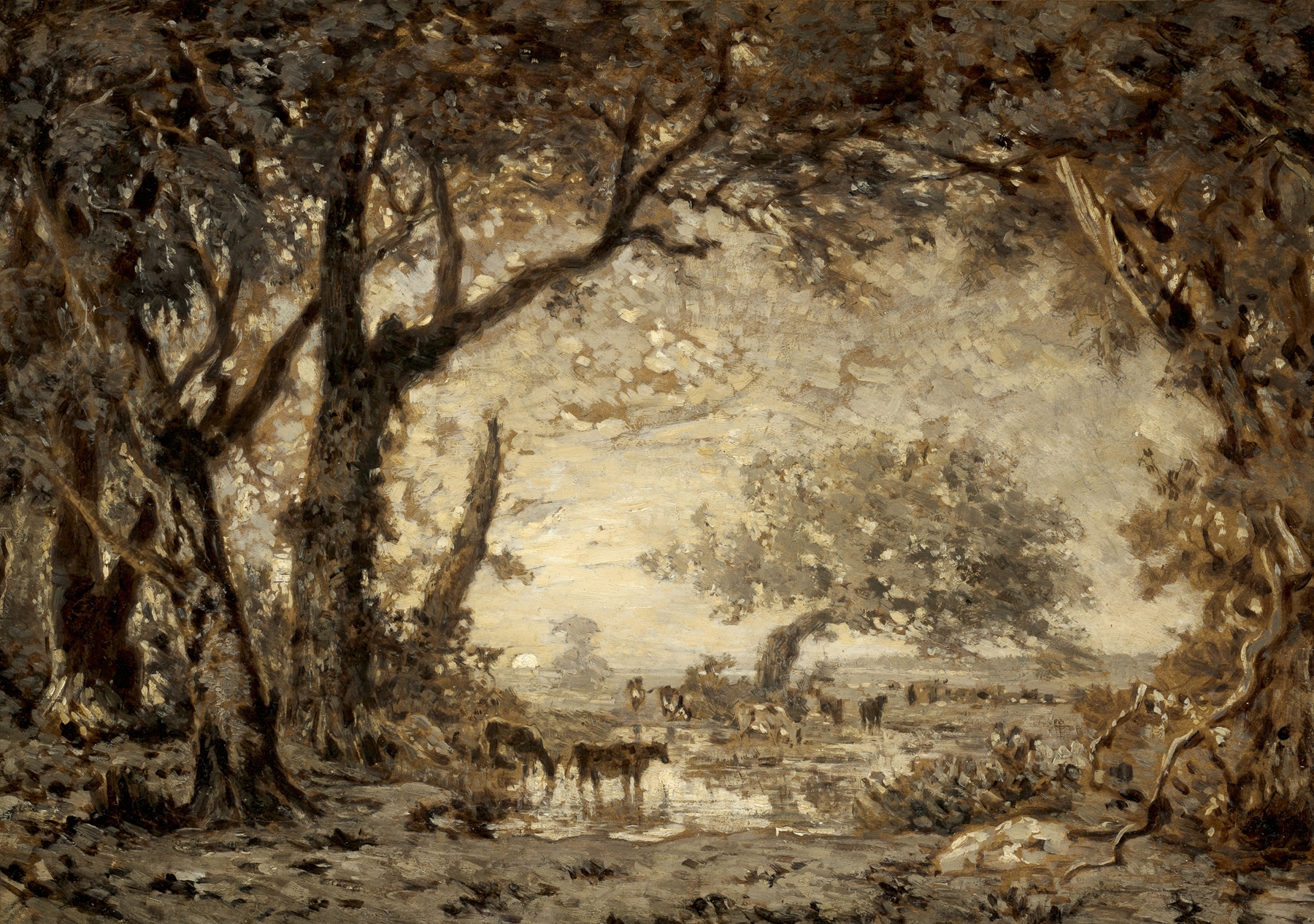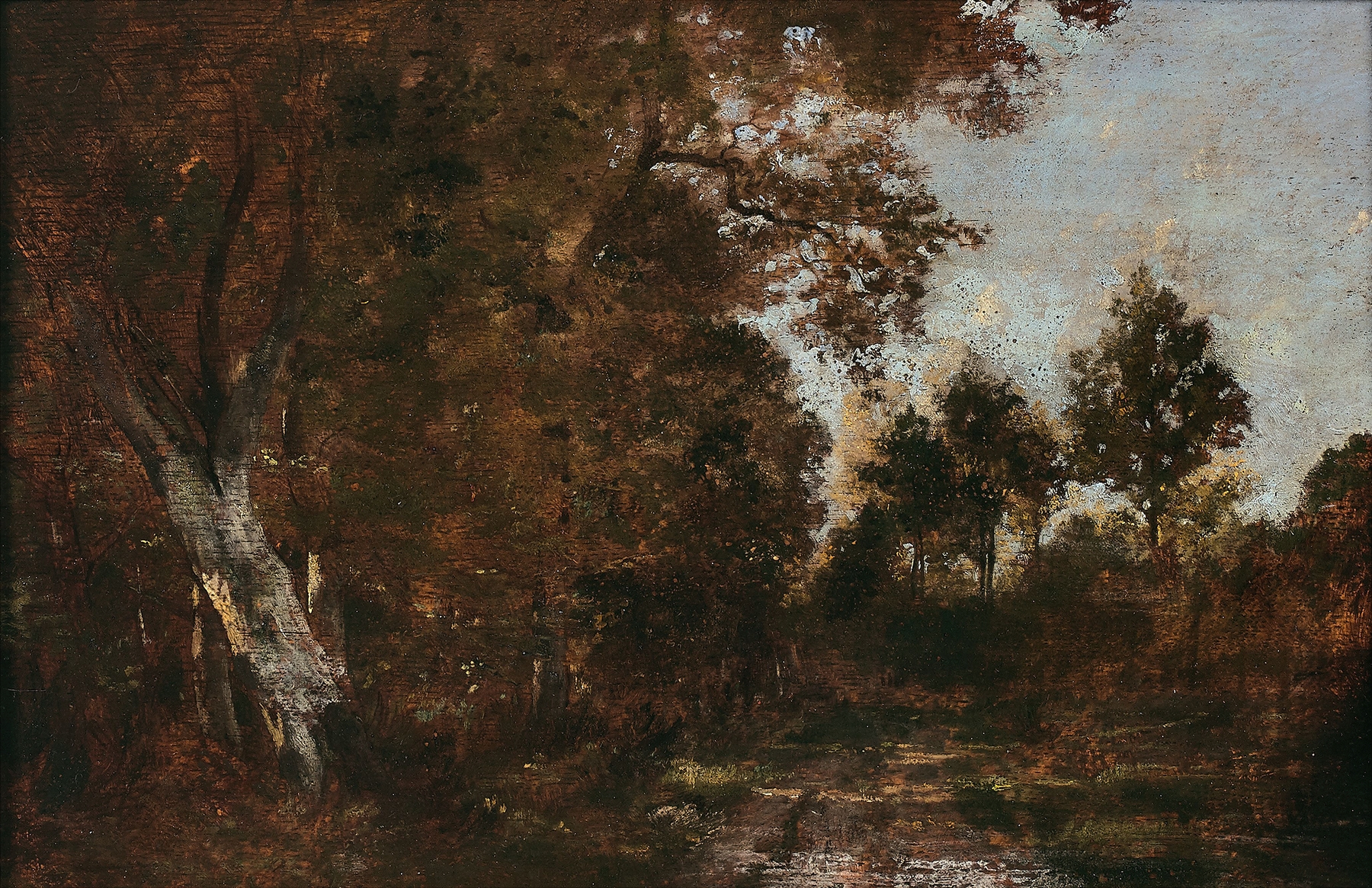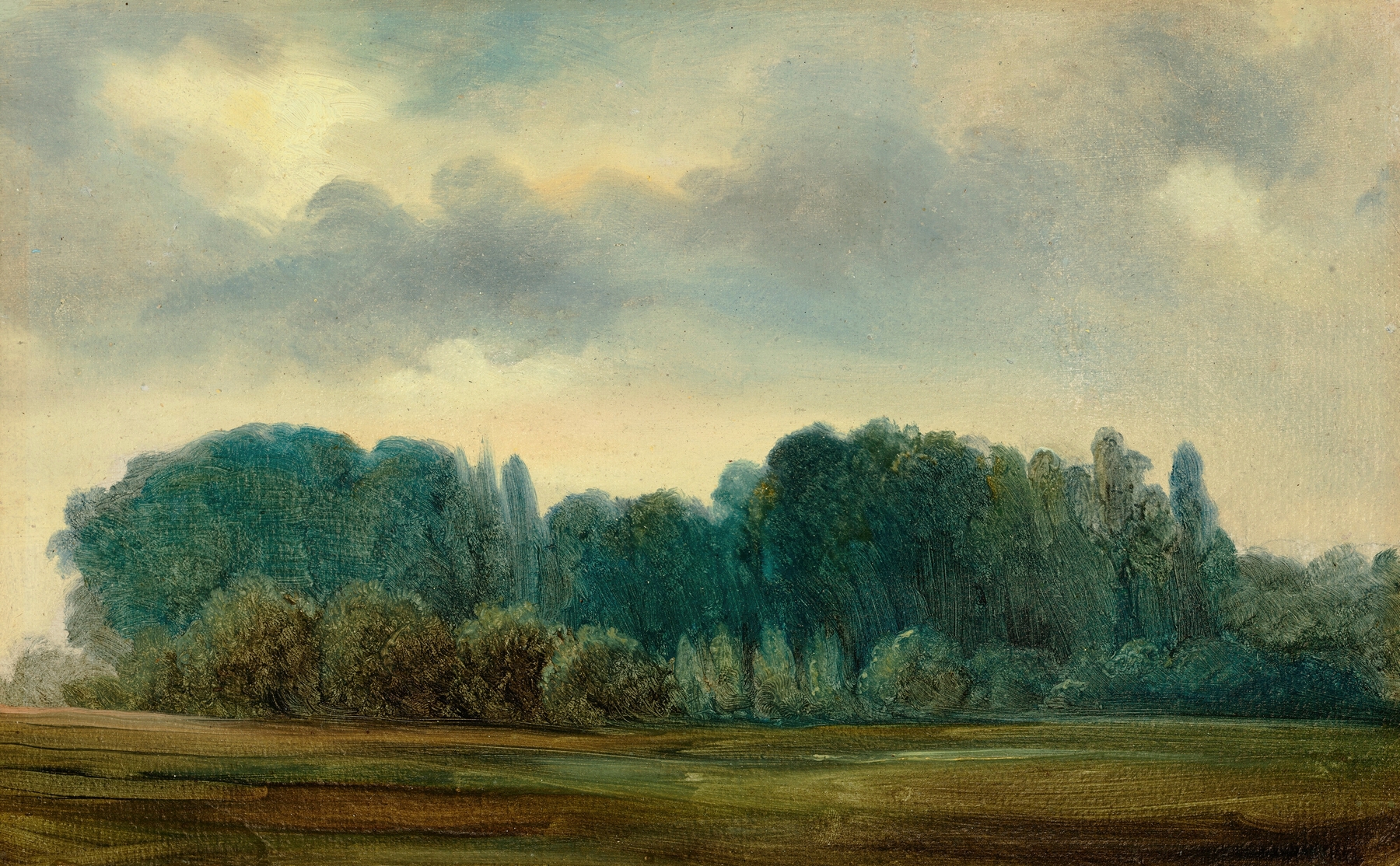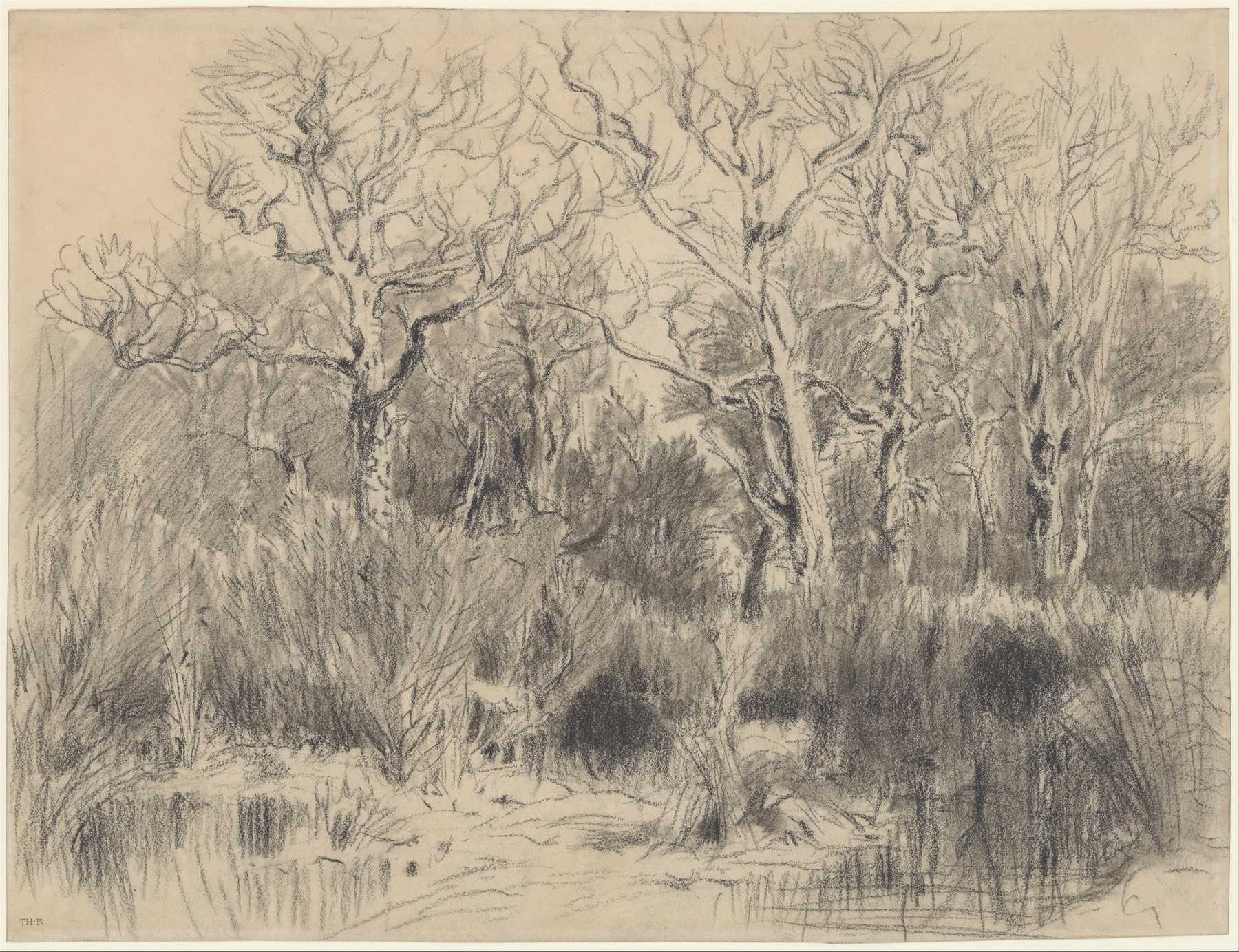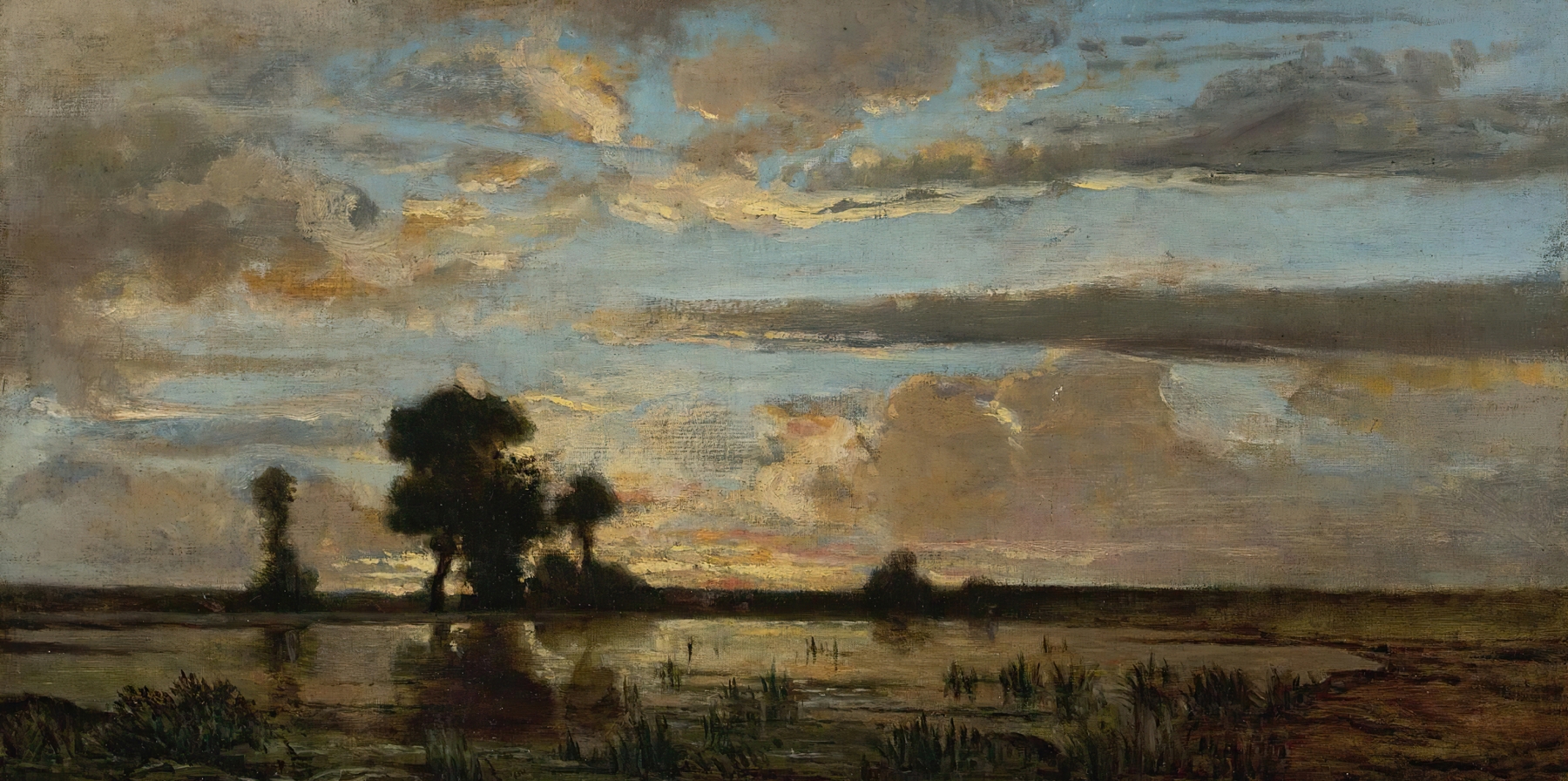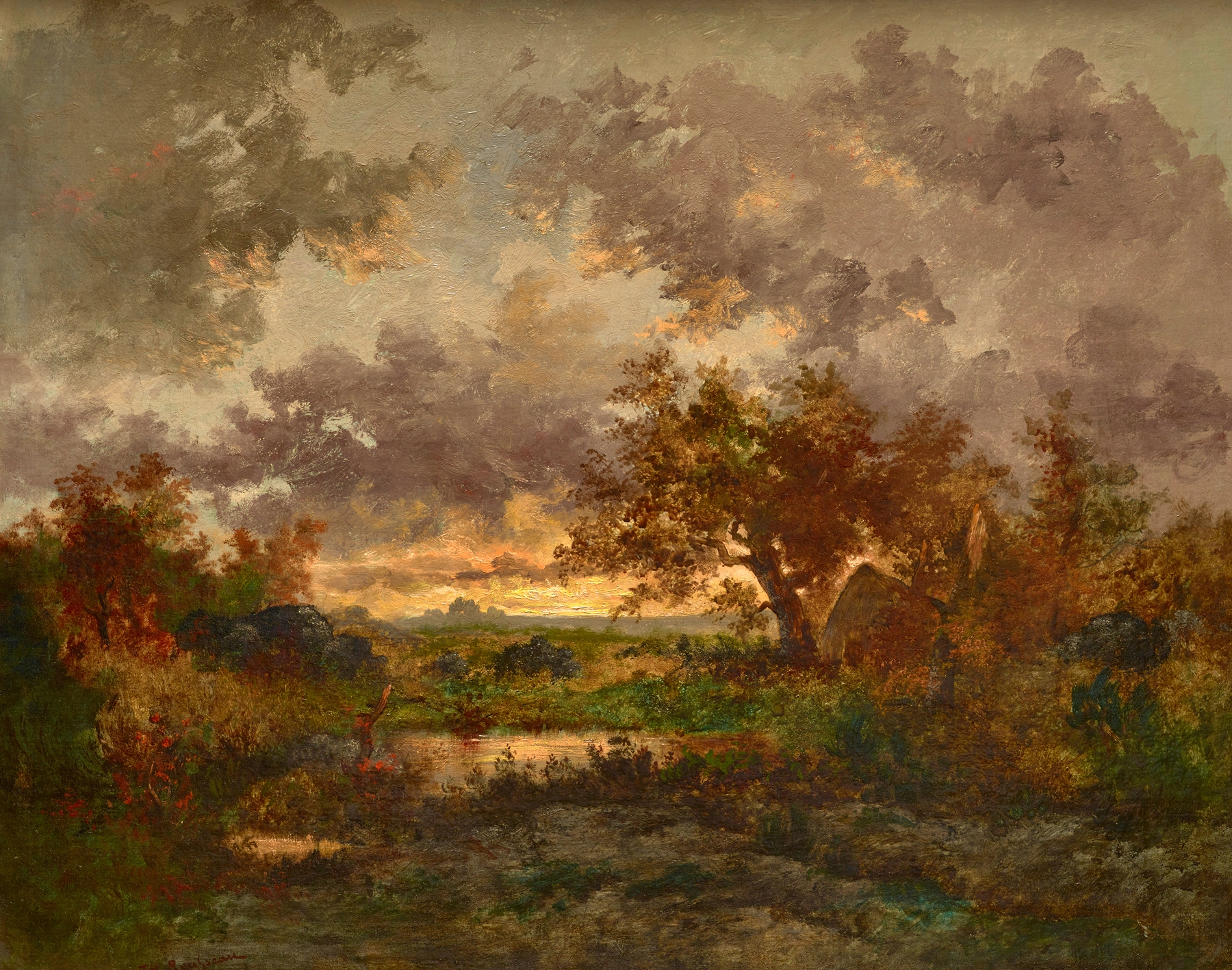
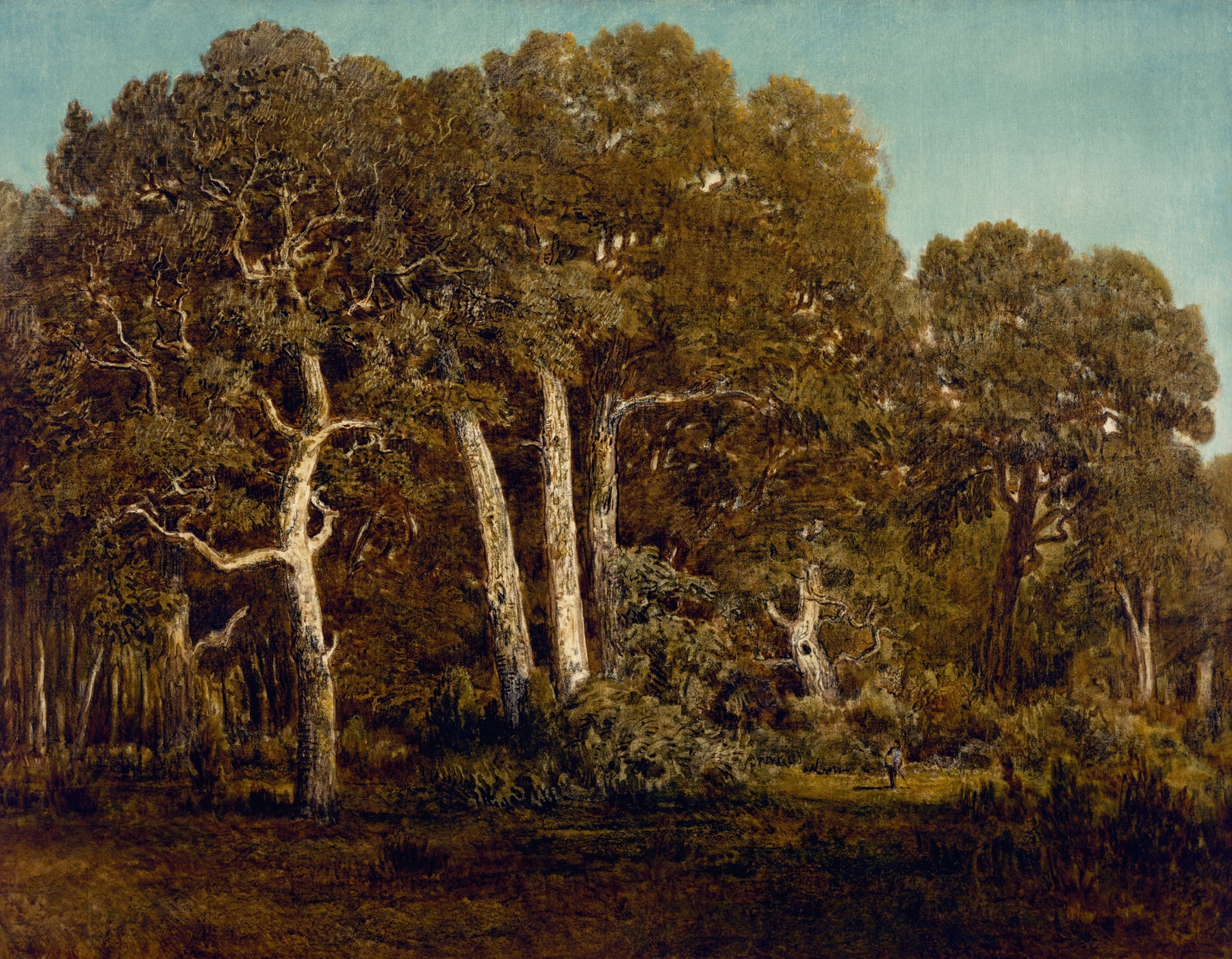
“Between color and silence, truth hides.” In the stillness of a dusky landscape, the quiet hum of nature envelops a modest abode, casting a spell of contemplation. The muted tones whisper stories of labor and repose, inviting the viewer to pause and listen to the echoes of human existence among the trees. Focus on the hut, nestled at the canvas's center, its weathered wood exuding patience. Notice how the deep greens of the surrounding forest frame it, contrasting beautifully with the earthy browns and soft grays of the structure itself. The brushwork captures the texture of bark and stone, while dappled light filters through the branches, illuminating patches of ground and creating an interplay of shadow and warmth. Yet, beyond the physical elements, an emotional tension resides within this scene. The silence is palpable, suggesting both solace and solitude, as if the hut stands as a testament to the transience of life. Rousseau contrasts the lively strokes of nature with the stillness of human dwelling, hinting at the balance between man and the wild. The viewer senses the weight of absence, an unspoken story of the charcoal burner who finds refuge here, where nature and labor converge. Théodore Rousseau painted this work during a pivotal time in the mid-19th century, amidst the rise of the Barbizon School, which sought to capture the essence of rural life. Working in the forest of Fontainebleau, he was deeply inspired by the natural world around him. This period marked a shift in art, as artists turned away from grand historical themes to embrace intimate landscapes, reflecting both personal and collective truths in a changing society.