The Chief Mosque In Futtehpore Sikri — History & Analysis
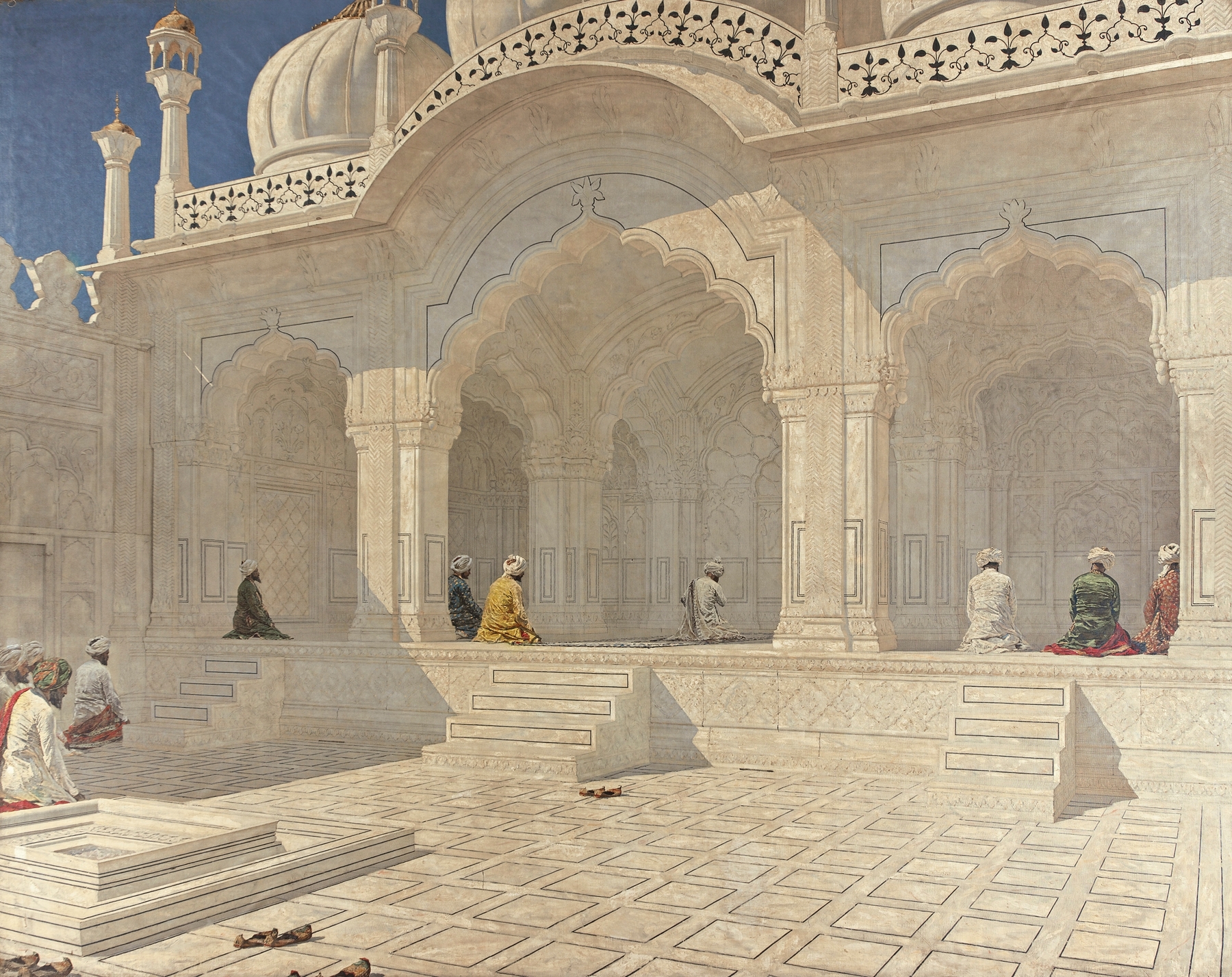
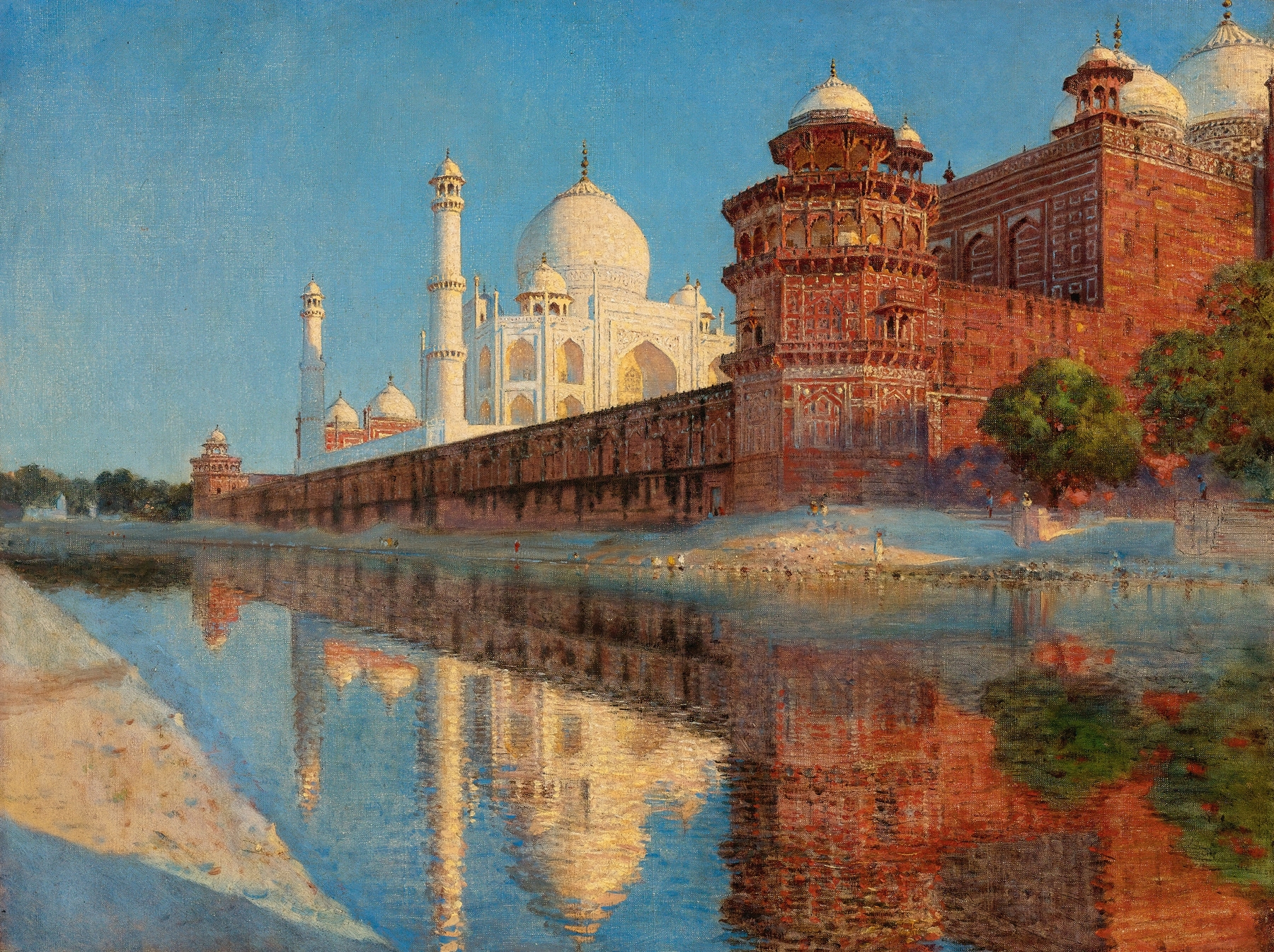
“Between color and silence, truth hides.” In the stillness of memory, we often find ourselves yearning for moments that once were, imbued with a bittersweet nostalgia that lingers in the air. Gaze first at the magnificent façade of the mosque, where the warm ochres and deep reds speak of an ancient splendor. Notice how the intricate carvings catch the sunlight, bringing both shadows and highlights into play, creating a rhythmic dance across the stone. The gentle curves of the arches invite your eye upward, leading to the soft blue sky, which envelops the structure, creating a stark contrast to the earthbound details below.
Each brushstroke delivers not merely a representation, but a pulse of life that breathes through the canvas. Delve deeper into the emotional landscape Vereshchagin paints; the mosque stands proud against the passage of time, while the smoothness of the stone hints at wear and memory. The silence that envelops this sacred space suggests whispers of prayers offered and dreams surrendered. In the distance, the lush greenery hints at a world untouched by the march of modernity, reinforcing a yearning for a past where spirituality and nature intertwined harmoniously.
In 1880, Vereshchagin was in India, captivated by the rich tapestry of culture and history. Throughout his travels, he focused on capturing the essence of the landscapes and structures that spoke to the soul of humanity. At this time, his works were also a commentary on the realities of war and peace, reflecting a profound sensitivity to the sacredness of life, making The Chief Mosque In Futtehpore Sikri a testament to both architectural mastery and the poignancy of nostalgia.