
The Empire — History & Facts
Could a single brushstroke hold eternity? In The Empire, the power of shadow intertwines with light, revealing a world poised between solidity and the ephemeral. Look closely at the luminous skyline, where delicate lines and bold strokes converge to form towering structures. Notice how the shadows stretch across the canvas, creating an illusion of depth and perspective that draws the eye upwards, inviting viewers to wander amongst the skyscrapers. The palette, rich in muted grays and vibrant blacks, contrasts sharply with bursts of incandescent white, suggesting the vibrancy of a city alive with ambition and energy. Yet, beneath the surface, the painting speaks to the fragility of human achievement.
The elongated shadows hint at the transient nature of progress, casting a veil of melancholy over the architectural grandeur. Each building, while magnificent, is enveloped in darkness, a reminder that even empires are built on fleeting foundations. This duality evokes a sense of awe and introspection, prompting us to ponder our own legacies. In 1928, Joseph Pennell was immersed in a rapidly modernizing America, capturing the spirit of a nation in transformation.
Living in New York, he experienced firsthand the architectural boom and the complexities of urban life. His work during this period reflects a keen awareness of the interplay between light and darkness, both literally in the changing skyline and metaphorically in the challenges facing society.
More Artworks by Joseph Pennell

The Flat Iron
Joseph Pennell
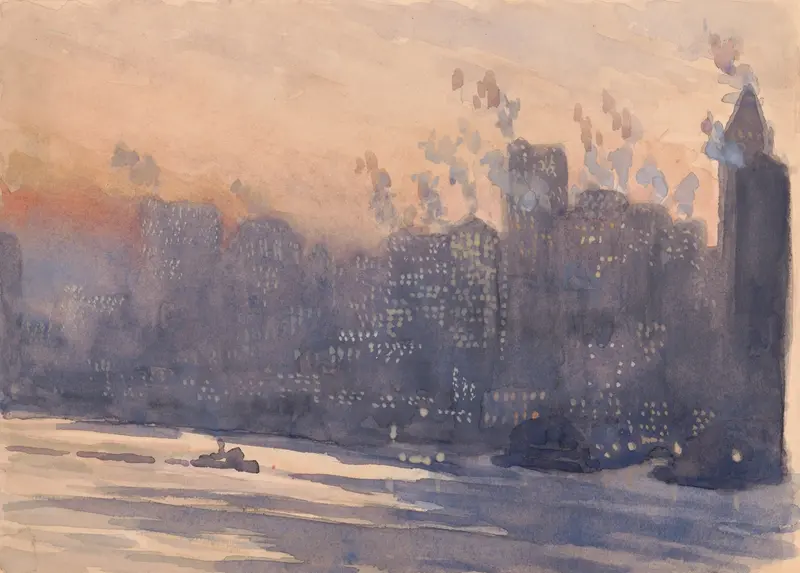
New York City harbor and skyline at night
Joseph Pennell

Concourse, Grand Central
Joseph Pennell
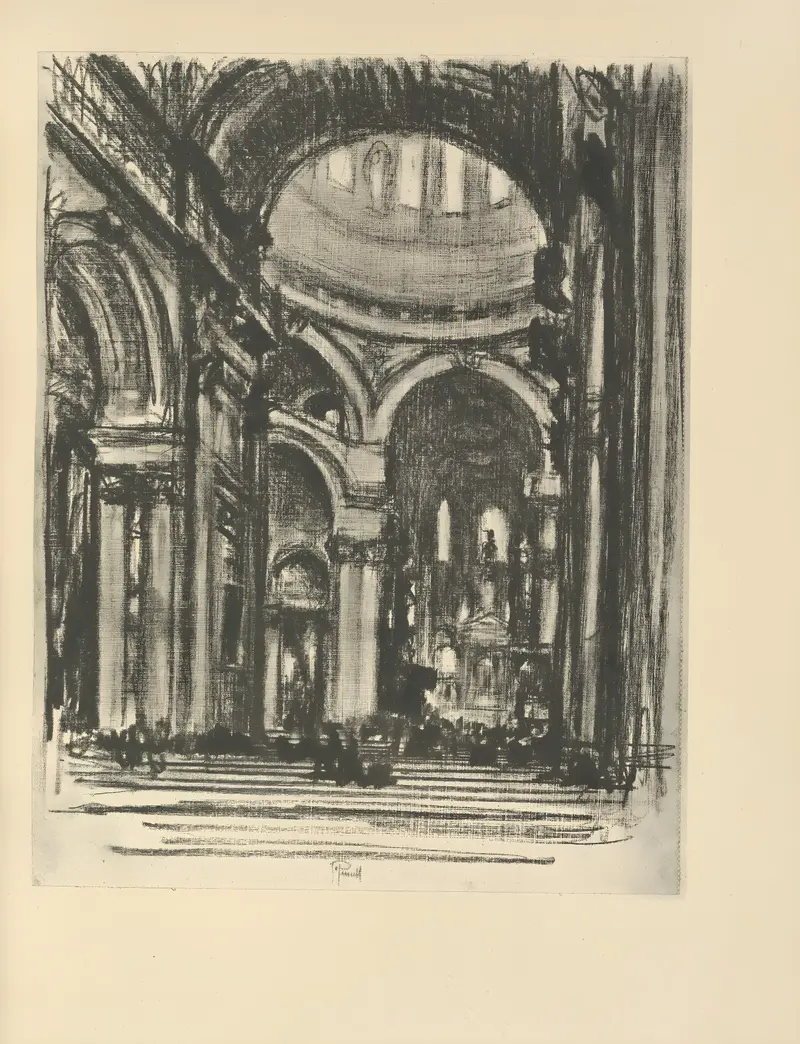
St. Paul’s, The Nave
Joseph Pennell
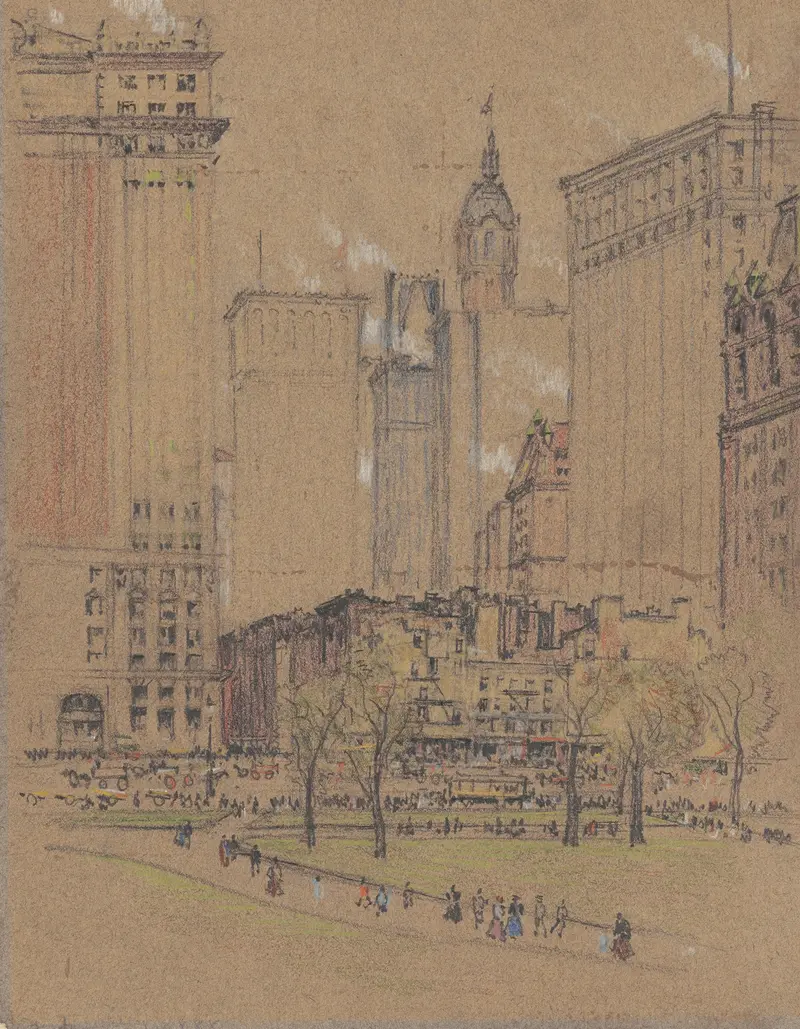
New York,the Old and the New
Joseph Pennell
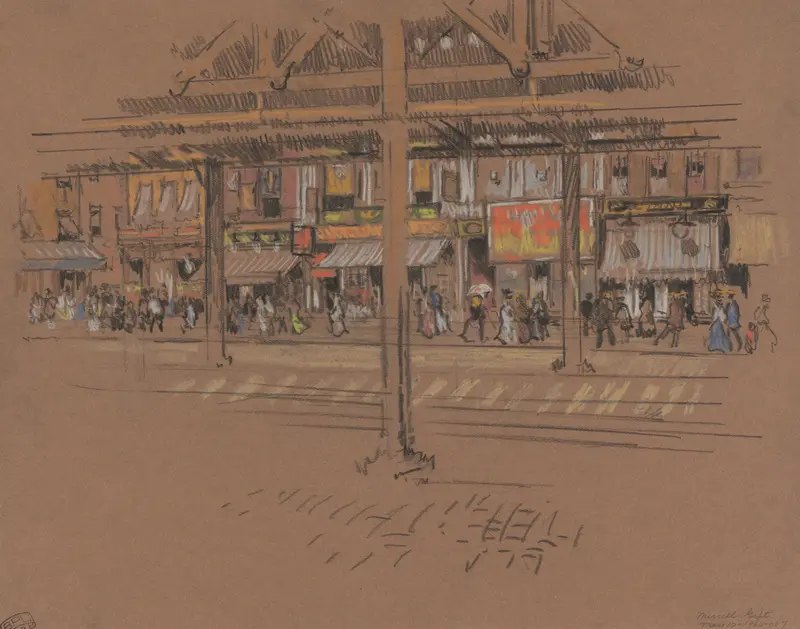
Sixth Avenue
Joseph Pennell

Smoke and fog on gray day, New York City
Joseph Pennell
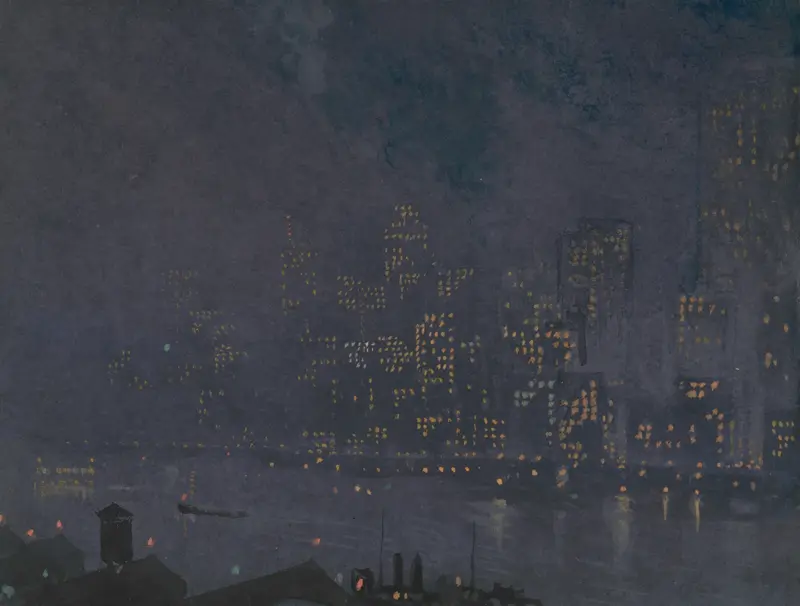
Skyscrapers at night
Joseph Pennell
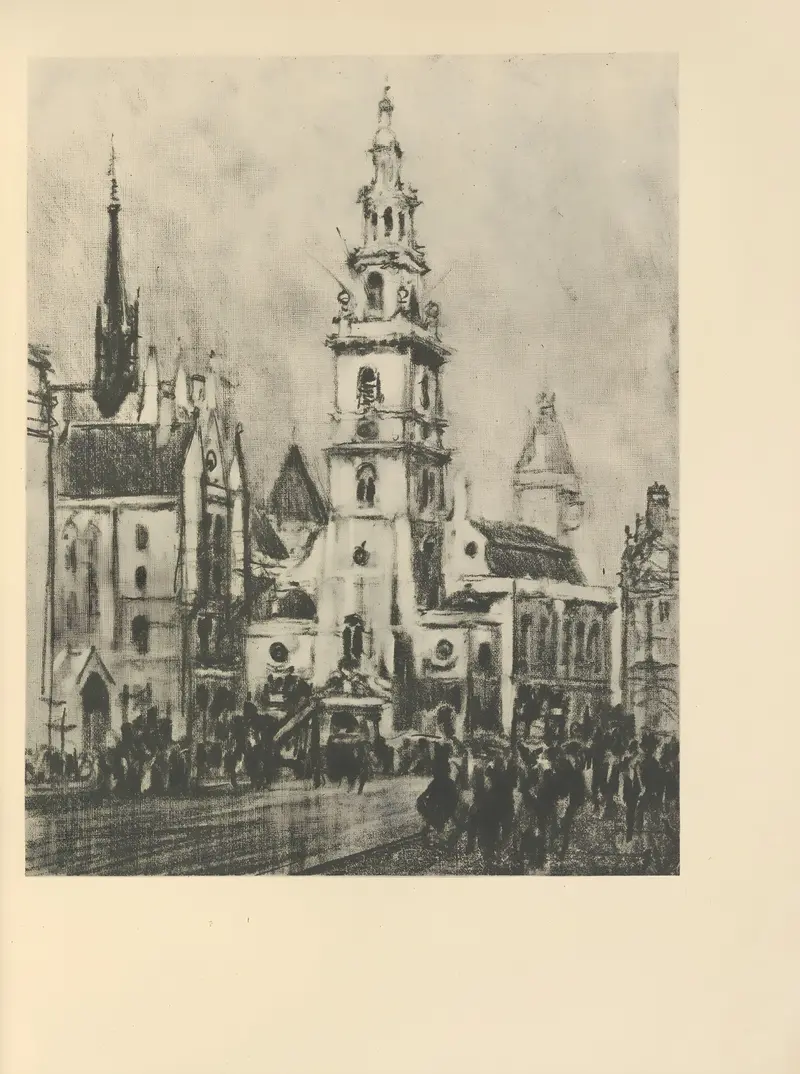
The Strand
Joseph Pennell
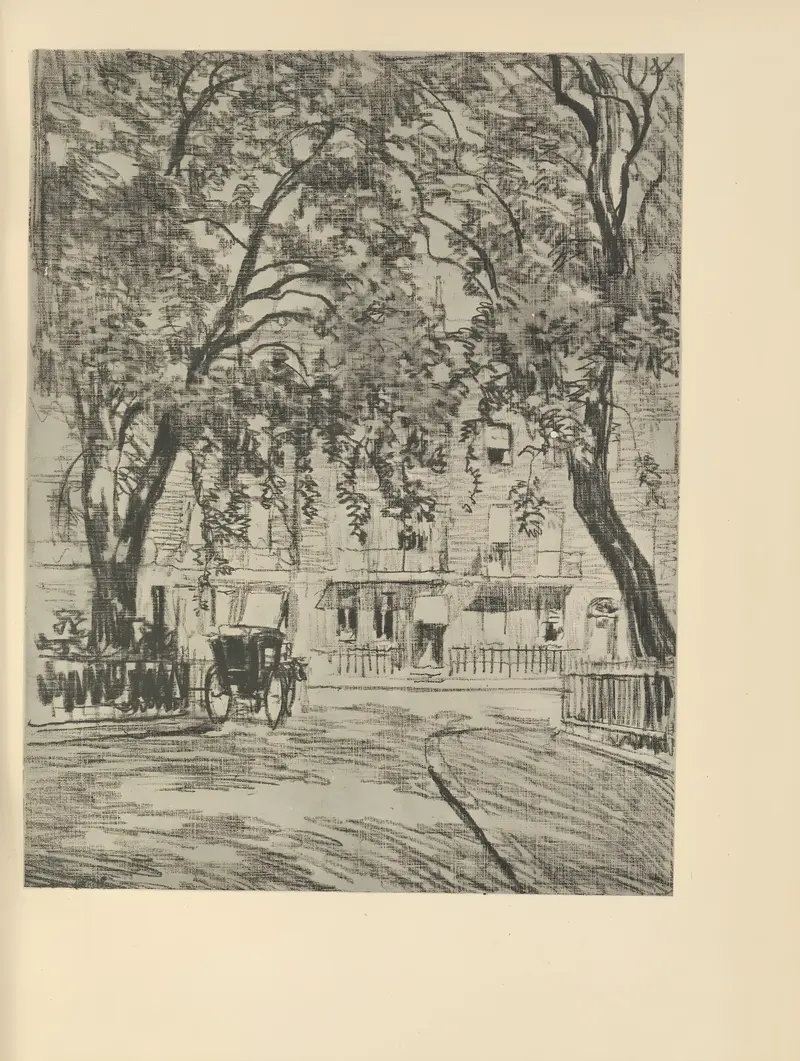
Woburn Square
Joseph Pennell





