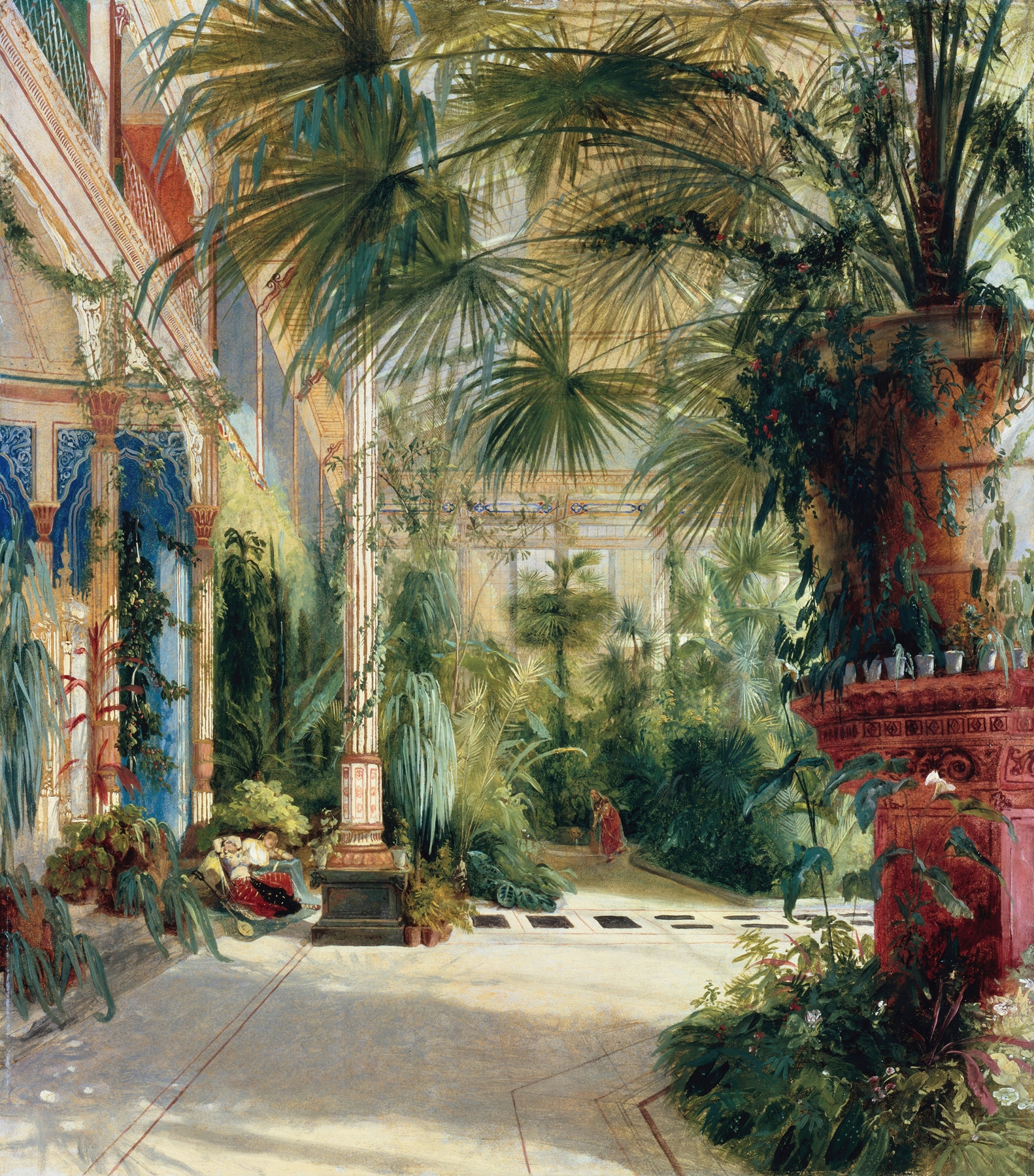
The Interior of the Palm House — History & Analysis
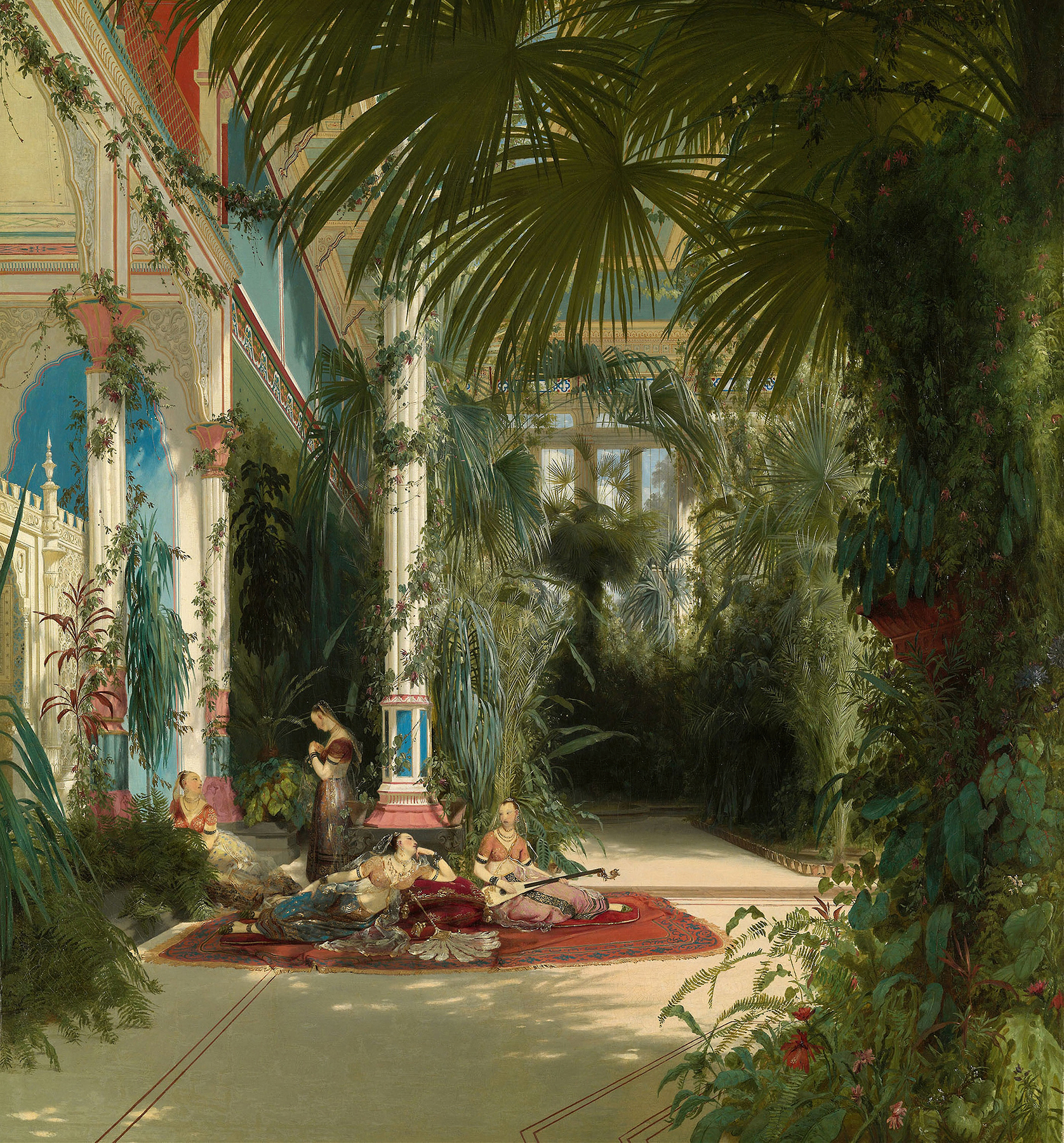
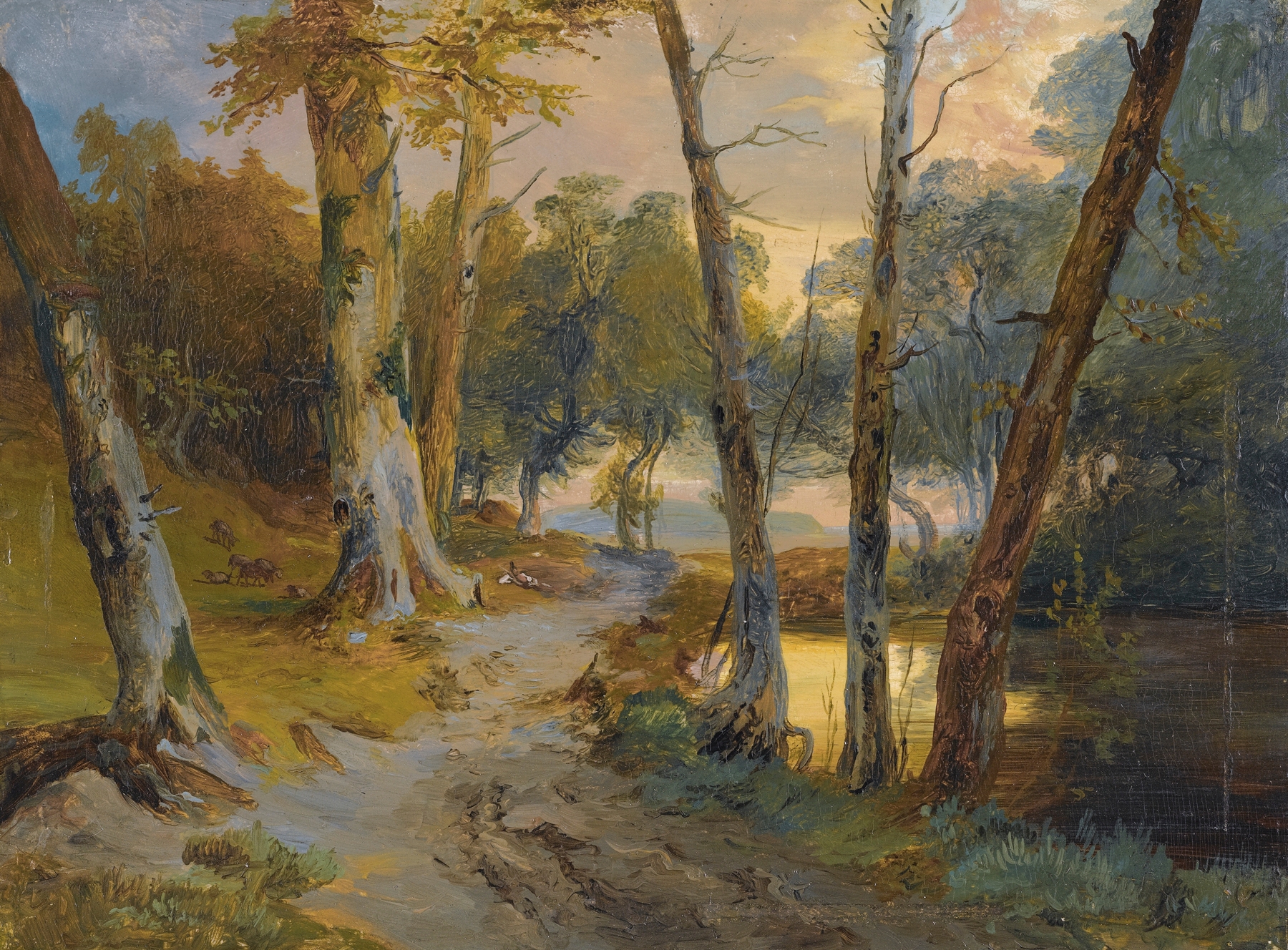
“Under the brush, chaos becomes grace.” What compels an artist to transform his inner turmoil into a serene portrayal of nature? Focus on the vibrant greens and playful play of light that emanates from the lush foliage. Look closely at the intricate interplay of shadow and sunlight dancing across the leaves, casting delicate patterns on the ground below. Notice how the meticulous brushstrokes create a sense of movement, inviting you into the space while grounding you in the tranquility of the scene.
The composition draws the eye toward an inviting path, beckoning you deeper into this lush oasis. Beneath this serene exterior lies a tension between nature and the artist's obsession with detail. The vivid, almost hyperreal colors evoke a sense of wonder, yet the precision with which each leaf and flower is rendered hints at an underlying compulsion, a desire to capture every nuance of beauty. The juxtaposition of the wild abundance of the garden with the carefully structured layout speaks to the struggle of balancing chaos and order, a reflection of the artist's own psyche.
Carl Blechen painted this piece in 1832, during a time of personal and artistic turmoil. Living in Berlin, he was grappling with his identity as an artist amidst the rising Romantic movement, which celebrated nature and emotion. His own battles with mental health informed his work, pushing him to explore the depths of beauty and obsession in his art, ultimately leading to a legacy that questioned the boundaries between reality and imagination.