The Interior of the Palm House on the Pfaueninsel Near Potsdam — History & Analysis
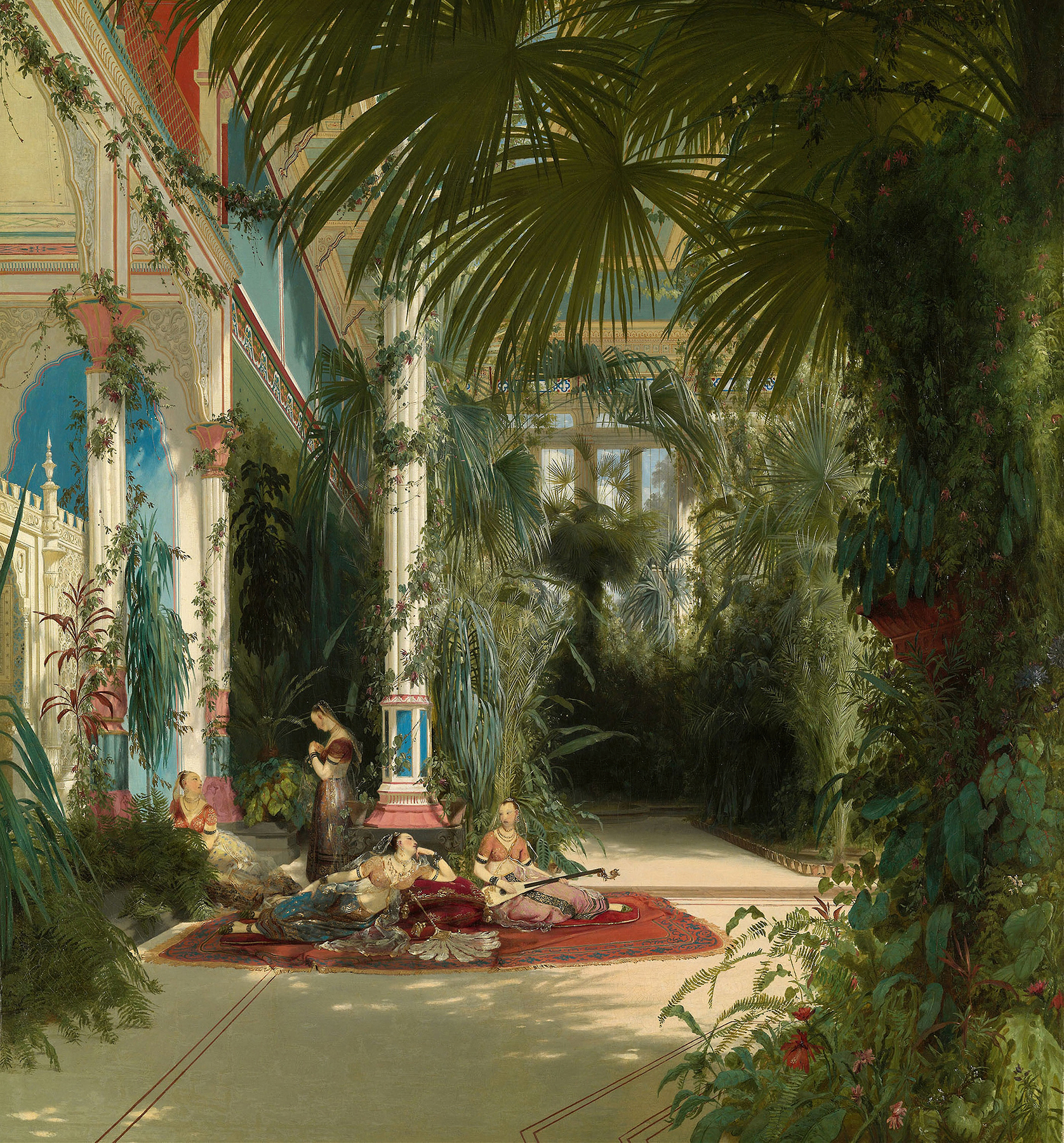
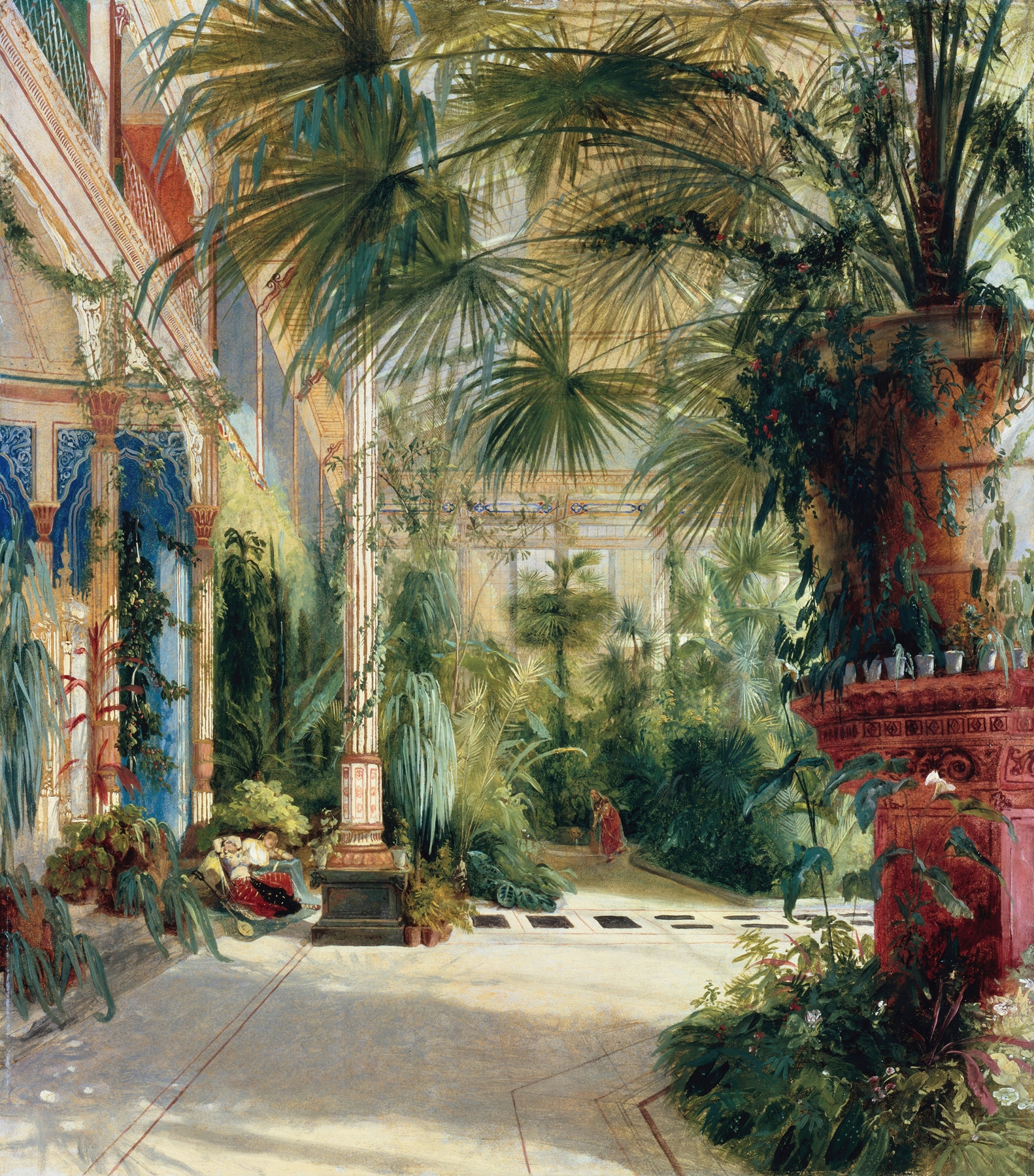
“Sometimes beauty is just pain, disguised in gold.” The striking contrast between serenity and turmoil often lingers within the confines of art, revealing narratives hidden beneath layers of delicate brushstrokes. Look to the left at the vibrant greens that stretch across the canvas, creating a lush backdrop for the palm house. Notice how the interplay of sunlight filters through the glass, casting intricate patterns that dance on the tiled floor. The viewer’s gaze is naturally drawn to the opulence of the foliage—each leaf rendered with meticulous detail—while the central structure of the palm house remains almost ghostly in its transparency, a delicate façade that belies the violence of nature attempting to reclaim its territory.
As you explore further, consider the juxtaposition of the cultivated space against the wild, chaotic growth beyond the glass walls. The palm house stands as a symbol of human intervention amid a turbulent world, a fragile sanctuary where beauty flourishes in the face of unseen forces. The vibrant colors, though inviting, hint at a darker undertone; they whisper of the struggle inherent in creation, where the pursuit of beauty can sometimes lead to destruction.
Created in 1834 while Blechen was in Potsdam, The Interior of the Palm House on the Pfaueninsel captures a transitional period in his life. At this time, he was grappling with both personal challenges and the shifting dynamics of the Romantic movement, which sought to celebrate the sublime in nature. This work reflects his deep engagement with landscape, blending realism and fantasy, and marks a significant moment in his artistic evolution.