The Interior of the Palm House on the Pfaueninsel Near Potsdam — History & Analysis
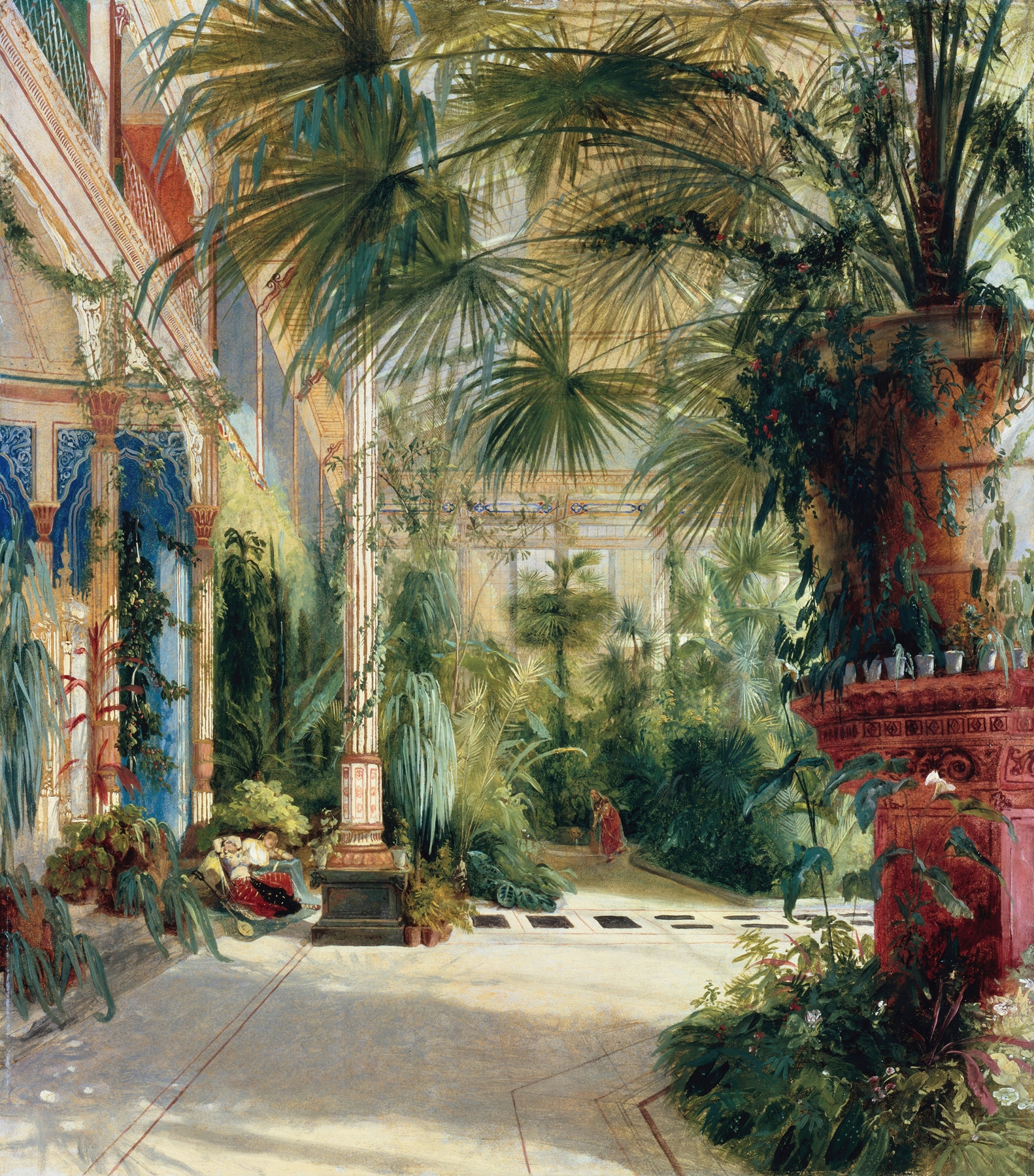
Can paint confess what words never could? In The Interior of the Palm House on the Pfaueninsel Near Potsdam, memory unfurls like a delicate leaf, whispering secrets of nature's embrace. Look to the center of the canvas, where a lush palm draws the eye with its extravagant fronds stretching towards the ceiling, creating a living canopy. Notice how warm light filters through glass panes, illuminating the vibrant greens and shadows that dance across the polished floor.
The careful composition gives a sense of depth, inviting the viewer to step inside this serene oasis, where man-made architecture meets the untamed beauty of nature. Within the tranquil space, contrasts abound. The lushness of the plants speaks to life and growth, while the structured architecture underscores human ingenuity. A sense of nostalgia permeates the air, as if this sanctuary is both a refuge and a reminder of time’s passage.
The meticulous brushwork reveals Blechen’s affection for detail, capturing not just the scene, but the unspoken dialogue between the organic and the constructed, inviting contemplation on the transience of beauty. In 1834, Blechen was immersed in the Romantic movement, capturing the sublime aspects of nature and its emotional resonance. He painted this work during a time of personal exploration and artistic innovation, as Romanticism began to shape the visual narrative of the era. Located near Berlin, the Palm House was a symbol of natural abundance, perfectly aligning with the artist’s vision of portraying the intimate relationship between humans and the natural world.