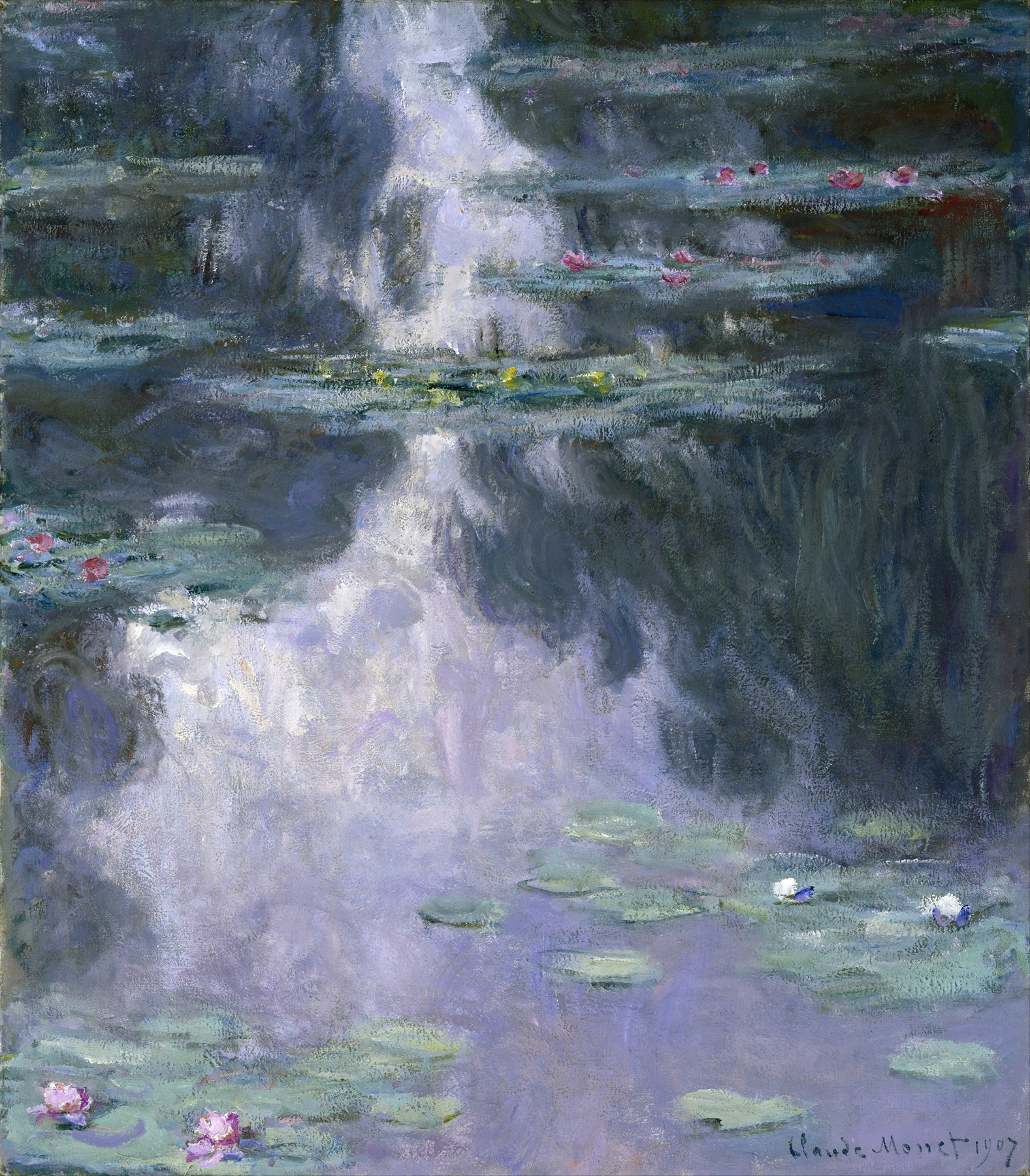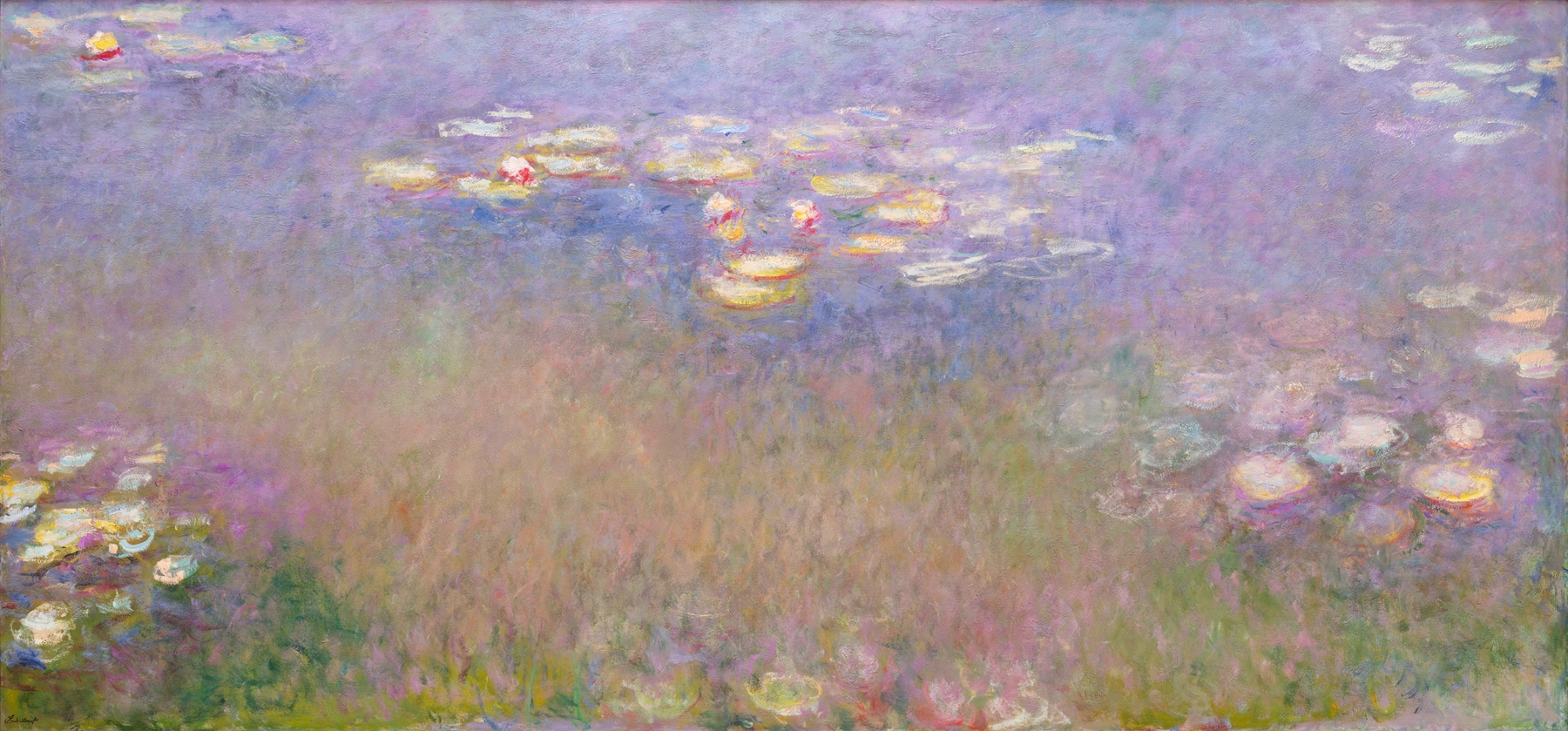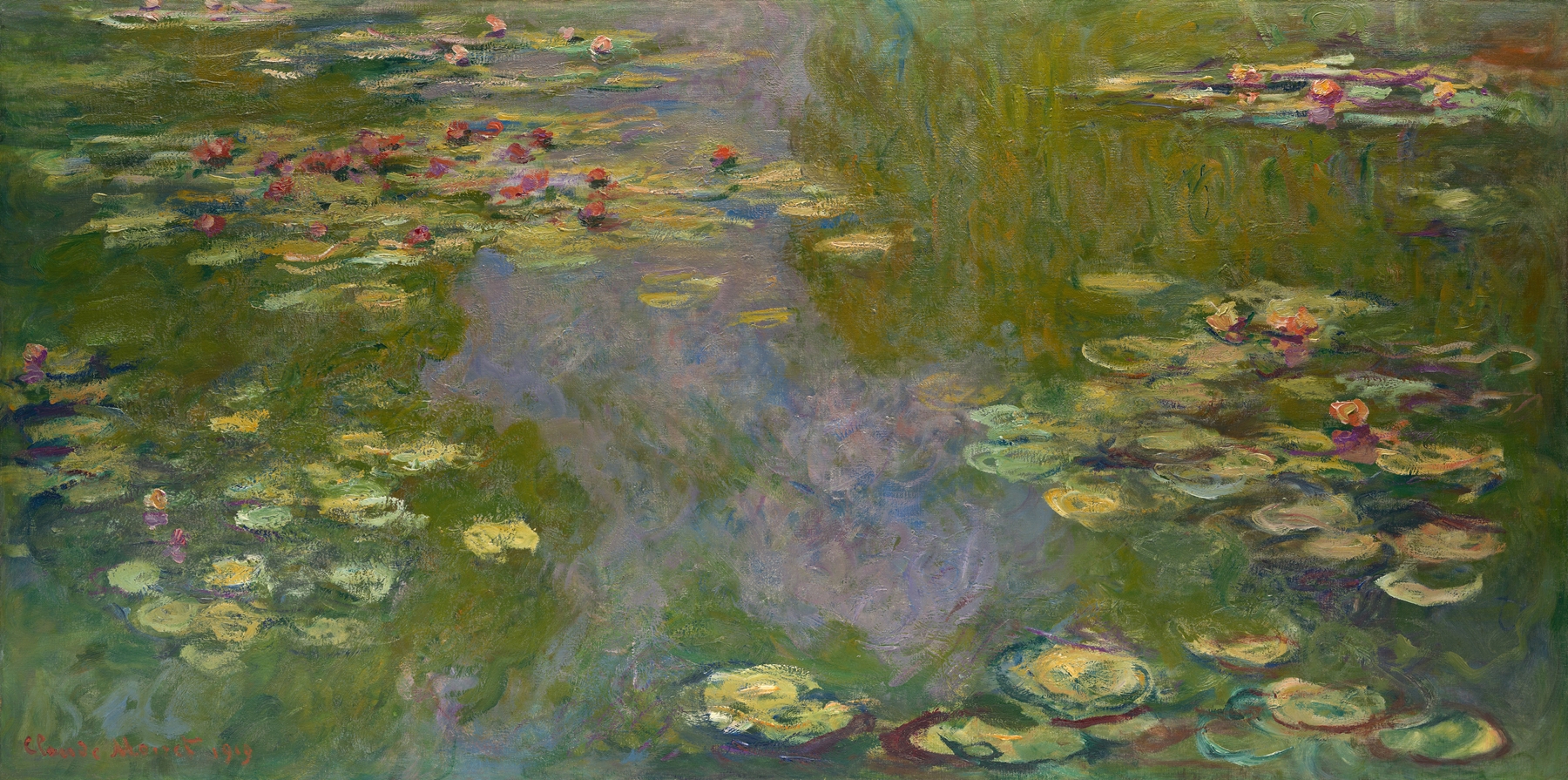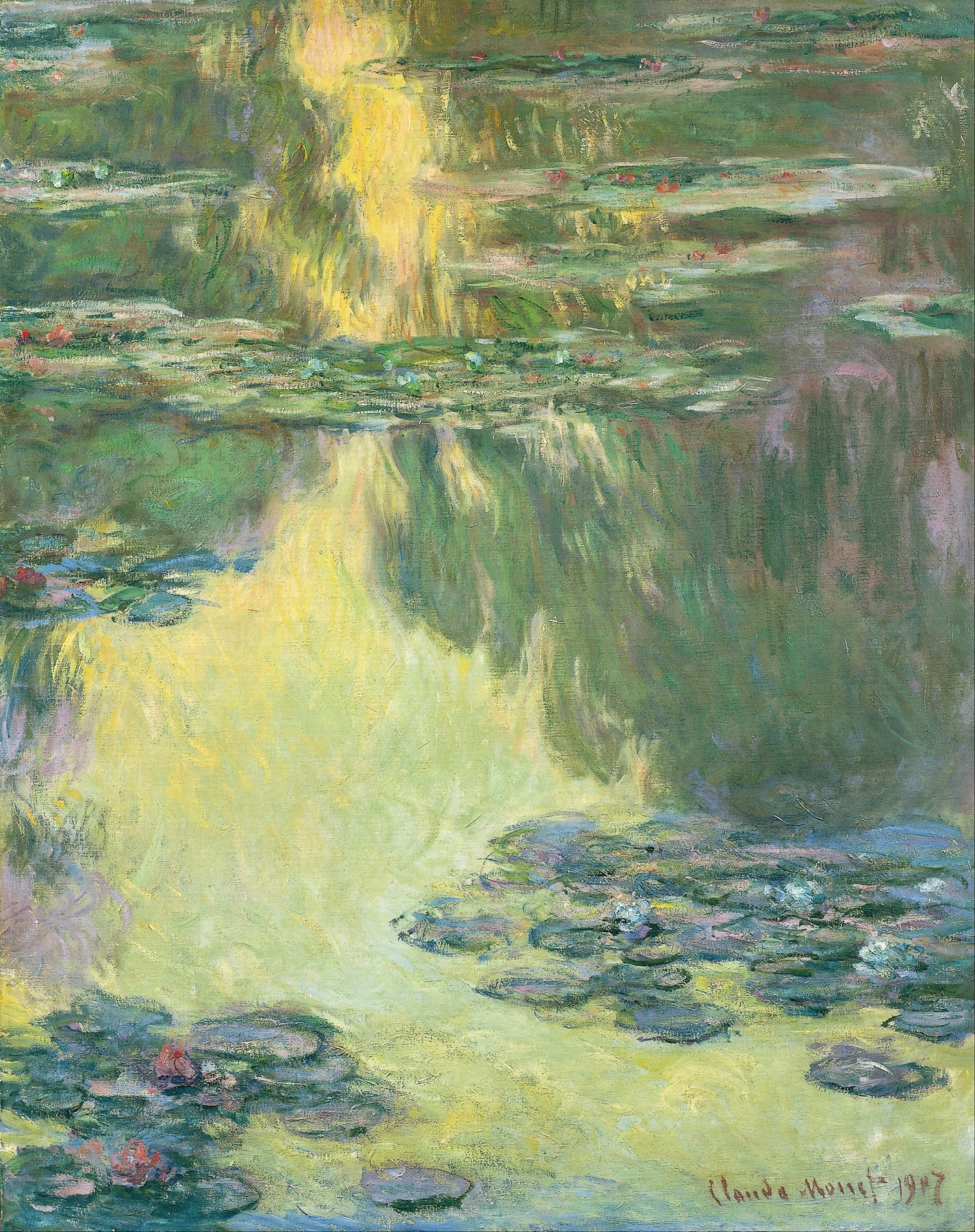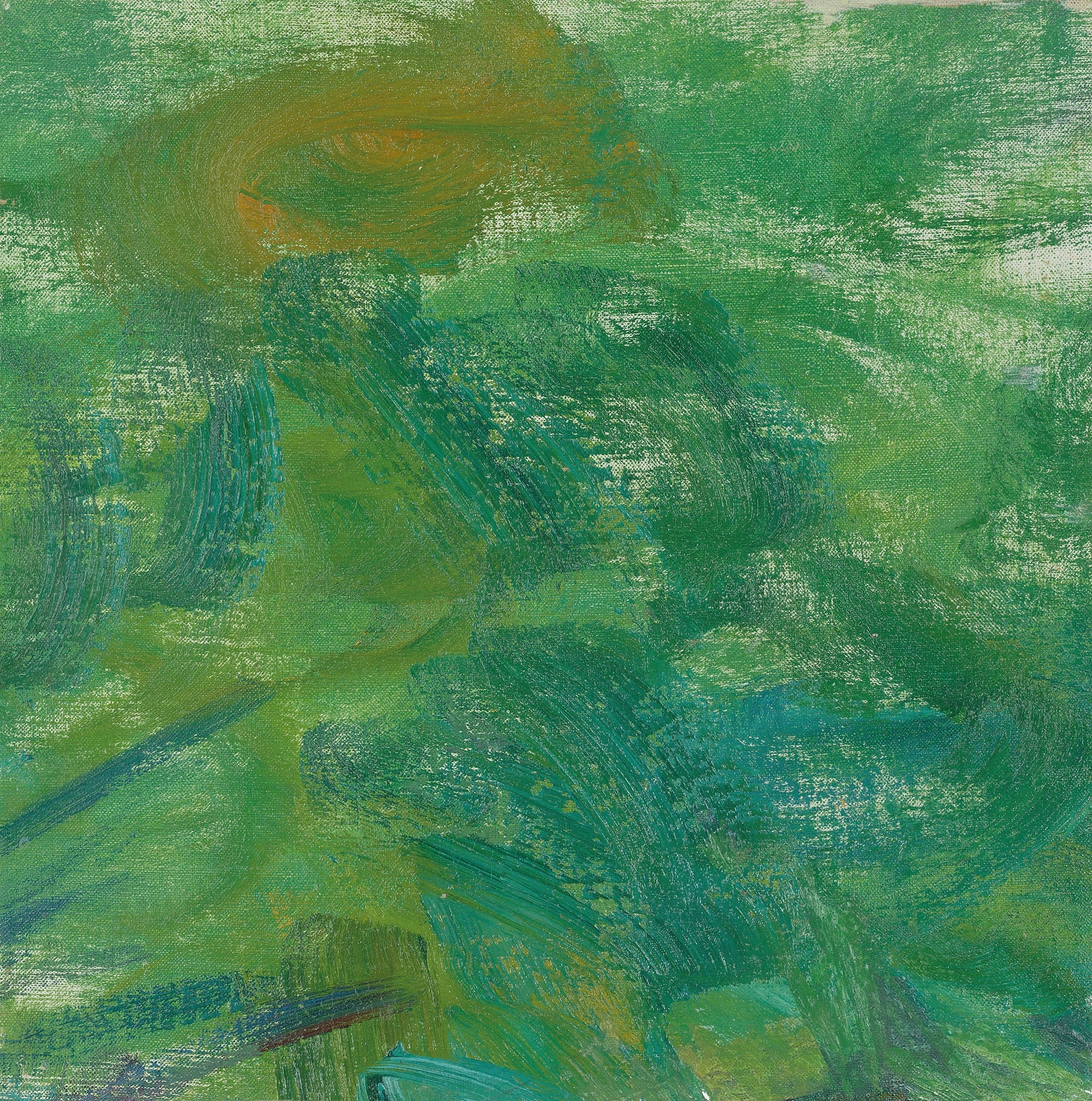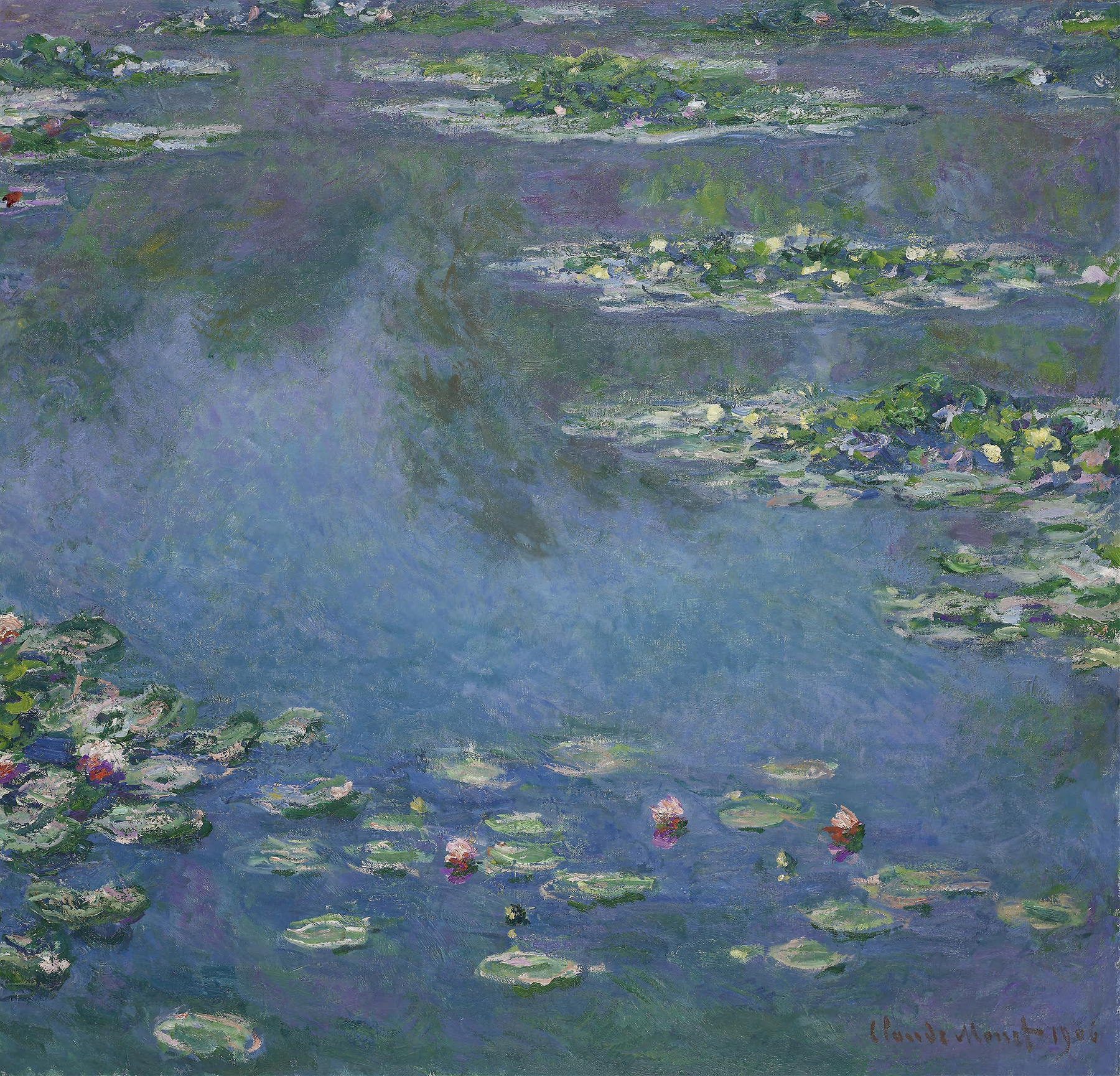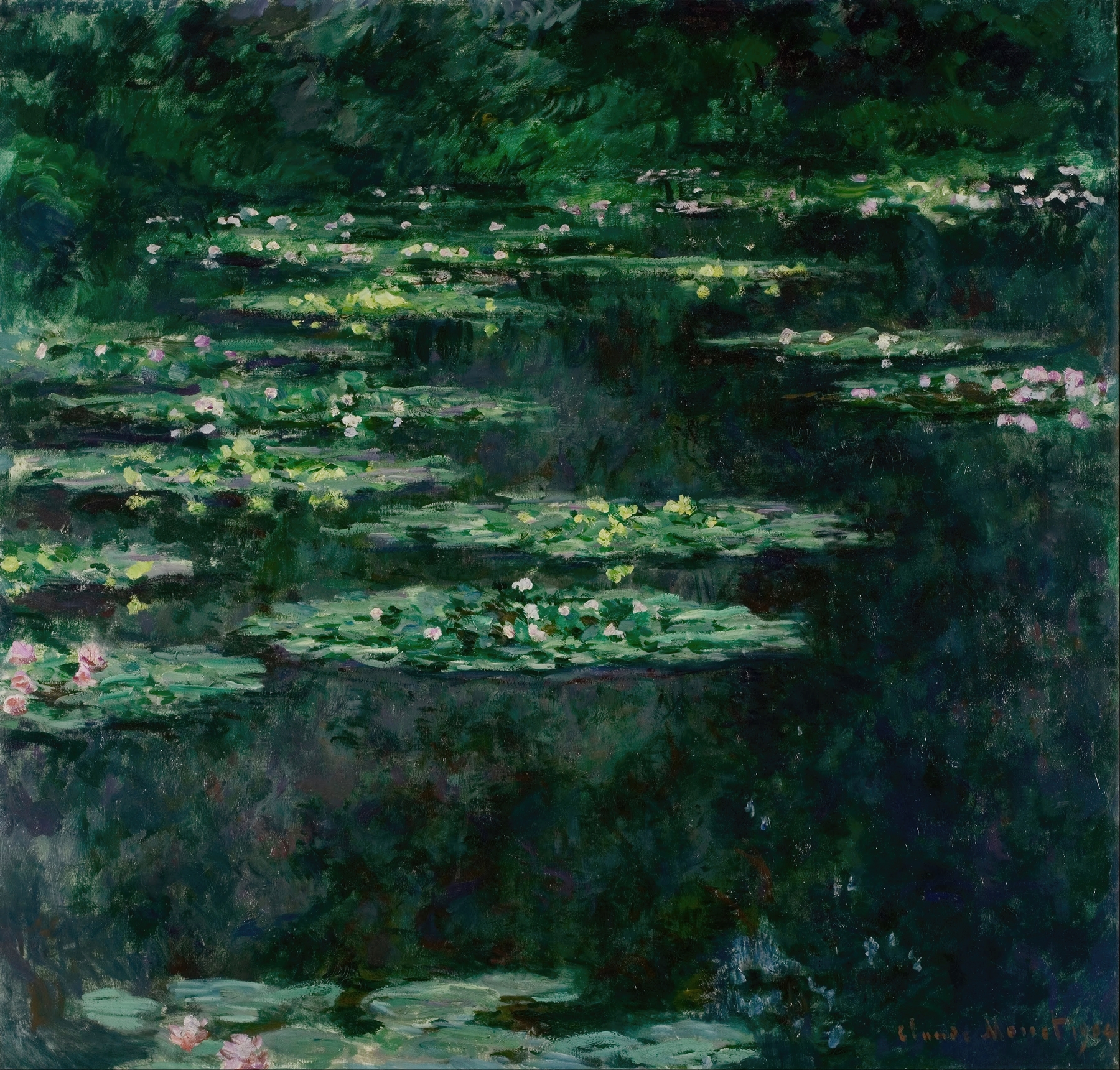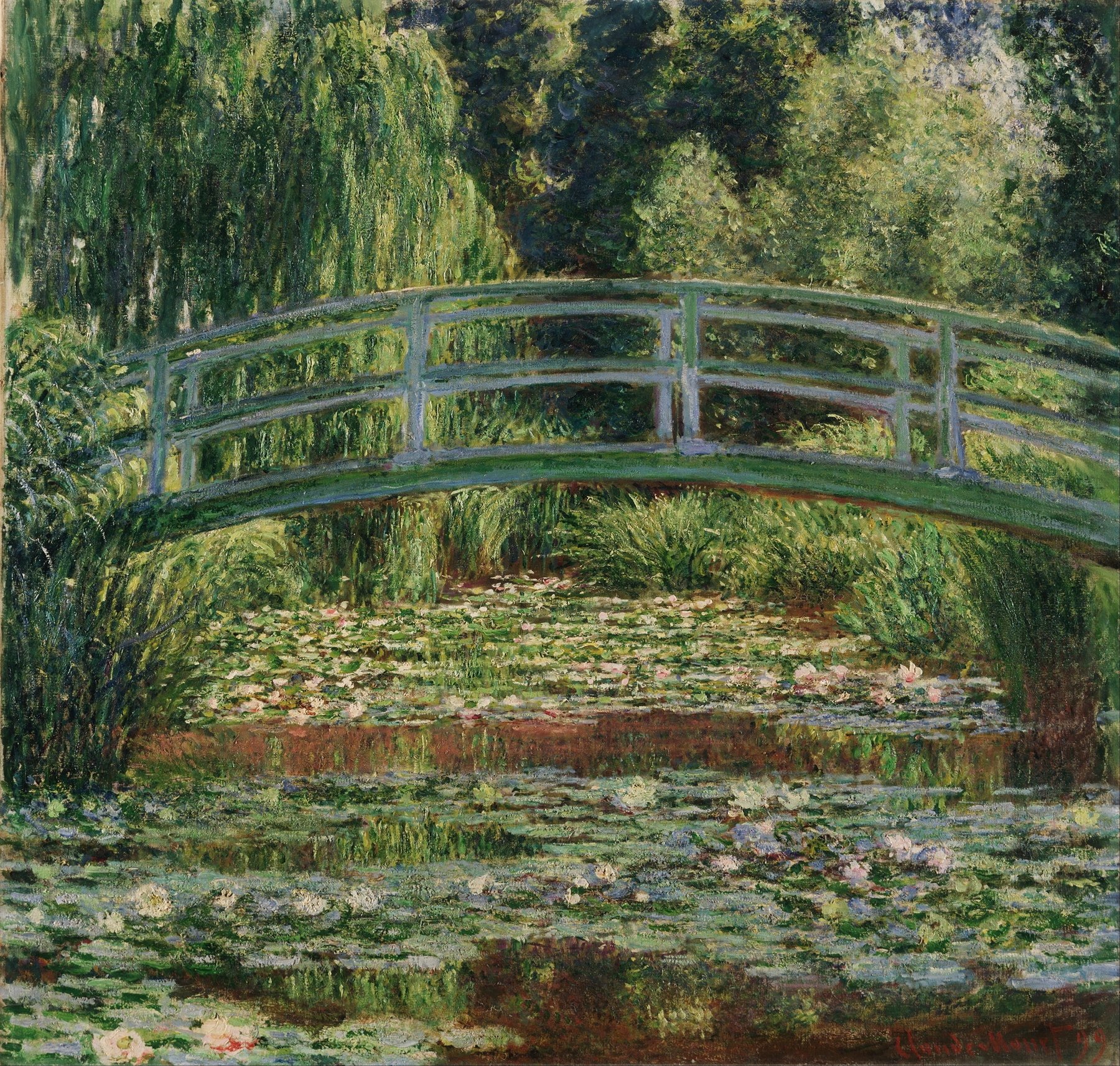
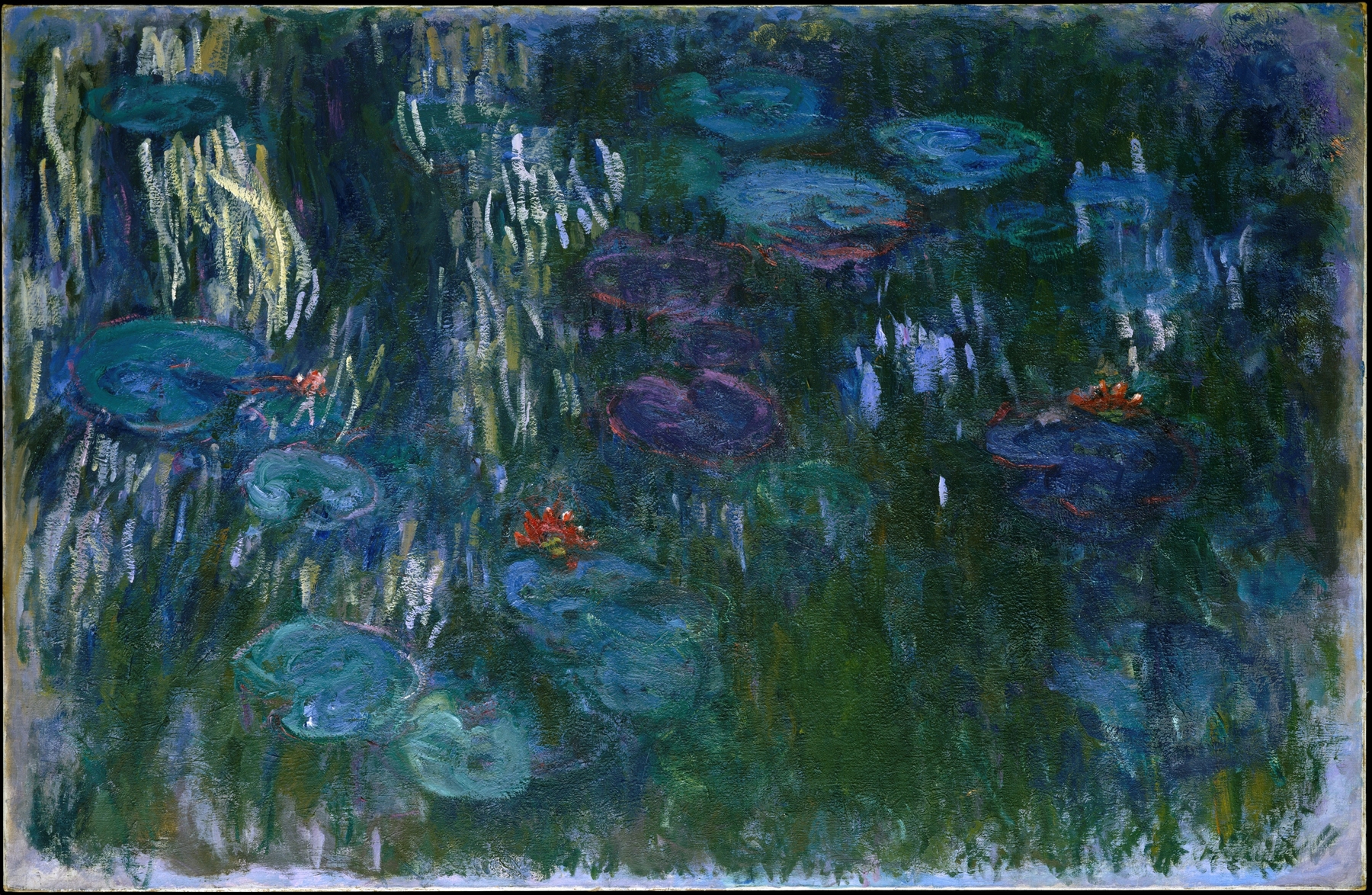
Can beauty exist without sorrow? Claude Monet's lush portrayal of the water lily pool, with its iconic Japanese footbridge, invites us to ponder this profound question, reflecting the tension between serenity and the complexities of existence. Look to the left at the delicate arch of the footbridge, where subtle strokes of emerald green invite you into the composition. Notice how the vibrant pinks and whites of the water lilies bloom against the shimmering surface of the water, their reflections dancing in soft blues and greens. The interplay of light, captured through rapid brushwork, creates a sense of movement, while the juxtaposition of warm and cool colors evokes a tranquil yet dynamic atmosphere. Monet's technique pushes the viewer to feel the essence of nature rather than merely observe it. Beneath the surface beauty lies a deeper meditation on transience and memory. The water lilies, ephemeral in their bloom, suggest the fleeting moments of joy within the cycle of life. The bridge, both a literal and metaphorical crossing, signifies the connection between the tangible world and the fleeting, a reminder of how beauty often emerges alongside sorrow. This harmonious scene conceals Monet’s own struggles with loss, inviting us to embrace both light and shadow as essential parts of our experience. In 1899, while residing in Giverny, Monet was fully immersed in his exploration of light and color, a time when he sought to capture the essence of nature's beauty. As an influential figure in the Impressionist movement, he faced both personal and artistic challenges, reflecting a world in transition. It was during this period that he cultivated his garden into a celebrated subject, transforming his surroundings into an eternal canvas that continues to resonate with viewers today.