The Lighthouse at Honfleur — History & Analysis
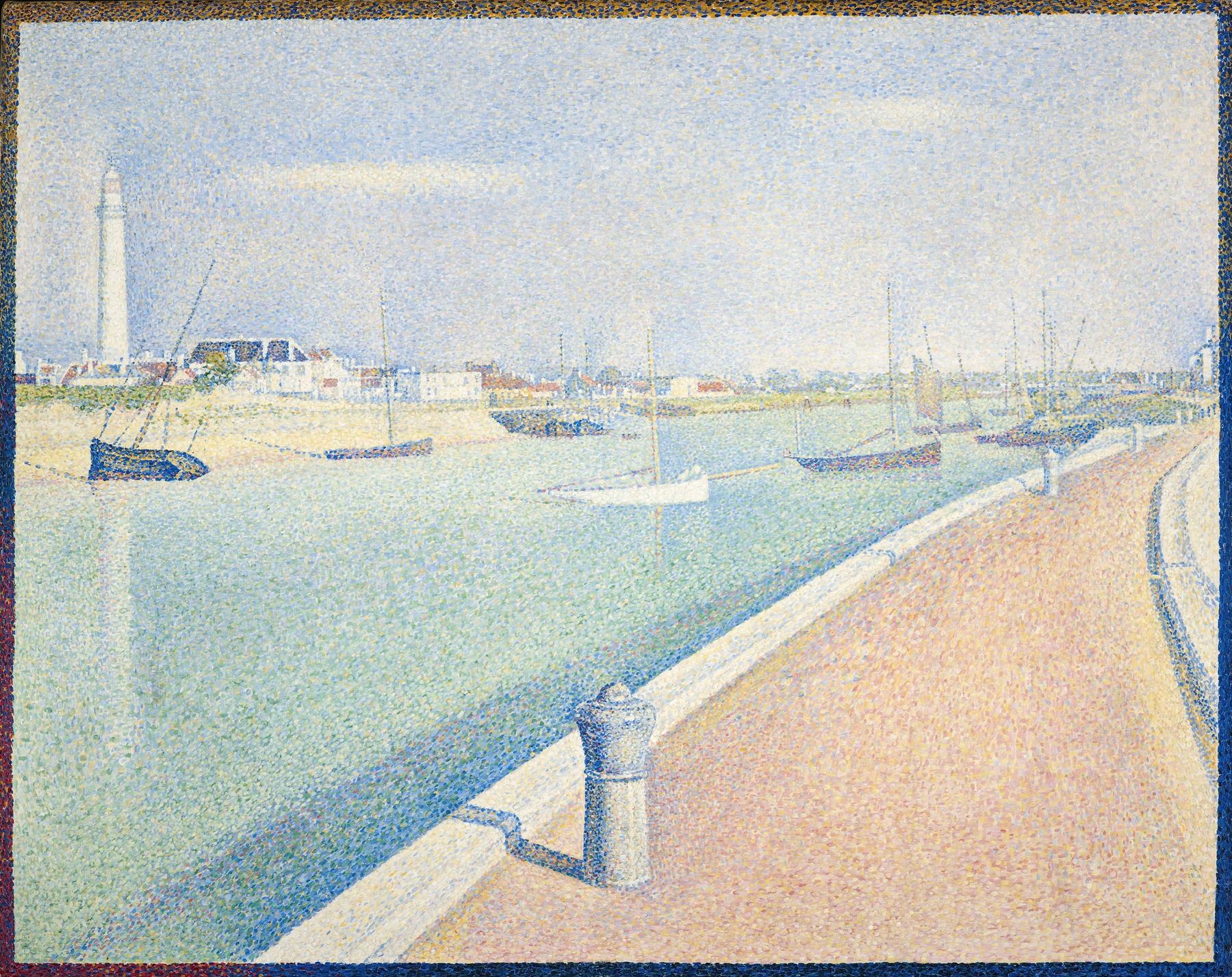
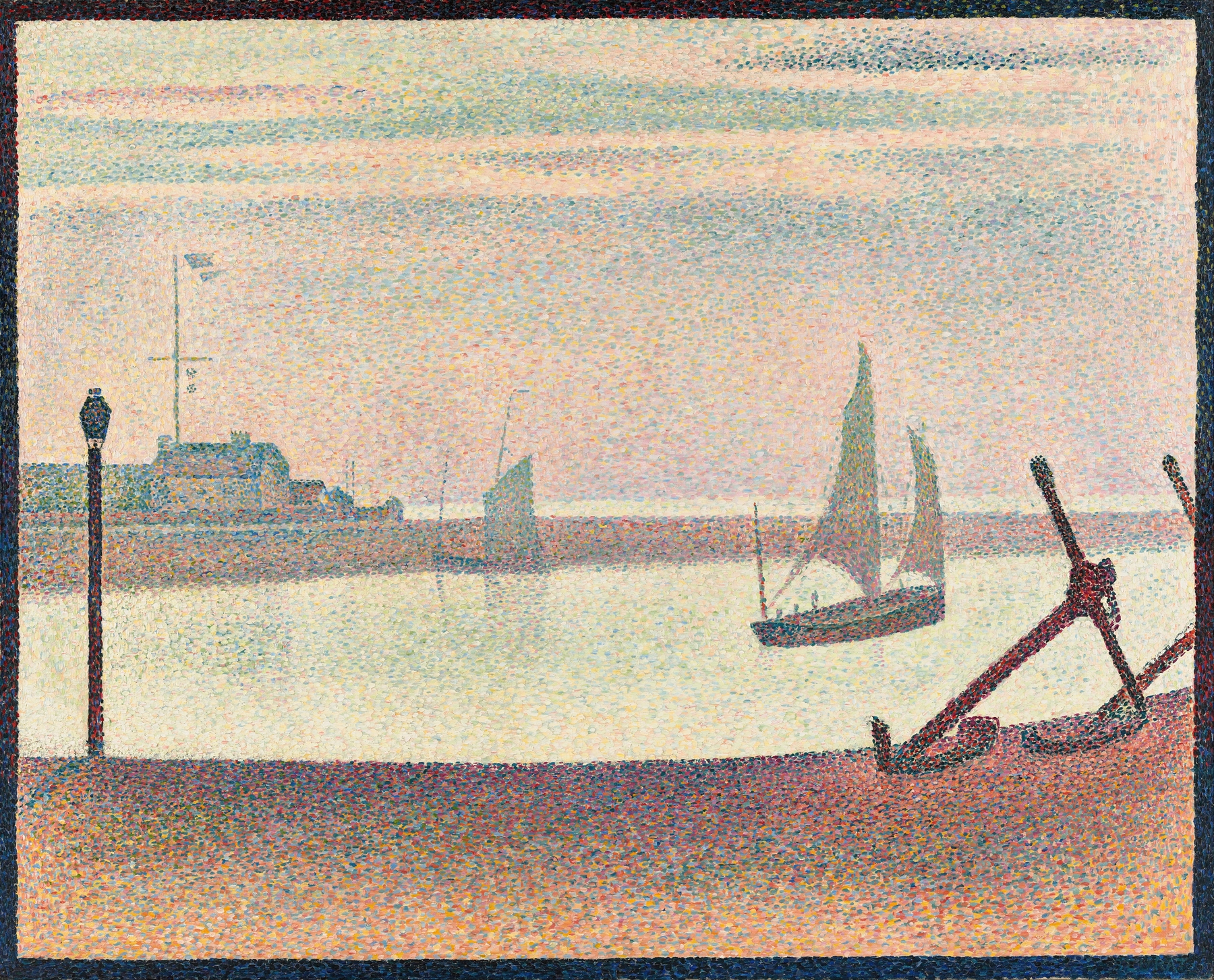
Could a single brushstroke hold eternity? In The Lighthouse at Honfleur, a fleeting moment is captured, distilled into a vivid memory where the past and present collide in a dance of color and light. Look to the center of the canvas, where the lighthouse stands resolute against a backdrop of deep blue—a beacon of stability amidst a shimmering sea of vibrant hues. The flickering brushstrokes create a sensation of movement, as if the water itself quivers with life.
Notice how the warm sunlight spills over the shoreline, casting soft reflections that shimmer like fragmented dreams against the cool tones of the harbor, inviting contemplation of both beauty and transience. Within this serene composition lies an interplay of permanence and ephemerality. The lighthouse, steadfast and unwavering, symbolizes guidance and safety, while the undulating waves remind us of the inevitable passage of time. This duality evokes a sense of nostalgia, whispering secrets of memories held tightly yet always just out of reach, captured in the delicate balance of light and shadow.
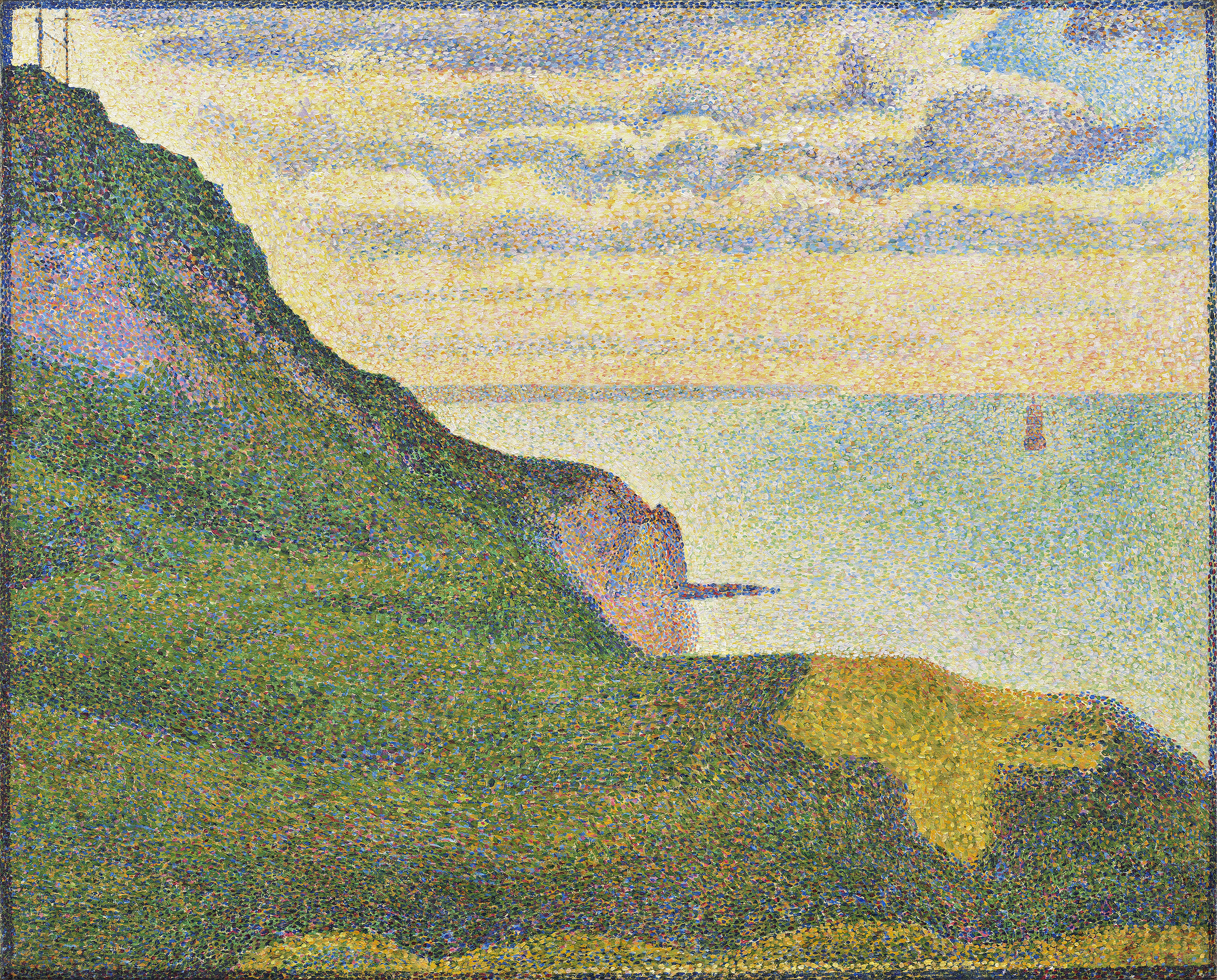
The viewer is led to ponder what emotions linger beneath the surface of this tranquil scene. In 1886, the artist was navigating his own internal conflicts while seeking to establish a unique voice within the Impressionist movement. Created in France, this work reflects Seurat's exploration of color theory and pointillism, as he sought to convey not just a scene, but an entire world within each carefully placed dot. It was a time of artistic experimentation, and this piece stands as a testament to his pursuit of a deeper understanding of memory and perception.