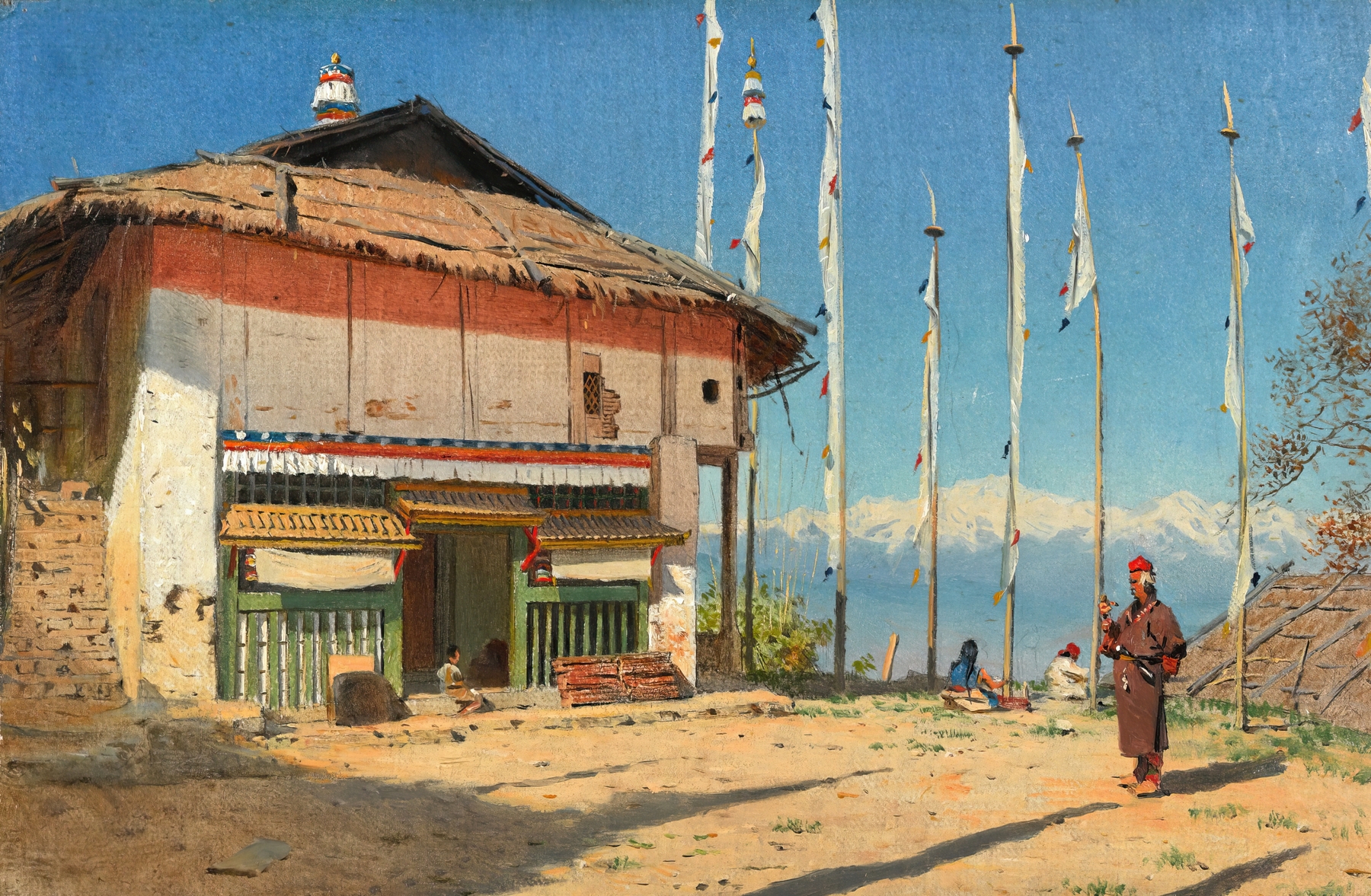
The main temple of Tassiding monastery. Sikkim — History & Analysis
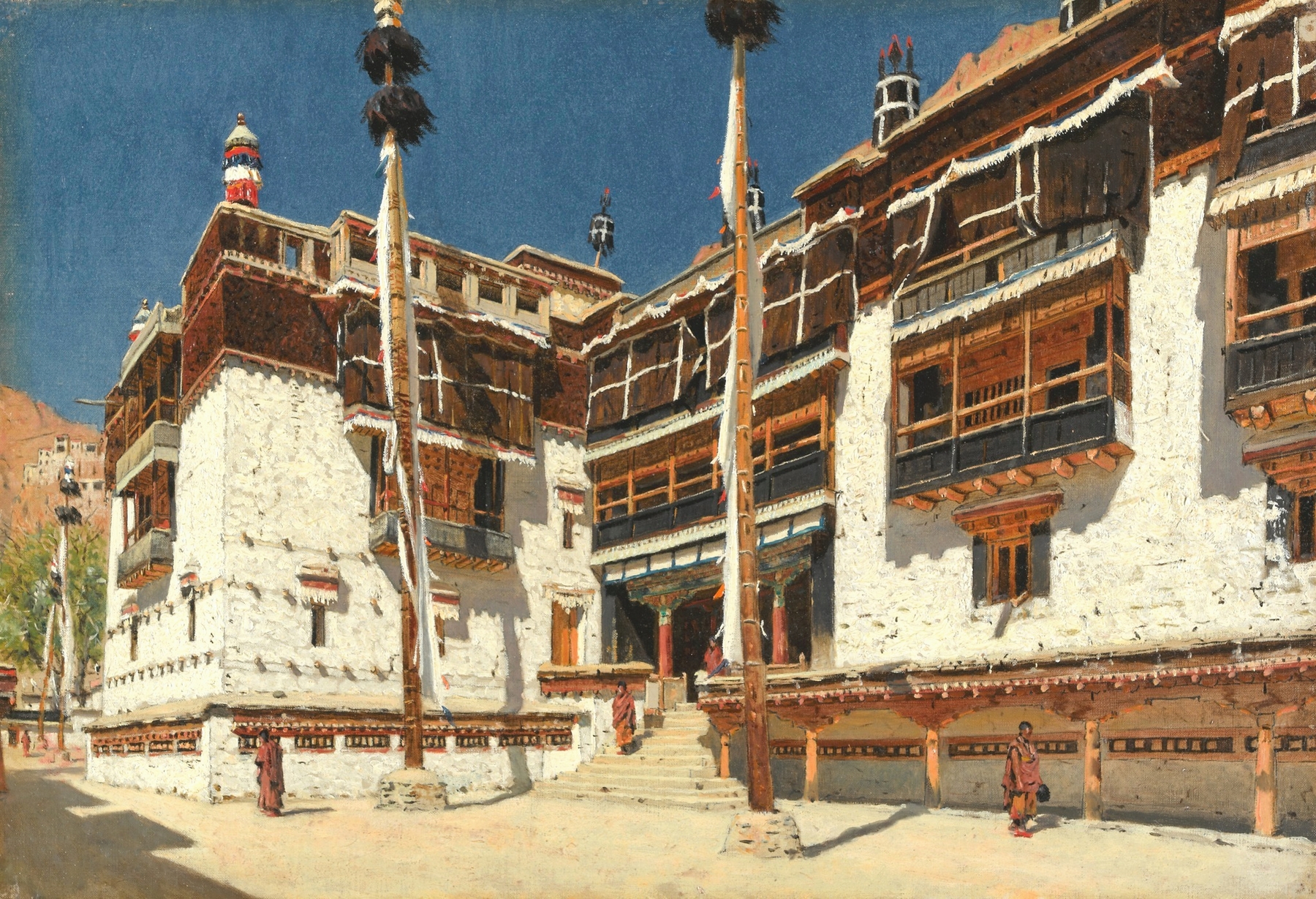
“The canvas doesn’t lie — it simply waits.” In the stillness of a sacred space, emptiness rings with profound resonance. The silence, palpable and haunting, invites contemplation; it is in this void that the spirit of the place breathes. Look to the center of the canvas, where the main temple stands, an imposing yet serene structure that dominates the composition. Notice how the muted colors of ochre and ivory blend seamlessly with the misty backdrop of the Himalayas, creating an atmosphere infused with tranquility.
The interplay of light and shadow plays across the temple’s intricate details, guiding your gaze upward toward its ornate roof. Each brushstroke captures the essence of the architecture, grounding the viewer in a moment of stillness amidst the vastness of nature. In the foreground, sparse vegetation and rocky terrain add to the sense of desolation and solitude, emphasizing the temple's isolation. The contrast between the man-made marvel and the unyielding landscape highlights themes of spiritual resilience in the face of nature’s indifference.
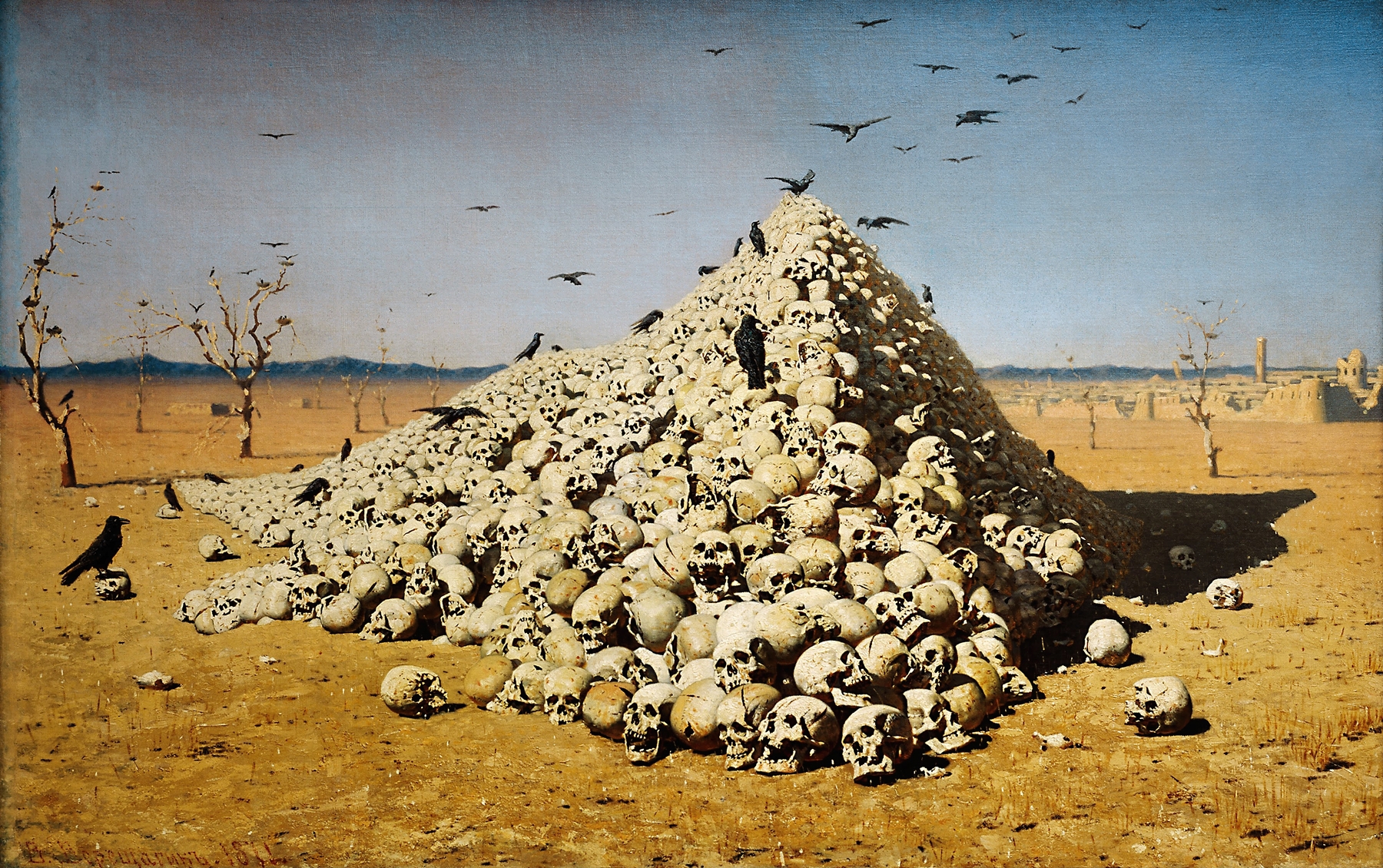
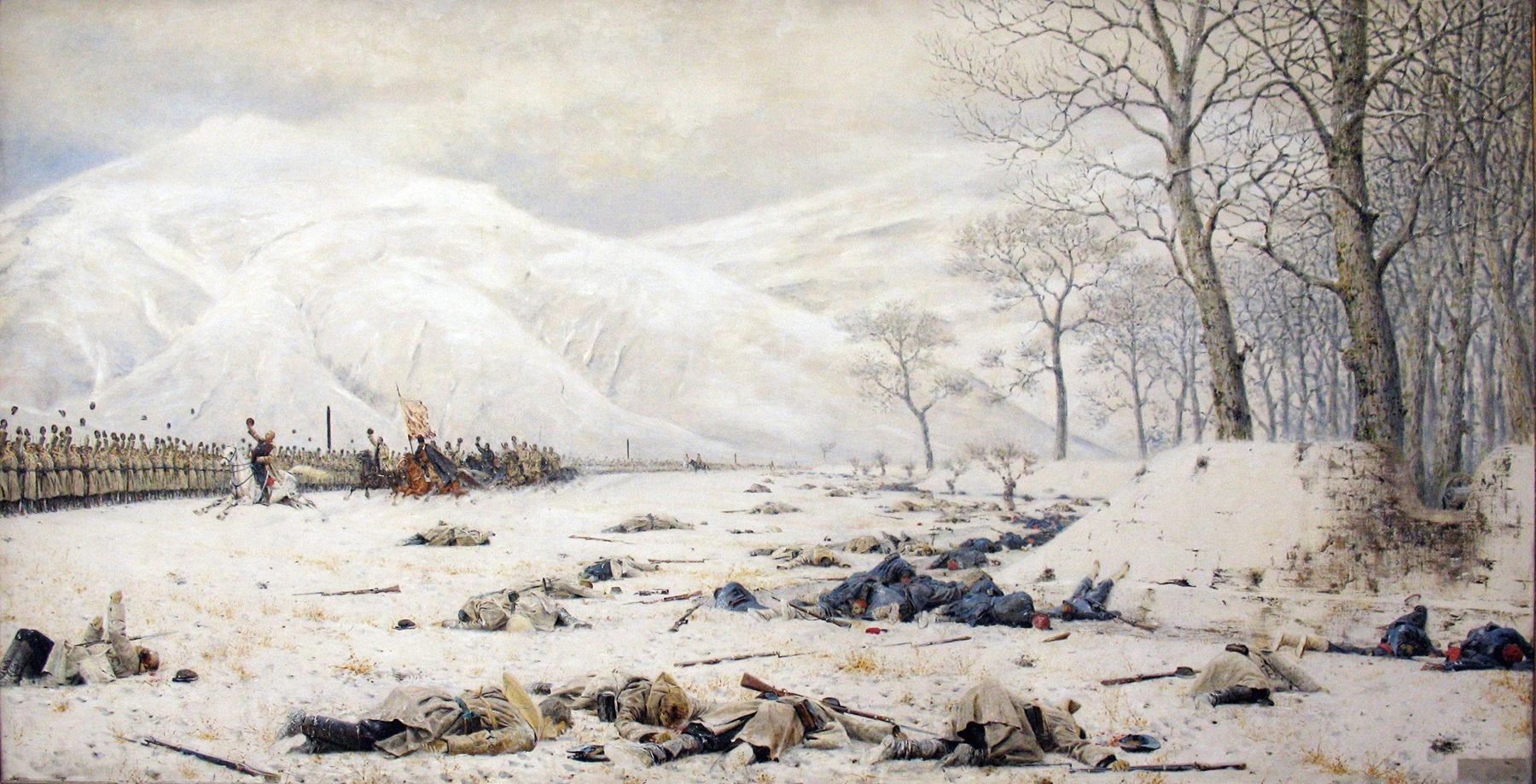
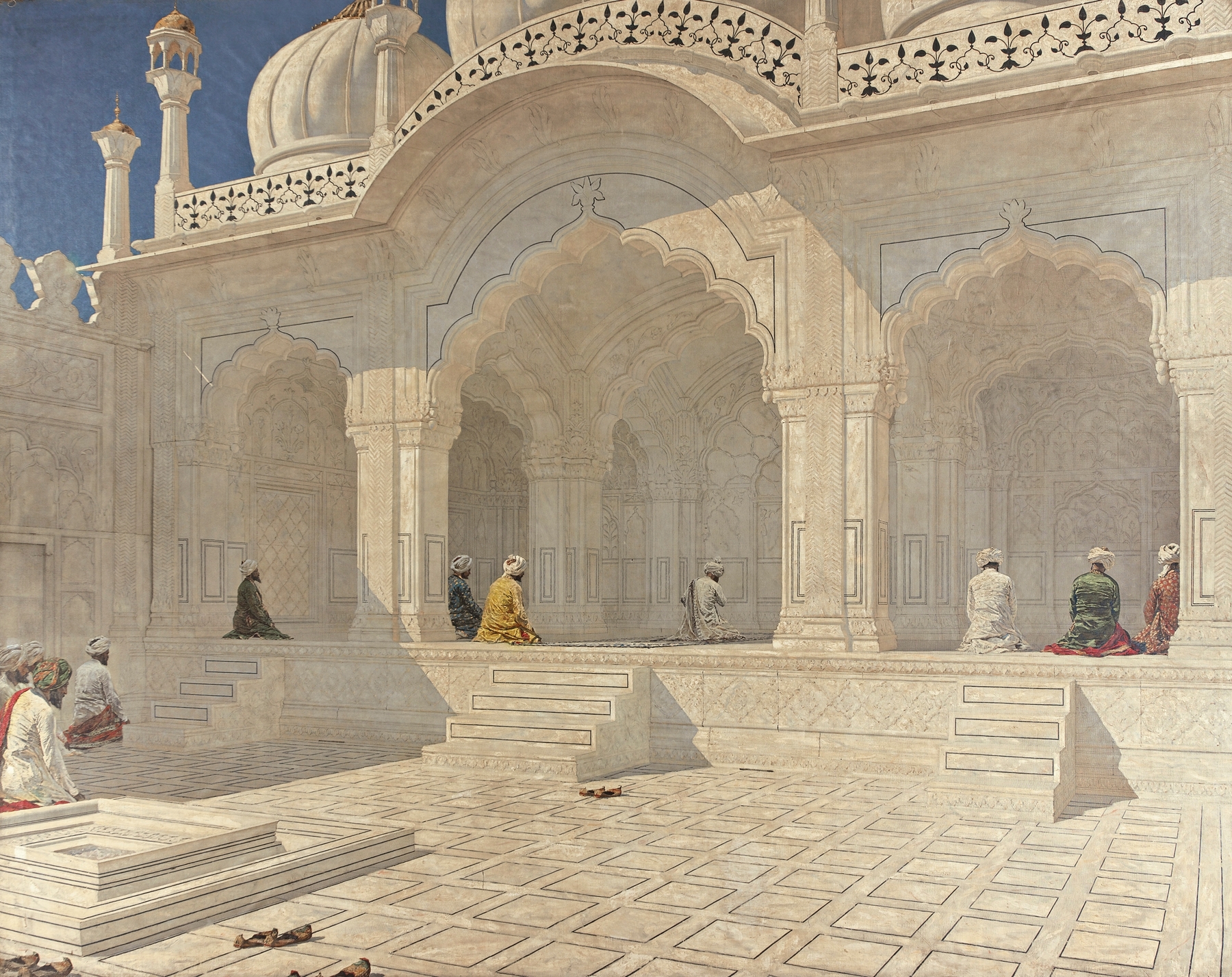
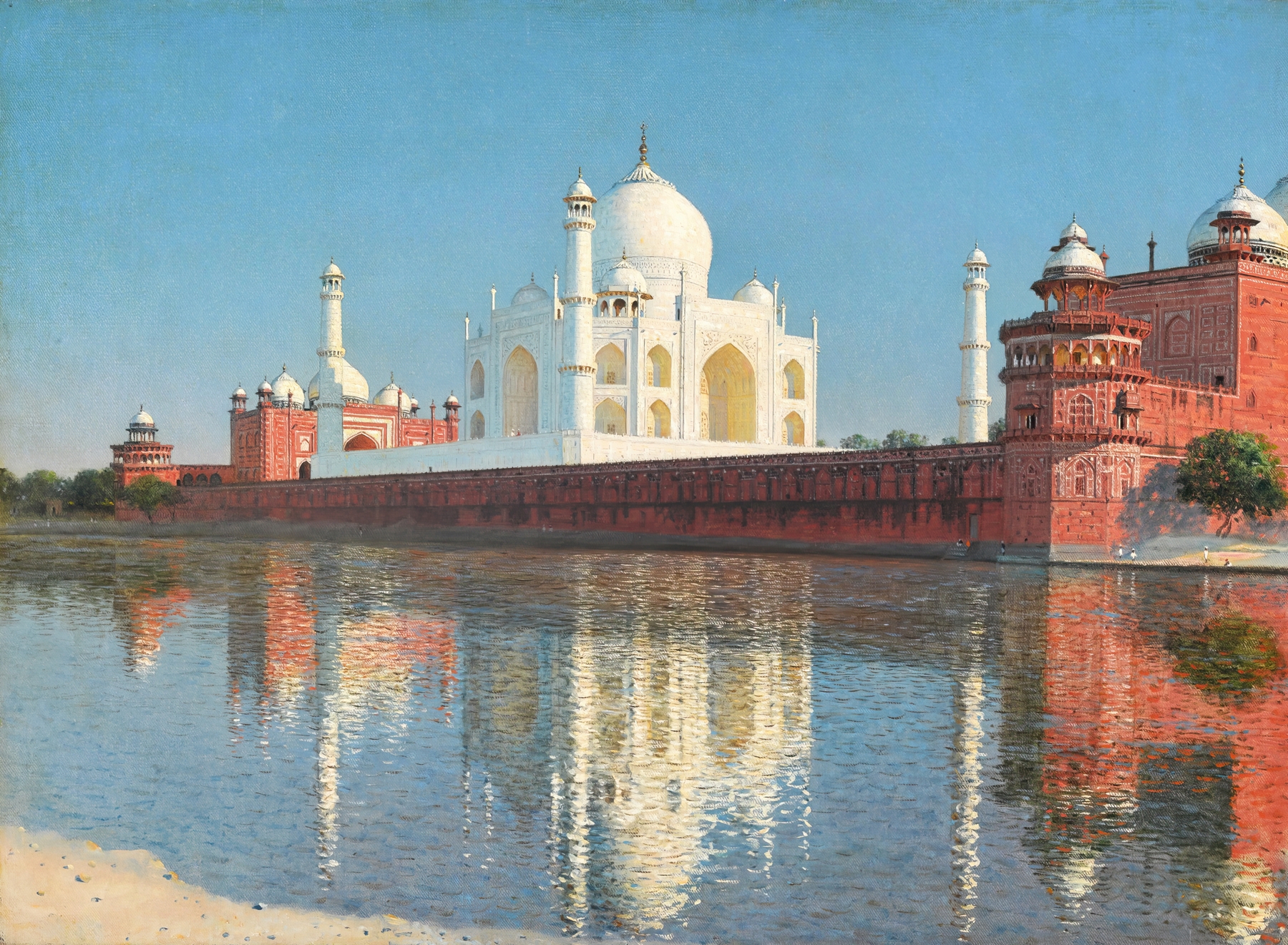
Each element within the scene reflects a deeper narrative of faith, reverence, and the human experience intertwined with the boundless beauty of the world. Vasily Vereshchagin painted this work in 1875, during a period marked by his extensive travels throughout Asia. The artist, a captivating figure known for his depictions of war and cultural landscapes, sought to capture the essence of the cultures he encountered. At this time, Vereshchagin was deepening his understanding of Eastern spirituality, which profoundly influenced his painting style and thematic choices.