The national game — History & Analysis
Could a single brushstroke hold eternity? In the delicate dance of motion and stillness, the power of movement breathes life into every corner of this artwork. Look to the center, where vibrant figures engage in a game of cricket, their energy palpable against the backdrop of sunlit grass. Notice how the artist employs sweeping strokes, imbuing the scene with a sense of rhythmic flow that mirrors the action on the field.
The palette bursts with lively greens and warm earth tones, capturing the golden hour's embrace, while dappled light creates a playful interplay of shadow and brilliance across the players and their surroundings. Beneath the surface, the painting speaks to the spirit of camaraderie and nationhood, capturing a quintessential moment in Australian culture. The dynamic poses of the players hint at both competition and collaboration, suggesting a deeper societal narrative woven through sport. There’s a juxtaposition between the concentrated focus of the batter and the relaxed demeanor of the fielders, reminding us of the dual nature of play—intense yet joyful.
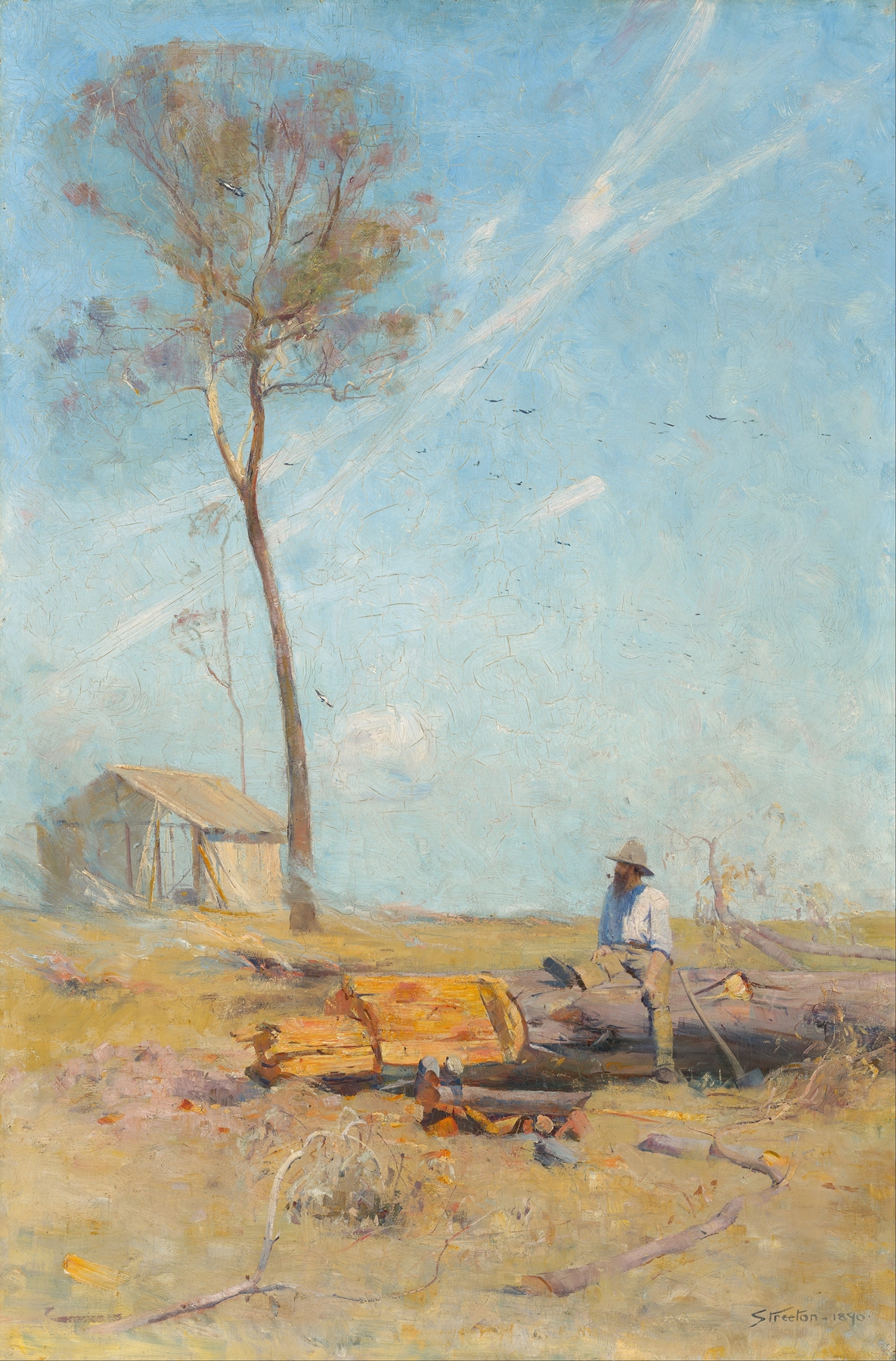
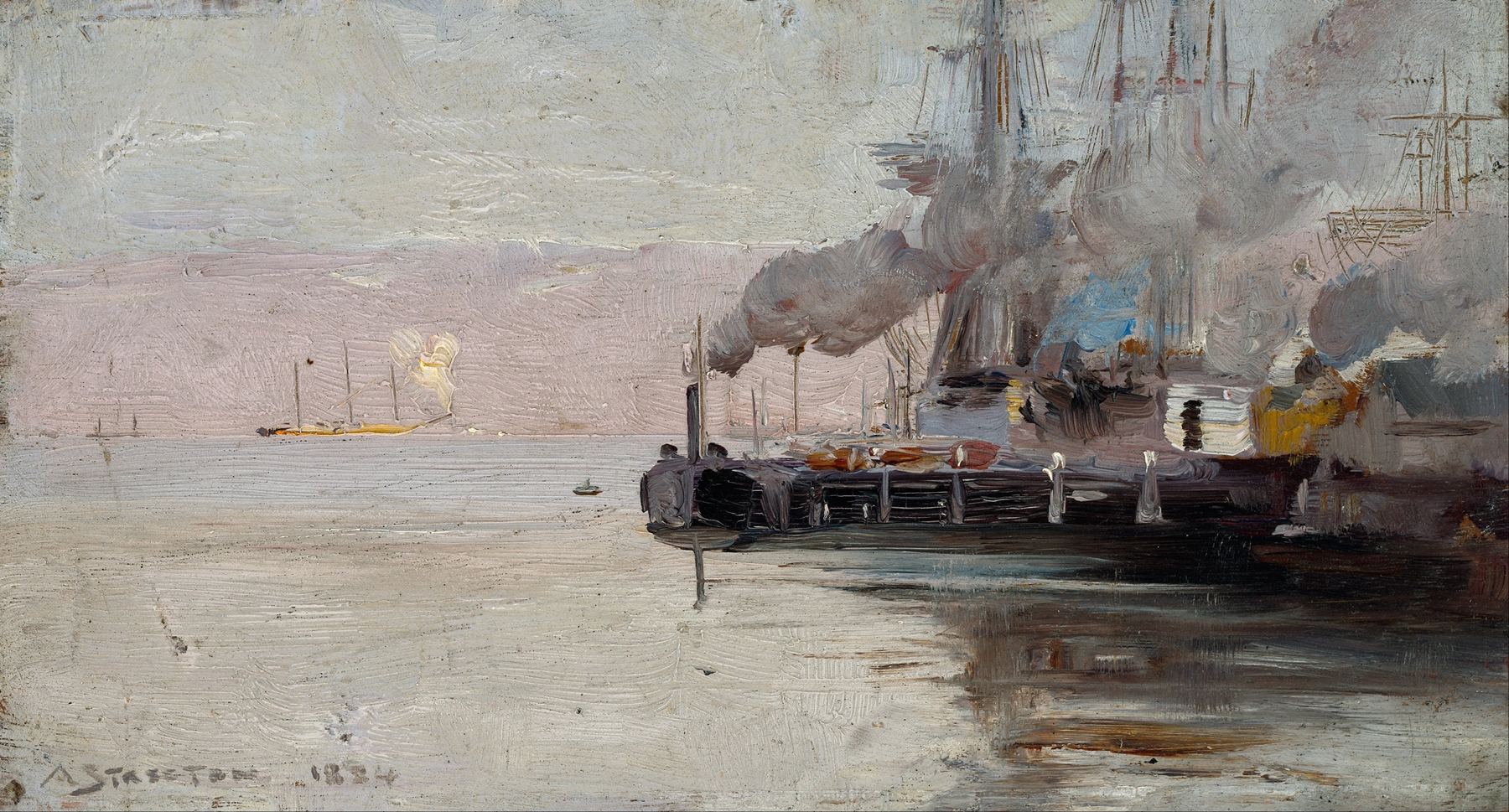
Arthur Streeton painted this work in 1889, a time when he was deeply immersed in the Heidelberg School, seeking to capture the essence of the Australian landscape and life. The movement toward plein air painting was reshaping the art world, and Streeton was at the forefront, drawing inspiration from his surroundings and the burgeoning national identity in a post-colonial landscape. This painting encapsulates not just a fleeting moment of sport but the very heartbeat of a nation in formation.