The Ocean-Going Tug ‘may Mcwilliams’ — History & Analysis
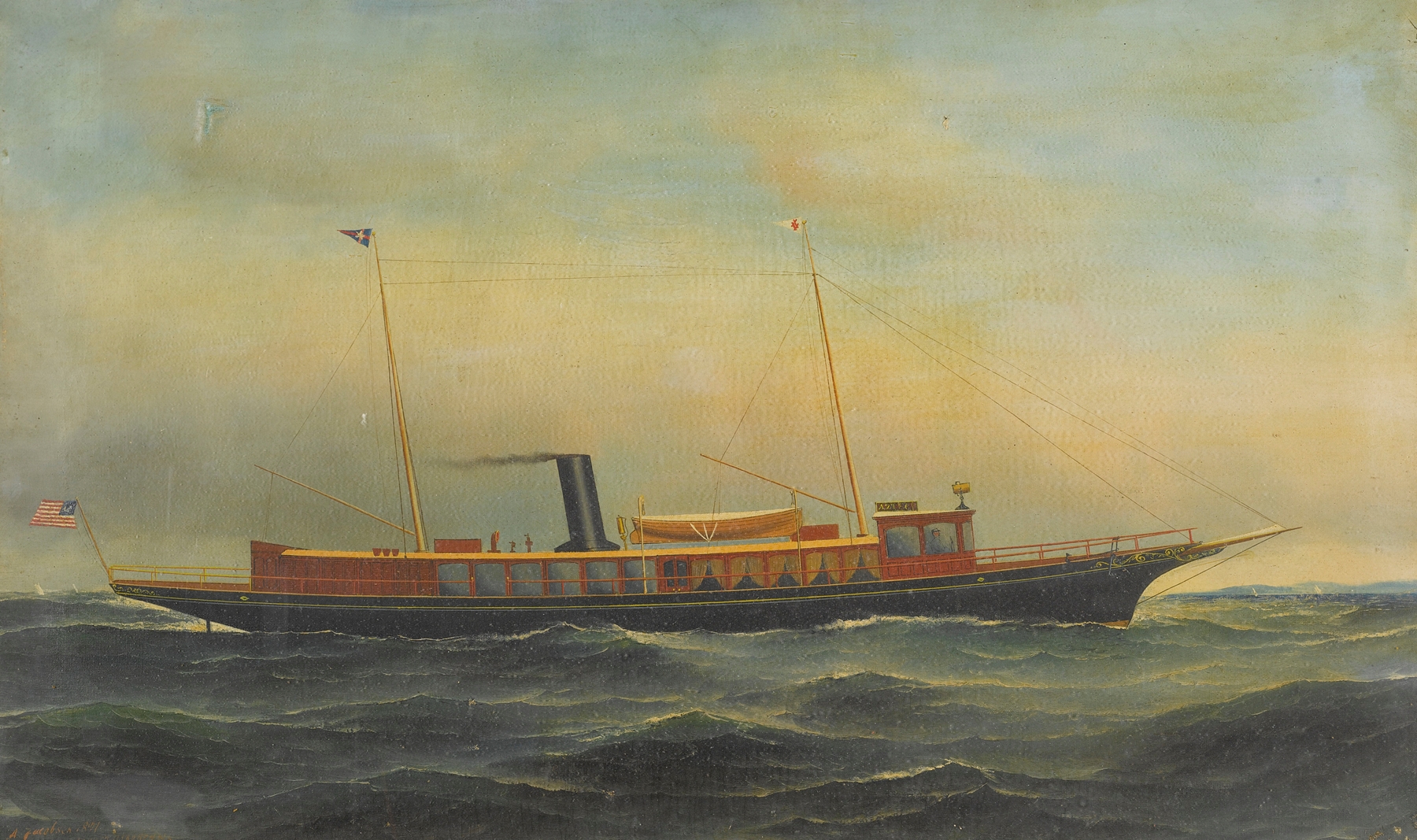
Is this a mirror — or a memory? In the late 19th century, when steamships began to revolutionize maritime travel, the tugboat emerged as an unsung hero amidst the changing tides of industry and innovation. Focus first on the tugboat itself, anchored resolutely in the foreground, its rugged form painted with meticulous detail. The sturdy hull, adorned with rich shades of indigo and rust, contrasts sharply against the soft, ethereal blues of the ocean expanse behind it.
Notice how the artist captures the gentle play of sunlight glistening on the water’s surface, a shimmering dance that breathes life into the scene while hinting at the unseen power of the vessel that propels other ships through the waves. Delve deeper into the emotional currents at play. The tugboat, often overlooked in the grand narrative of naval prowess, symbolizes resilience and steadfastness amidst the rapid changes of an era. Its prominent position in the composition serves as a reminder of the vital role these vessels played in the age of steam and commerce, reflecting a world on the brink of modernity, where tradition battled against the tides of progress.
Antonio Jacobsen painted The Ocean-Going Tug ‘May McWilliams’ in 1895, a time when he was firmly established in New Jersey's vibrant art scene. The maritime industry was undergoing significant transformation, influenced by the rise of steam-powered vessels. Jacobsen’s work not only documents this technological shift but also echoes the larger narrative of an evolving society embracing innovation while cherishing its roots.