The railway station, Redfern — History & Analysis
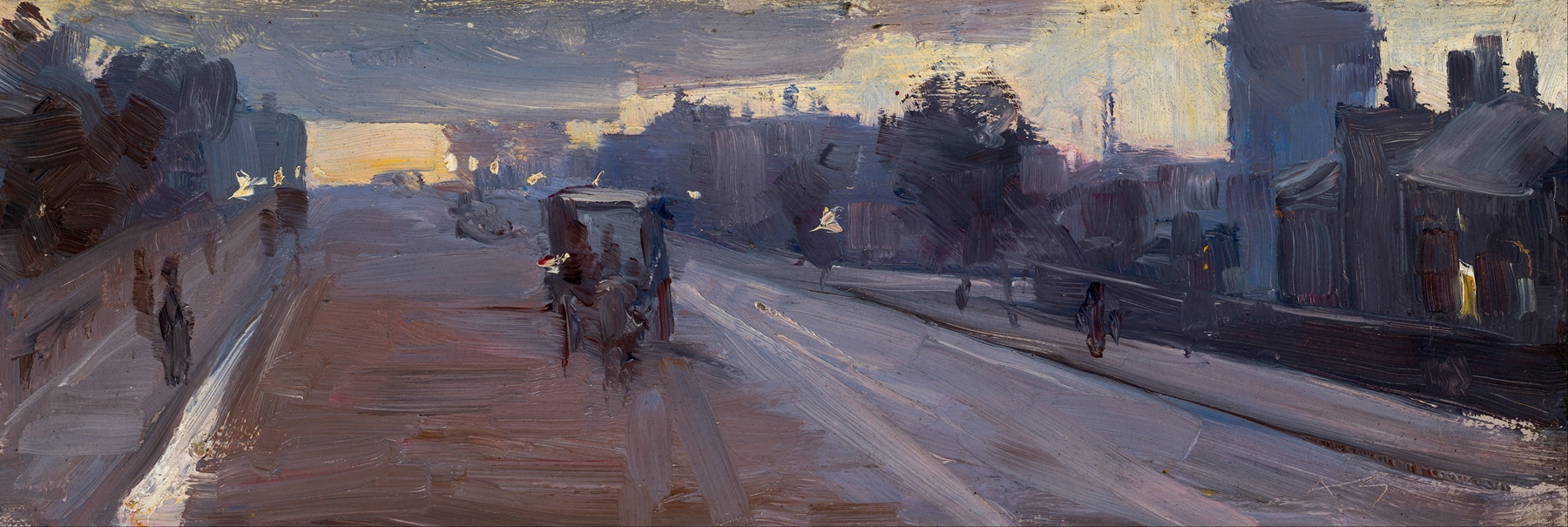
When did color learn to lie? The vibrant hues of a bustling railway station whisper secrets, inviting scrutiny beyond their surface charm. Look to the left at the figures in the foreground: travelers clad in period attire, their faces a myriad of emotions — anticipation, weariness, and perhaps a hint of nostalgia. Notice how the warm sunlight bathes the scene, casting long shadows that elongate the moment, while the architectural lines of the station curve gracefully to draw your eye toward the horizon.
The palette of deep reds and warm yellows not only captures the essence of sunlight but also imbues the moment with a sense of longing and transience, as if the colors themselves are a façade hiding deeper truths. In examining the delicate interplay of light and shadow, we uncover the tension between reality and illusion. Each brushstroke suggests movement and life, yet the stillness of the scene hints at something deeper — the fleeting nature of time and the connections forged in transit. The absence of a defined focal point creates an emotional resonance, compelling viewers to reflect on their own journeys and the multitude of stories intertwined in the bustling environment of the station.
Arthur Streeton created this piece in 1893 during a transformative period for Australian art, as he embraced the vibrant colors and impressions of the landscape. This was a time marked by the burgeoning Australian Impressionist movement, which sought to capture the unique light and atmosphere of the continent. As Streeton painted in Redfern, he was not only documenting a specific moment in time but also responding to the rapidly evolving urban landscape of Sydney and the burgeoning national identity of Australia.