The Rialto, Venice — History & Analysis
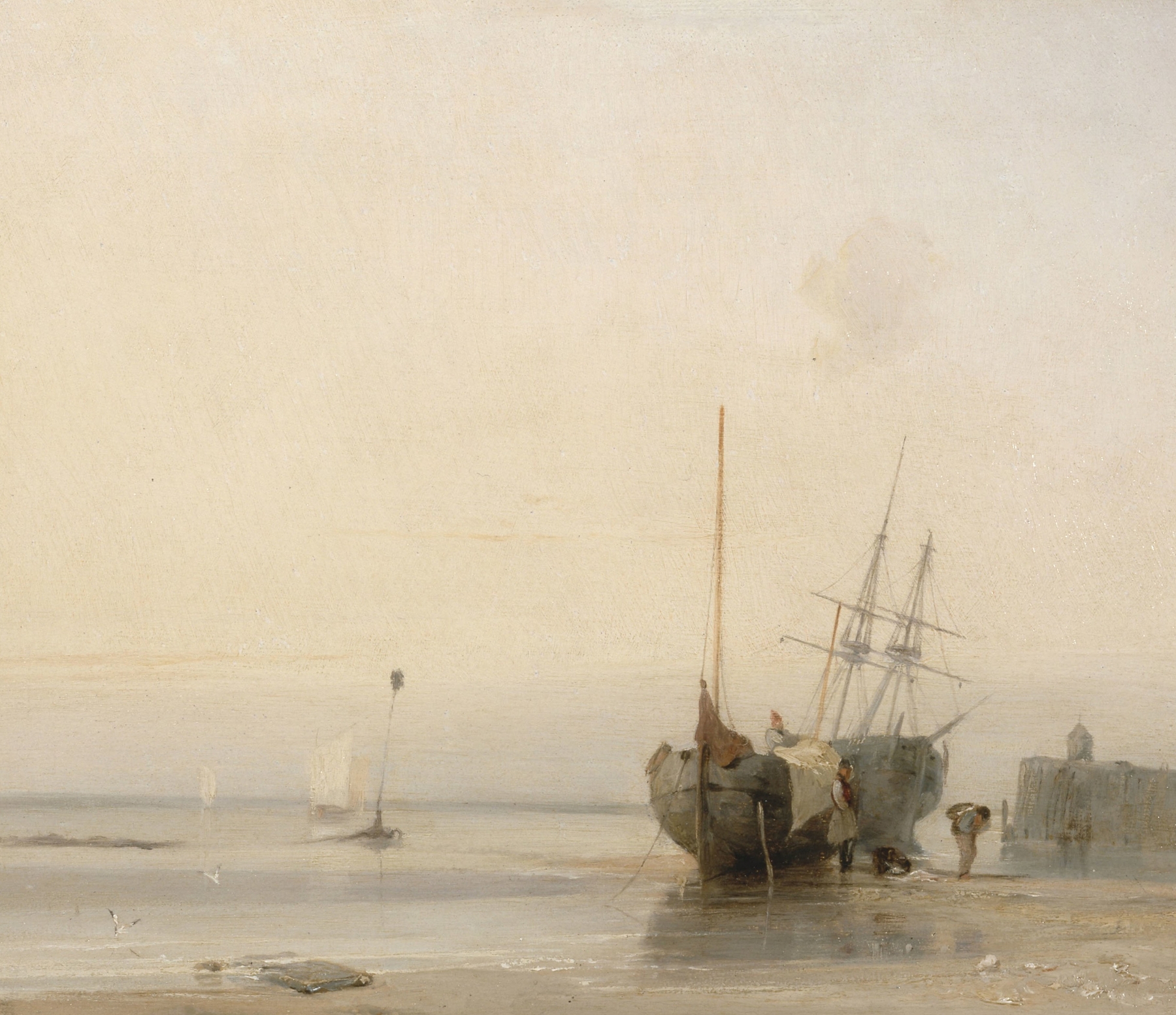
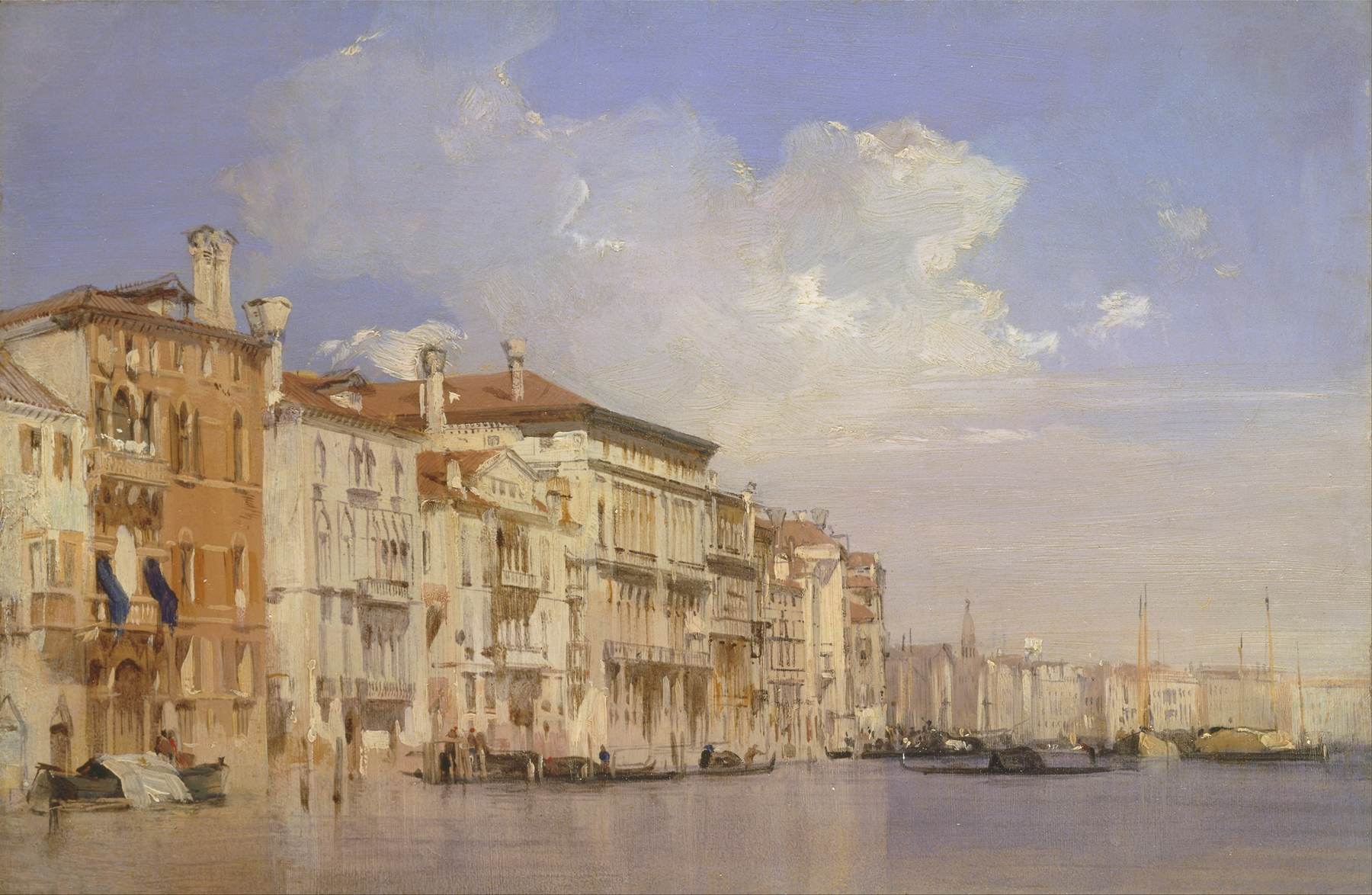
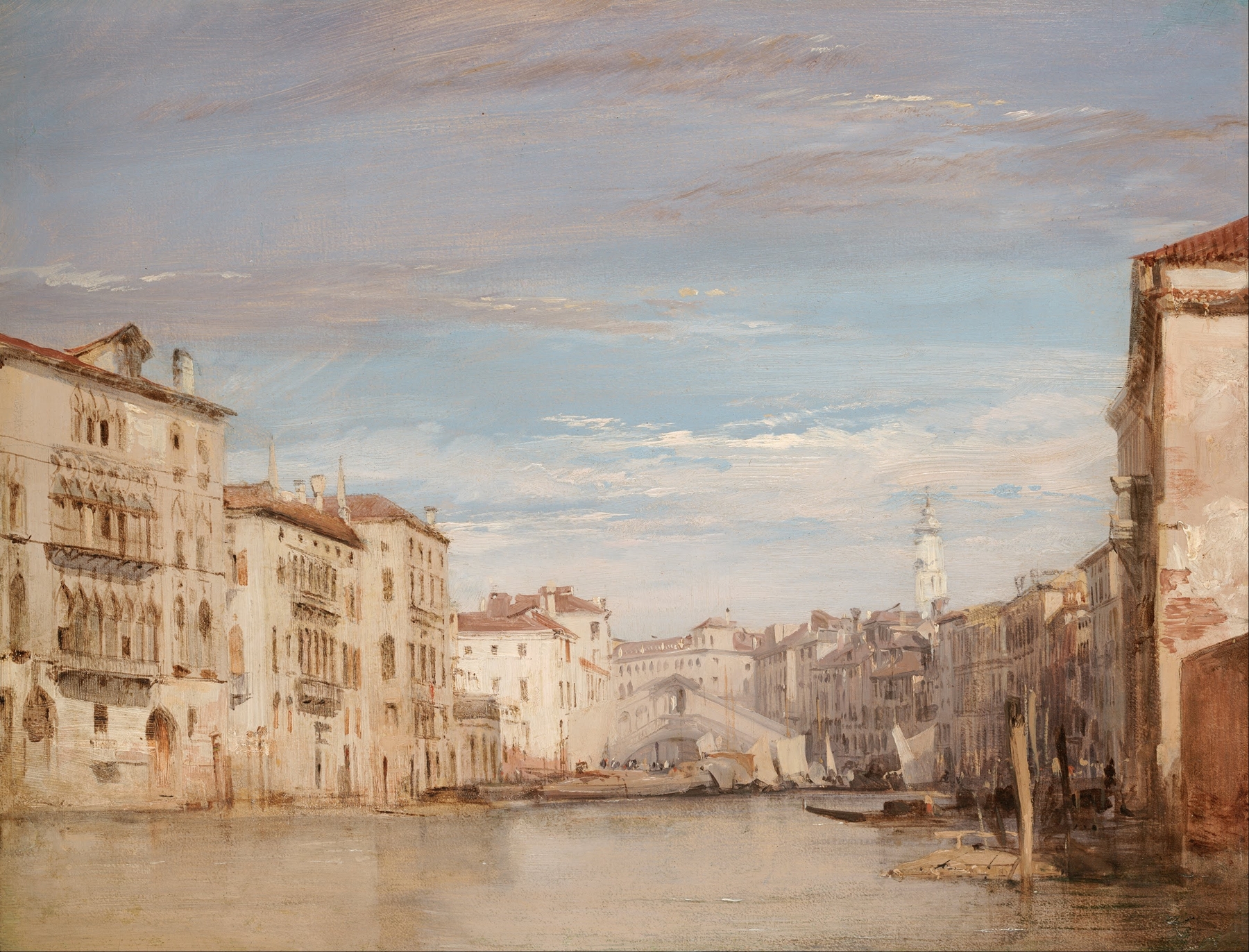
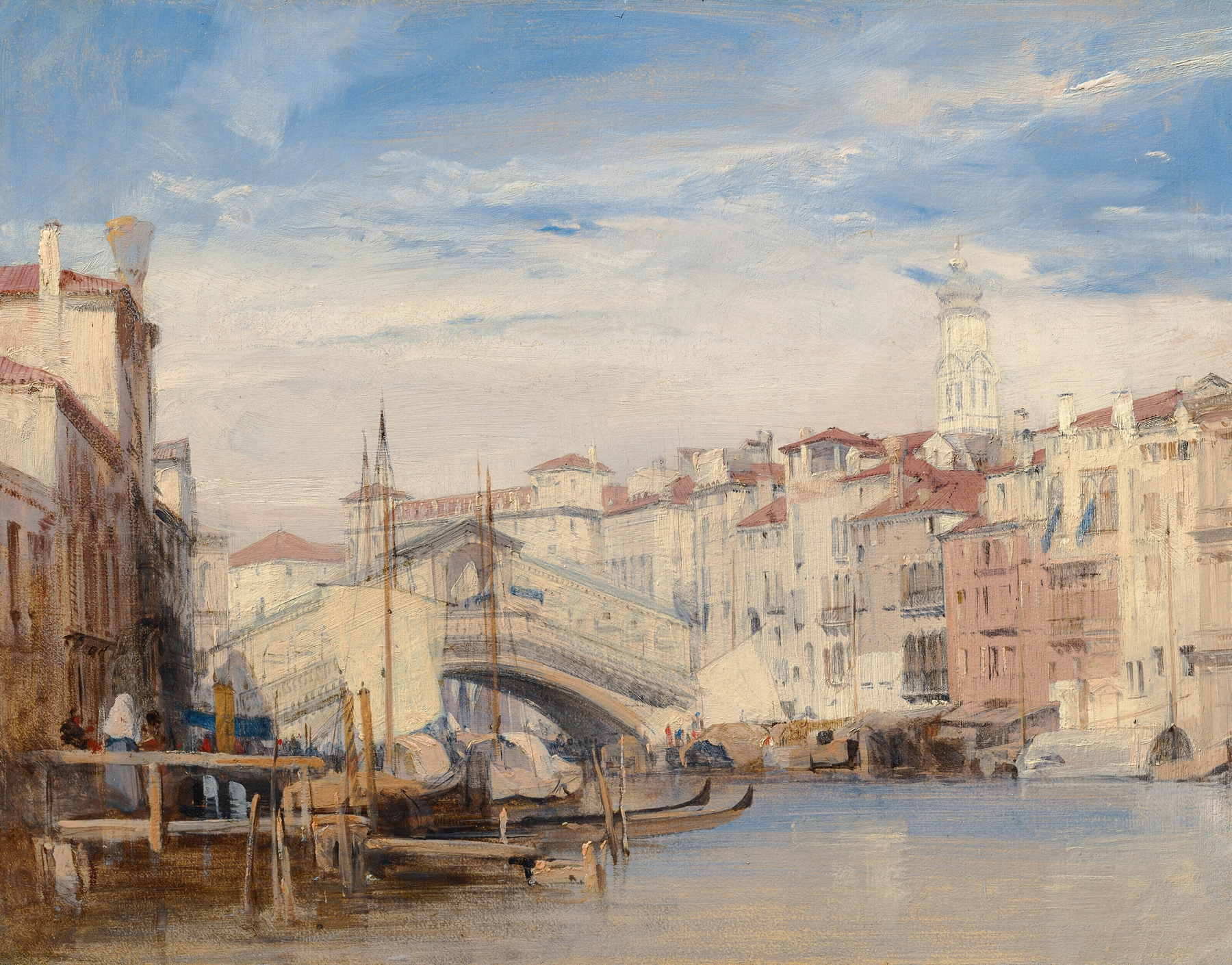
“Under the brush, chaos becomes grace.” Nostalgia swells as we gaze upon a fleeting moment in time, where the essence of Venice dances in ephemeral light and shadow. Look to the left at the grand arch of the Rialto Bridge, its weathered stones speak of history, cradling a bustling market filled with figures caught in their daily rituals. Notice how the light diffuses through the soft haze, illuminating the vibrant hues of merchants’ wares, whispering tales of a world rich with life and commerce. The delicate strokes create a fluidity that evokes both movement and stillness, capturing the duality of a city that thrives on activity yet basks in serene beauty.
As you absorb the scene, subtle contrasts emerge—warmth in the sunlit façade of the bridge against the cool reflections in the water below. Here lies a tension between the joyous bustle of the market and the hushed depths of the canal, a reminder of the ever-persistent passage of time. The figures, though minuscule against their surroundings, vibrate with life, revealing individual stories woven into the fabric of this timeless locale. Each brushstroke resonates with longing, inviting the viewer to contemplate what has been lost and what remains in the heart of Venice.
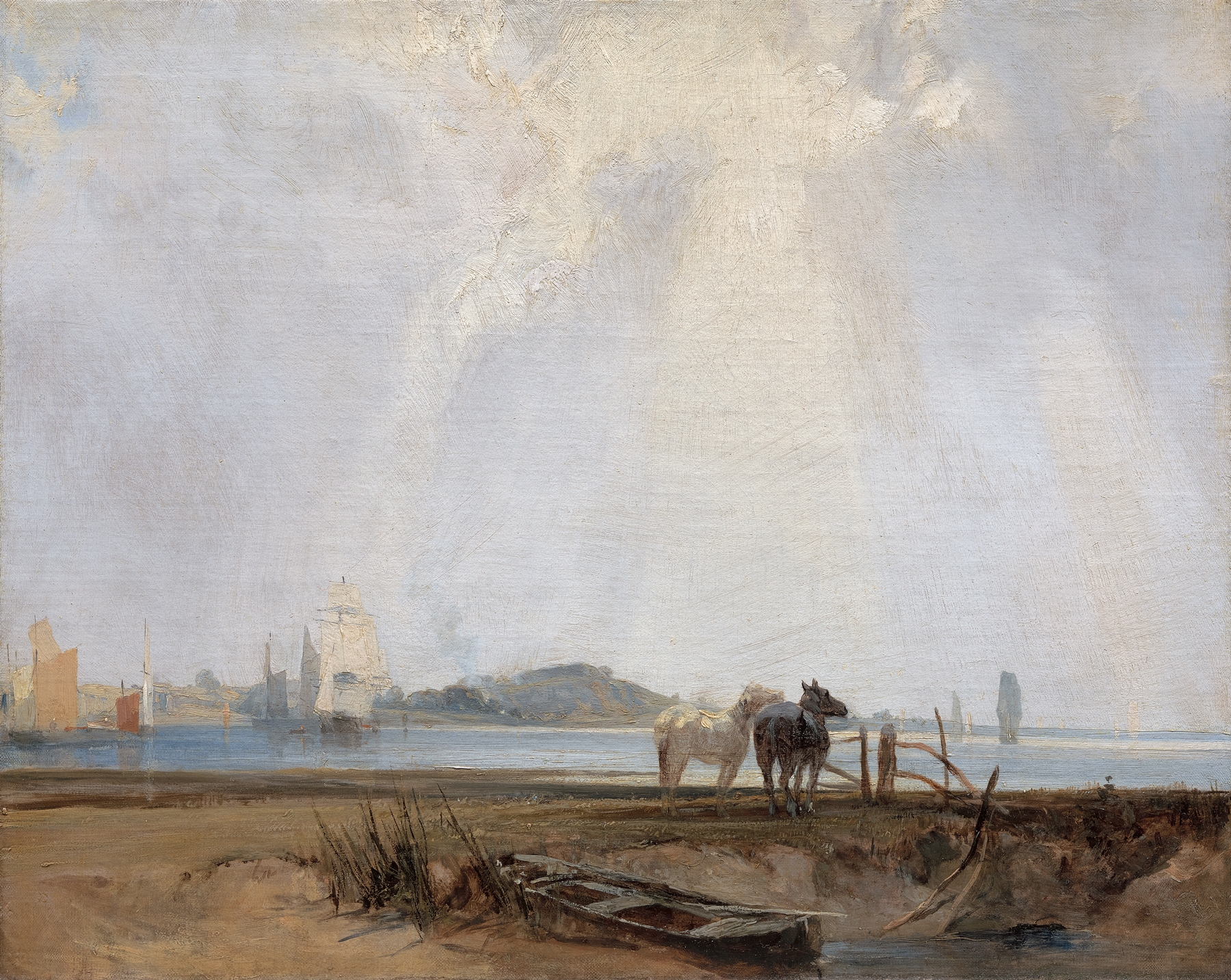
Richard Parkes Bonington painted this masterpiece during the early 19th century, a period marked by the Romanticism movement's emphasis on emotion and individual experience. Living in France, Bonington sought to capture the fleeting beauty of landscapes and urban vistas. The artist’s fascination with light and atmosphere mirrored a growing interest in plein air painting, a technique that emphasized working outdoors, enabling him to breathe life into his subjects.