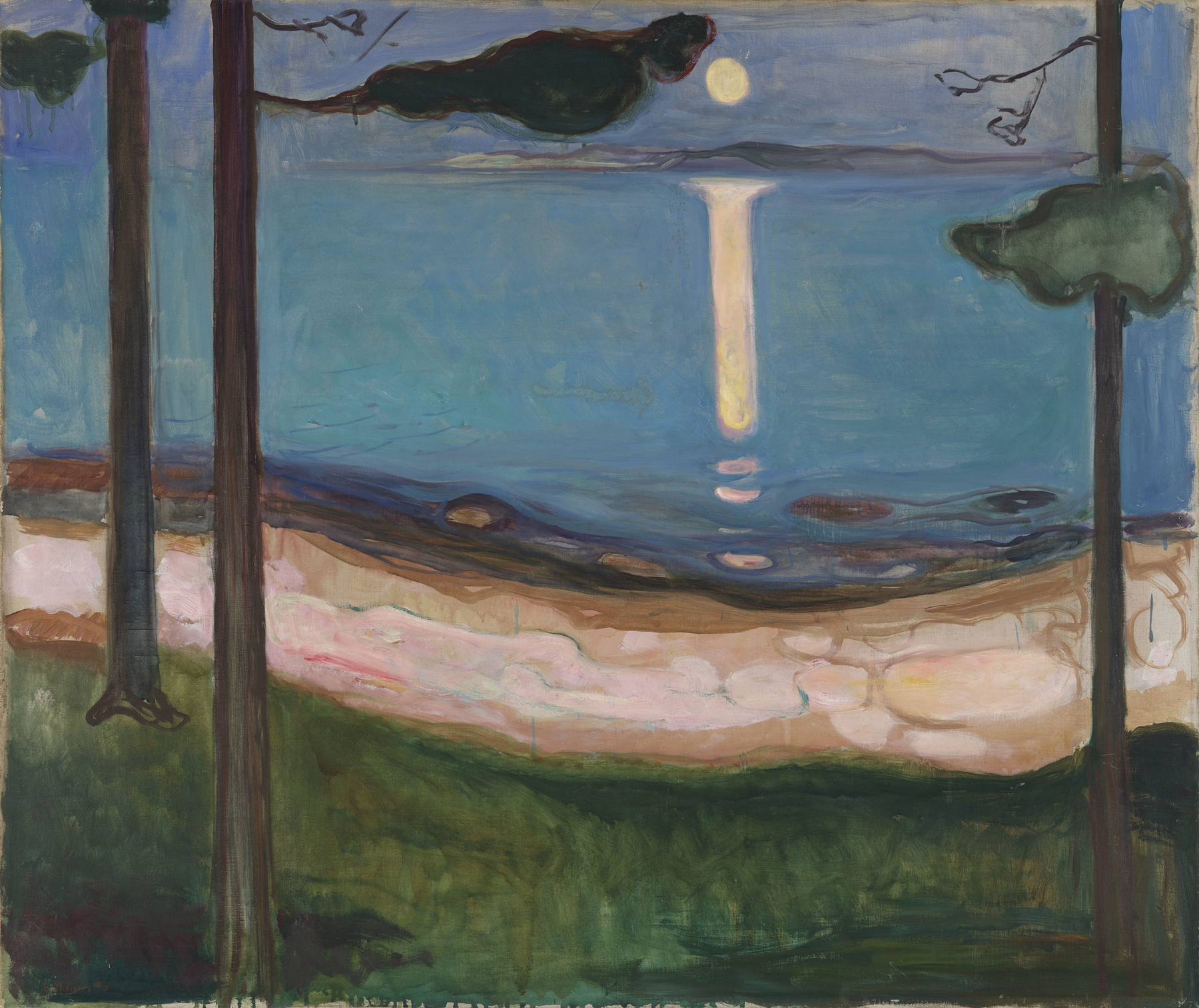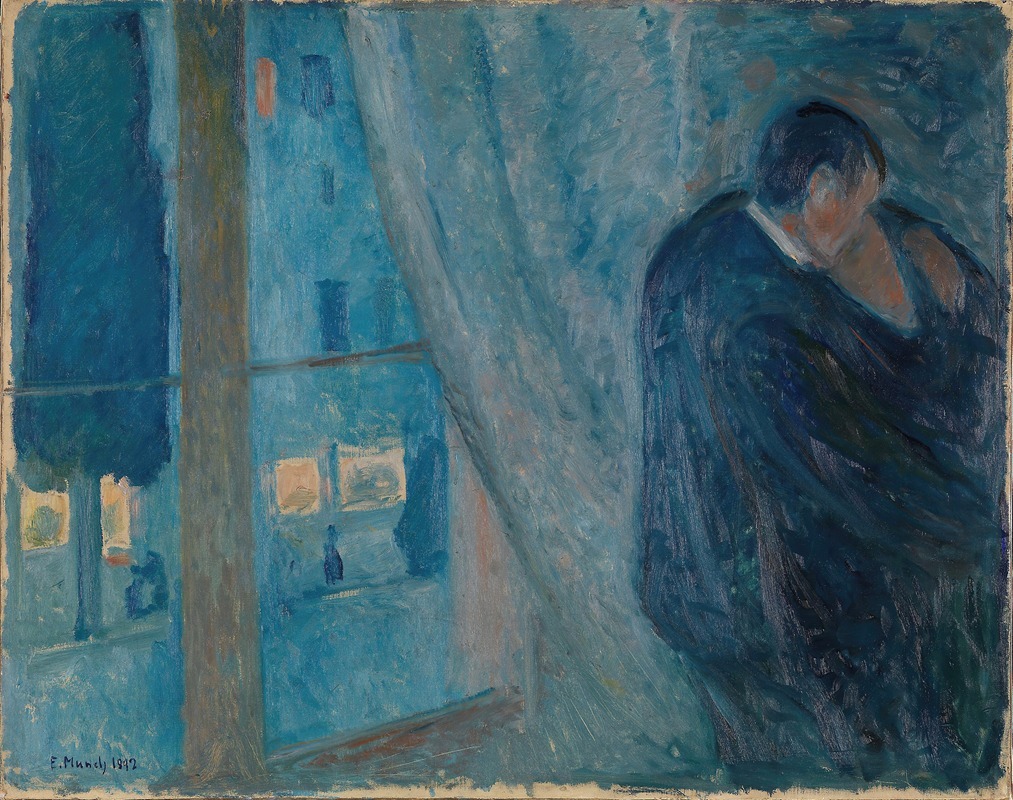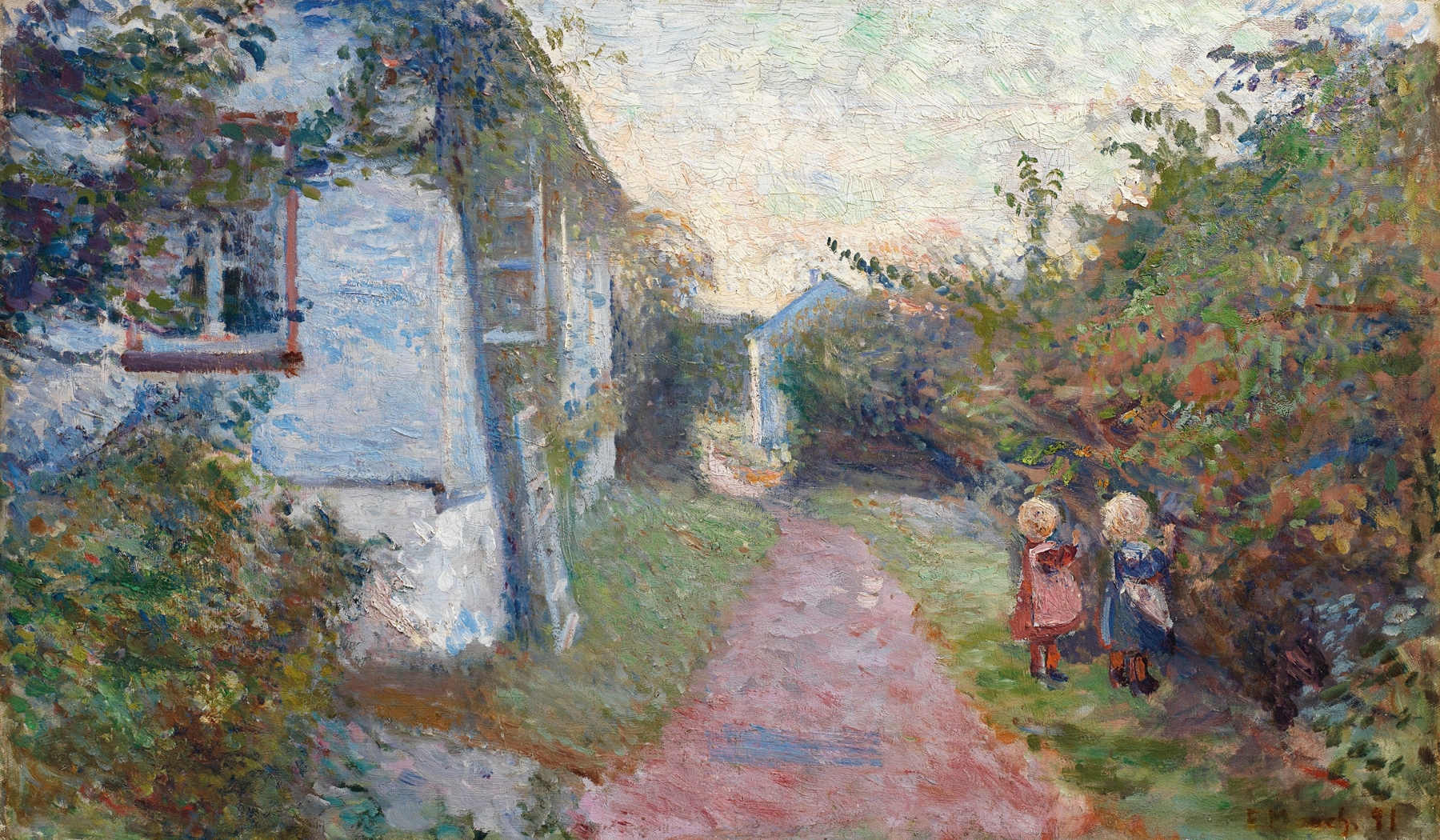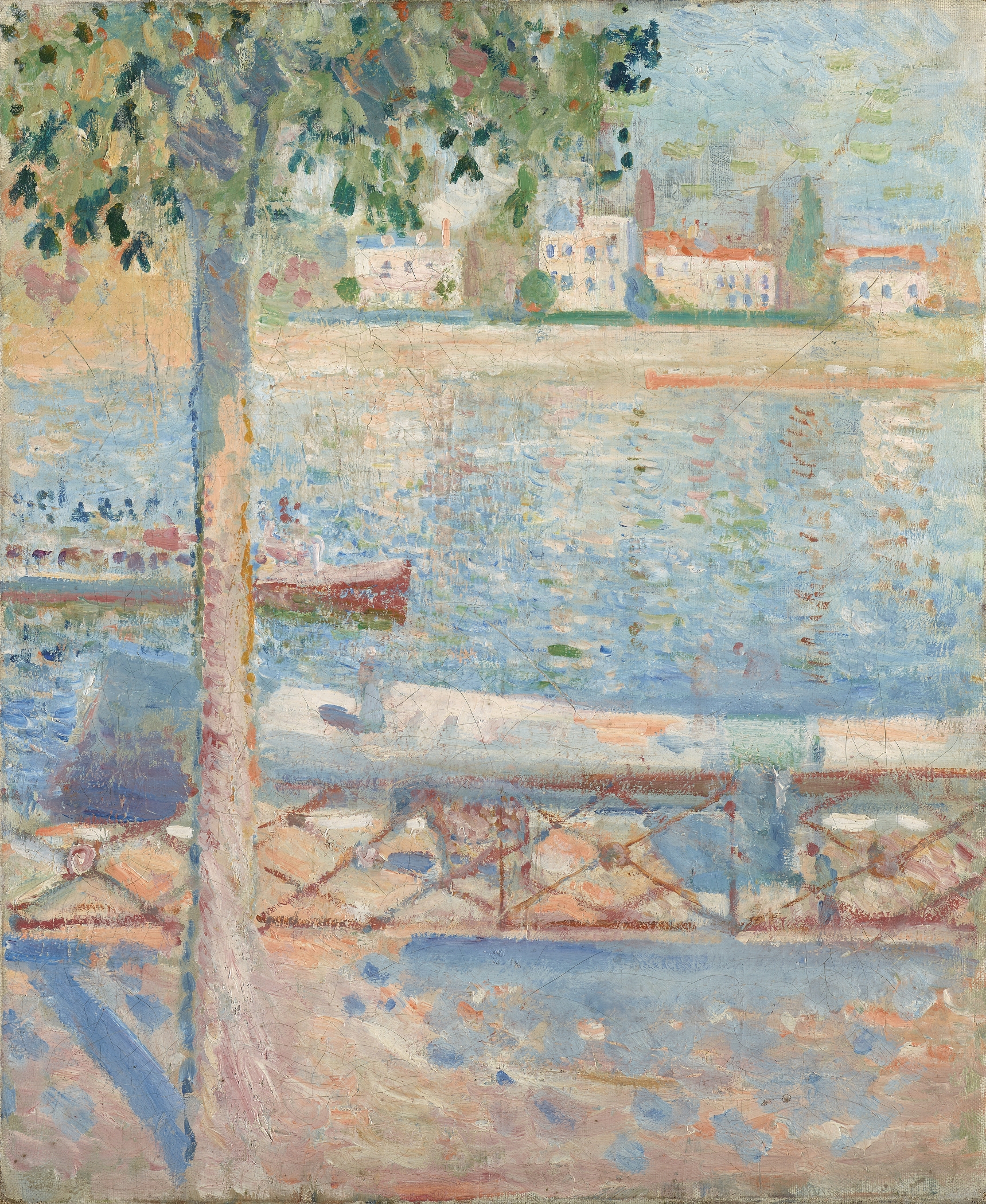
Where does light end, and longing begin? In Edvard Munch’s *The Seine At Saint-Cloud*, the boundaries between reality and emotion blur, inviting contemplation of life's fleeting moments. Look to the center of the canvas, where the shimmering river reflects a delicate palette of blues and greens, mingling harmoniously with the warm hues of the setting sun. The languid strokes of the water contrast sharply with the jagged branches of the trees to the left, creating a sense of tension. Notice how the light dances upon the surface, illuminating the scene while casting shadows that seem to whisper secrets of longing and solitude. The figures, small and distant, evoke a sense of isolation amidst the tranquil landscape, drawing the viewer’s eye towards both the beauty and melancholy woven into the fabric of the scene. In this work, Munch captures the essence of longing; the river mirrors both the beauty and the peril of desire, suggesting that each moment is but a reflection of something deeper. The subtle interplay of light and shadow may symbolize the dichotomy of hope and despair, while the solitary figures stand as a reminder of human connection's fragile nature. The overall composition evokes a sense of yearning, as if the viewer is caught between the desire to embrace the beauty of the scene and the inevitable passage of time. In 1890, Munch painted this piece during a transformative period in his career. He was living in Paris, surrounded by the vibrant artistic community that would influence his style. It was a time marked by personal struggles and a quest for truth in his art, as he sought to express deep emotional experiences through vivid colors and evocative themes. The work encapsulates his fascination with the interplay of light, shadow, and human emotion, establishing him as a pivotal figure in the evolution of modern art.