
The Kiss — History & Facts
In the tender embrace of intimacy, time becomes both a thief and a keeper, holding moments suspended in vulnerability. Look to the center of the canvas, where two figures share a soft, unyielding kiss—faces merging, their bodies entwined. The muted palette of reds, blues, and greens creates an ethereal atmosphere, enhancing the emotional weight of this connection. Notice how the swirling lines of color seem to echo the swirling thoughts and feelings of the lovers, blurring the boundaries between them and inviting us to experience their passion. Within this intimate moment lies a poignant tension between desire and the ephemeral nature of love.
The figures, though physically close, are adrift in a world that feels both blissful and isolating. The stark contrast of their enveloping warmth against the cool background evokes a sense of longing, while the heavy strokes suggest both the stability and fragility of this union—love that is both eternal and fleeting, caught in the relentless flow of time. In 1892, Edvard Munch was living in Norway, grappling with personal themes of love, loss, and existential angst. At this time, he was deeply influenced by Symbolism, exploring the depths of human emotion in his work.
The Kiss reflects this exploration, capturing the intensity of longing and the complexities of intimacy during a period marked by turbulent emotions and the search for meaning in relationships.
More Artworks by Edvard Munch

The Scream
Edvard Munch

The Scream (1910 version)
Edvard Munch

Despair
Edvard Munch

The Day After
Edvard Munch
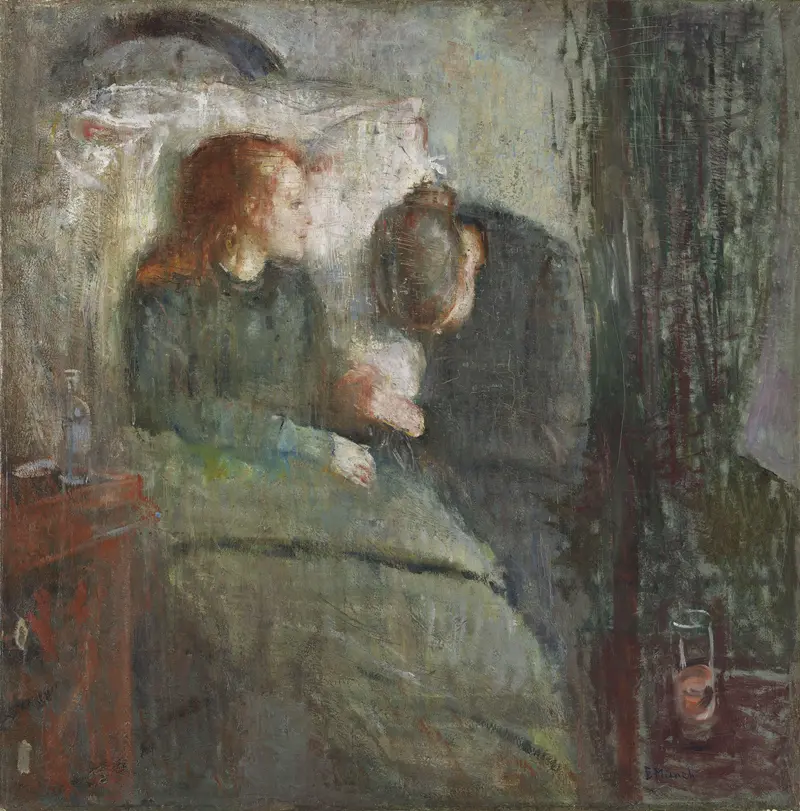
The Sick Child
Edvard Munch
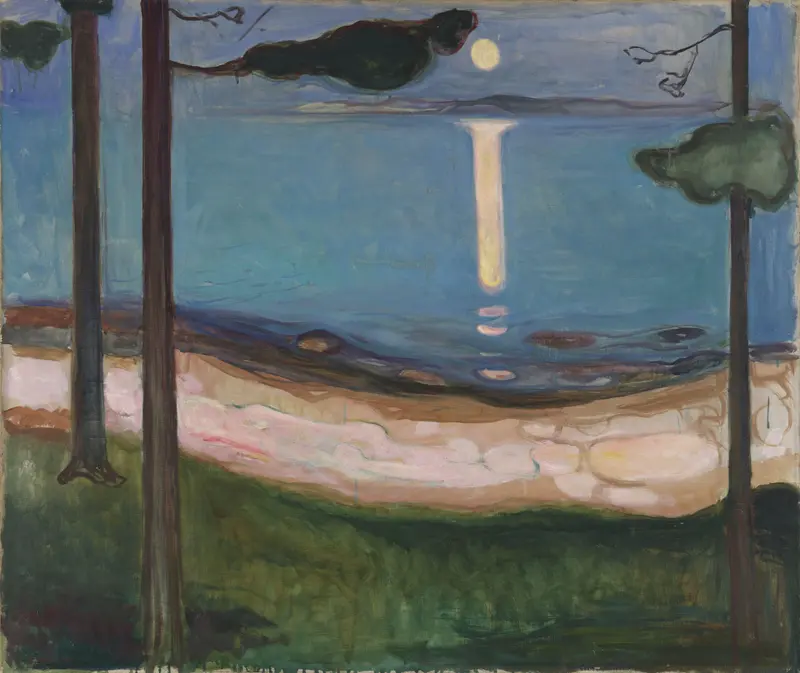
Moonlight
Edvard Munch
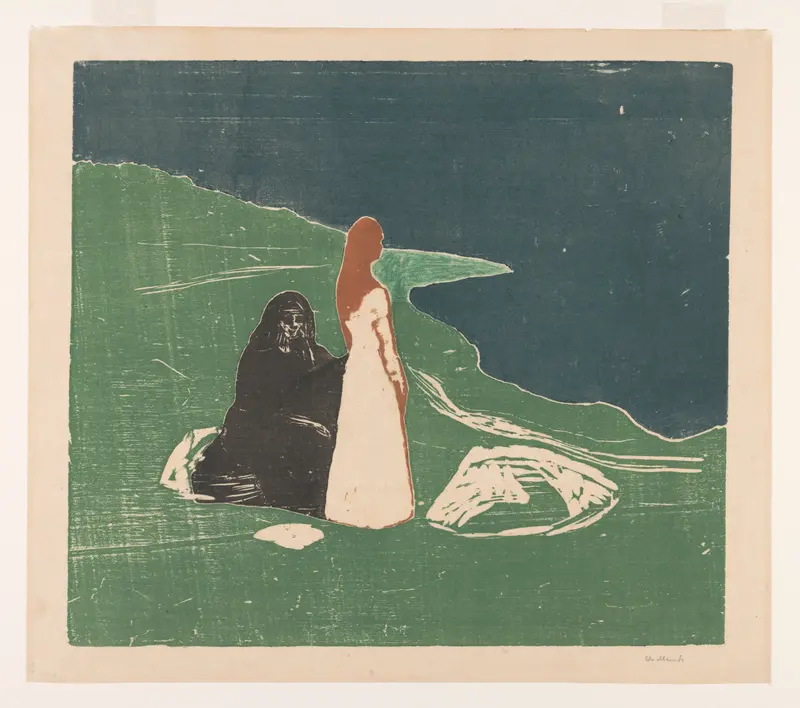
Two Women on the Shore
Edvard Munch
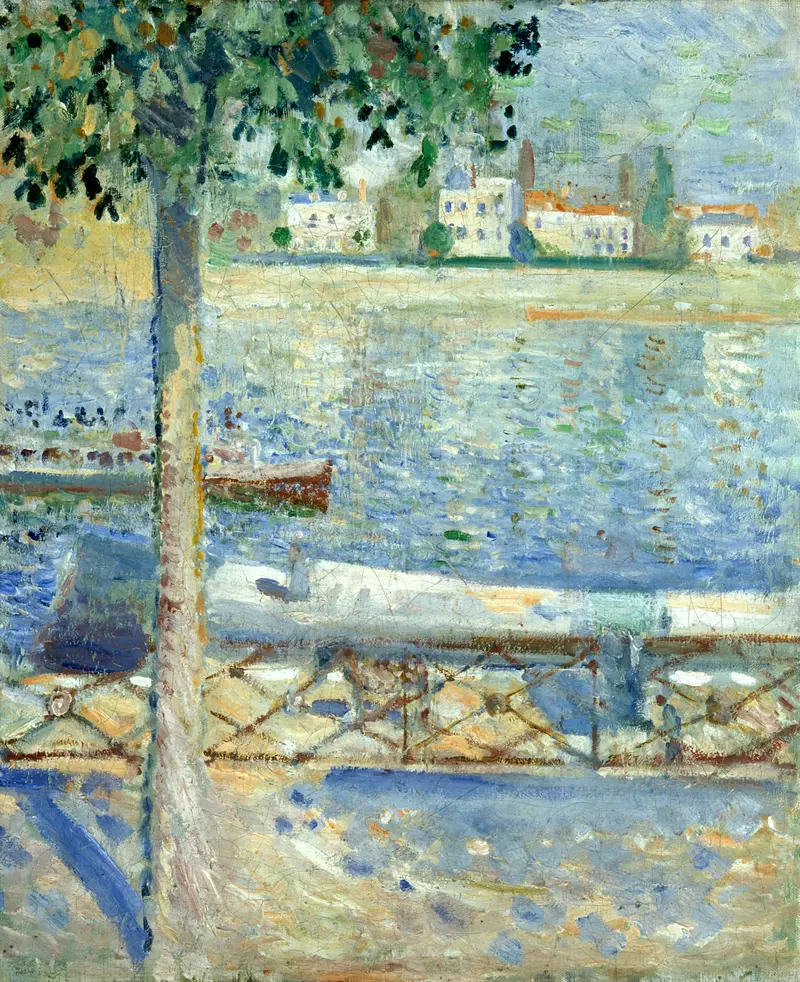
The Seine At Saint-Cloud
Edvard Munch
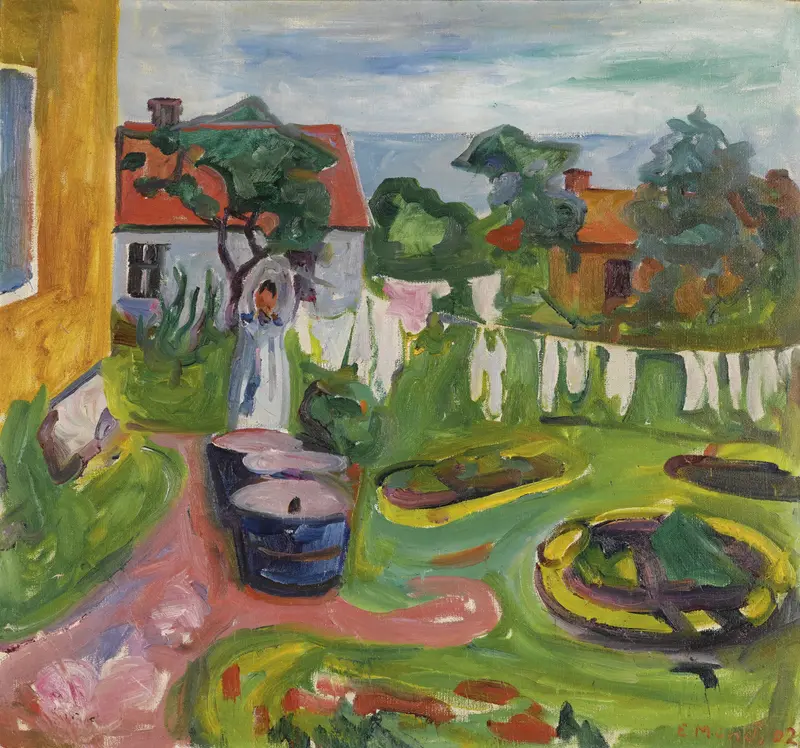
Klestørk I Åsgårdstrand (Clothes On A Line In Åsgårdstrand)
Edvard Munch
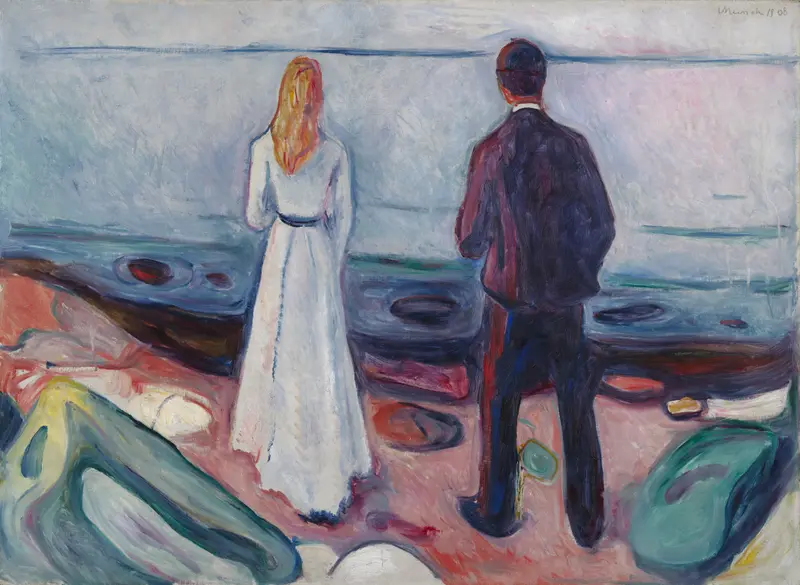
Two Human Beings (The Lonely Ones)
Edvard Munch



