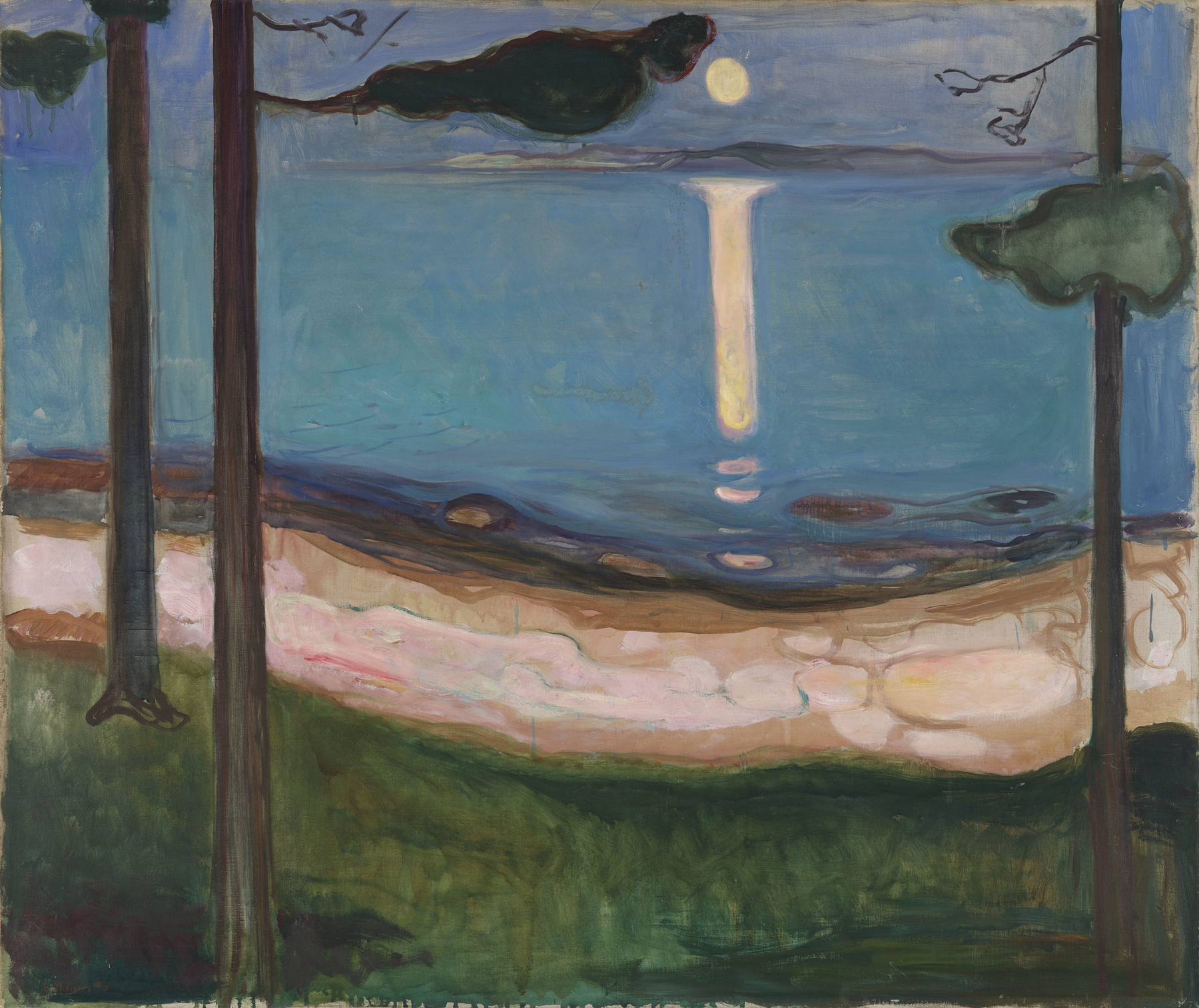
“The canvas doesn’t lie — it simply waits.” In the cool embrace of night, emotions ebb and flow like the tides, revealing the raw depths of human sorrow and longing. Munch's work, *Moonlight*, invites us to explore this profound grief, where light and shadow dance in delicate balance, echoing the complexities of the heart. Focus first on the luminous moon that bathes the landscape in an ethereal glow; its pale light shimmers across the rippling water, creating a haunting reflection. Notice how the surrounding trees lean in as if caught in an intimate conversation, their dark silhouettes contrasting with the radiant sky. The interplay of blues and greens evokes a sense of calm, yet a palpable tension simmers beneath the surface, suggesting that tranquility often harbors turmoil. The lone figure standing by the water's edge serves as a silent witness to this poignant moment. Their posture, slightly hunched, communicates a profound isolation, yet the light encircles them, hinting at the possibility of solace amid despair. This duality—of being enveloped by both the beauty of the night and the weight of sorrow—reflects the artist’s exploration of the human condition, where grief can be both a consuming darkness and a source of inspiration. In 1895, Munch painted *Moonlight* during a period of personal upheaval, grappling with profound loss and existential angst. Living in Norway, he was influenced by the Symbolist movement, which sought to convey deeper truths through dream-like imagery and emotional intensity. This work stands as a testament to his mastery in capturing the intricate dance between light and shadow—both in his art and in life itself.