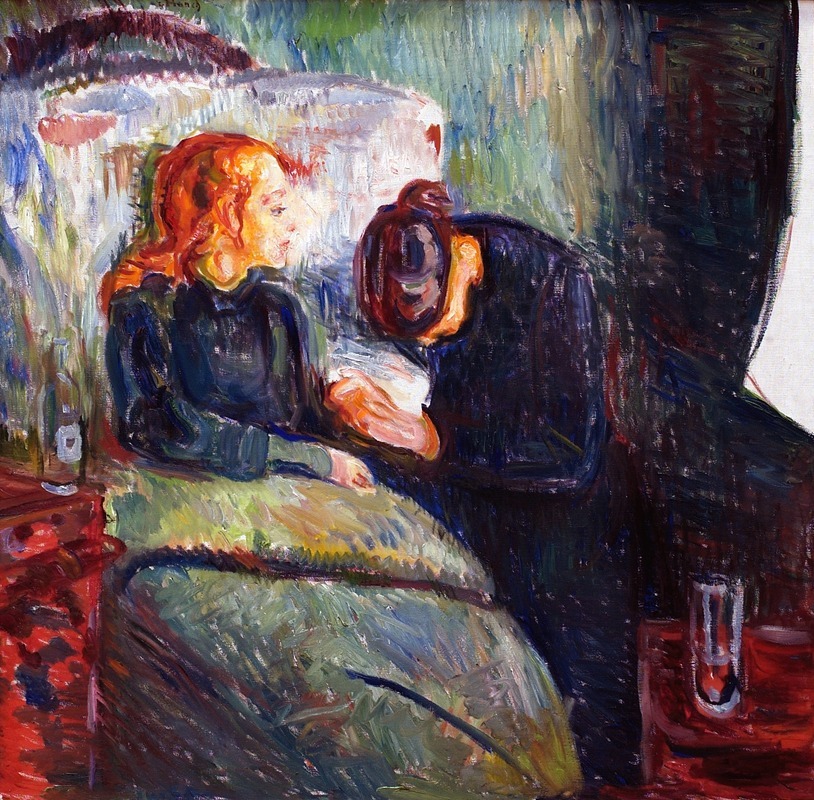
Is this a mirror — or a memory? In Edvard Munch’s *The Sick Child*, the tender, haunting portrayal of illness reflects both vulnerability and an underlying thread of hope. Look to the center of the painting, where a frail child lies, surrounded by a dimly lit space that amplifies the gravity of her condition. The painter’s brushstrokes convey a sense of fragility, with pale skin tones and distorted features that capture both suffering and the innocence of youth. Notice how the ghostly quality of the background contrasts with the deep reds and earthy tones of the foreground, drawing your attention to the melancholic expressions of the figures surrounding the child, particularly the mother, who leans close, her face etched with concern and maternal love. Hidden within this scene is an emotional complexity that transcends mere sadness. The tender yet suffocating atmosphere speaks to the universal fears of loss and helplessness, yet the warmth emanating from the mother’s touch suggests a flicker of resilience. The juxtaposition of stark despair against the soft, muted colors invites contemplation on the duality of life — suffering and solace existing side by side. It is in this delicate balance that hope emerges, framed by the intimate connection between the caregiver and the afflicted. Created during a tumultuous period in 1907, Munch was grappling with his own experiences of illness and loss, including the death of his beloved sister to tuberculosis. Working in Norway, he was part of a broader artistic movement that sought to explore deep psychological themes. This painting reflects not only his personal struggles but also the evolving attitudes toward illness and emotional expression in the early 20th century, marking a significant moment in the evolution of modern art.