The Scream — History & Facts
A hairless, wide-eyed figure with a long, skull-like face stands in the foreground of a railed road, hands pressed to its cheeks and mouth open. Behind it the road runs back diagonally to two dark upright figures walking away, and beyond the railing a fjord curves between hills under a sky of wavy bands of orange, red and yellow. A vertical red strip runs down the right edge, and the signature and date, 'Munch 1893', are at the lower left. The figure is no one in particular.
In Edvard Munch's earlier painting Despair, 1892, the same landscape holds a clearly defined man in a hat and coat; in The Scream he became a face that is hard to place, which the museum's audio guide calls universal and genderless. The two small men on the road are, in Munch's own account, the friends who walked on while he stopped at the railing. A barely legible pencil line at the top left reads 'Can only be painted by a madman!'; a 2020 study with an infrared camera and handwriting analysis found that Munch himself added it. The painting was bought in 1910 by Olaf Schou, who gave it straight to the National Gallery in Oslo.
It is in the National Museum in Oslo.
Sources: Wikidata Q471379 · Wikipedia: The Scream · Image source (Wikimedia Commons)
More Artworks by Edvard Munch

The Scream (1910 version)
Edvard Munch

Despair
Edvard Munch

The Day After
Edvard Munch
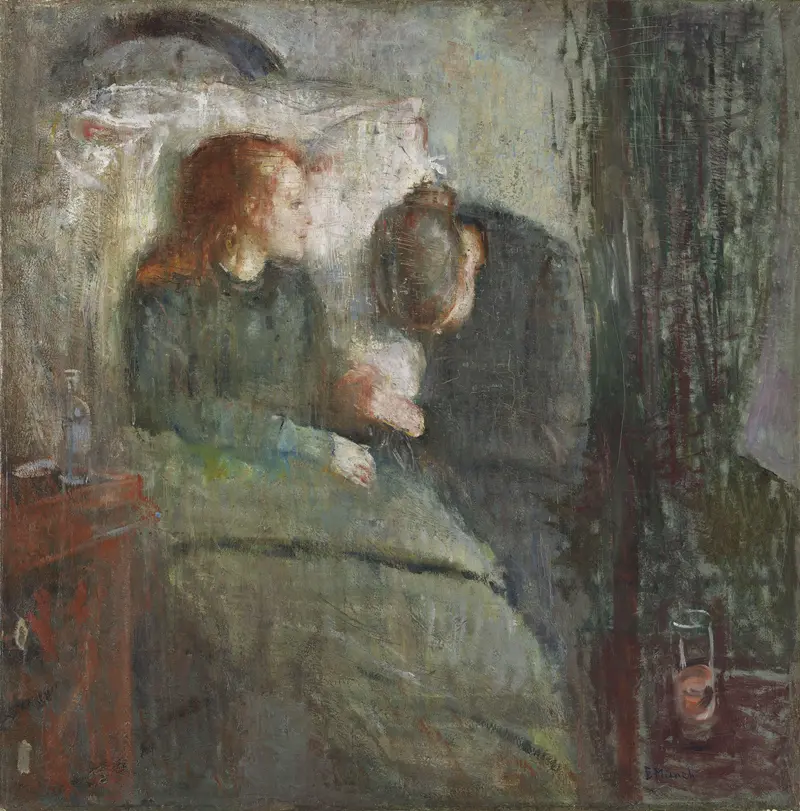
The Sick Child
Edvard Munch
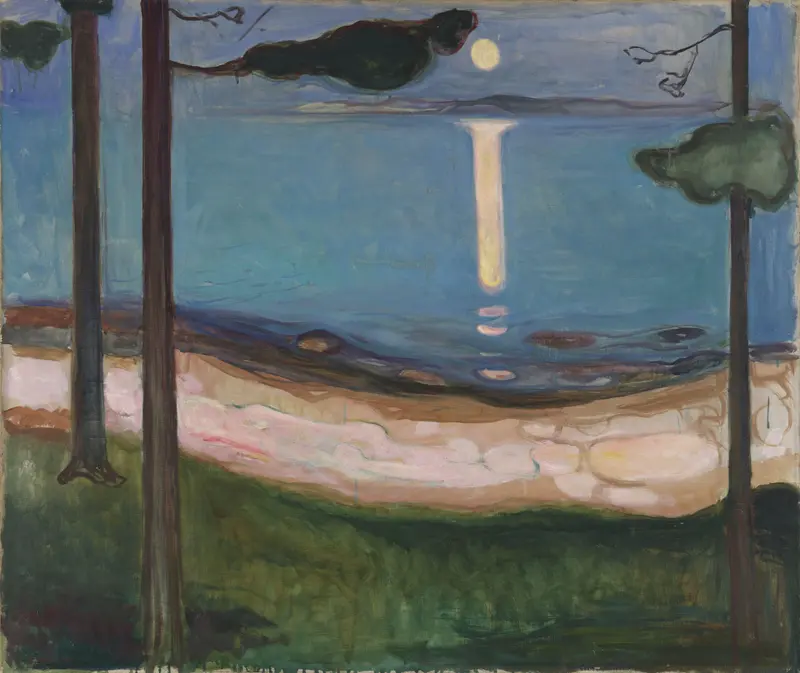
Moonlight
Edvard Munch
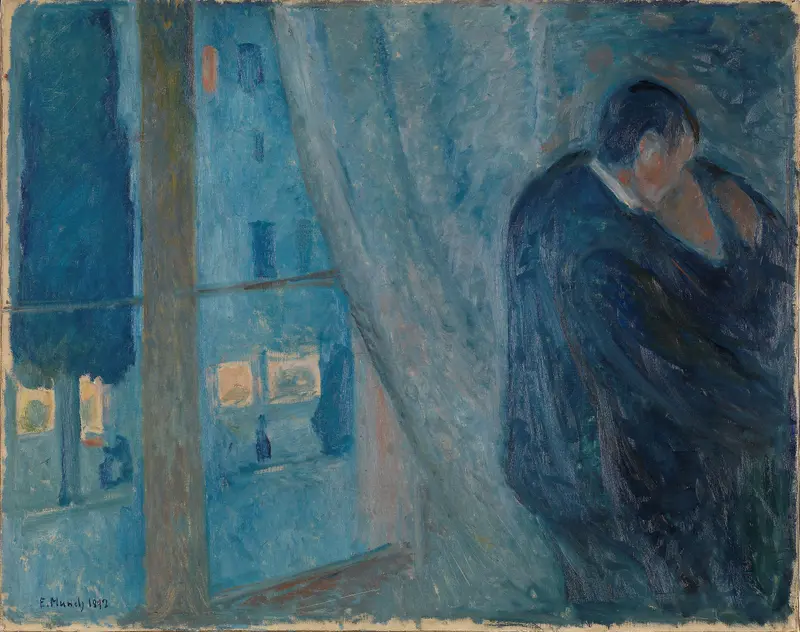
The Kiss
Edvard Munch
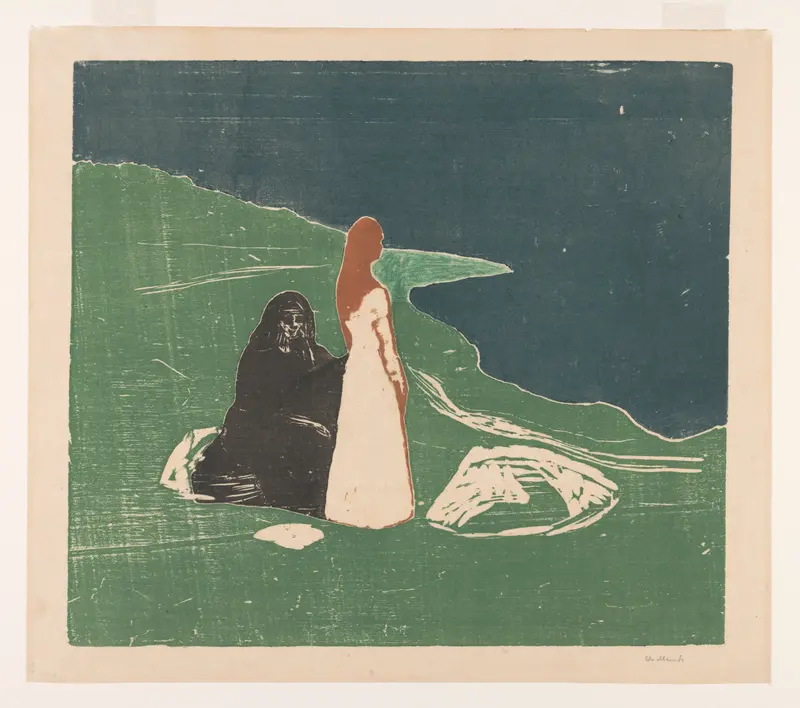
Two Women on the Shore
Edvard Munch
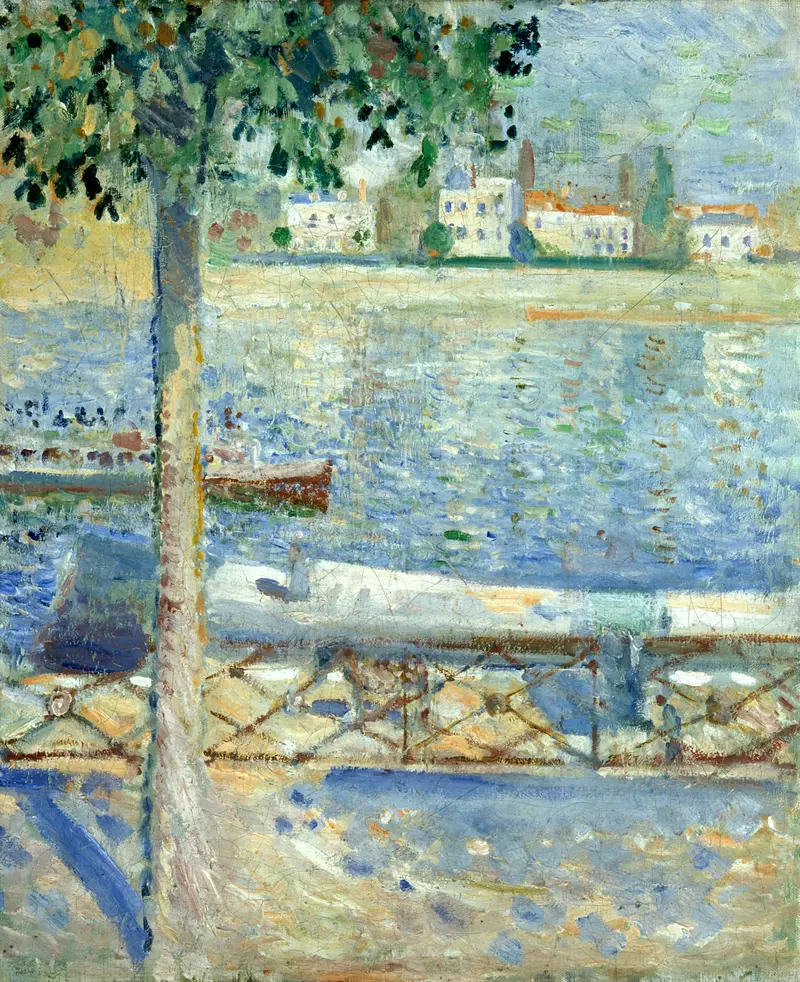
The Seine At Saint-Cloud
Edvard Munch
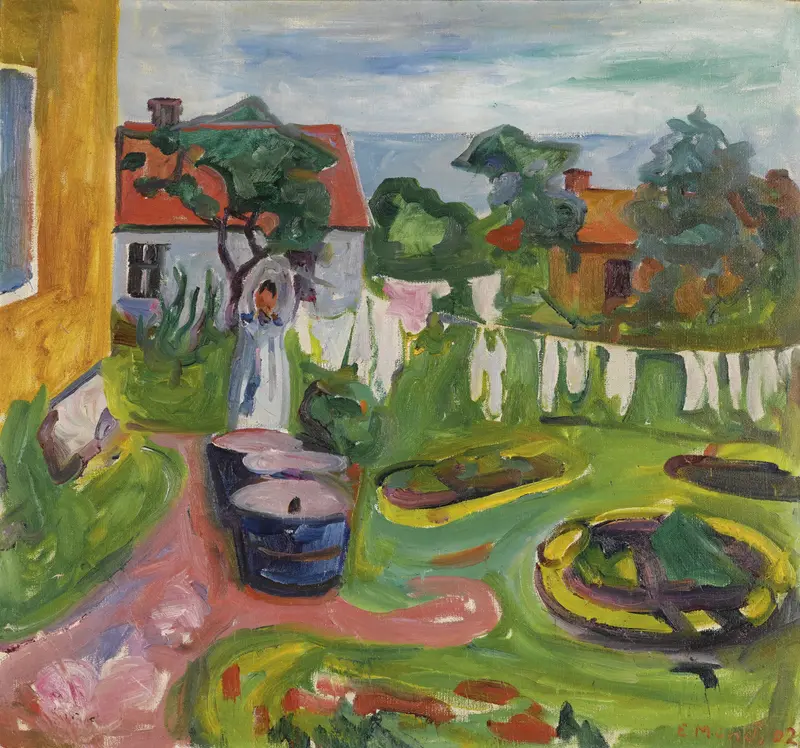
Klestørk I Åsgårdstrand (Clothes On A Line In Åsgårdstrand)
Edvard Munch
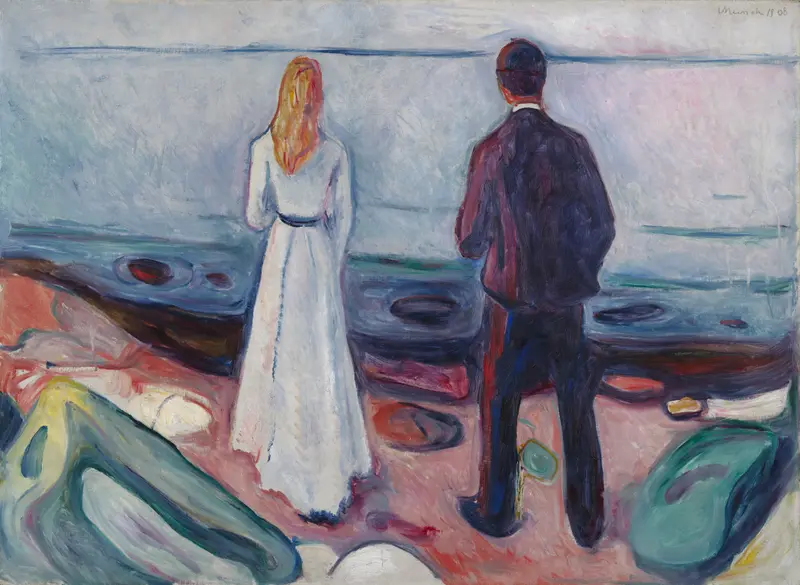
Two Human Beings (The Lonely Ones)
Edvard Munch