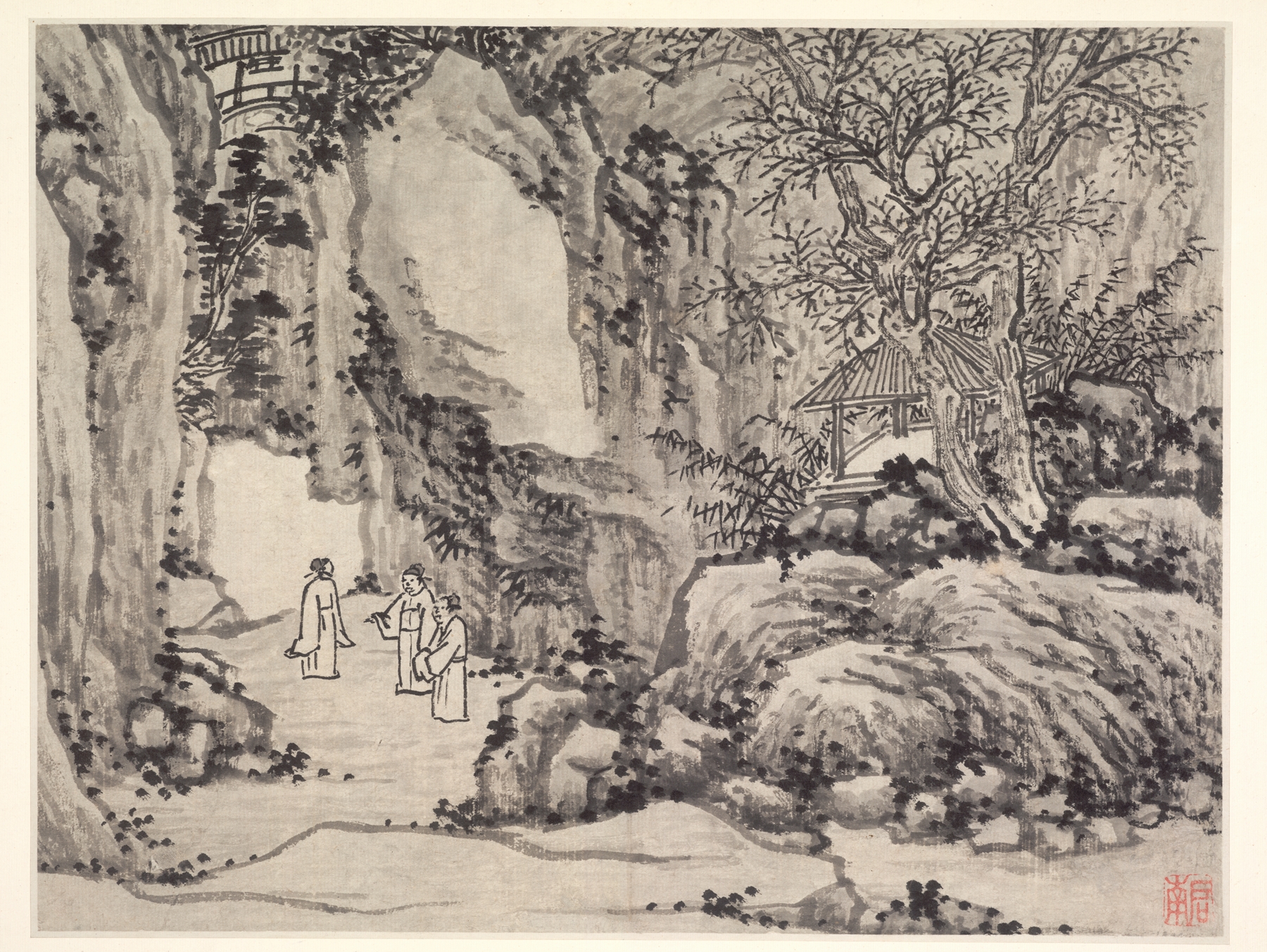
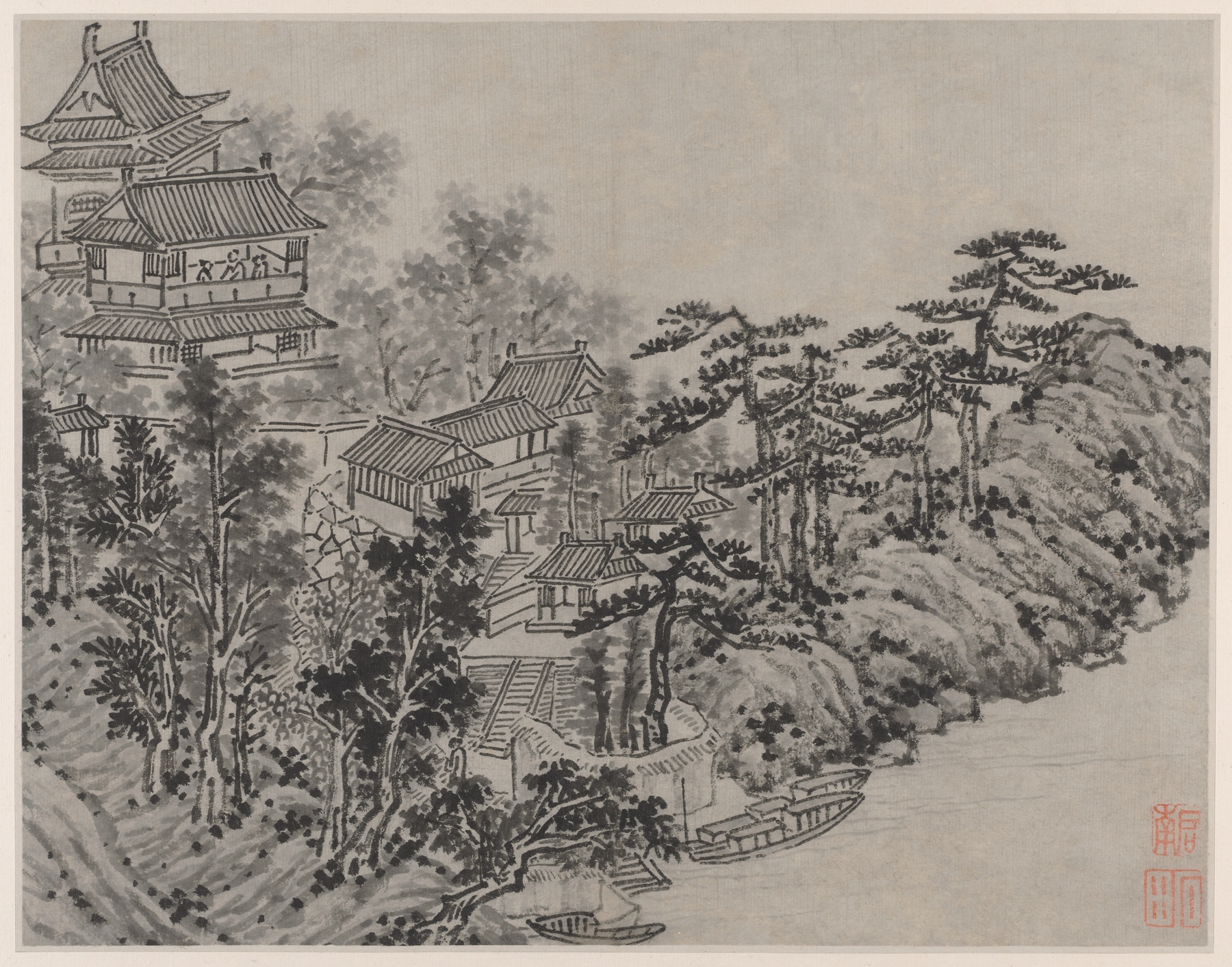
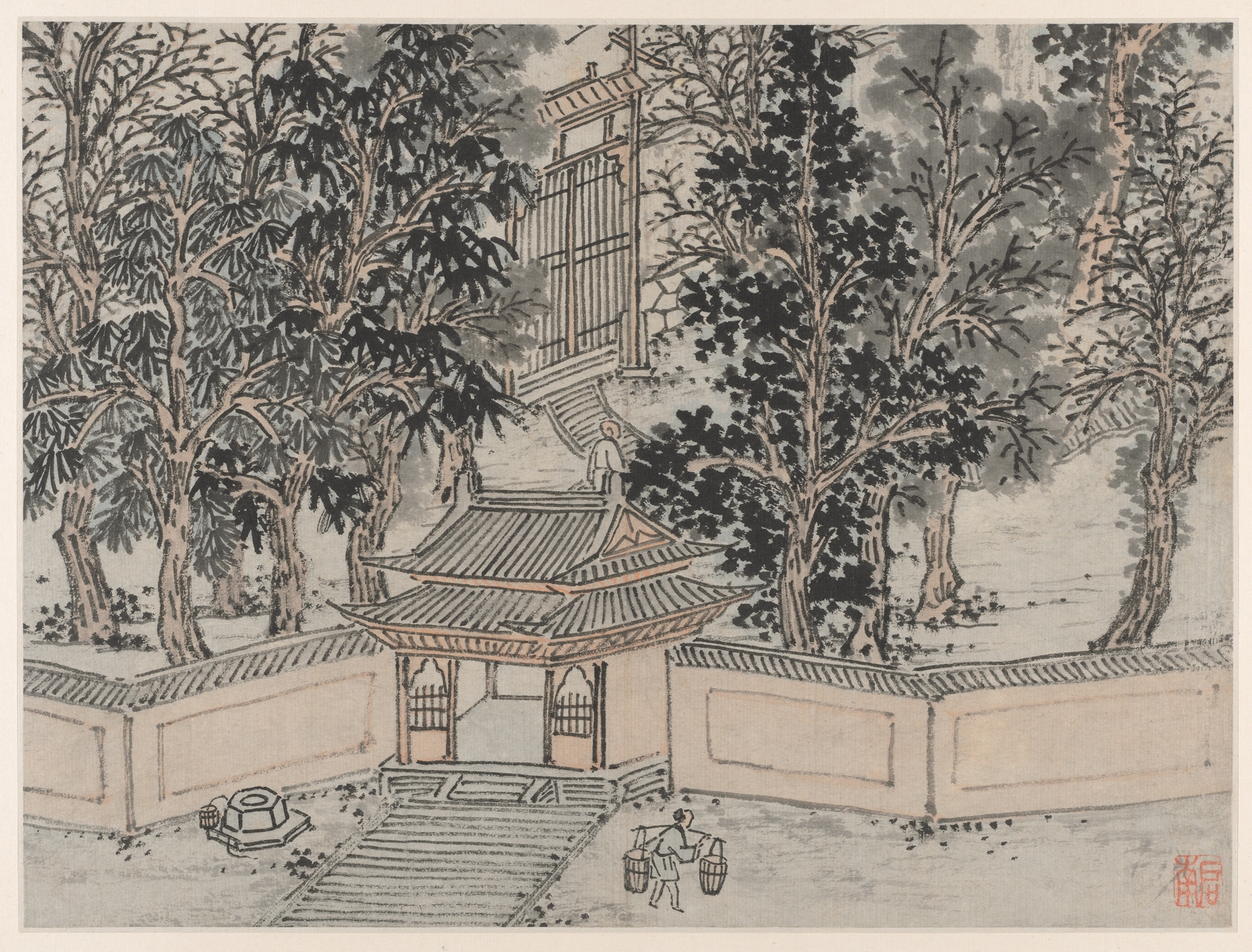
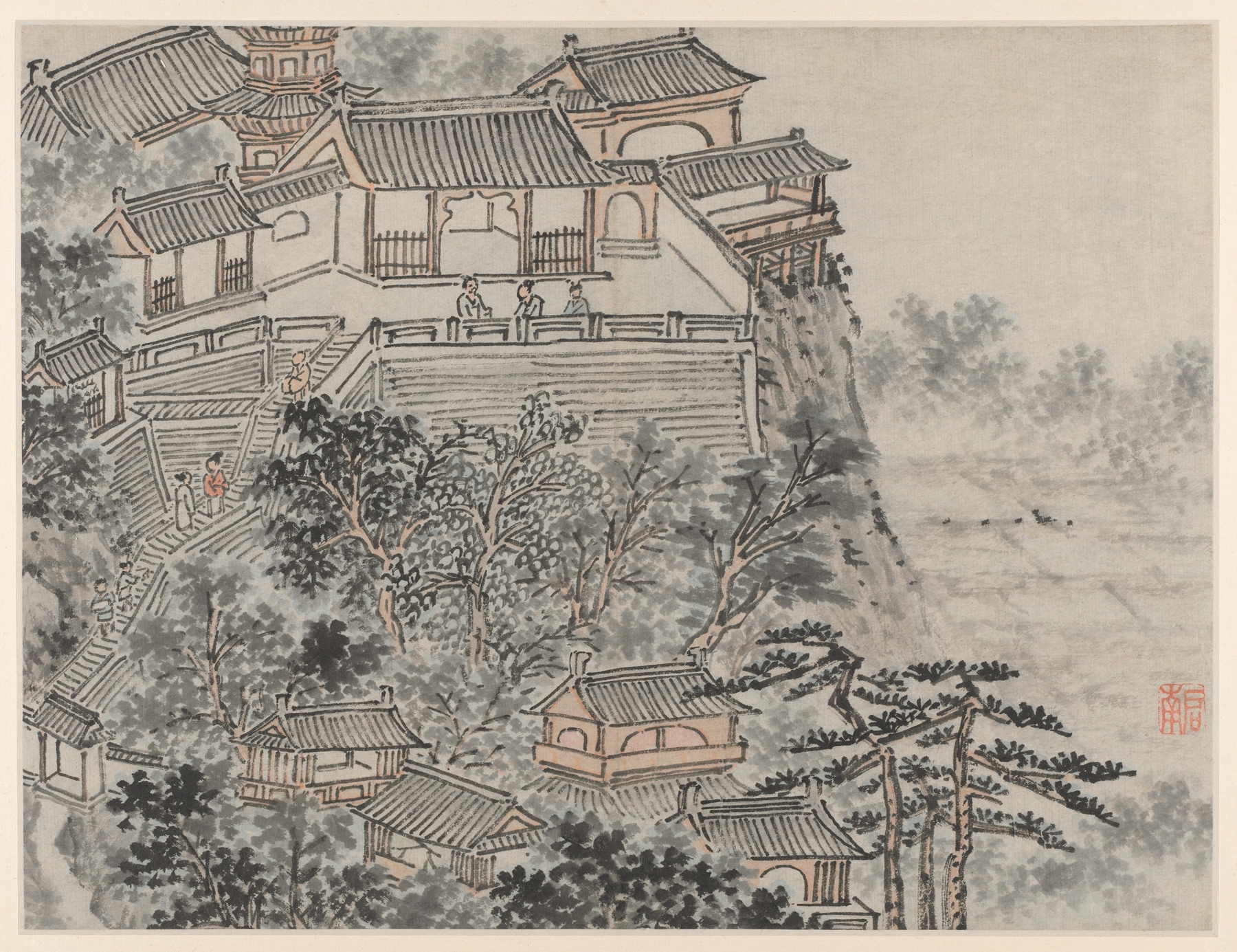
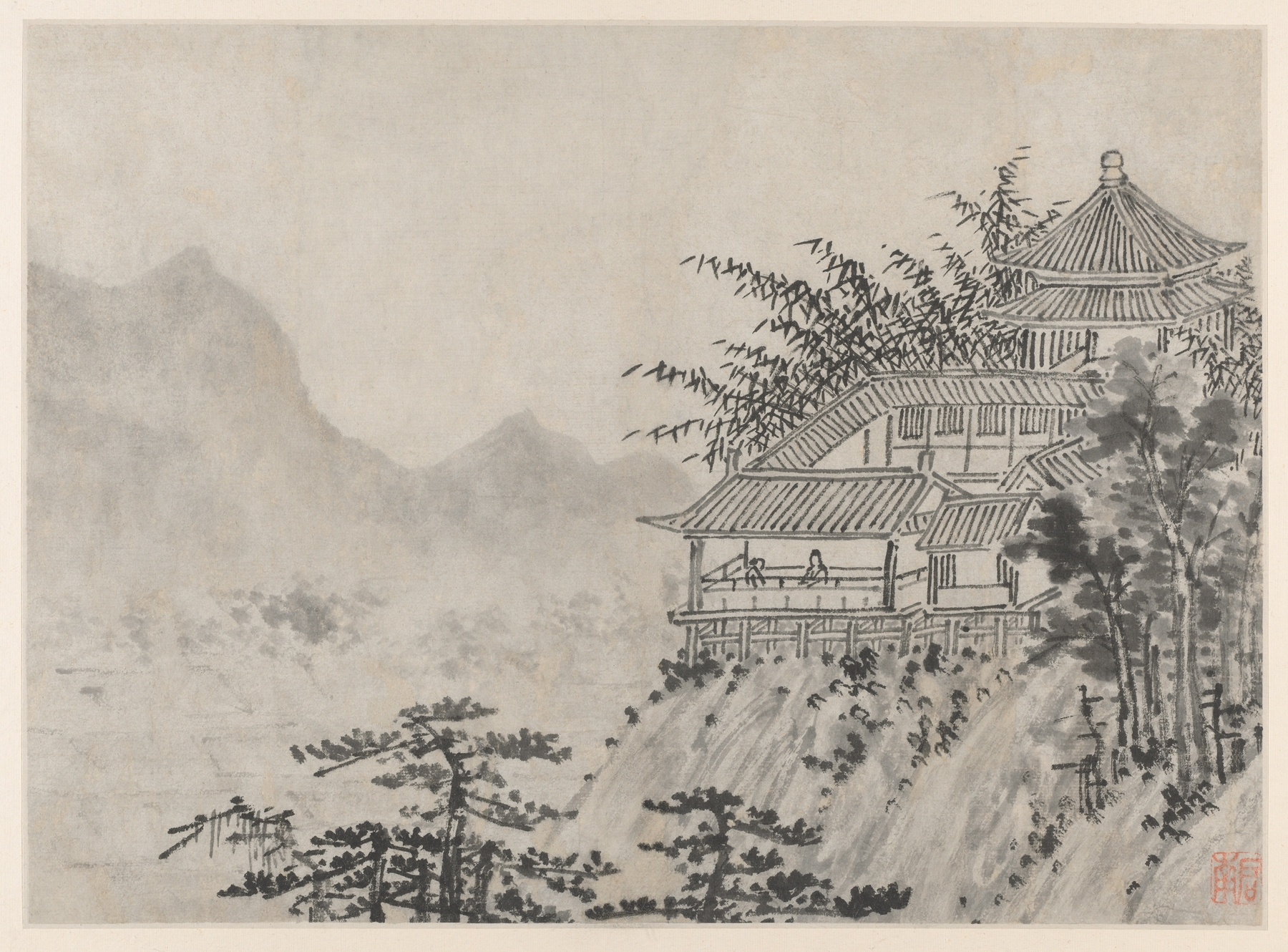
The Thousand Buddha Hall and the Pagoda of the ‘Cloudy Cliff’ Monastery, from Twelve Views of Tiger Hill, Suzhou — History & Analysis
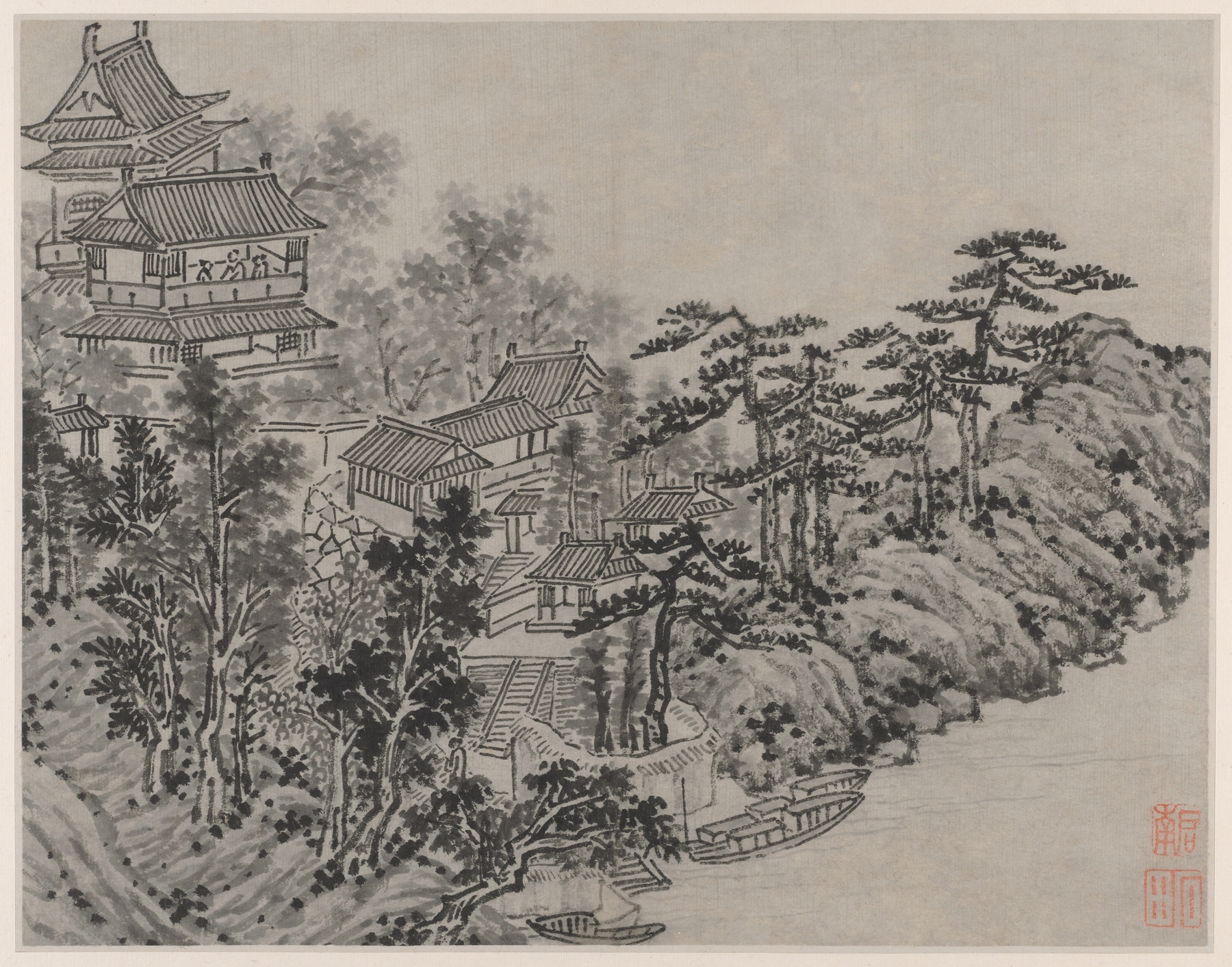
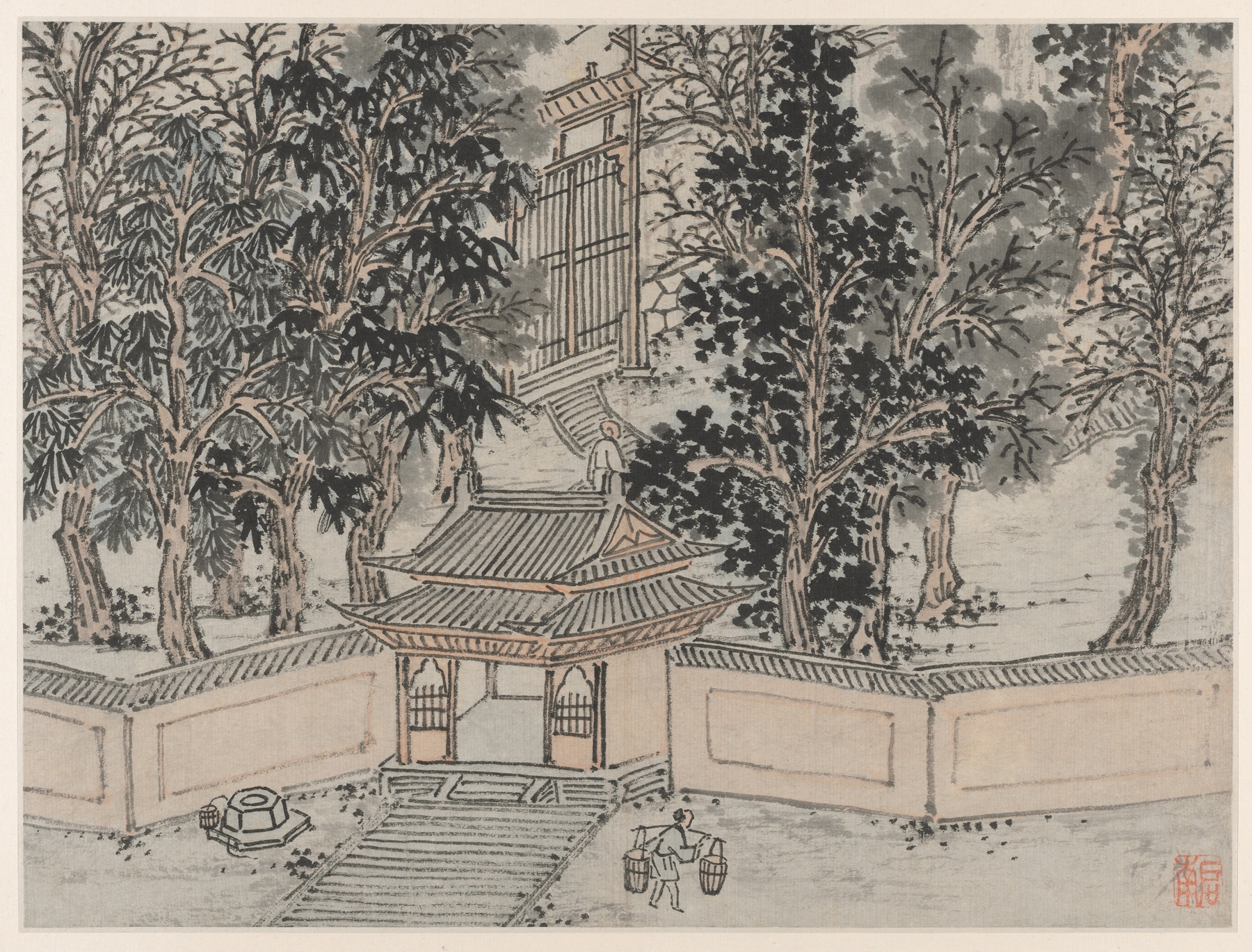
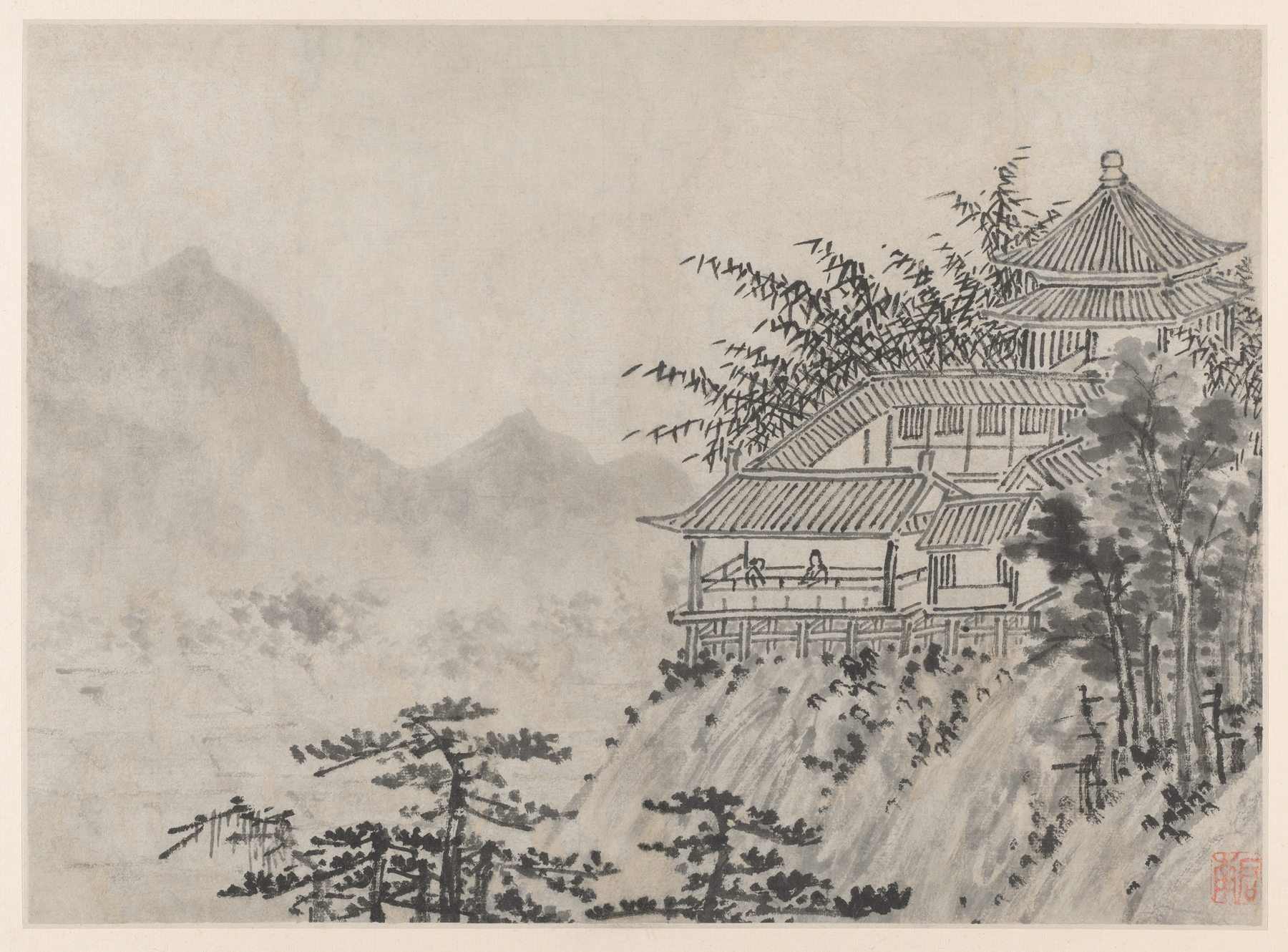
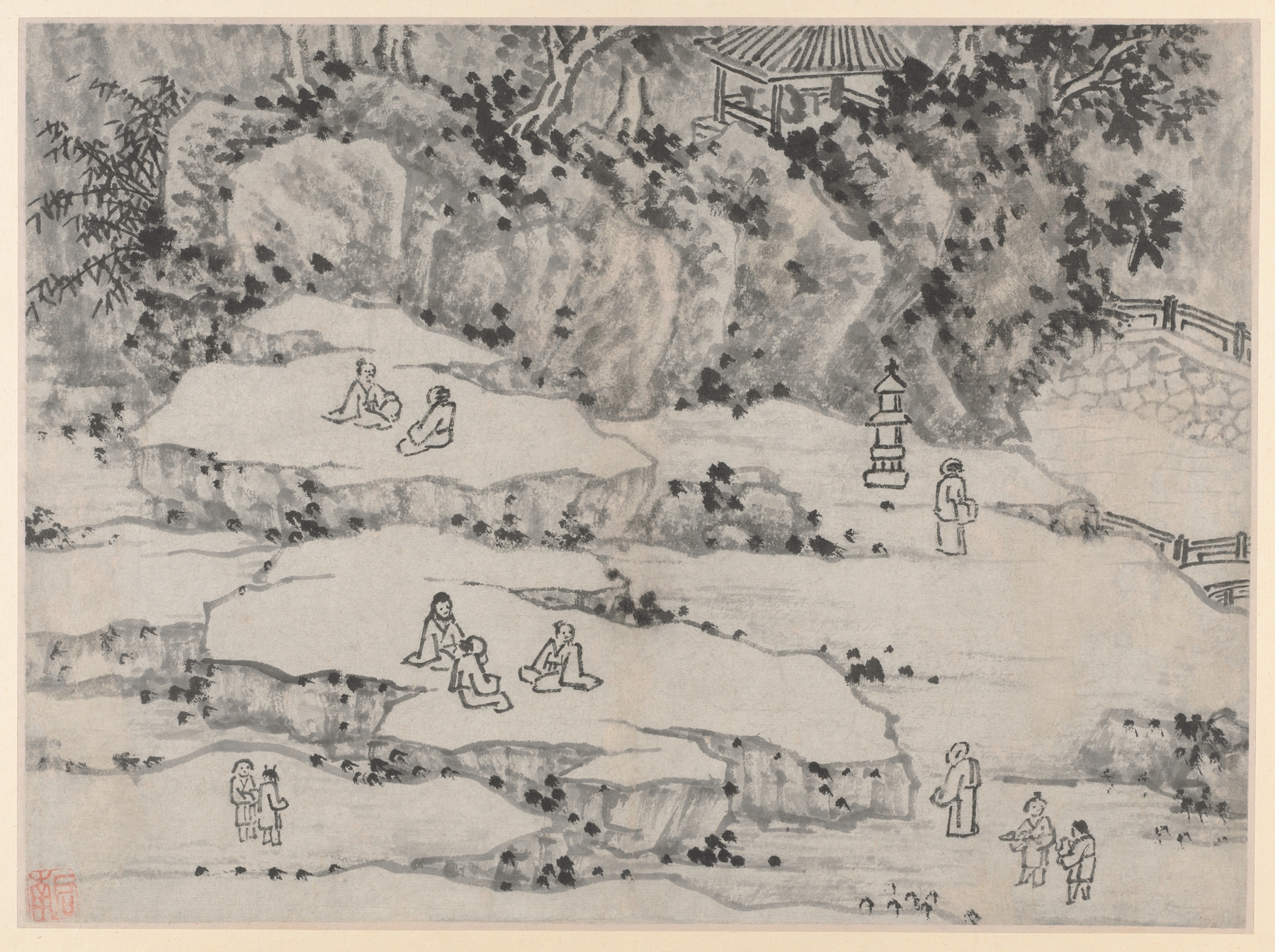
Could beauty survive in a century of chaos? This question resonates through the serene landscape painted after 1490, a moment frozen in time, echoing whispers of betrayal hidden within its tranquil layers. Look to the left at the delicate brushwork that constructs the ethereal pagoda, its elegant lines reaching skyward, seemingly untouched by the tumult around it. Notice how the soft greens and blues merge in a harmonious gradient, inviting the eye to explore the tranquil waters below.
The composition is meticulously balanced; the structures rise like sacred sentinels against a backdrop of gentle mists, while the delicate reflections in the water suggest fragility, hinting at the underlying tension in this moment of peace. As you delve deeper, consider the profound contrast between the serene beauty of the temple and the lurking chaos of the era. The intricate details of the landscape, with its lush foliage and contemplative figures, speak to the stability of tradition amidst societal unrest. The painting not only evokes a sense of tranquility but also serves as a poignant reminder of cultural heritage's vulnerability, as betrayal often lies just beneath the surface, threatening to unravel the fabric of existence.
During this period, Shen Zhou, a leading figure of the Wu School of landscape painting, was grappling with the shifting tides of Ming dynasty politics and the decline of traditional values. Creating this piece at a time when artistic expression was flourishing yet politically precarious, he sought to capture the essence of enduring beauty, even as the world around him trembled with uncertainty. His mastery of ink and brush forged a legacy that would resonate through the centuries, a testament to art's power to transcend turmoil.