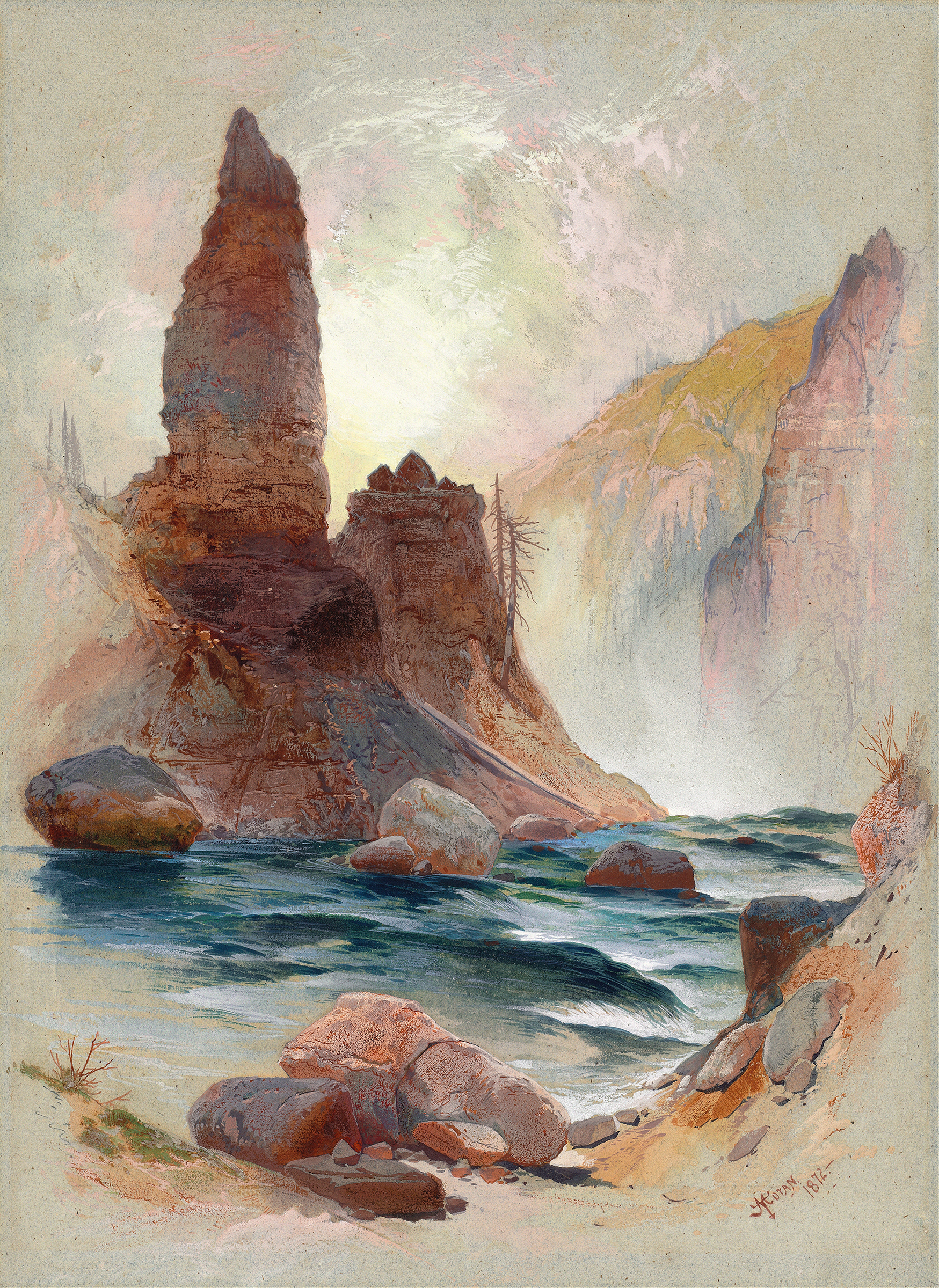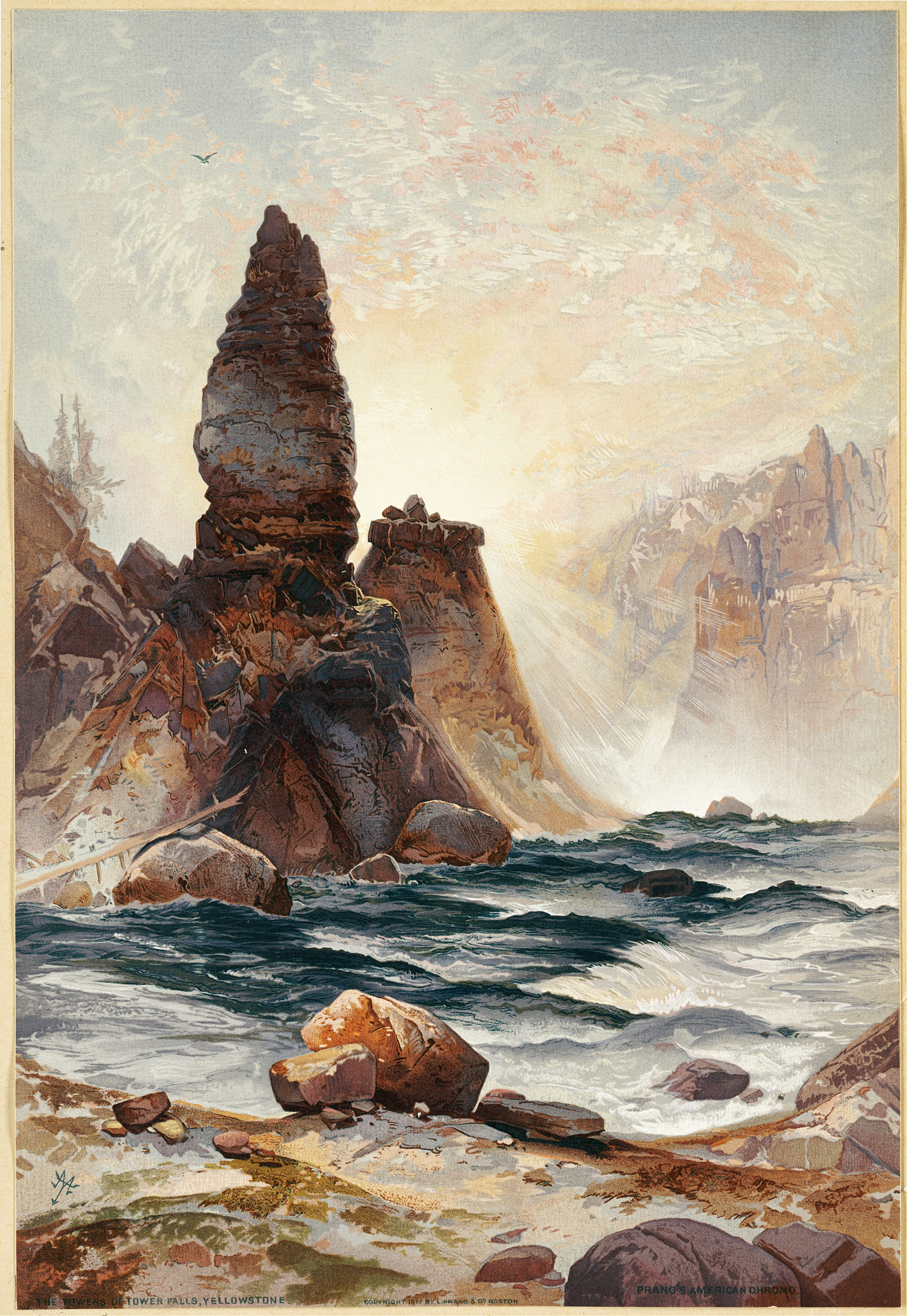
The Towers of Tower Falls, Yellowstone — History & Analysis
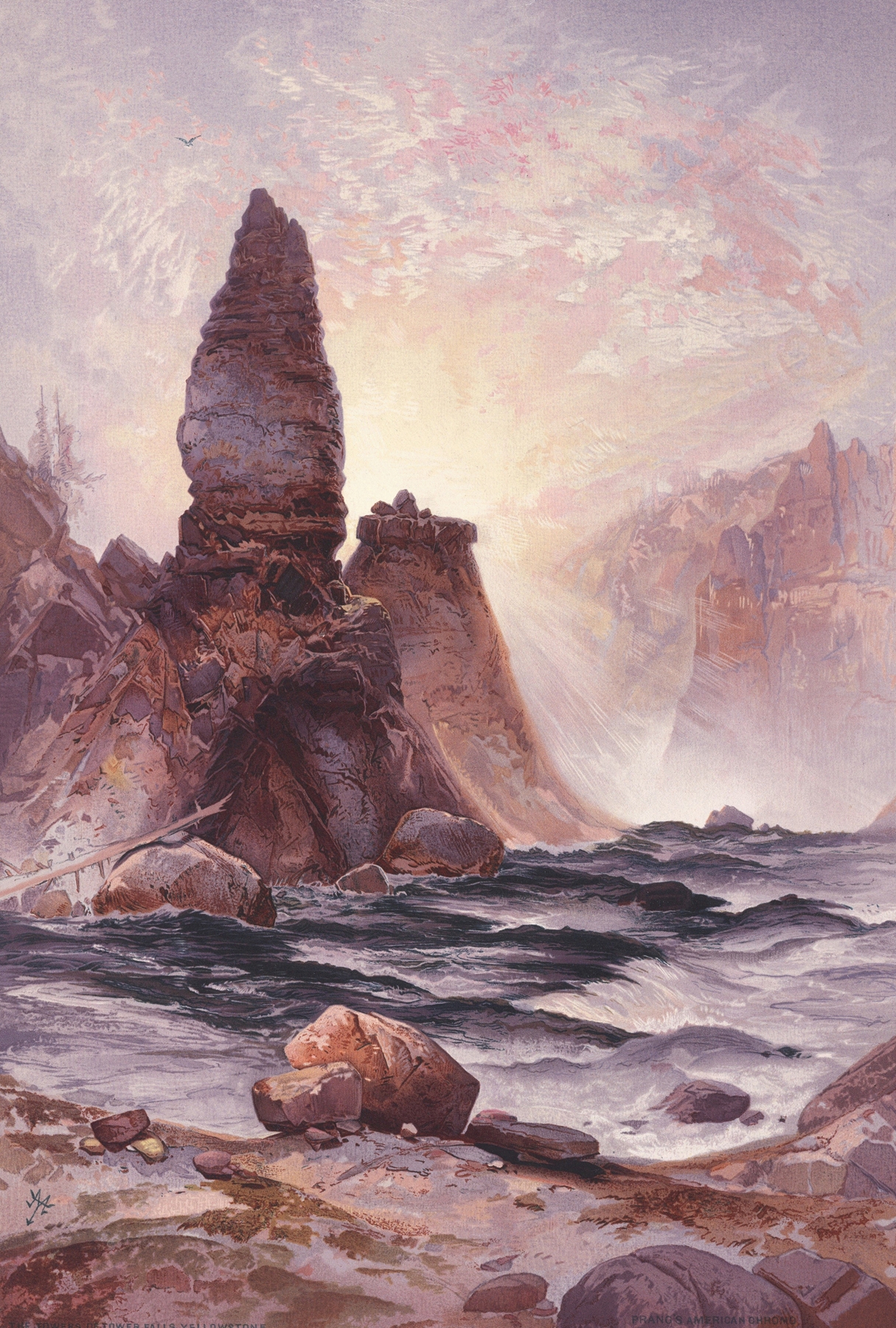
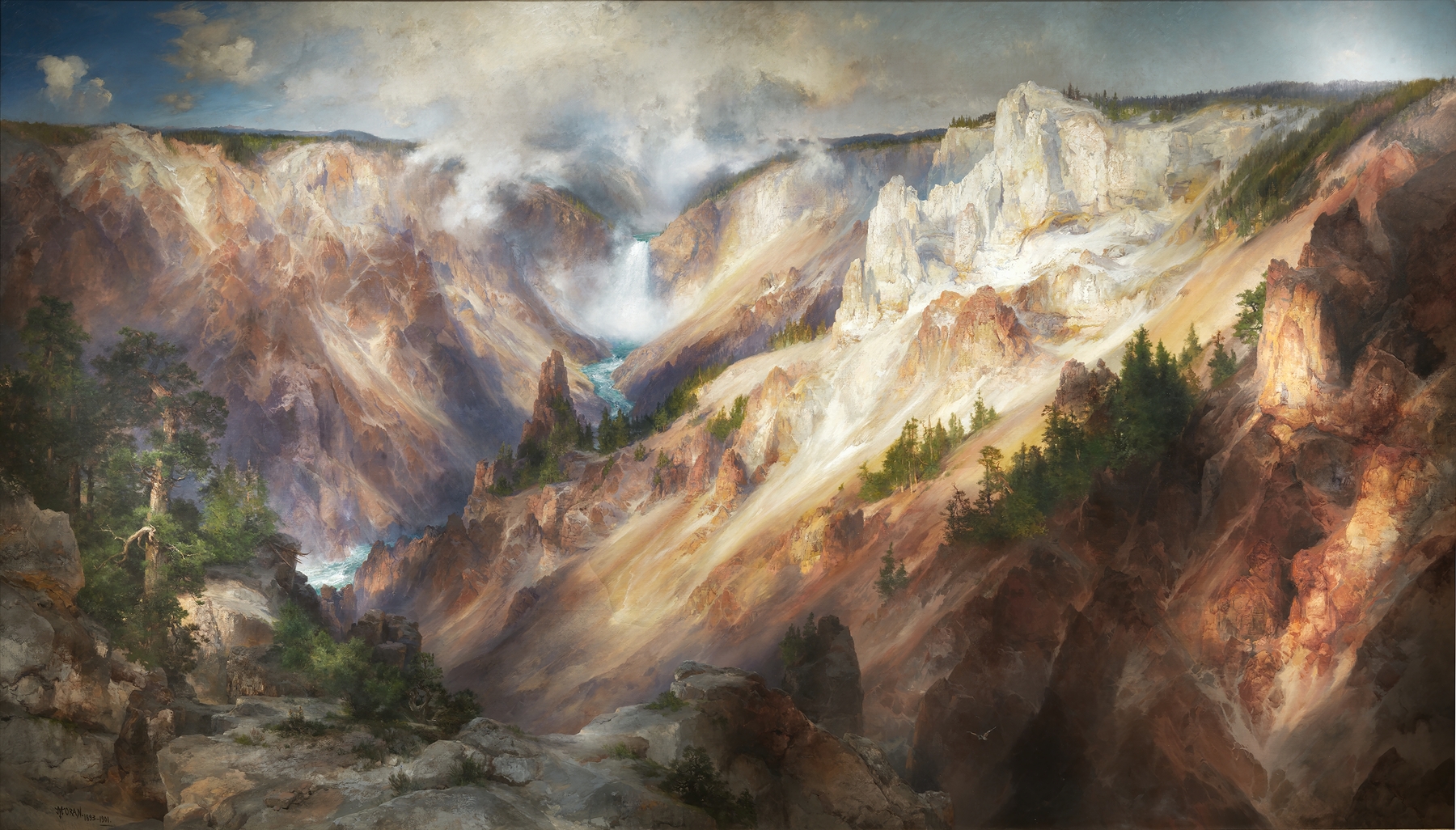
Could a single brushstroke hold eternity? In The Towers of Tower Falls, Yellowstone, the sweeping vistas and towering formations invite us to contemplate the vastness of nature and the artist’s revolutionary vision. Focus on the vibrant hues that dominate the canvas, guiding your gaze toward the strikingly vertical cliffs on the left. Notice how the warm oranges and rich browns contrast with the cool blues of the sky, creating a dialogue between earth and heaven.
The meticulous brushwork captures the essence of light filtering through the clouds, revealing the hidden textures of the rock face and the delicate mist rising from the waterfall. You can almost feel the coolness in the air and hear the distant rush of water. Yet, beneath the surface, this piece embodies a profound tension between wilderness and civilization. The imposing towers stand as guardians of an untouched landscape, while the presence of the waterfall suggests the relentless passage of time.
Moran's choice to depict this natural wonder reflects a growing awareness of the American landscape, celebrating both its beauty and fragility, urging viewers to contemplate their relationship with the environment. In 1875, the artist worked on this piece during a transformative period in American art history, advocating for the appreciation of the American West. As a member of the Hudson River School, Moran was pivotal in capturing the sublime beauty of untouched lands. The nation was on the brink of expansion, and his works played a crucial role in the burgeoning conservation movement, inspiring a sense of wonder and urgency in protecting these natural treasures.