The Via Mala in Graubünden — History & Analysis
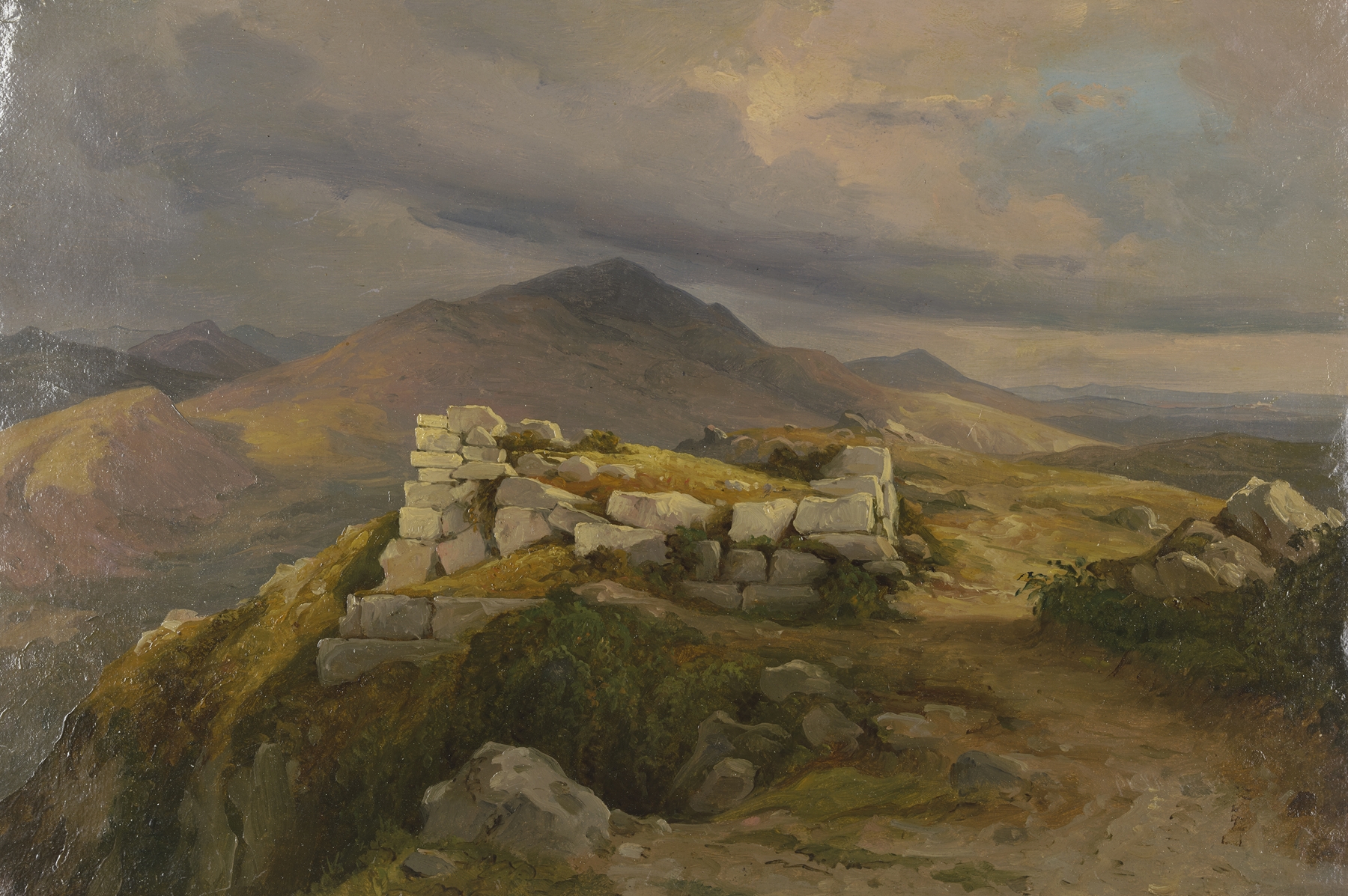
Can paint confess what words never could? The vast, rugged landscape embodies destiny, hinting at the intertwined fates of both nature and humanity. Look to the center of the canvas where jagged cliffs rise dramatically, almost touching the stormy sky. The artist employs a rich palette of greens and browns to illustrate the surrounding foliage, while the swirling clouds overhead render a sense of movement, as if nature itself is holding its breath.
Notice the meandering river at the valley's base, reflecting bits of light like shards of broken glass—a reminder of life's fragility against the backdrop of relentless mountains. In the distance, a lone figure traverses the rocky path, their smallness emphasizing humanity's fleeting presence within the grandeur of the natural world. This contrast captures the inherent struggle between man and nature, evoking feelings of solitude and introspection. The tumultuous sky looms over the scene, suggesting an impending storm, perhaps a metaphor for life's unpredictable twists and the weight of destiny hanging in the balance.
In 1872, while creating this piece, the artist found himself navigating the complexities of the German Romantic movement, which celebrated nature’s sublime beauty and man's relationship with it. Living in Berlin, he was influenced by the burgeoning interest in landscape painting, a genre that had become a powerful vehicle for personal expression. This work reflects not only his artistic journey but also the period's exploration of the majestic and often overpowering forces of nature.