View of Frankfurt on the Main — History & Analysis
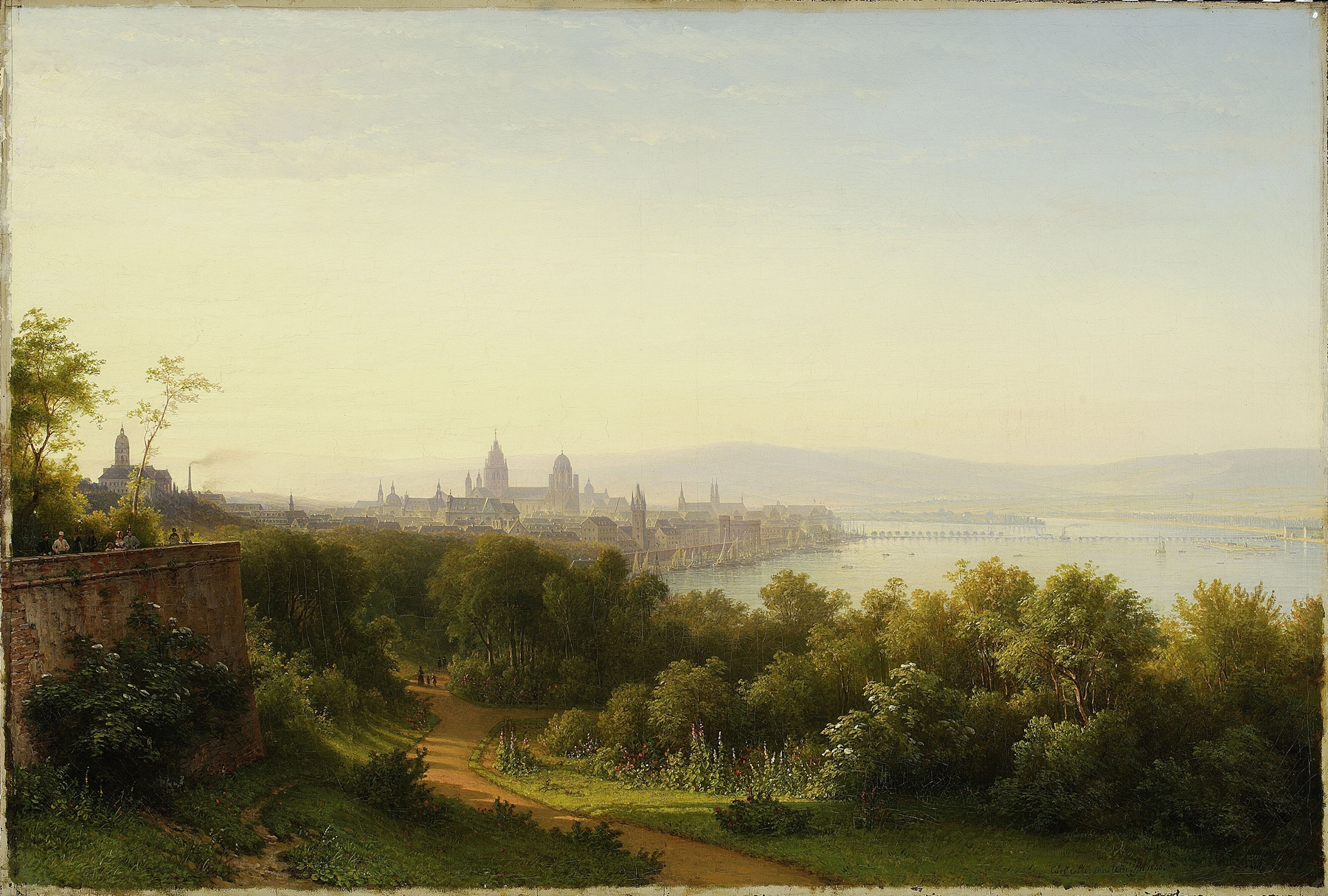
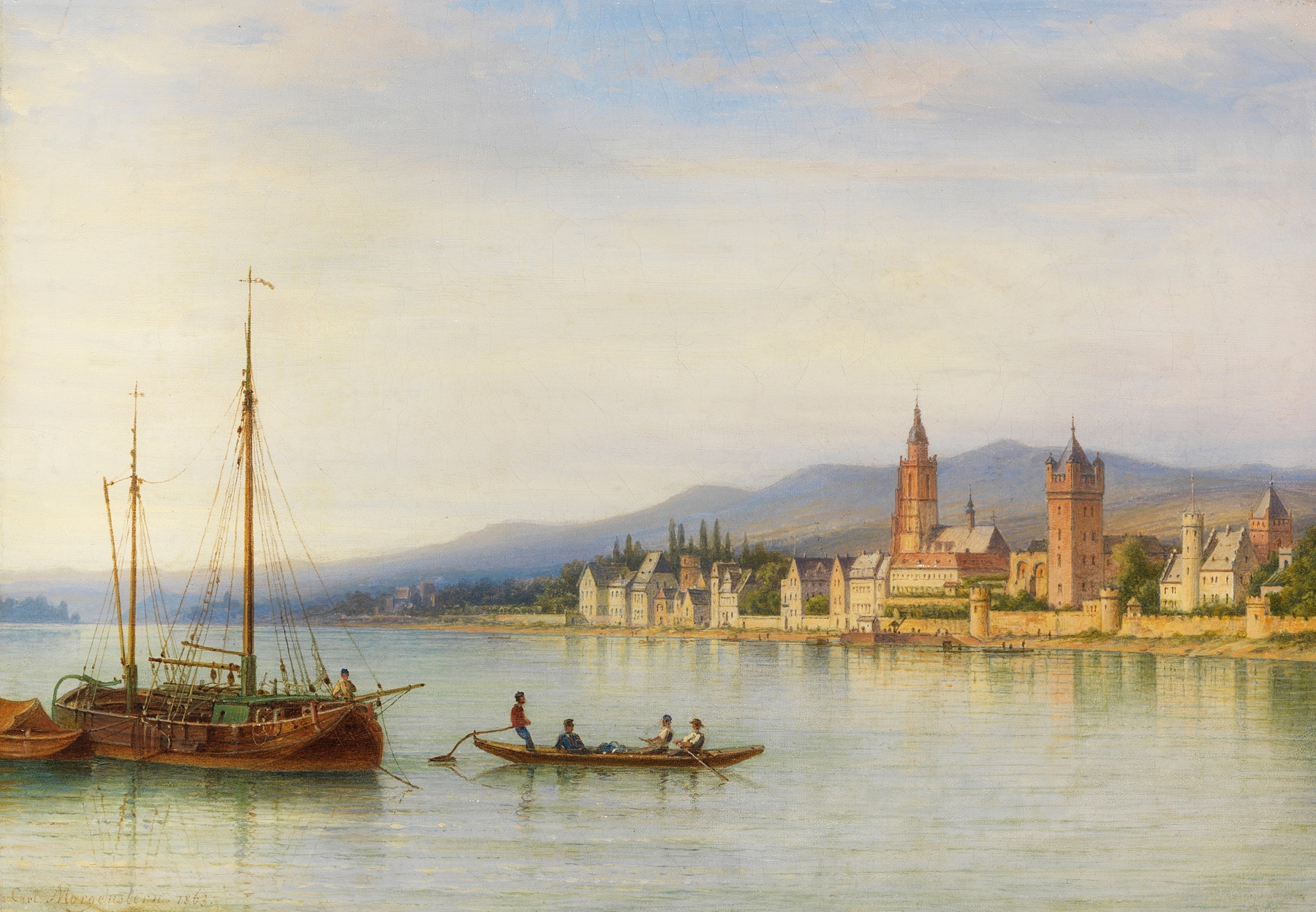
“To paint is to remember what time wants us to forget.” This sentiment echoes through the vibrant strokes and expansive vista captured by the artist, evoking a deep sense of longing for moments suspended in time. Look to the horizon where the soft glow of the setting sun bathes Frankfurt’s skyline in a warm, golden hue. The delicate balance of light and shadow highlights the architectural beauties, from the spires of the Rathaus to the gentle curves of the riverbanks. Notice how Morgenstern's meticulous brushwork gives texture to the clouds, allowing them to drift dreamily above the bustling city, while the shimmering water reflects both the skyline and the ethereal sky, creating a harmonious connection between land and heaven.
Beneath the surface beauty lies a contrast between the vibrancy of urban life and the stillness of nature. The flowing river not only frames the city but also symbolizes the passage of time, while the serene colors suggest a wistfulness for the past. Each building tells its own story; some stand proudly, as guardians of history, while others fade silently into their surroundings—inviting viewers to ponder what memories linger in this landscape, both personal and collective.
In 1889, Morgenstern was immersed in a transformative era for art, marked by the rise of Impressionism and an increased interest in capturing the effects of light. Working in Frankfurt, he experienced the swift changes of industrialization, reflecting a world bridging old traditions and modern advancements. It was a time when artists sought to reconcile their emotional responses to a rapidly changing society, and this work embodies that quest for connection.