View of Mainz on the Rhine — History & Analysis
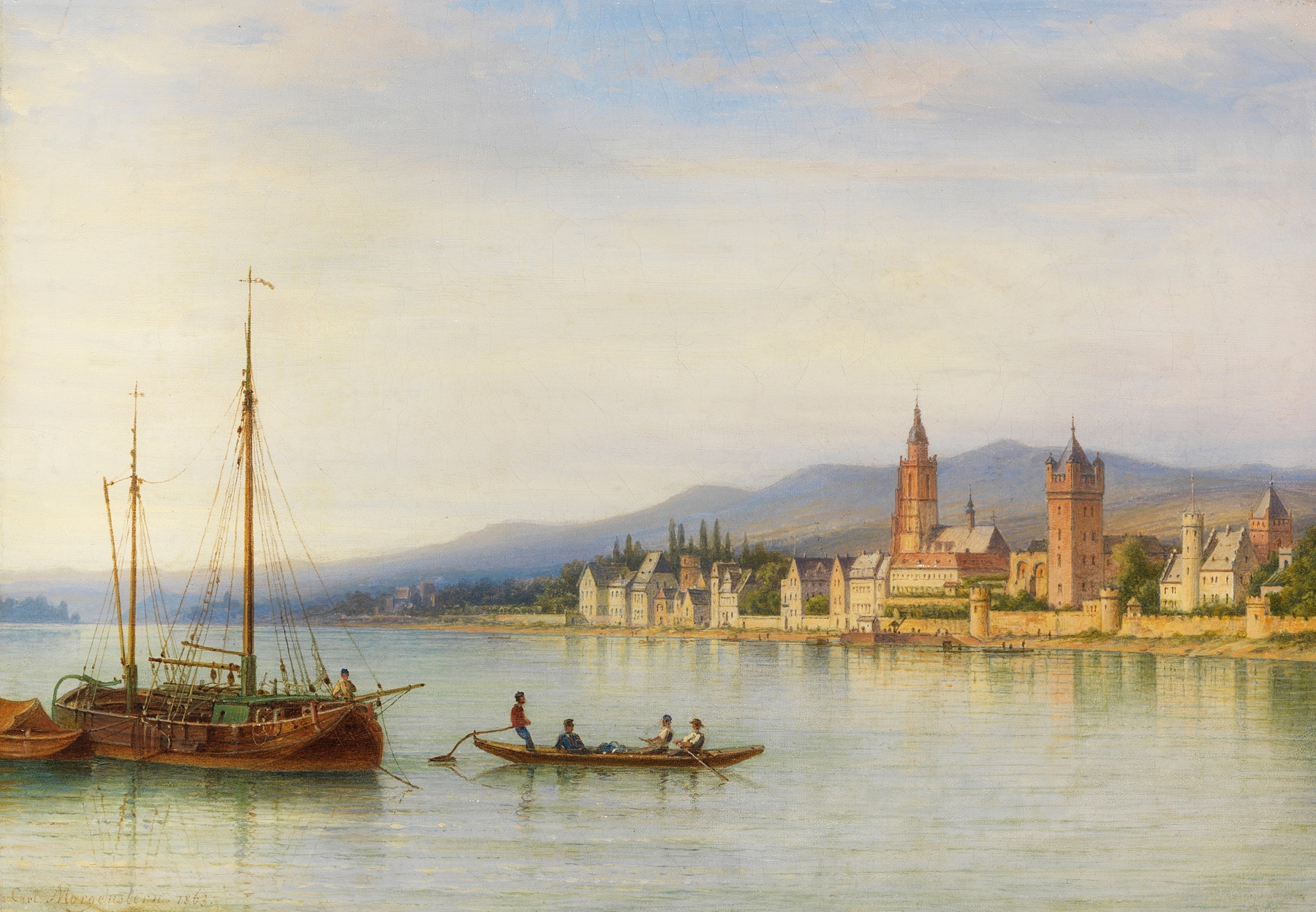
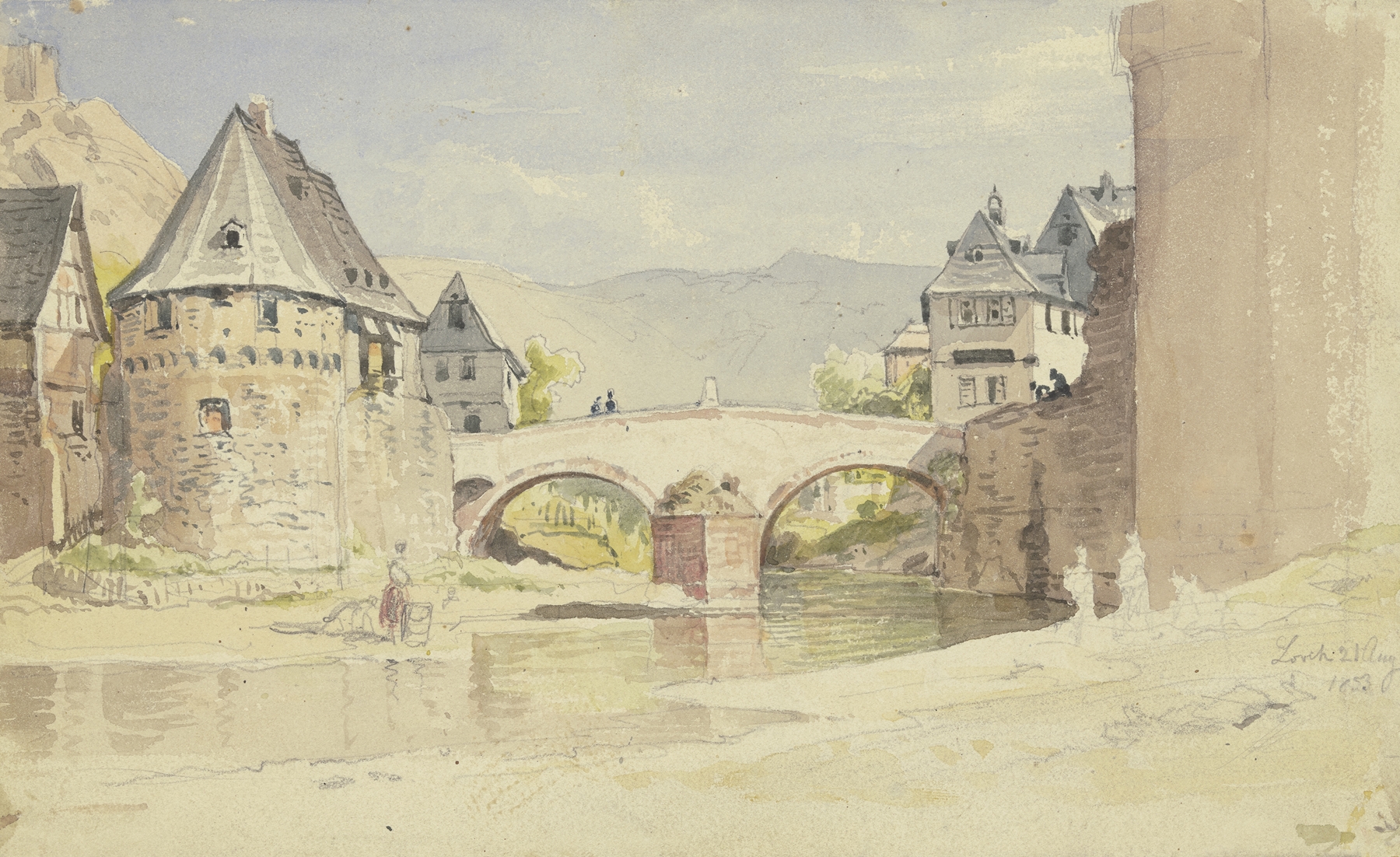
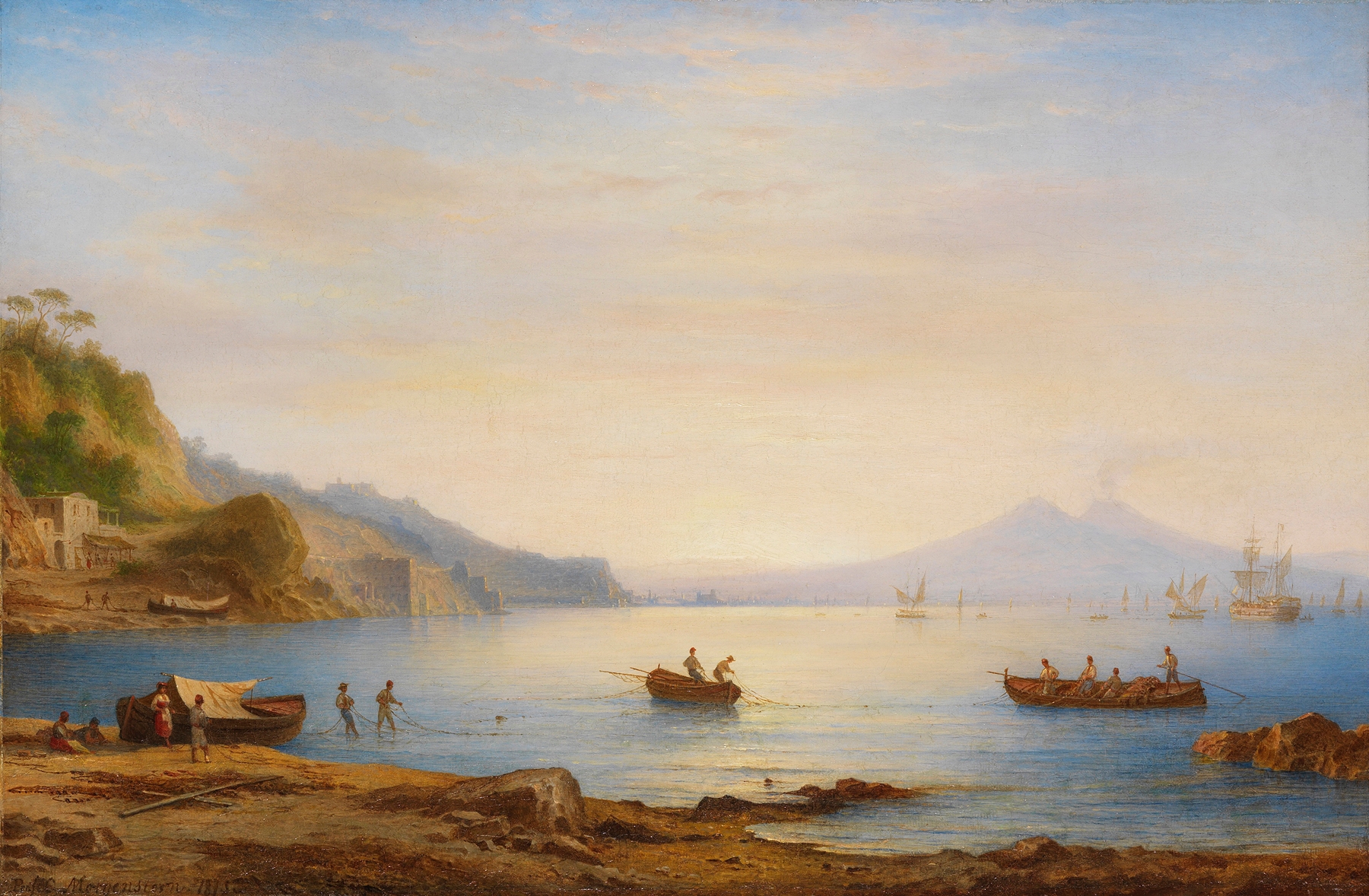
Who listens when art speaks of silence? In View of Mainz on the Rhine, the hush of a tranquil landscape beckons contemplation, inviting viewers to engage with its serene beauty and the weight of unspoken narratives. Look to the left where gentle ripples of the Rhine catch the light, leading your eye toward the softly illuminated buildings of Mainz. The subtle interplay of cool blues and warm golden tones evokes a sense of harmony, while the painter’s meticulous brushwork captures not just the architecture, but the fleeting moments of daily life.
A solitary boat glides past, its path cutting through the calm waters, creating a bridge between the viewer and the world depicted, urging us to reflect on our place within it. Beneath the surface, layers of significance emerge. The vibrant sky, filled with tender hues, contrasts starkly with the stillness of the water, suggesting the duality between the ephemeral and the eternal. The towering spires of the city seem to stretch skyward, symbolizing aspiration and the human spirit's yearning for transcendence.
Meanwhile, the quietness of the scene invites introspection, hinting at stories entwined in silence that echo through time. In 1846, Carl Morgenstern painted this piece during a period where Romanticism was flourishing in Europe, underscoring a fascination with nature and the sublime. Having settled in Düsseldorf, he was influenced by his surroundings and the growing interest in capturing local landscapes. This moment in his career reflects a broader movement in art, resonating with a deep-seated desire to explore not just the visible, but the emotional landscapes that lie beyond.