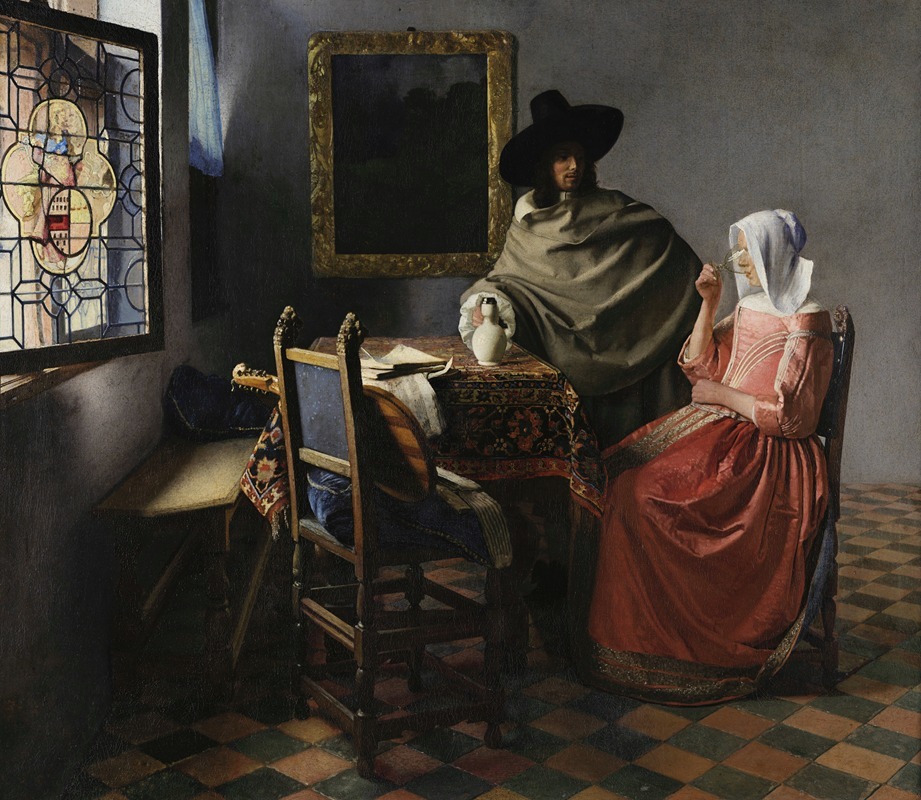

Ladies and gentlemen, take a close look at Johannes Vermeer’s The Wine Glass (c. 1658–1660), a masterful depiction of domestic life in 17th-century Delft. Notice the warm, golden light flooding the room from the left, reflecting off the glassware and illuminating the delicate expressions of the figures. Vermeer captures a moment of quiet social interaction: a woman lifts her wine glass, while a gentleman leans in, perhaps speaking or listening, creating a subtle narrative of human connection and courtship. Pay attention to the meticulous details—the translucent wine in the glass, the shimmering silver jug, the patterned floor, and the carefully draped clothing—all rendered with Vermeer’s signature precision. The composition is balanced, guiding your eye from the figures to the objects and back, creating a sense of harmony and intimacy. There’s a gentle tension here: the slightly raised glass hints at celebration, flirtation, or perhaps a fleeting toast, inviting viewers to imagine the story unfolding. What sets this work apart is Vermeer’s ability to combine ordinary life with extraordinary artistry. Unlike grand historical or religious scenes, this painting elevates the everyday, turning a simple moment of shared wine into a meditation on human presence, light, and atmosphere. It’s a quiet, luminous reflection of social rituals, captured with the subtle genius that defines Vermeer’s work.