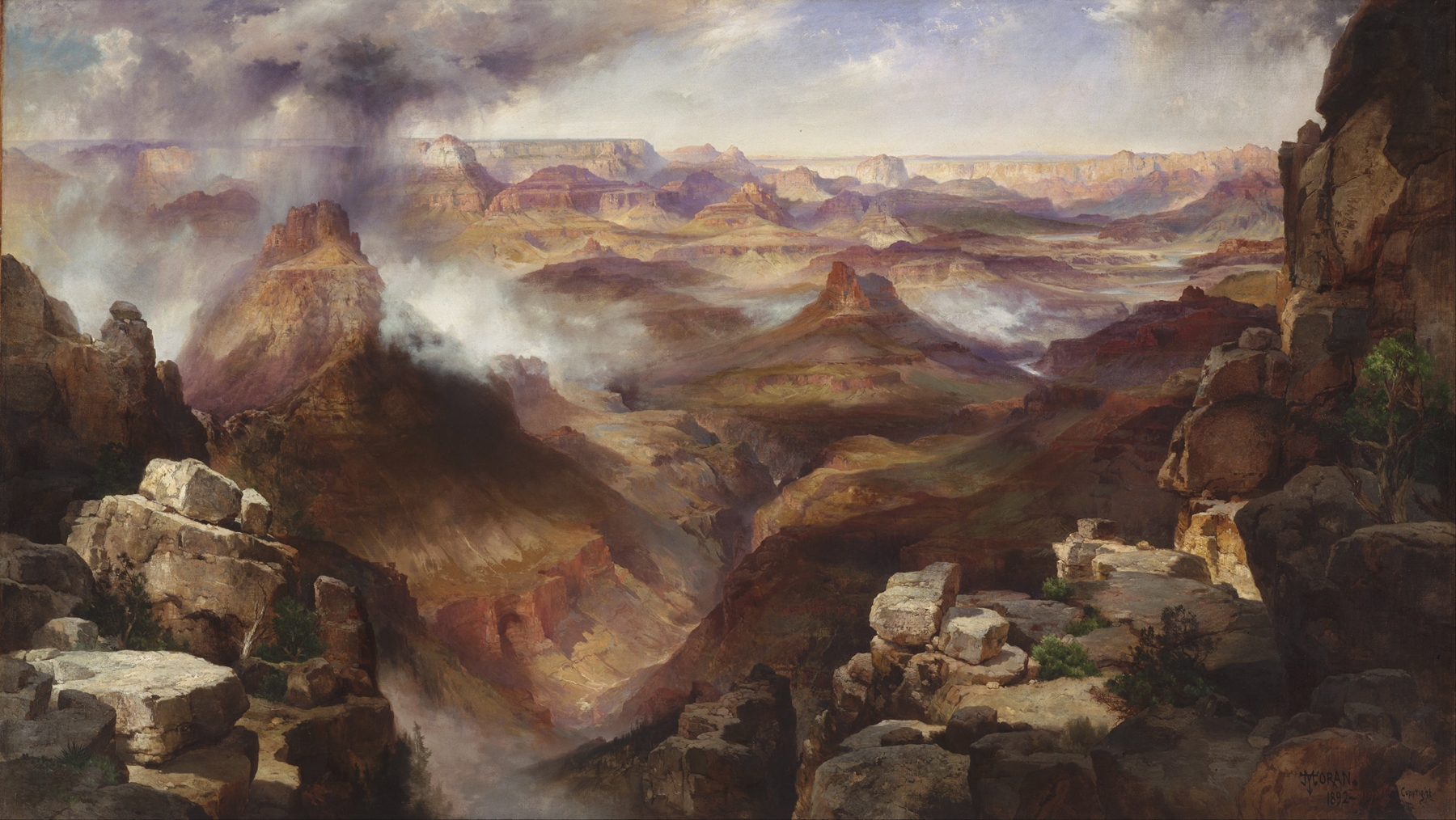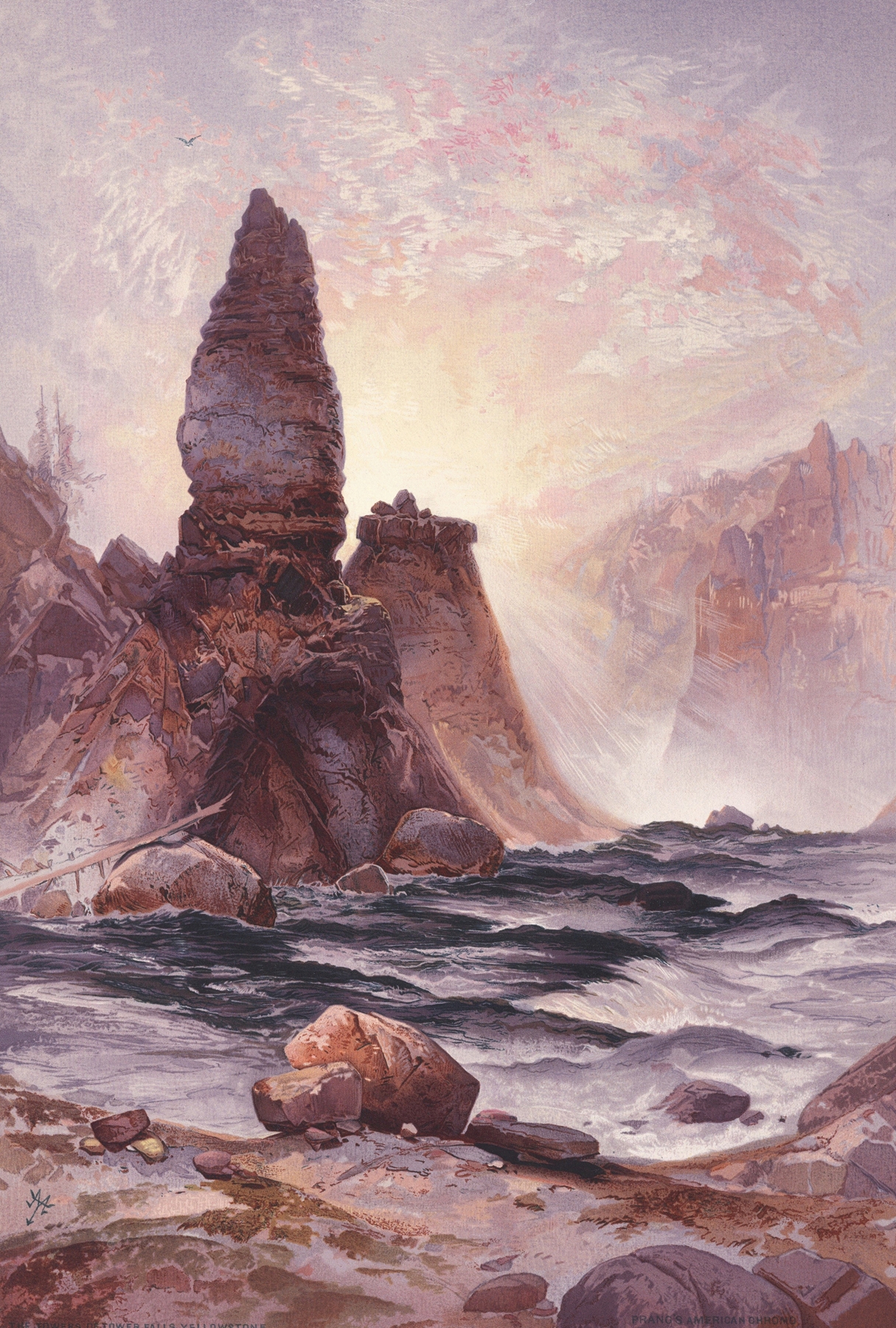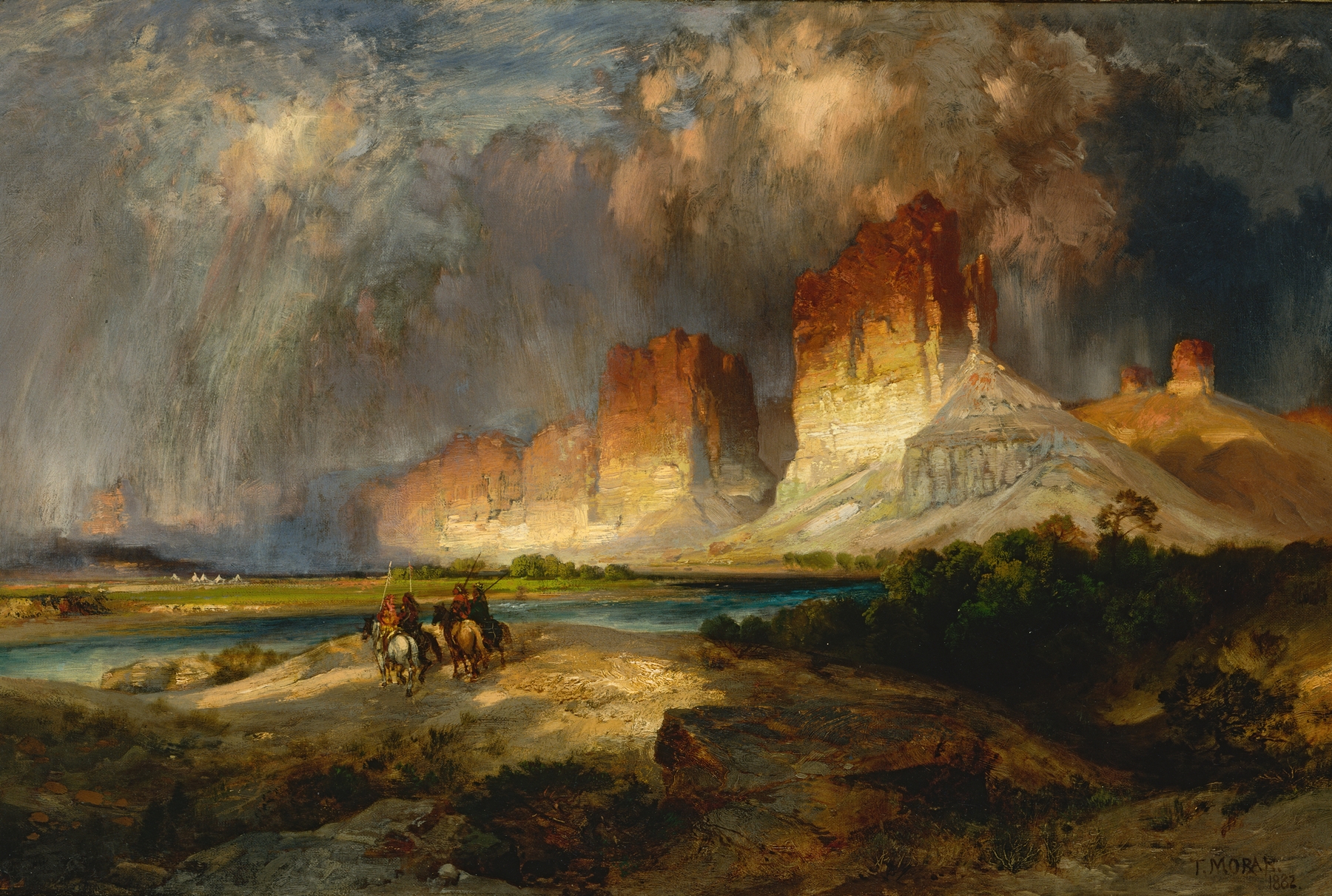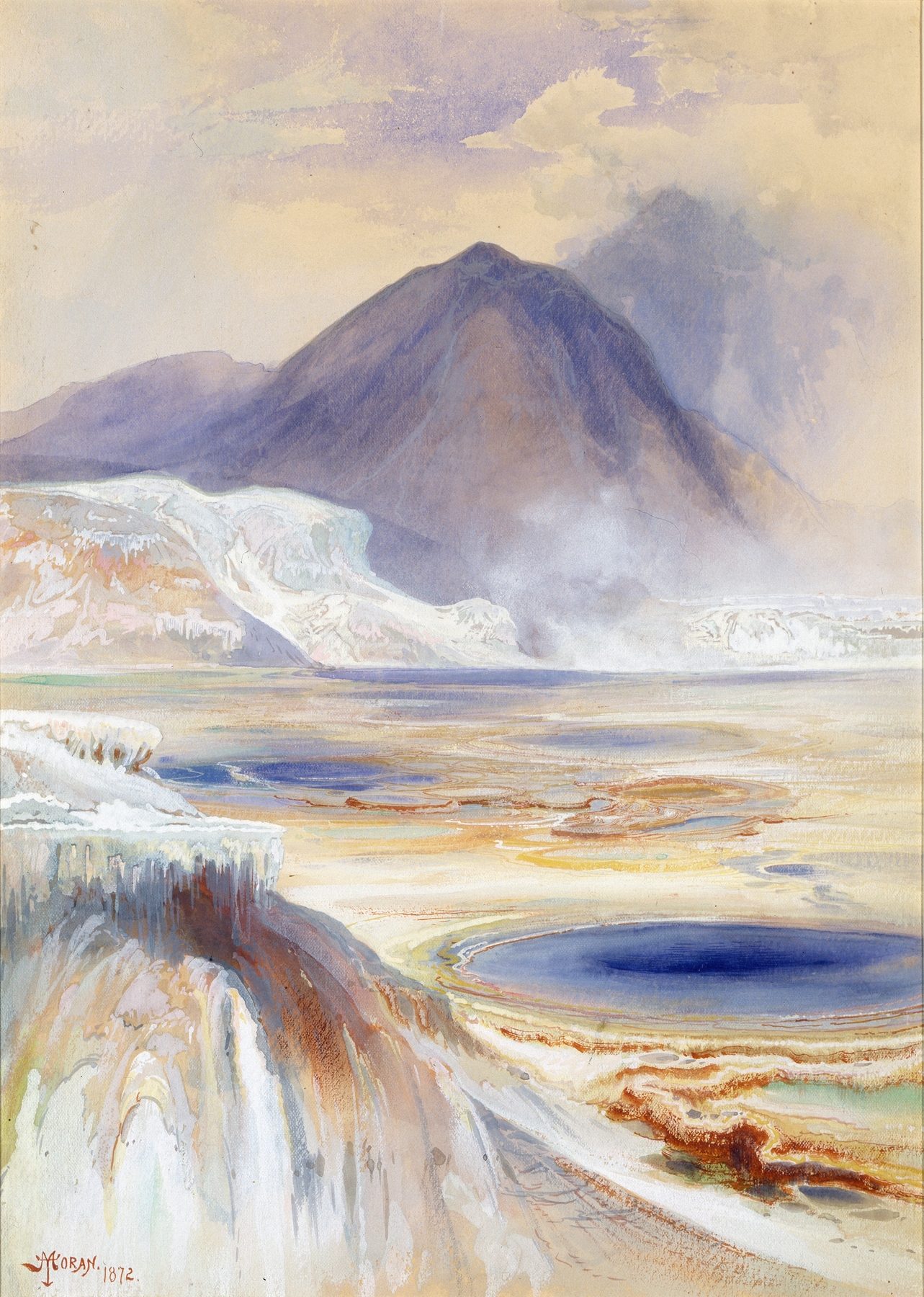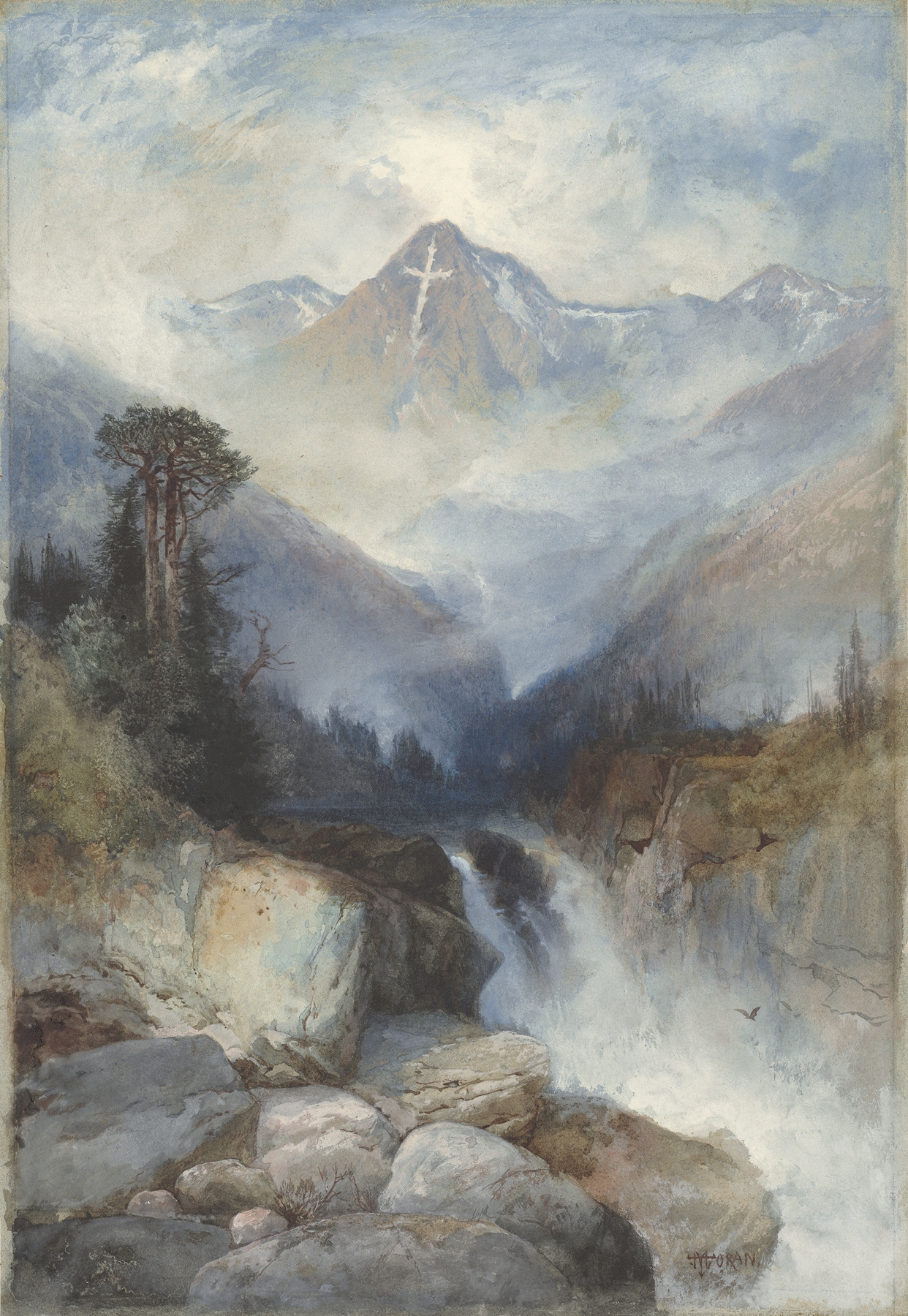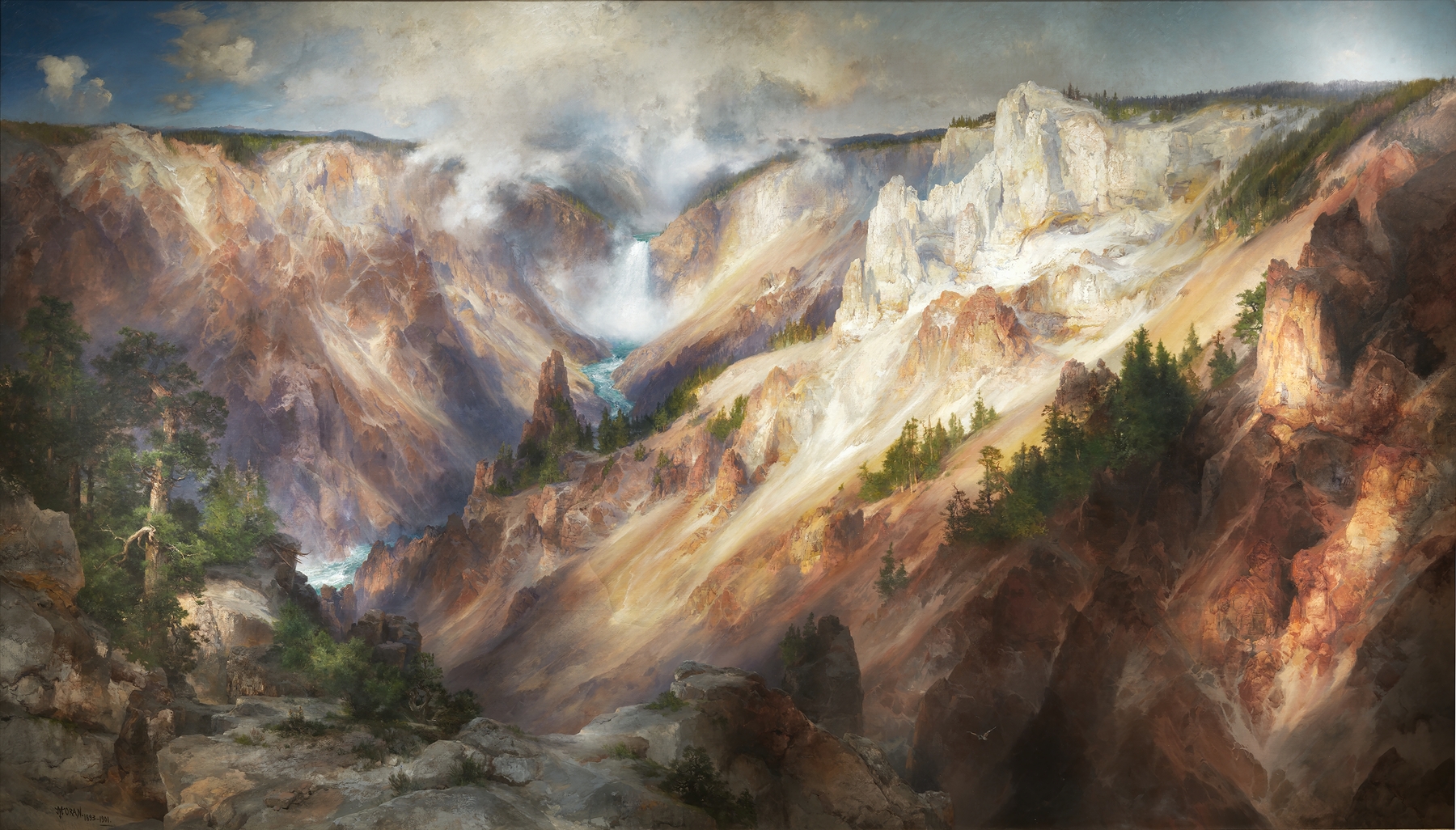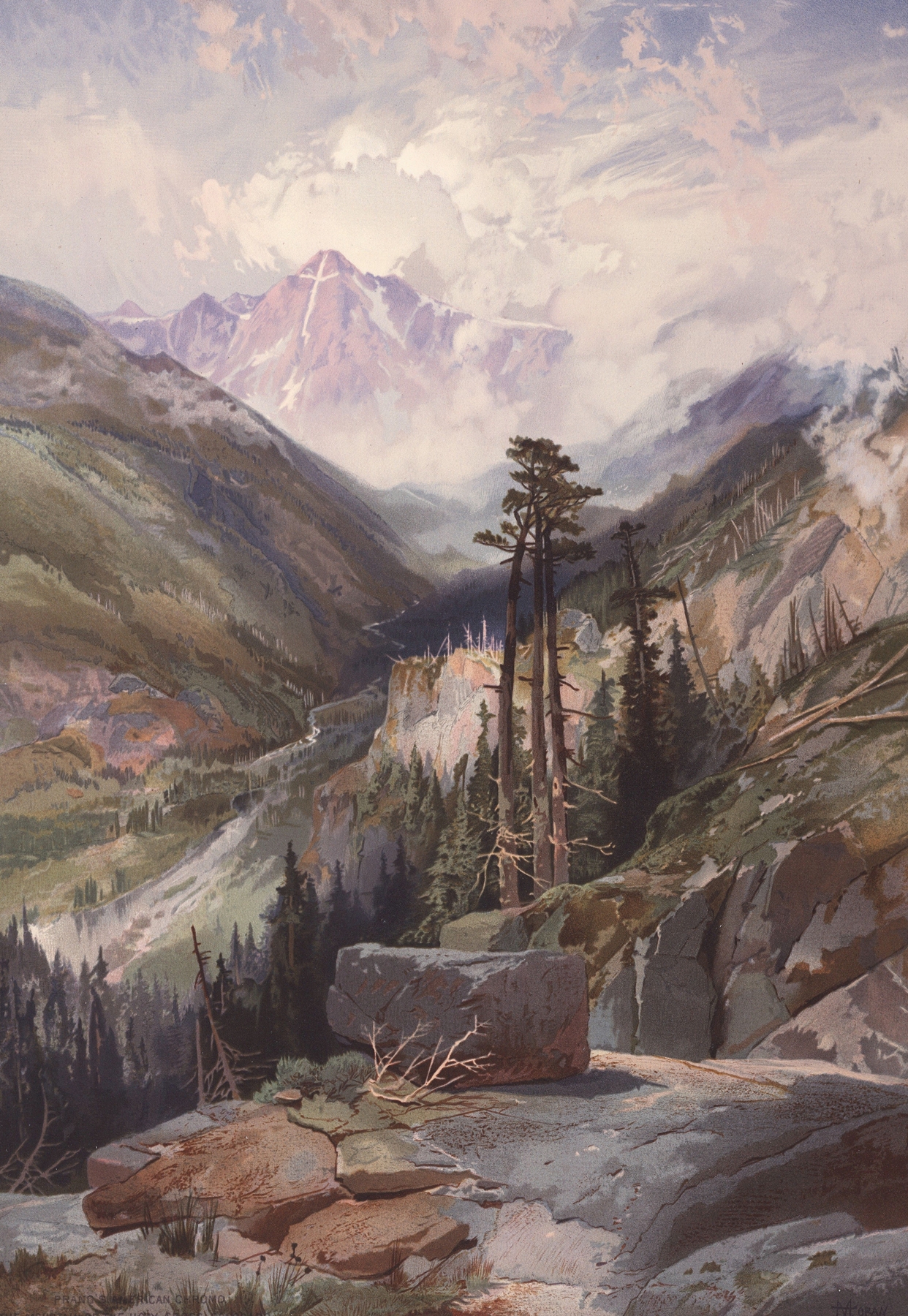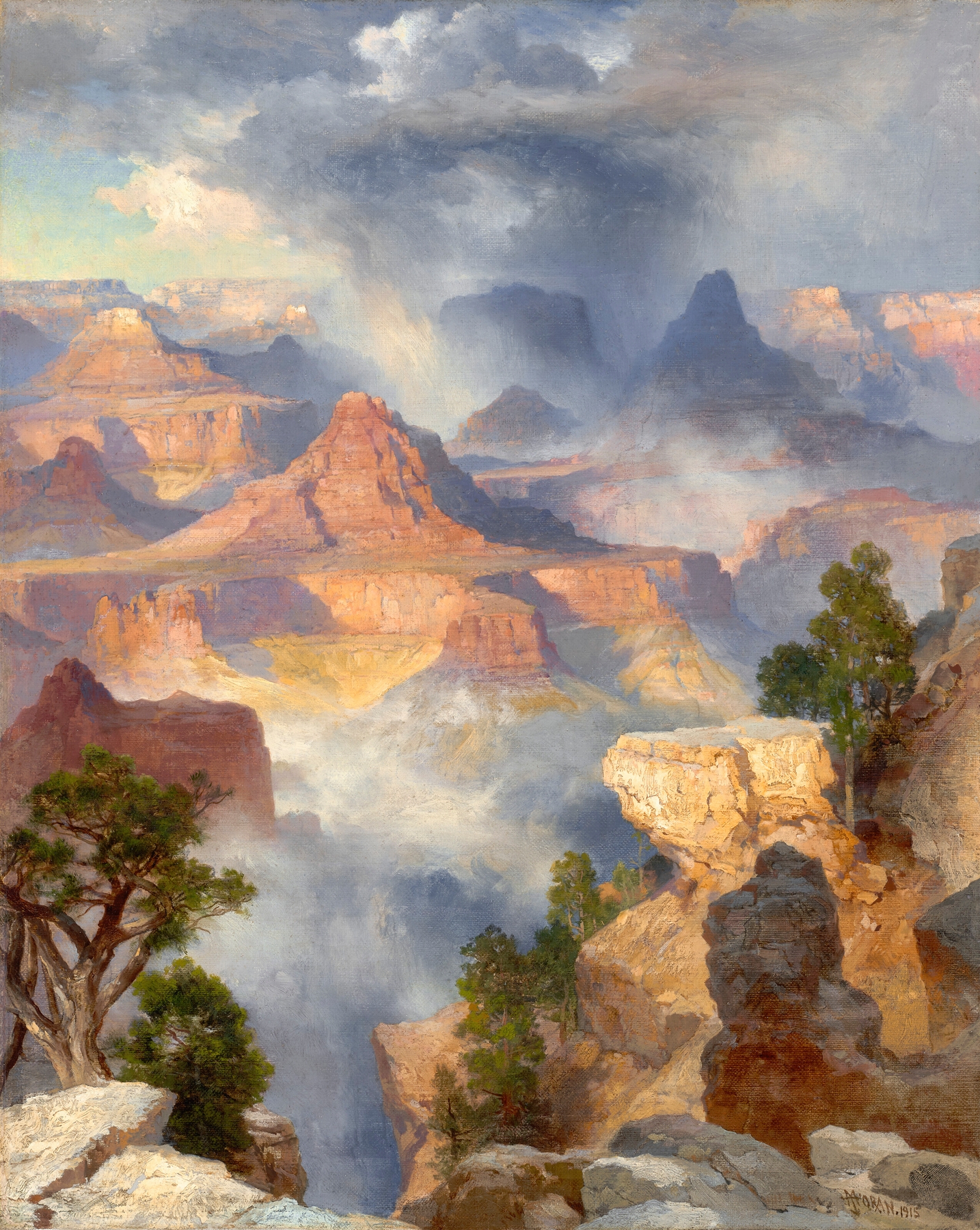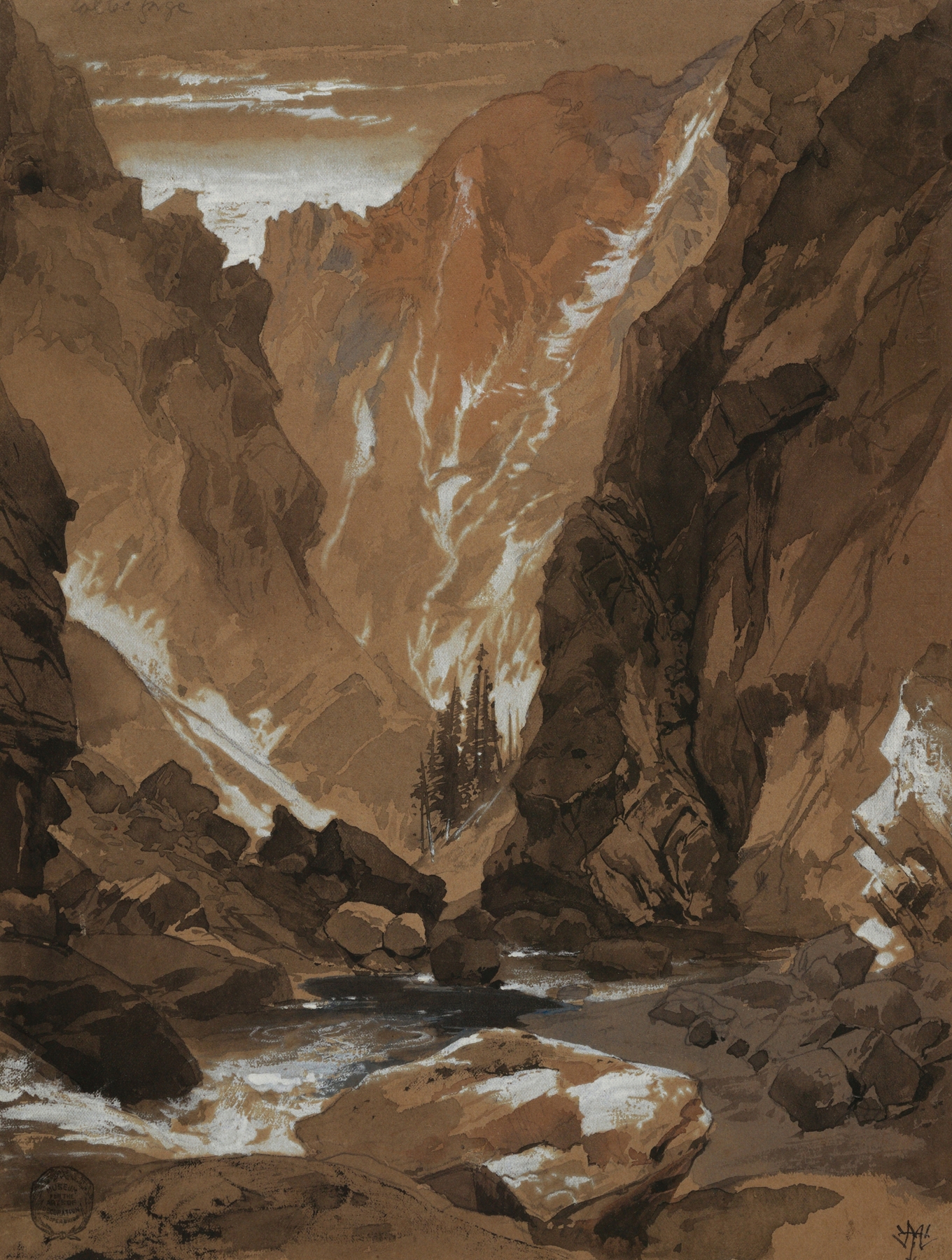
Could beauty survive in a century of chaos? In *Toltec Gorge, Colorado*, a breathtaking wilderness unfolds, revealing a moment of serene majesty amid the relentless march of time. The rugged cliffs, bathed in soft light, evoke a sense of the eternal, even as nature itself grapples with its own mortality. Look to the left at the towering cliffs, their jagged edges softened by the warm hues of sunset. The play of light and shadow dances across the rocky landscape, inviting your gaze to linger in the depths of the gorge. Notice how the vibrant greens of the flora contrast with the earthy tones of the stones, a reminder of life’s persistence against the backdrop of a harsh environment. The composition is both grand and intimate, drawing you into the heart of the scene while simultaneously showcasing the vastness of the American wilderness. Beneath the surface, the painting captures the tension between permanence and transience. The sublime cliffs stand resilient, yet they also hint at erosion and change, embodying the cycle of life and death. The delicate interplay of light suggests a fleeting moment, as if the scene itself could vanish, leaving only memory behind. Here, beauty becomes a poignant reflection on mortality, whispering the truth that all things must eventually yield to time. In 1881, Thomas Moran painted this work during an era when American artists were beginning to explore the natural landscape with romantic vigor. This period found him deeply engaged with the burgeoning conservation movement, as national parks emerged as sanctuaries amid industrial expansion. Moran’s artistic exploration was not merely a celebration of nature, but a call to recognize and preserve its fragile beauty, ensuring that it might survive the chaos of human progress.