Tree in a Wintry Forest — History & Analysis
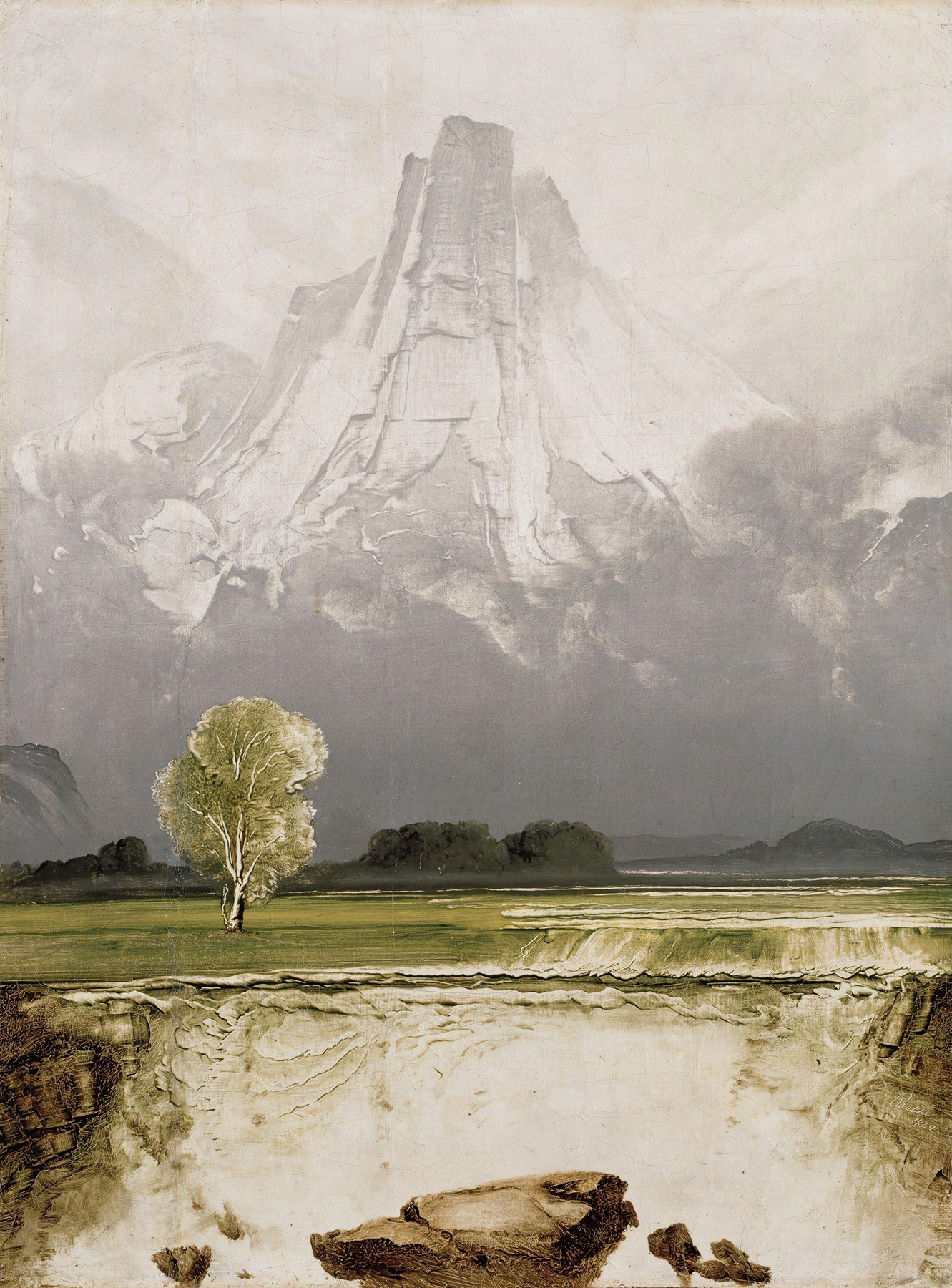
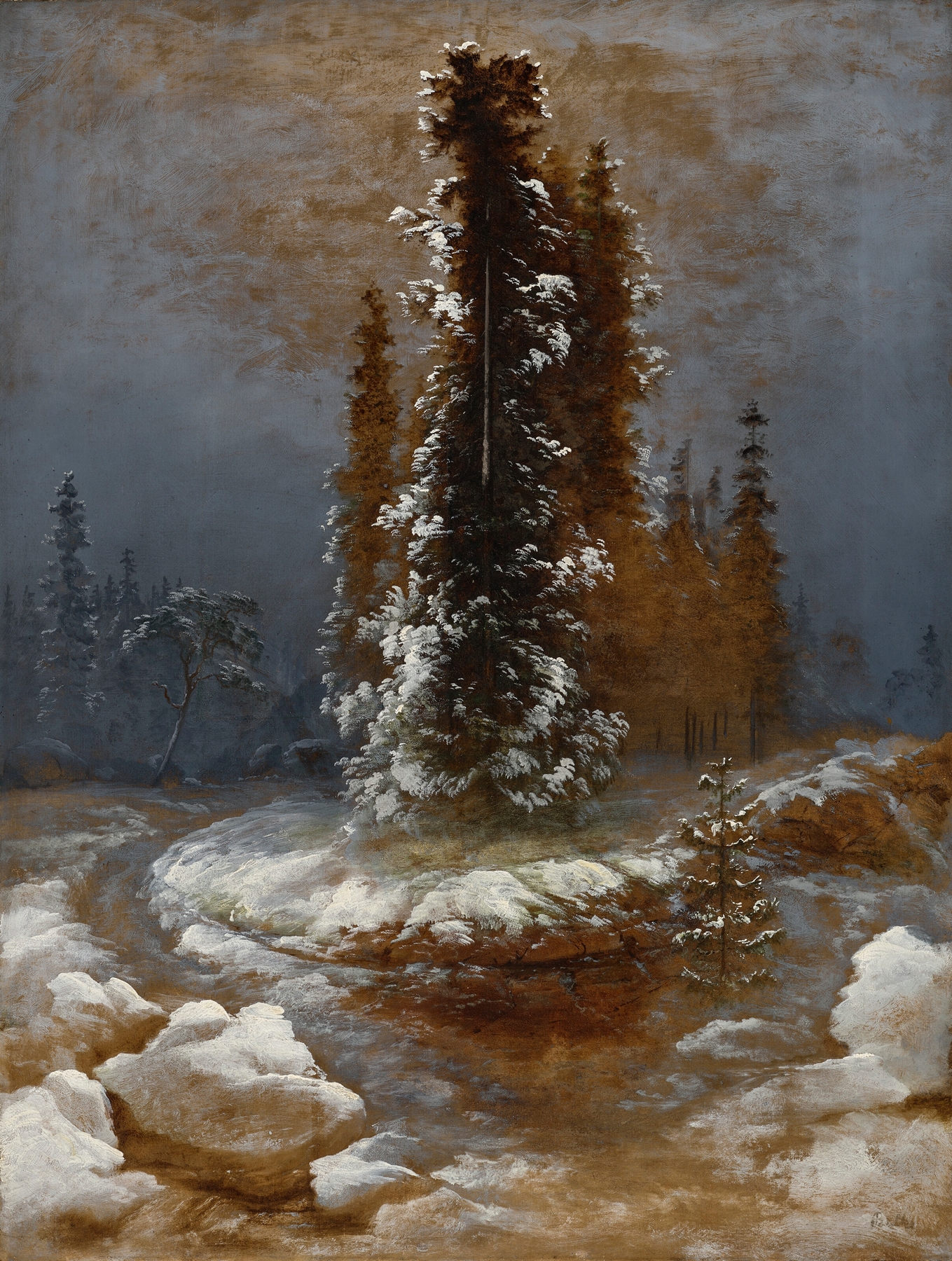
Where does light end, and longing begin? In the contemplation of nature, a silent dread lingers beneath the serene beauty. Focus on the stark silhouette of the tree, standing resolute against a backdrop of snow-laden ground and frosted branches. Notice how the muted greys and whites dominate the scene, only occasionally pierced by delicate hints of soft blue. The artist's choice of a monochromatic palette evokes a chill that transcends the visual, wrapping the viewer in an emotional embrace of solitude.
The brush strokes, both bold and hesitant, invite one to ponder the fragility of life within the vastness of winter. As you explore further, observe the tension between the tree and the encompassing forest. The tree, while solitary, embodies resilience amidst a backdrop of desolation, suggesting an unyielding spirit in the face of fear. The almost spectral quality of the landscape emphasizes vulnerability, as if the quietude of the scene speaks of both isolation and strength.
Each flake of snow, a whisper of the past, reminds us of the fleeting nature of existence and the shadows that accompany it. During the years of 1849 to 1859, Balke painted Tree in a Wintry Forest during a period marked by a growing fascination with the sublime in nature. Working in Norway, he was influenced by Romanticism, which sought to evoke deep feelings and the overwhelming power of the natural world. At this time, Balke himself was navigating personal challenges, reflecting a profound connection to the landscapes he portrayed, imbuing them with emotional depth that resonates even today.