Stetind med bjerk — History & Analysis
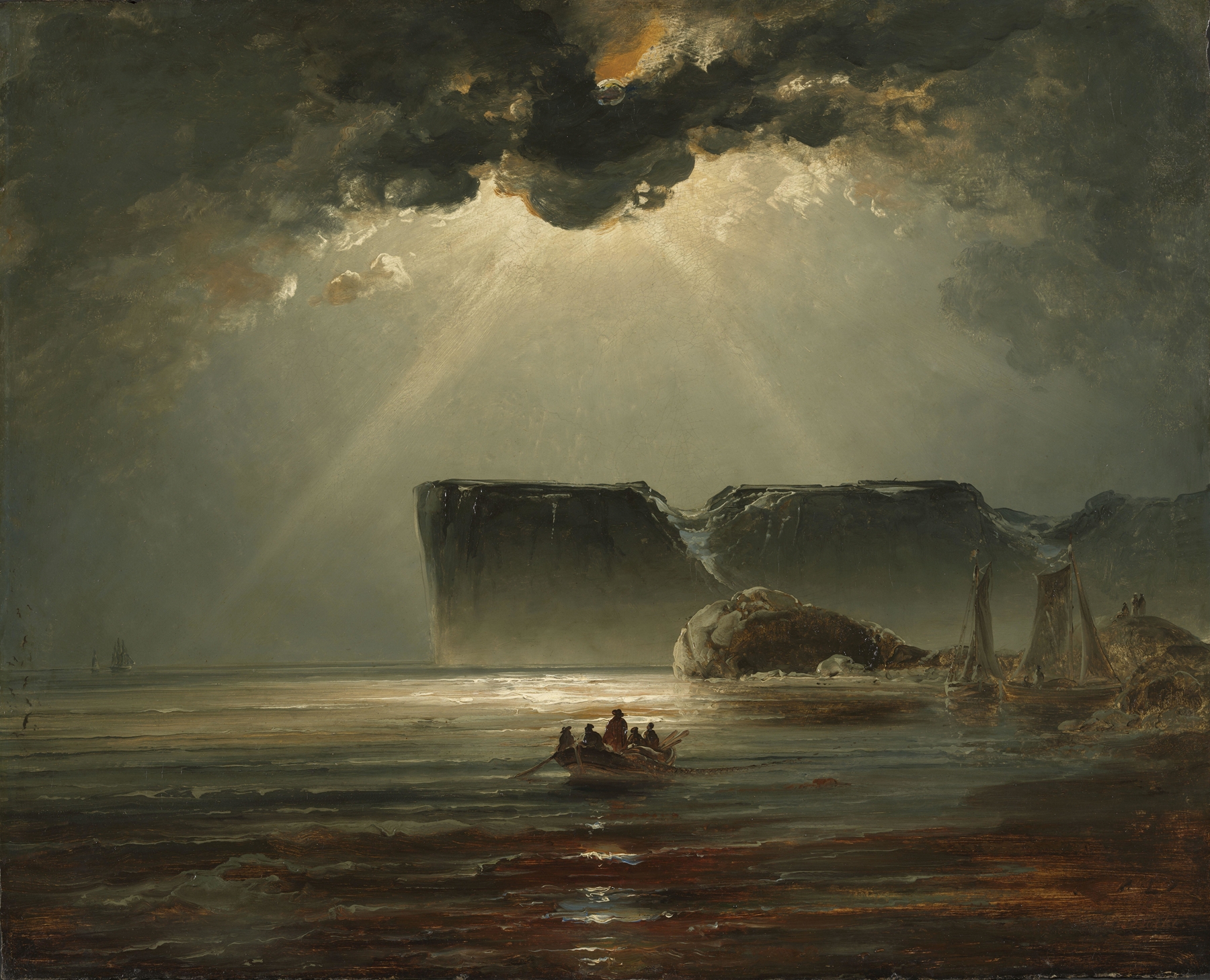
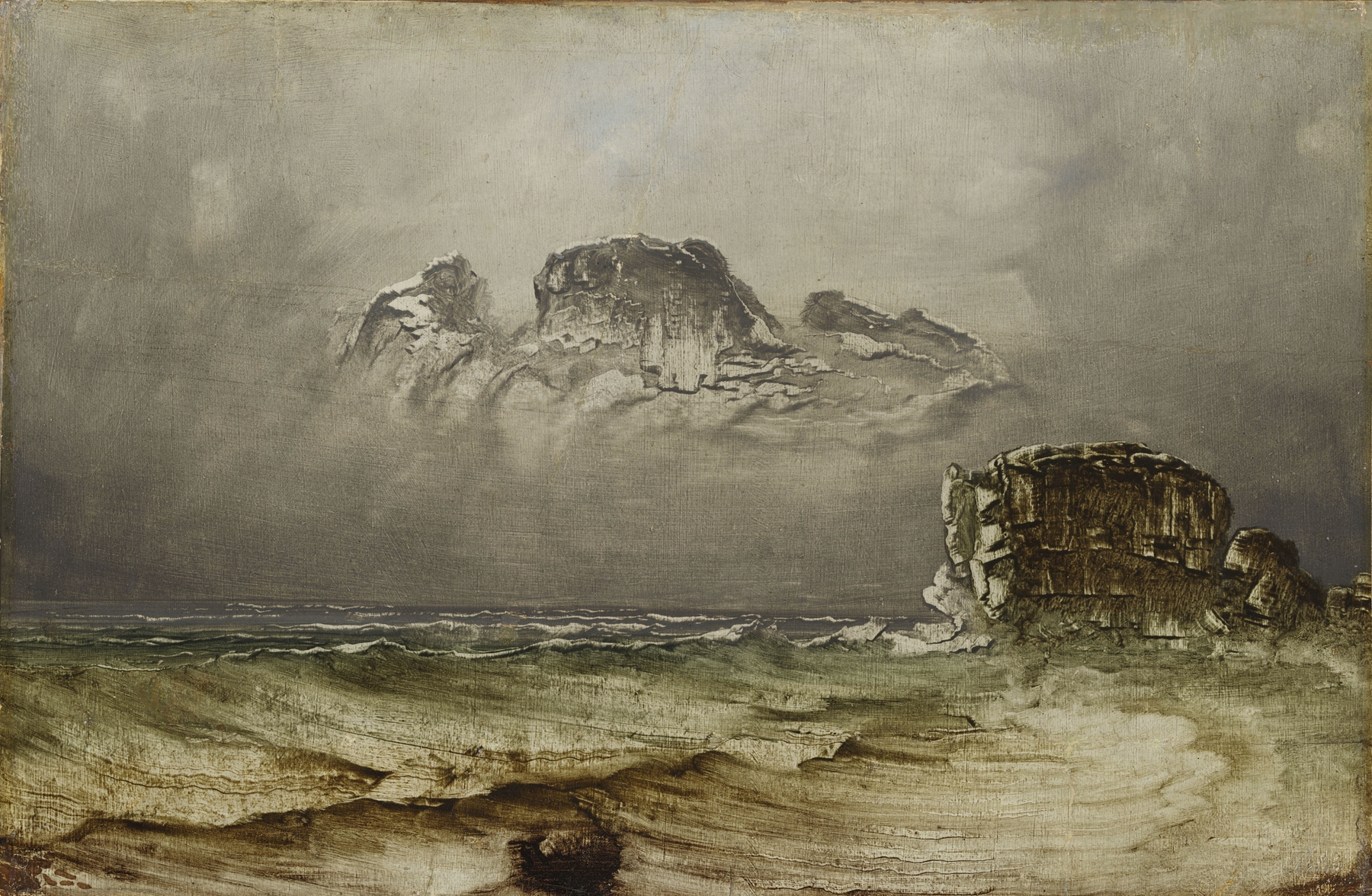
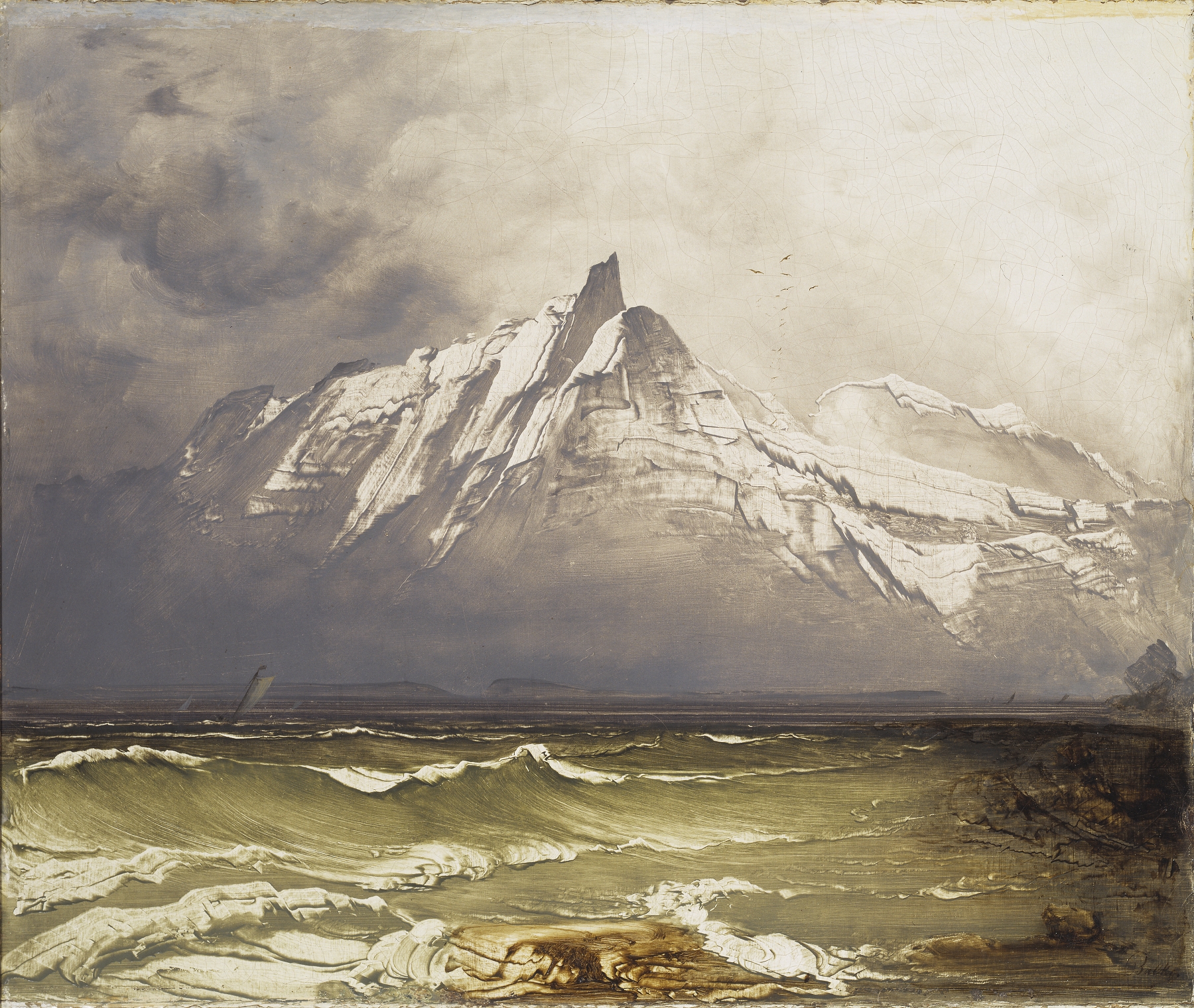
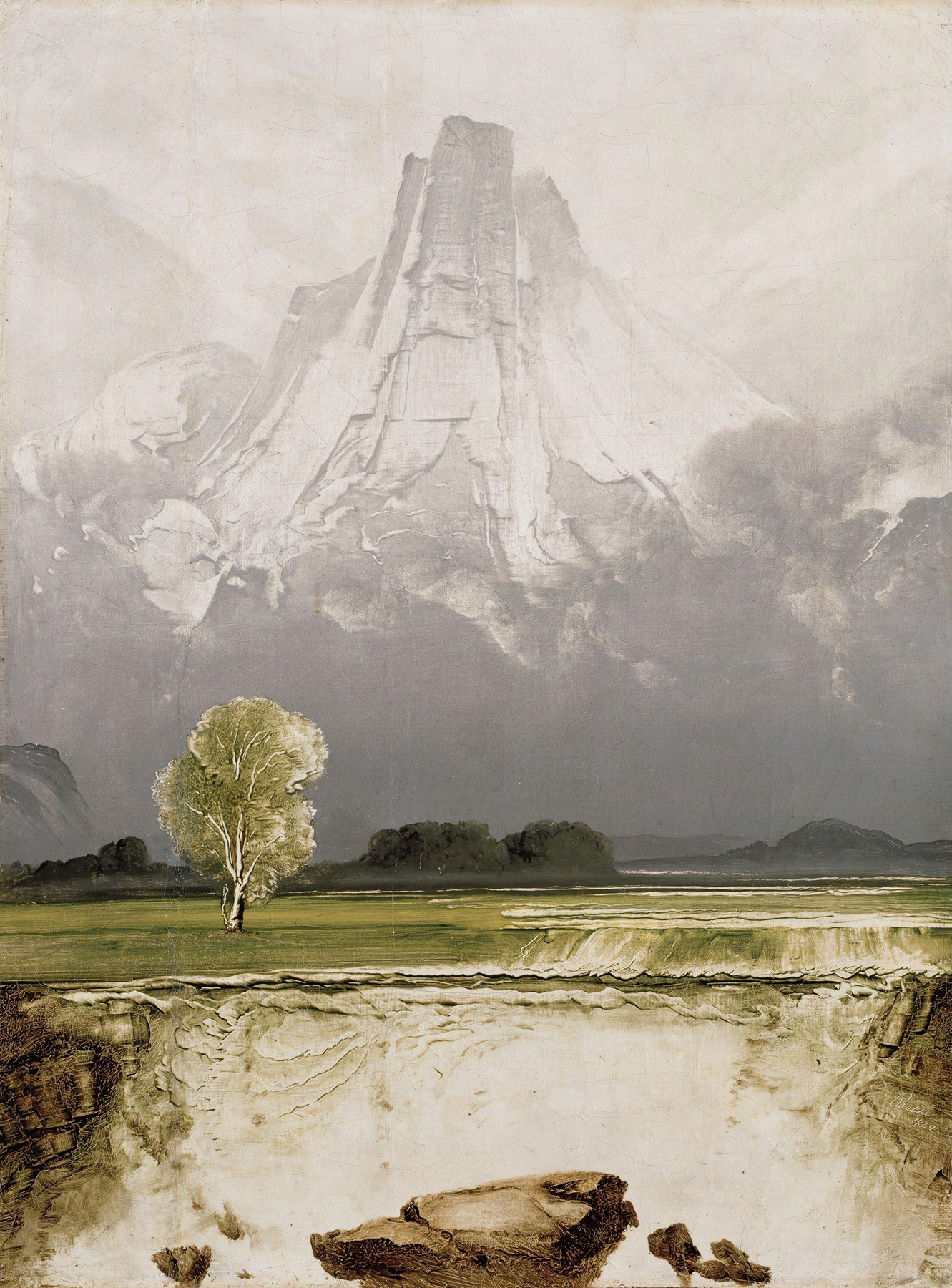
What secret hides in the quiet of the canvas? Peder Balke's Stetind med bjerk invites us to contemplate the divine presence woven into the tranquility of the Norwegian landscape. Look to the left at the imposing silhouette of Stetind, its sharp peaks reaching skyward, shrouded in low-hanging clouds that hint at both majesty and mystery. The color palette, dominated by deep greens and earthy browns, creates a sense of grounding, while the stark white of the mountains contrasts dramatically against the subdued hues.
Notice how the light gently caresses the birch trees in the foreground, illuminating their delicate branches and offering a moment of softness amidst the rugged terrain. This painting reveals the tension between the natural and the transcendent. The rugged mountain, a symbol of divine strength, looms over the fragile birch, suggesting the coexistence of power and vulnerability. The interplay of light and shadow conjures a sense of reverence; the birch, often associated with renewal, stands resilient against the enormity of nature, inviting viewers to reflect on their own place within it.
Furthermore, the soft blending of colors evokes an ethereal quality, pulling us into a contemplative space where the silence of the landscape speaks volumes. In 1864, Balke was in the midst of redefining his artistic vision while residing in Norway. His works from this period showcase a shift toward a more expressive representation of nature, influenced by his experiences and the Romantic movement’s emphasis on emotion and spirituality. This painting sits within a larger context of his explorations of the sublime, as he sought to capture not just the physicality of the landscape but its deeper, almost divine essence.