Trekvaart — History & Analysis
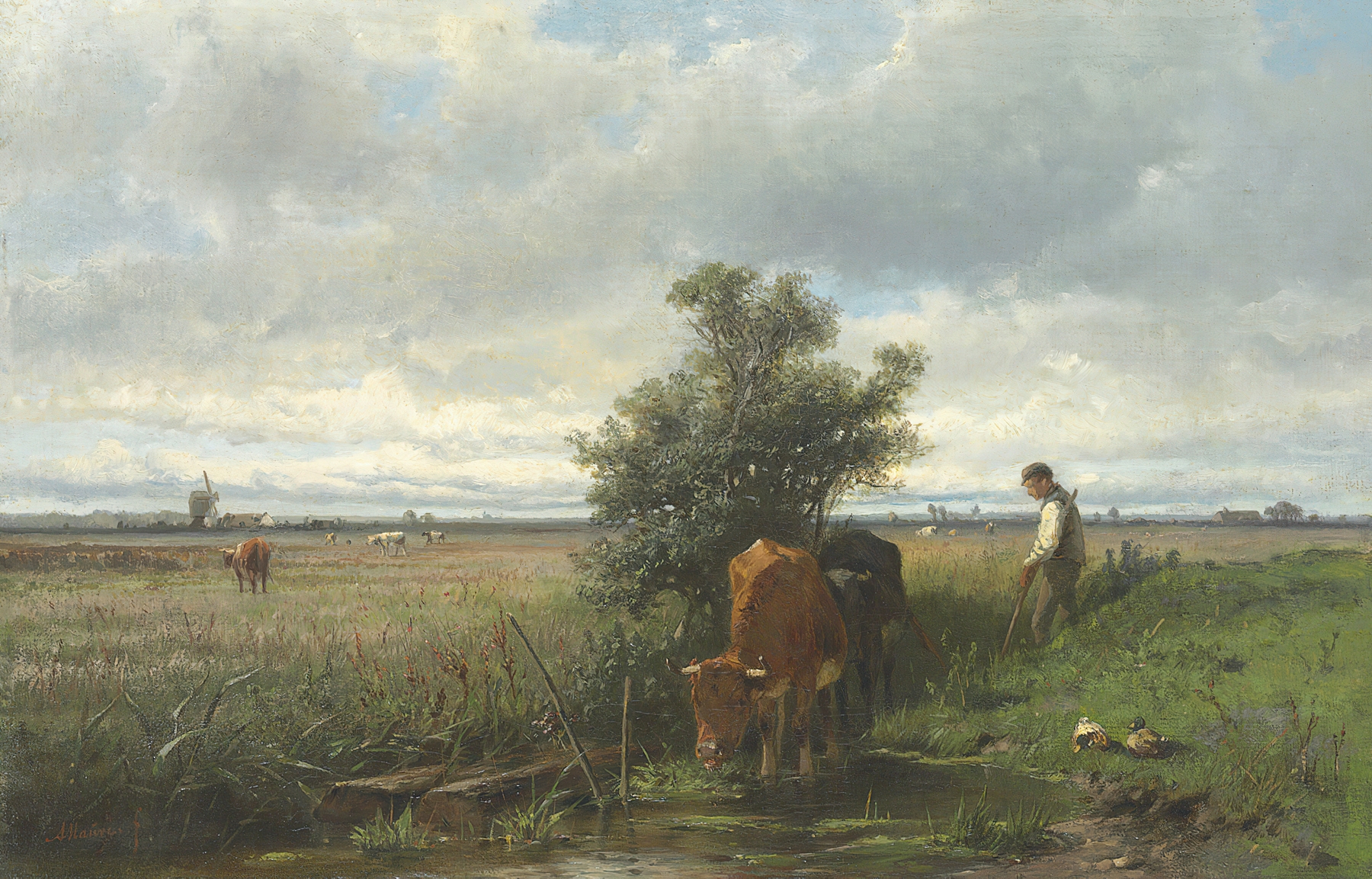
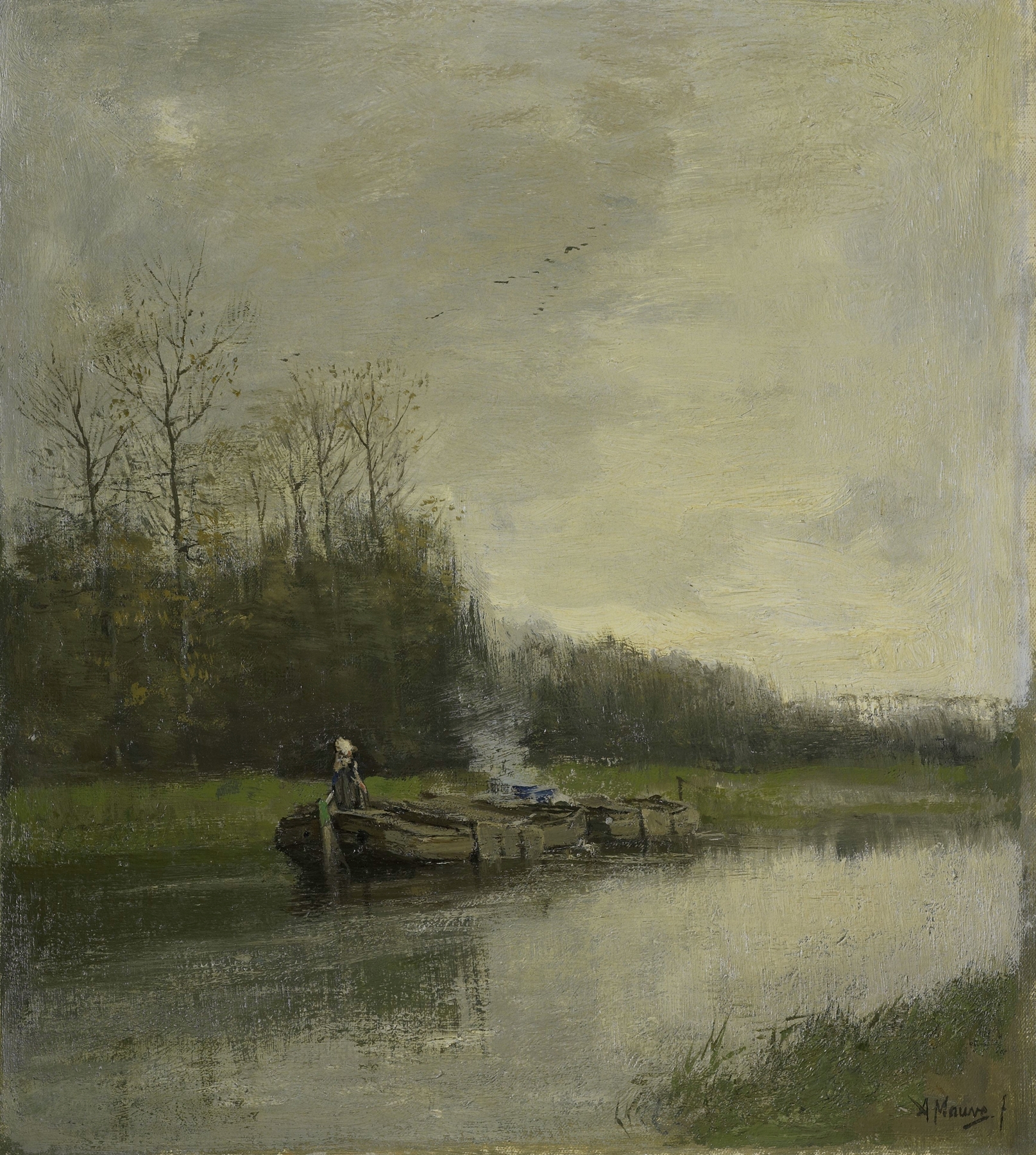
What secret hides in the quiet of the canvas? In Trekvaart, the stillness encapsulates a world where innocence and nature converge in unspoken harmony. Focus on the tranquil waterway that bisects the canvas, reflecting a soft, muted sky. The subtle variations of green and brown evoke the lush terrain, beckoning you to explore the gentle curves and textured strokes.
Notice how the play of light dances upon the water’s surface, creating ripples that seem almost alive, guiding your gaze toward the distant horizon where a solitary figure walks along the bank, a testament to both solitude and serenity. The painting pulses with a quiet tension; the juxtaposition of the vibrant landscape against the solitary presence hints at themes of isolation and connection. The figure’s smallness in relation to the expansive environment heightens the sense of innocence, suggesting a tender vulnerability amid the grandeur of nature. The use of soft brushwork lends a dreamlike quality, inviting introspection and personal reflection about one’s place within the natural world.
Created during the mid-19th century in the Netherlands, Mauve painted Trekvaart amidst a burgeoning interest in realism and the exploration of everyday life. This period marked his engagement with the Dutch landscape tradition and the themes of rural existence, influenced by his connections to the Hague School. His work reflects a desire to capture both the beauty and the simplicity of life, bridging the gap between the artist’s internal world and the landscapes he cherished.