Trouville at Low Tide — History & Analysis
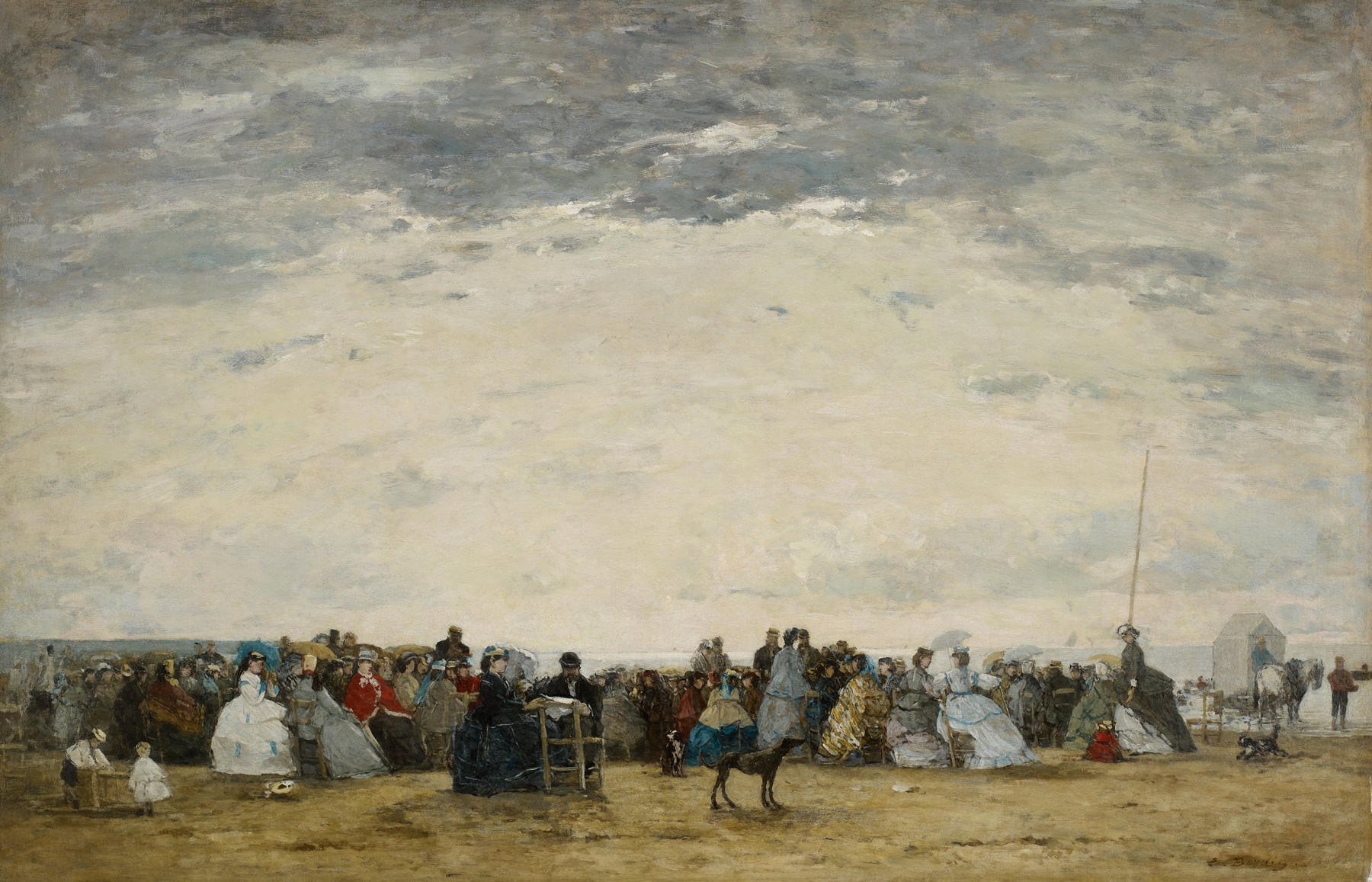
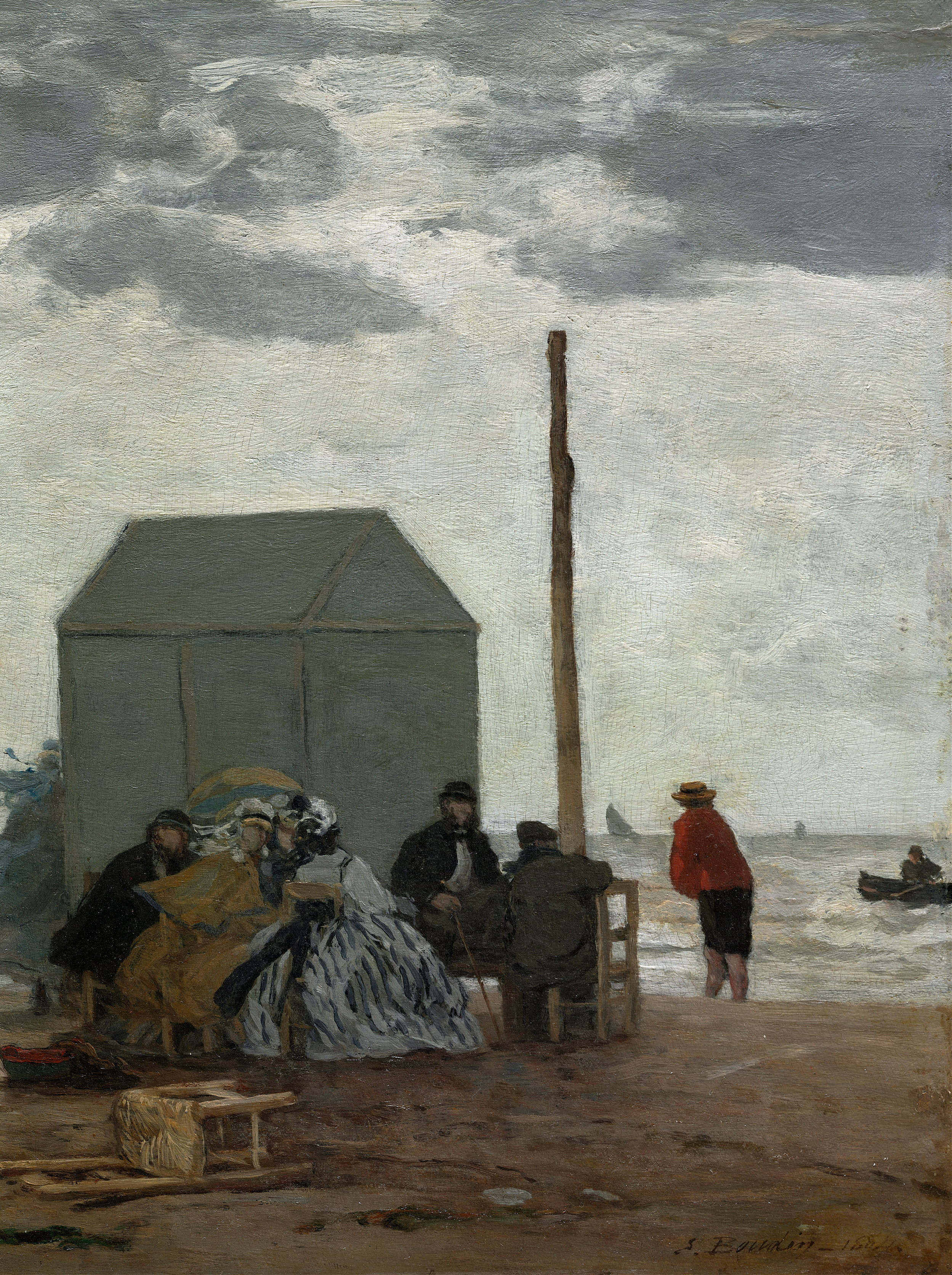
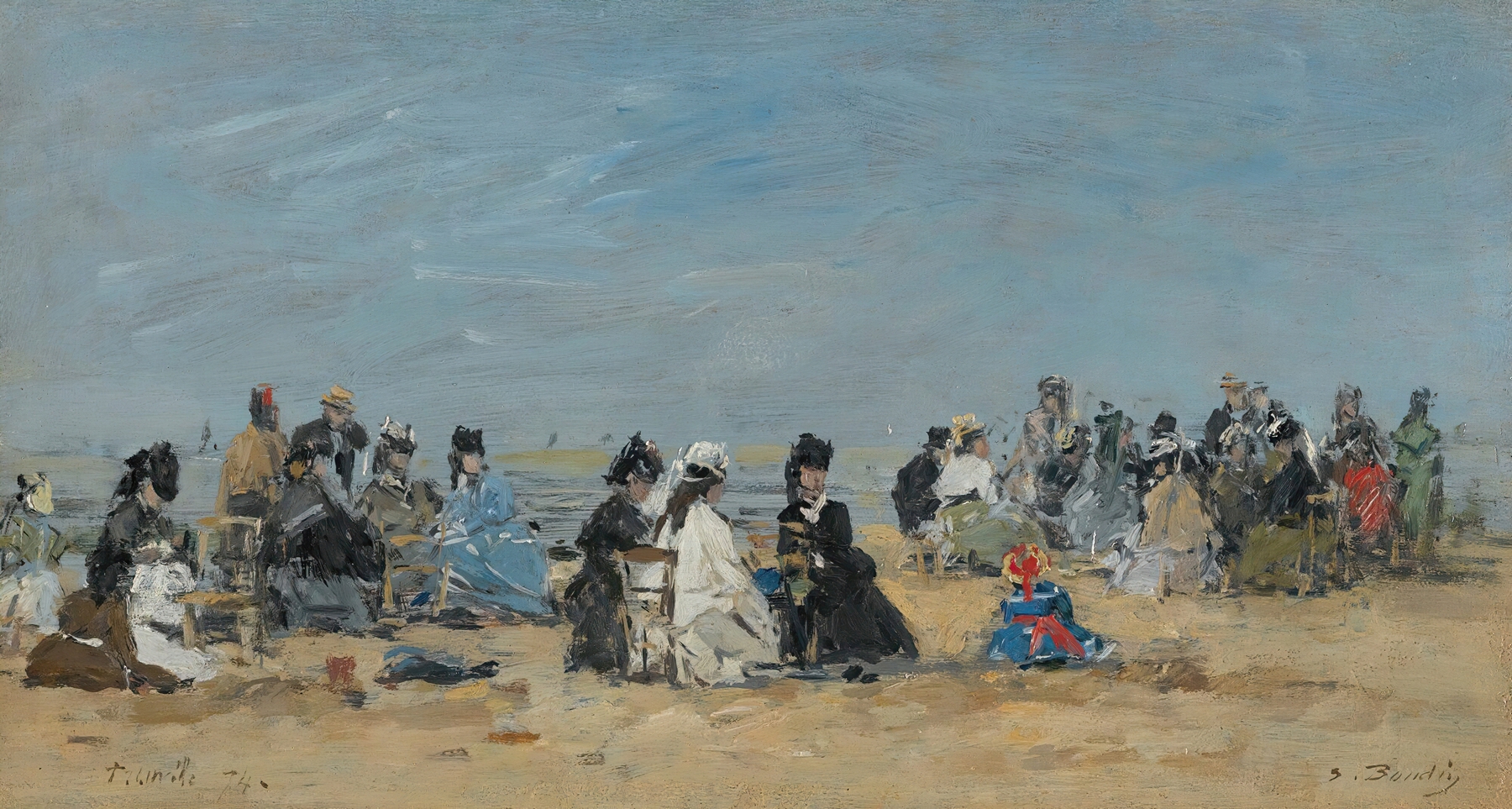
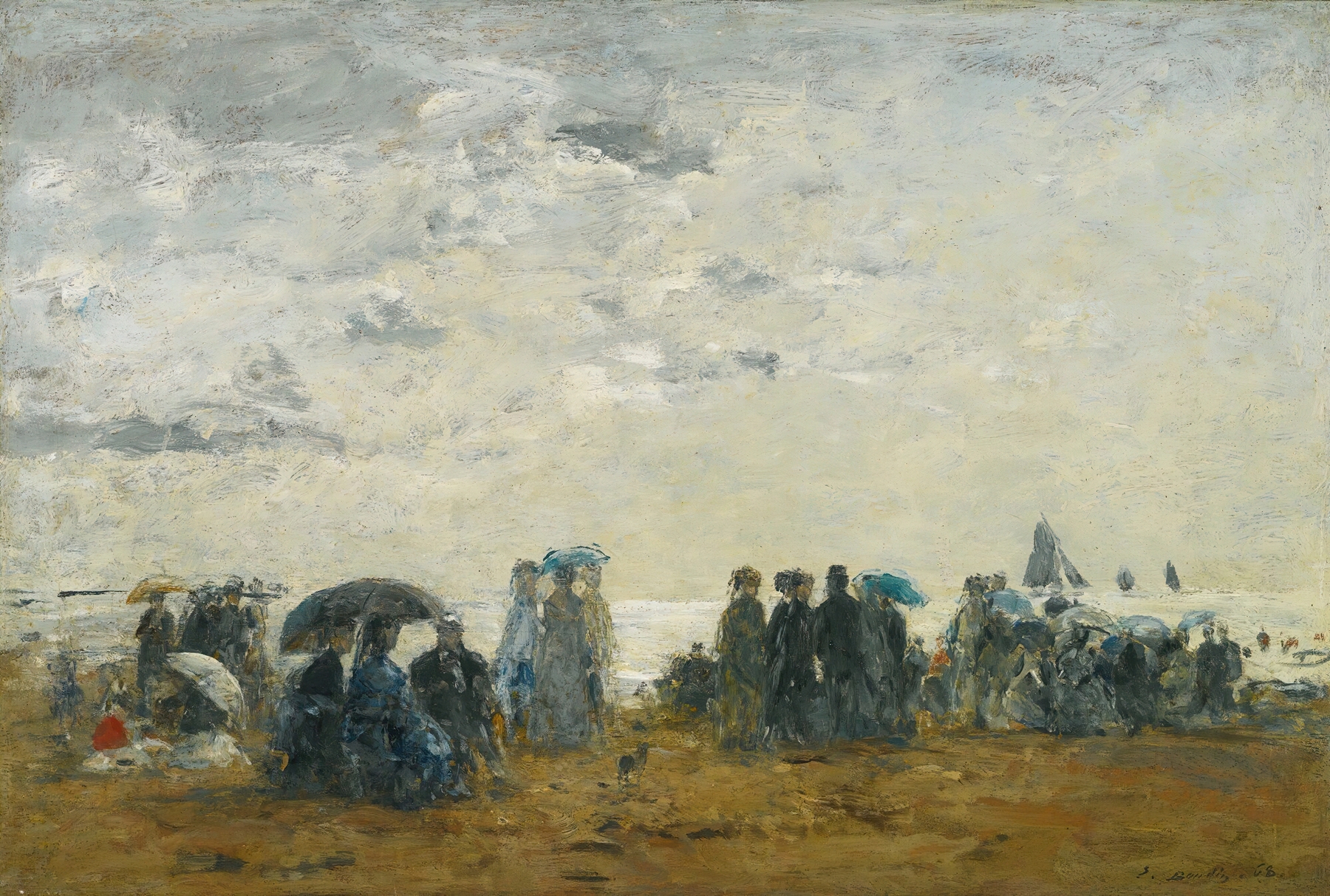
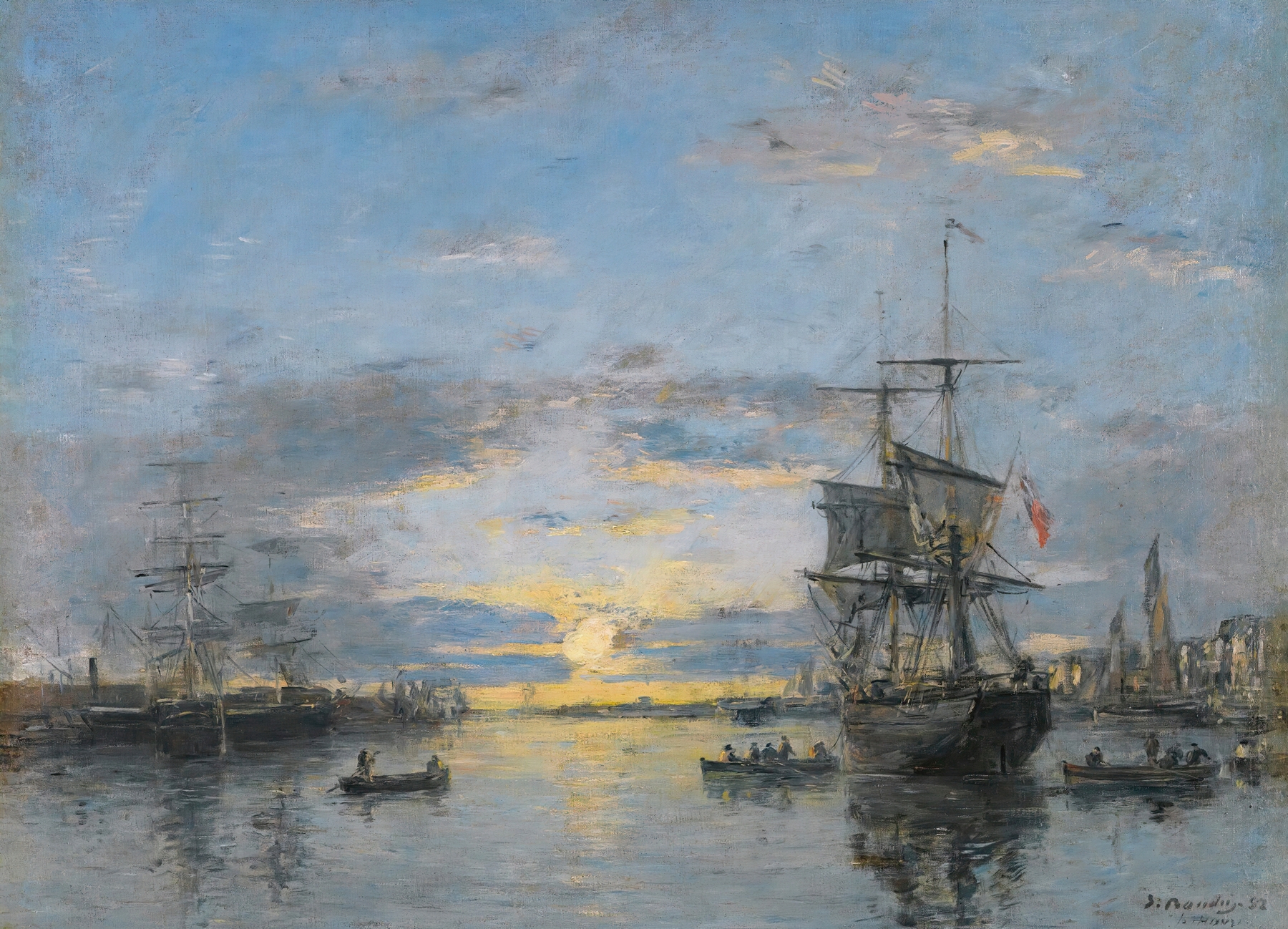
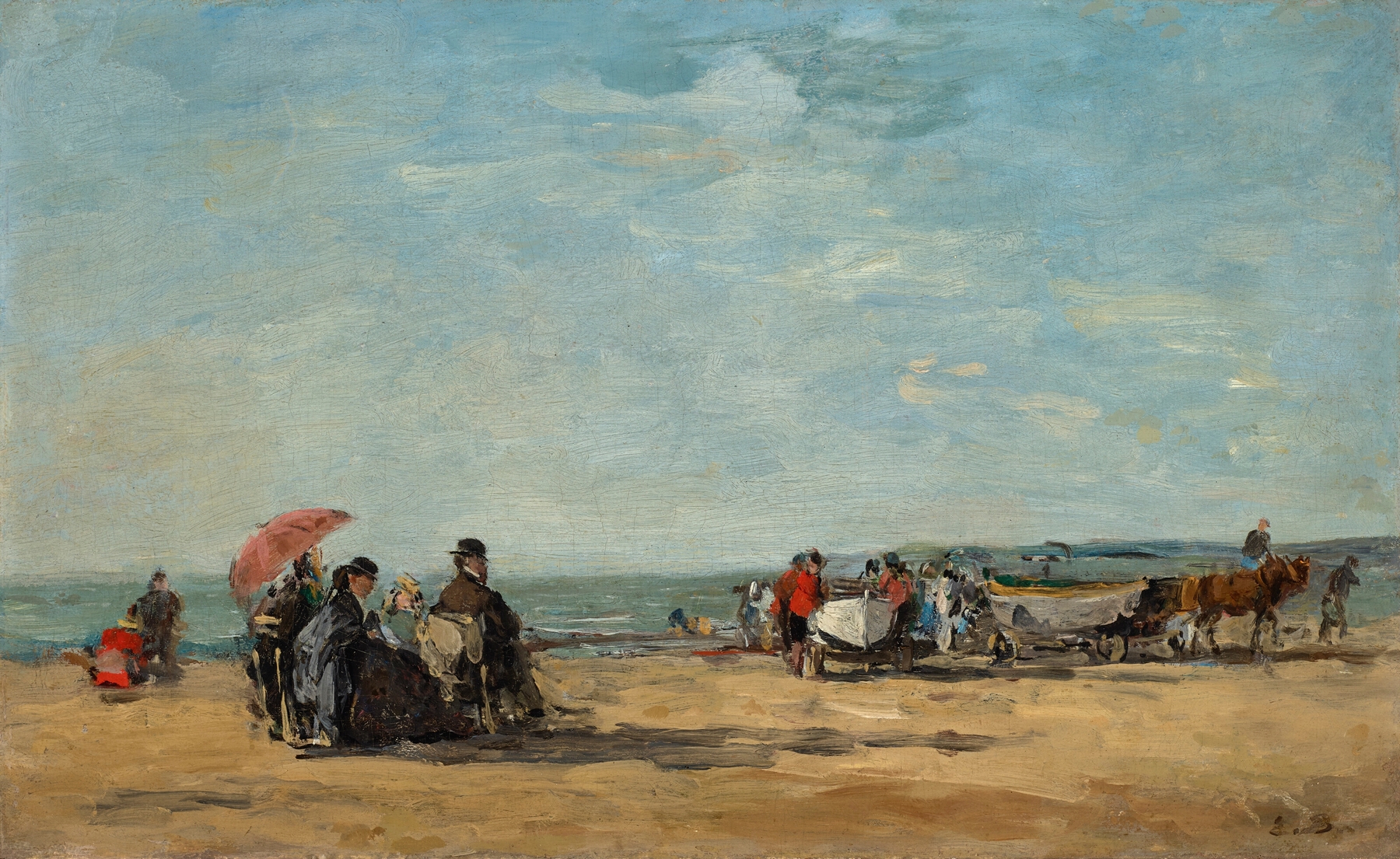
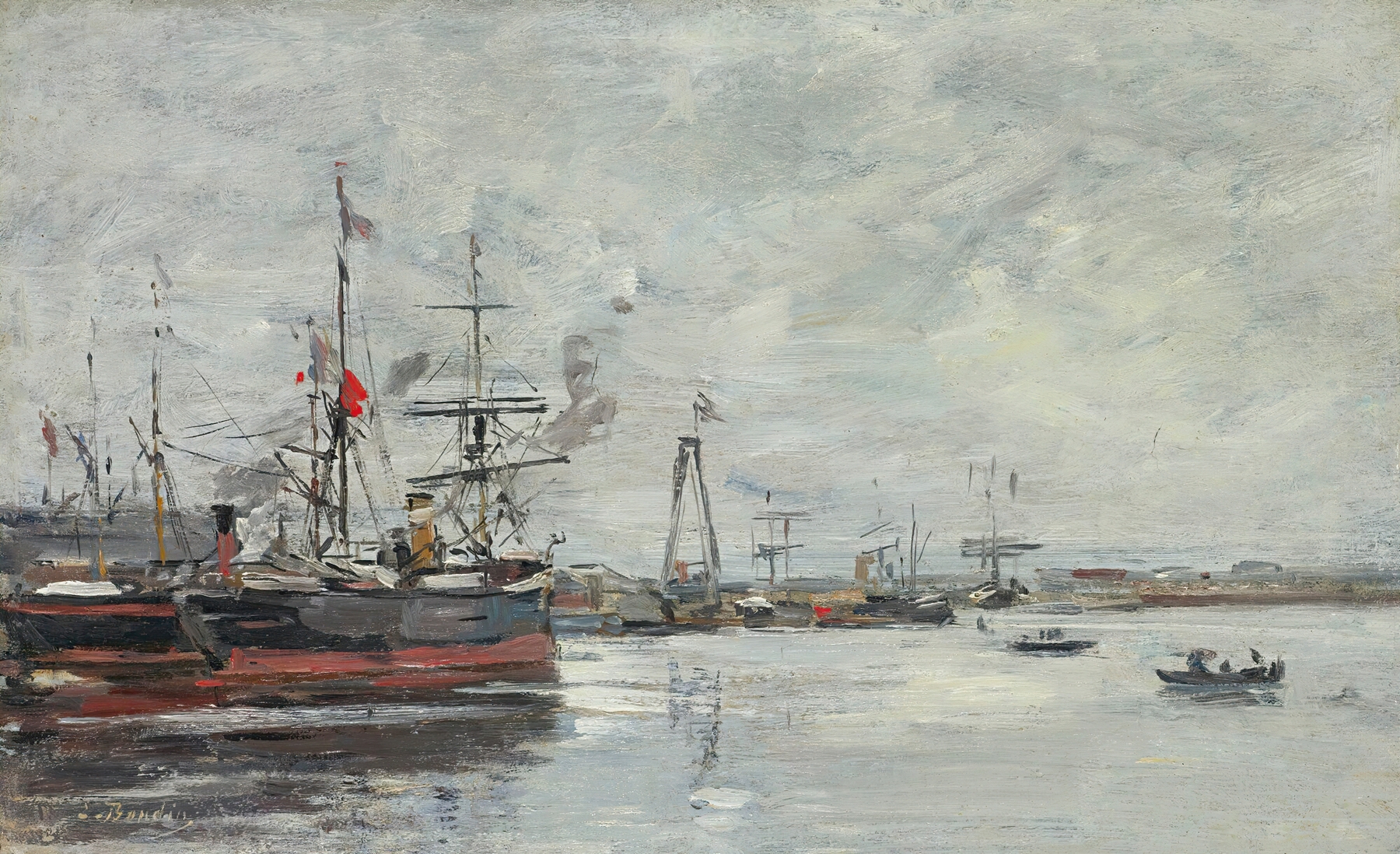
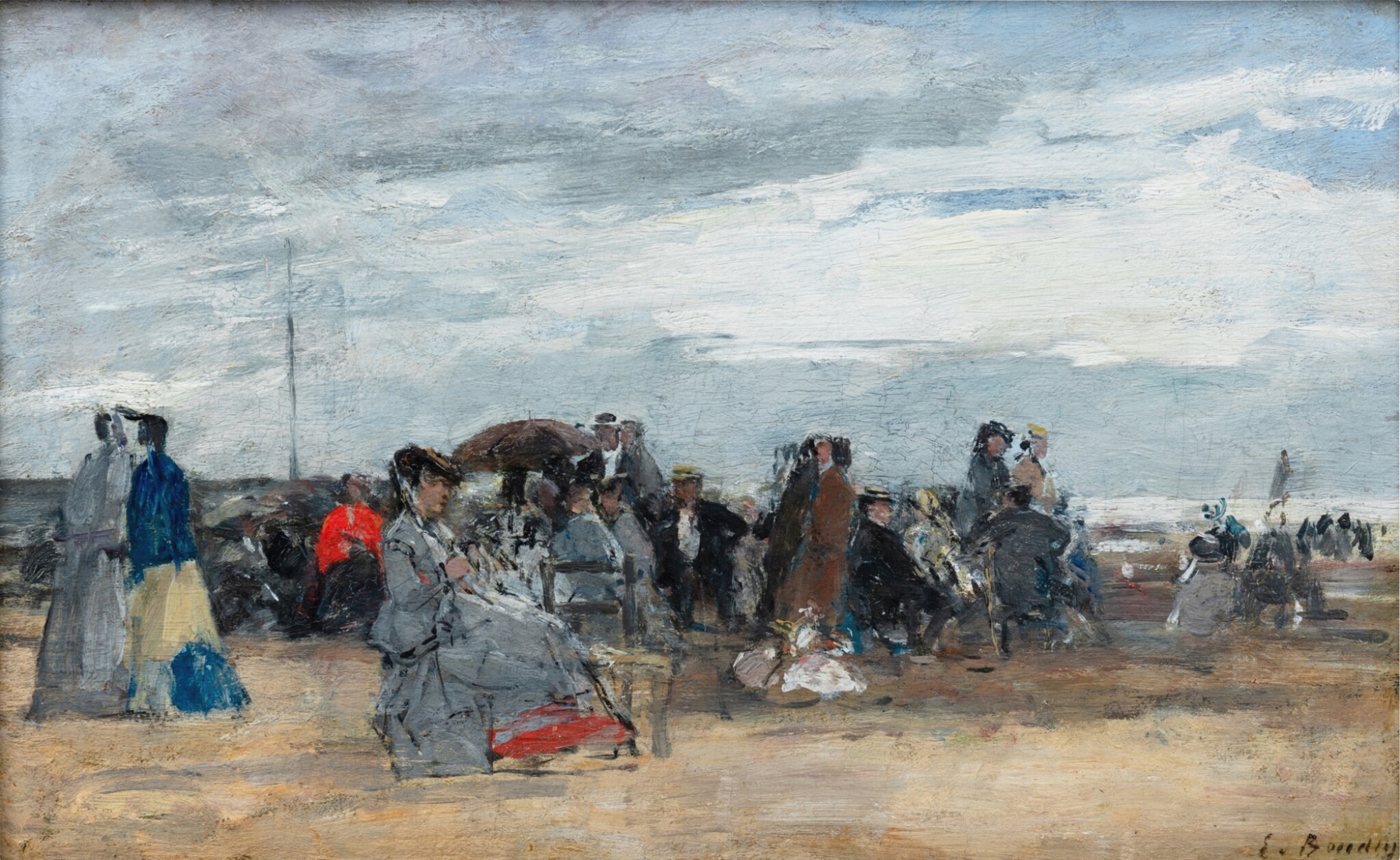
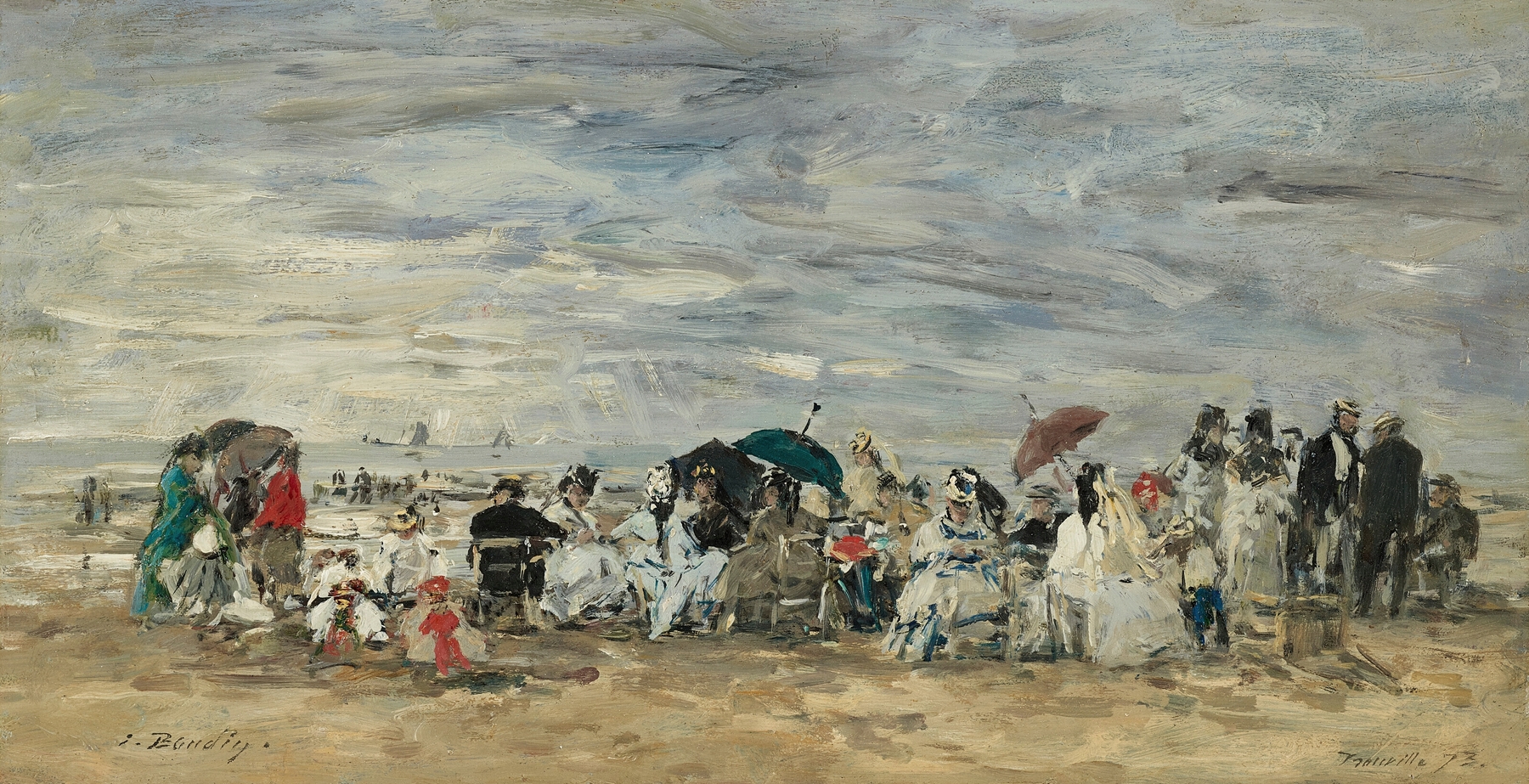
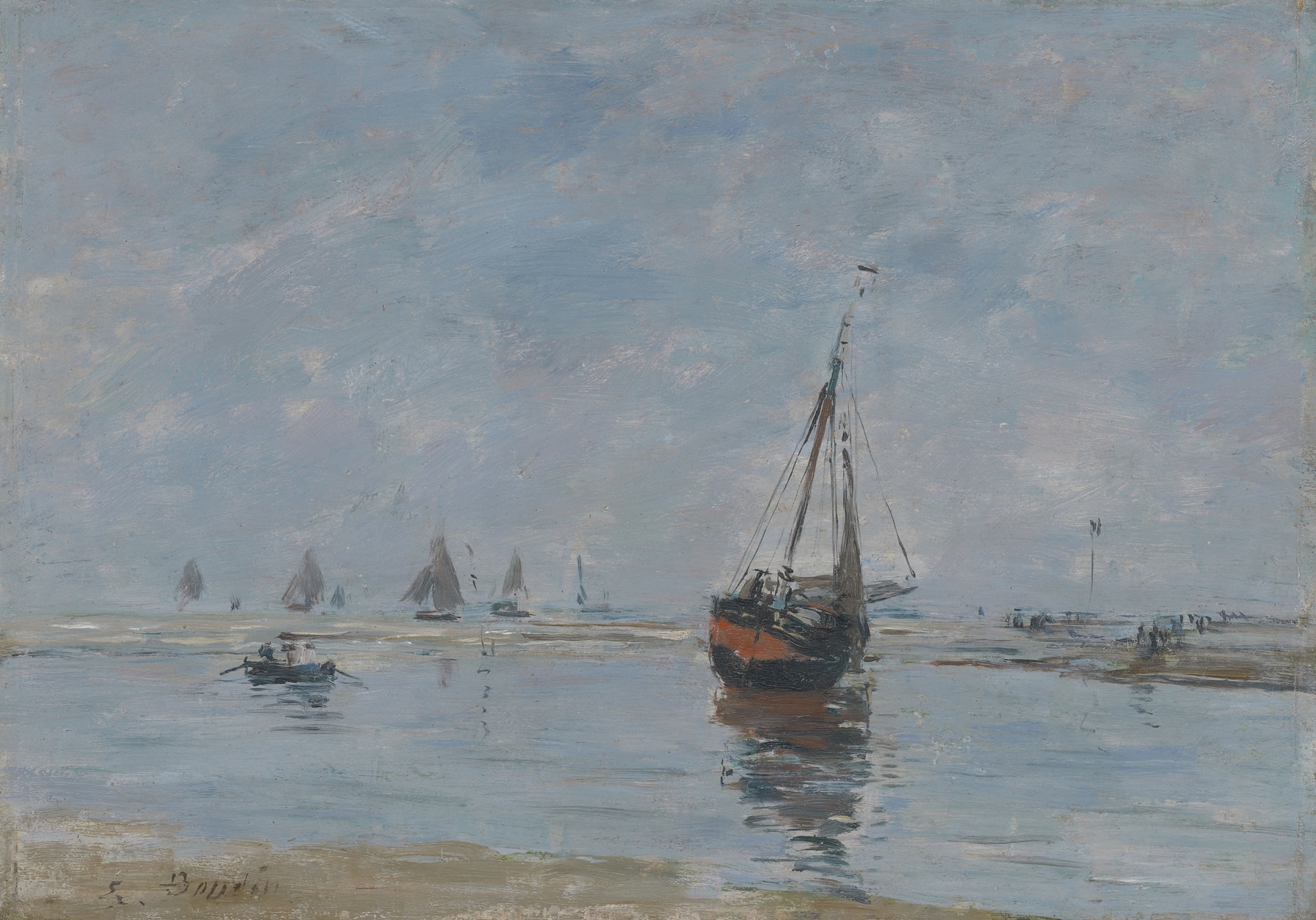
Could beauty survive in a century of chaos? In a world where memories dissolve like the tide, this painting invites us to pause and reflect on the delicate interplay between nature and human presence. Look to the left at the soft, sandy shore where the sea caresses the land, revealing a breathtaking expanse of water stretching toward the horizon. Notice how the subtle brushstrokes of pale blues and grays dance together in harmony, creating an atmosphere that feels both serene and ephemeral. The light gently washes over the scene, illuminating the figures scattered across the beach, capturing fleeting moments of leisure as they engage with the landscape—some wading in water, others lost in thought.
Boudin’s deft use of color and light beckons the viewer into this idyllic coastal retreat. Amidst the tranquility, there exists a palpable tension between the permanence of the landscape and the transience of human existence. The low tide exposes the fragile shoreline, hinting at the passage of time and the inevitability of change. The figures, though animated, are mere whispers against the grand backdrop of nature, suggesting our fleeting place within the vastness of the world.
It is a poignant reminder of both the beauty and fragility encapsulated in memory, where each moment is precious yet ephemeral. Eugène Boudin painted Trouville at Low Tide between 1888 and 1895, during a period of personal reflection and artistic exploration. Working primarily in France, he was deeply influenced by the Impressionist movement and the changing perceptions of light and atmosphere. As he captured the charm of seaside life, Boudin also grappled with his own legacy and the evolution of art in response to modernity, celebrating both beauty and the passage of time.