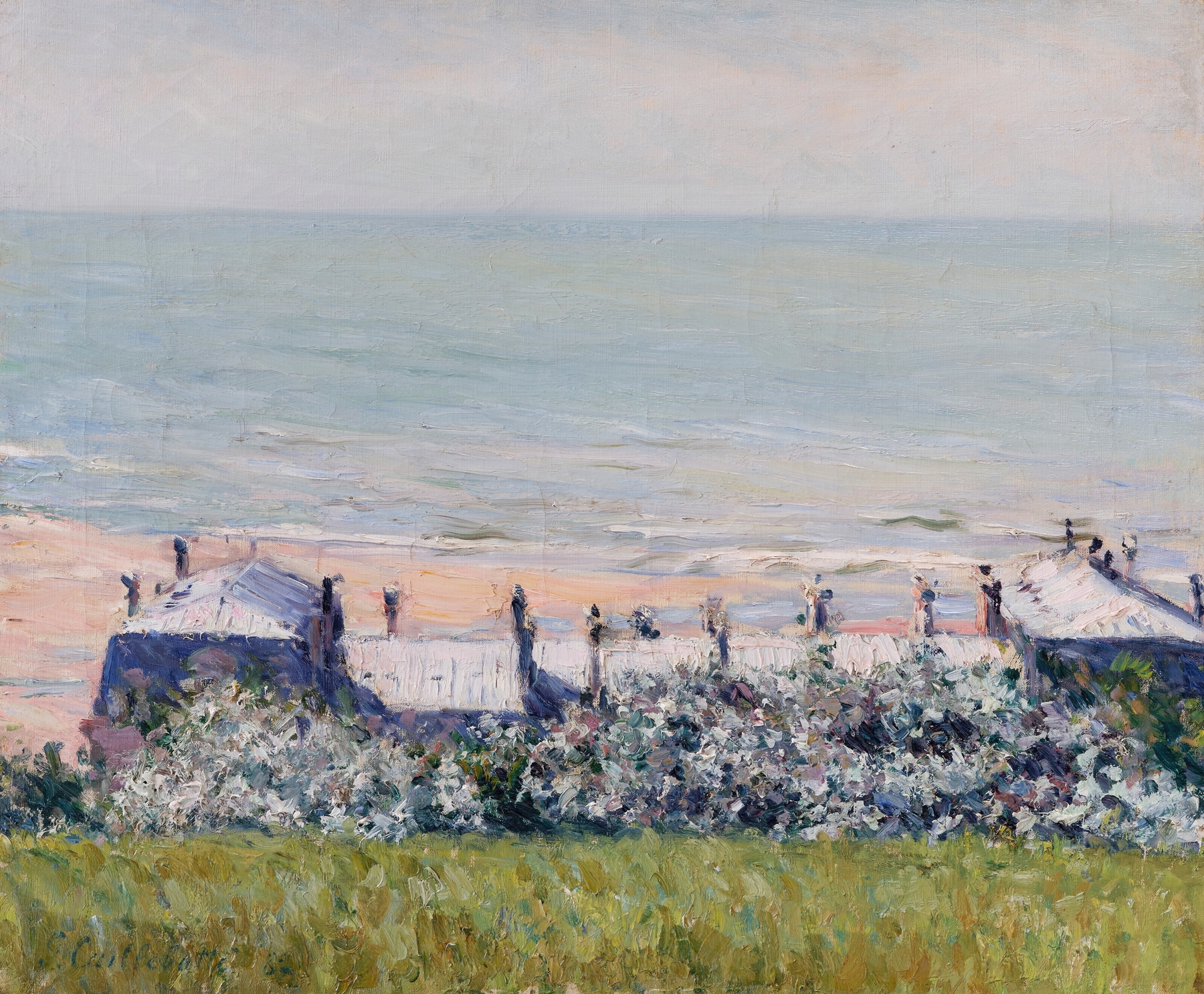
Un Balcon, Boulevard Haussmann — History & Analysis
“Sometimes beauty is just pain, disguised in gold.” In the delicate interplay between the vibrancy of life and the shadows of solitude, the essence of existence reveals itself in unexpected ways. Focus your gaze on the balcony railing, where the subtle curve draws your attention to the figures beyond. The composition is grounded by the cool blues and muted grays of the city, contrasted sharply with the warm yellow and ocher of the sunlight that bathes the scene. Notice how the brushstrokes breathe life into the bustling boulevard below, yet the figures on the balcony exude a stillness that invites contemplation, almost as if they are detached from the lively world around them.
As you delve deeper, consider the juxtaposition of the vibrant street life against the solitary observers. The contrasting elements of movement and stasis highlight the emotional distance between the figures and the animated city. Their expressions, though not overtly detailed, convey a sense of melancholy, suggesting that even amidst beauty, loneliness can linger. The perspective invites viewers to reflect on their own moments of isolation, even while surrounded by the bustle of life.
Created in 1880, this work emerged during a transformative era for Caillebotte, who was deeply embedded in the Impressionist movement, yet often felt at odds with its exuberant celebration of modernity. Living in Paris, he witnessed the rapid changes of urban life, grappling with the tensions between vibrant city life and personal isolation. This painting encapsulates both the joy and the poignancy of that era, reflecting the artist’s unique perspective on beauty and loneliness.