Une clairière en Provence — History & Analysis
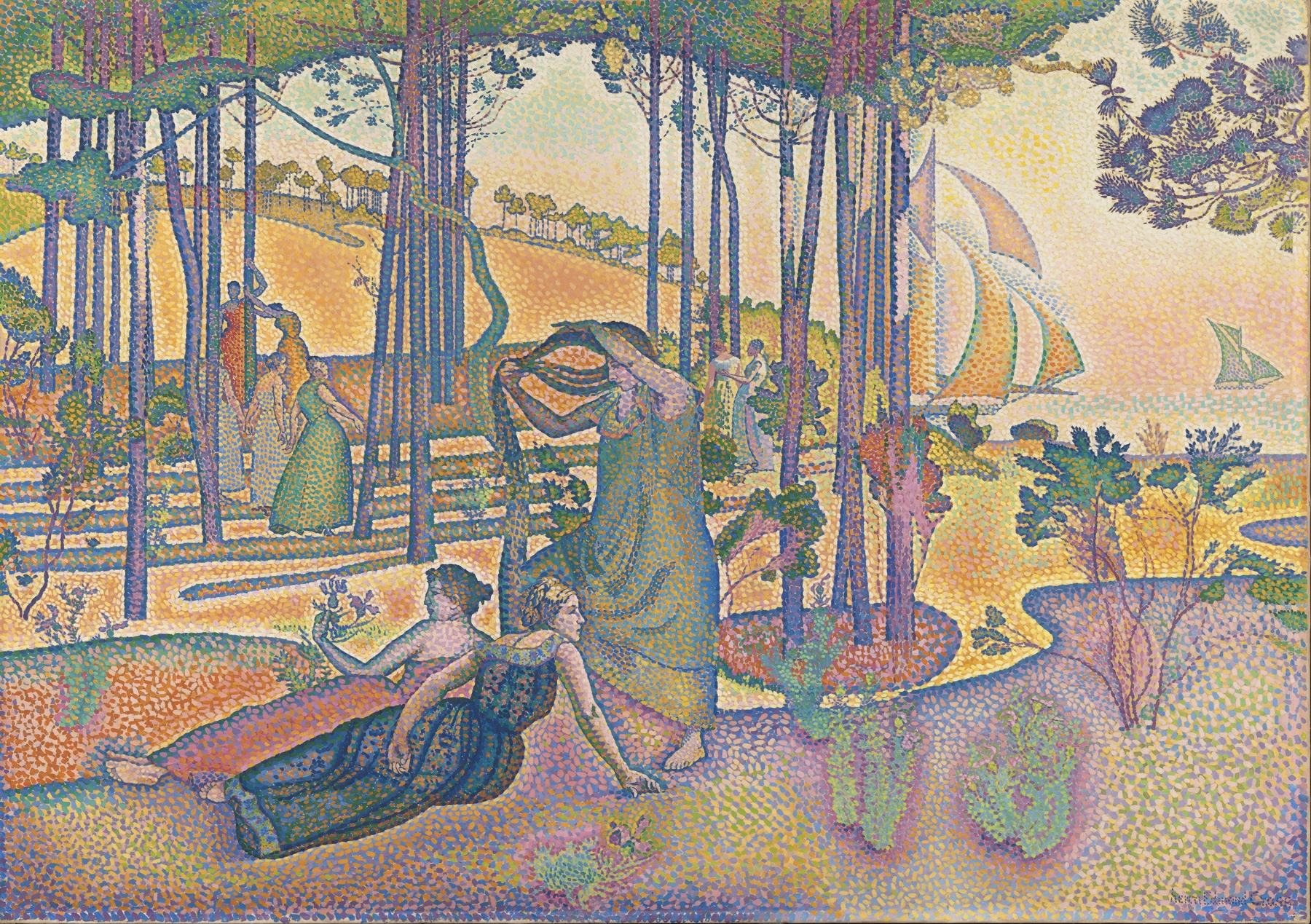
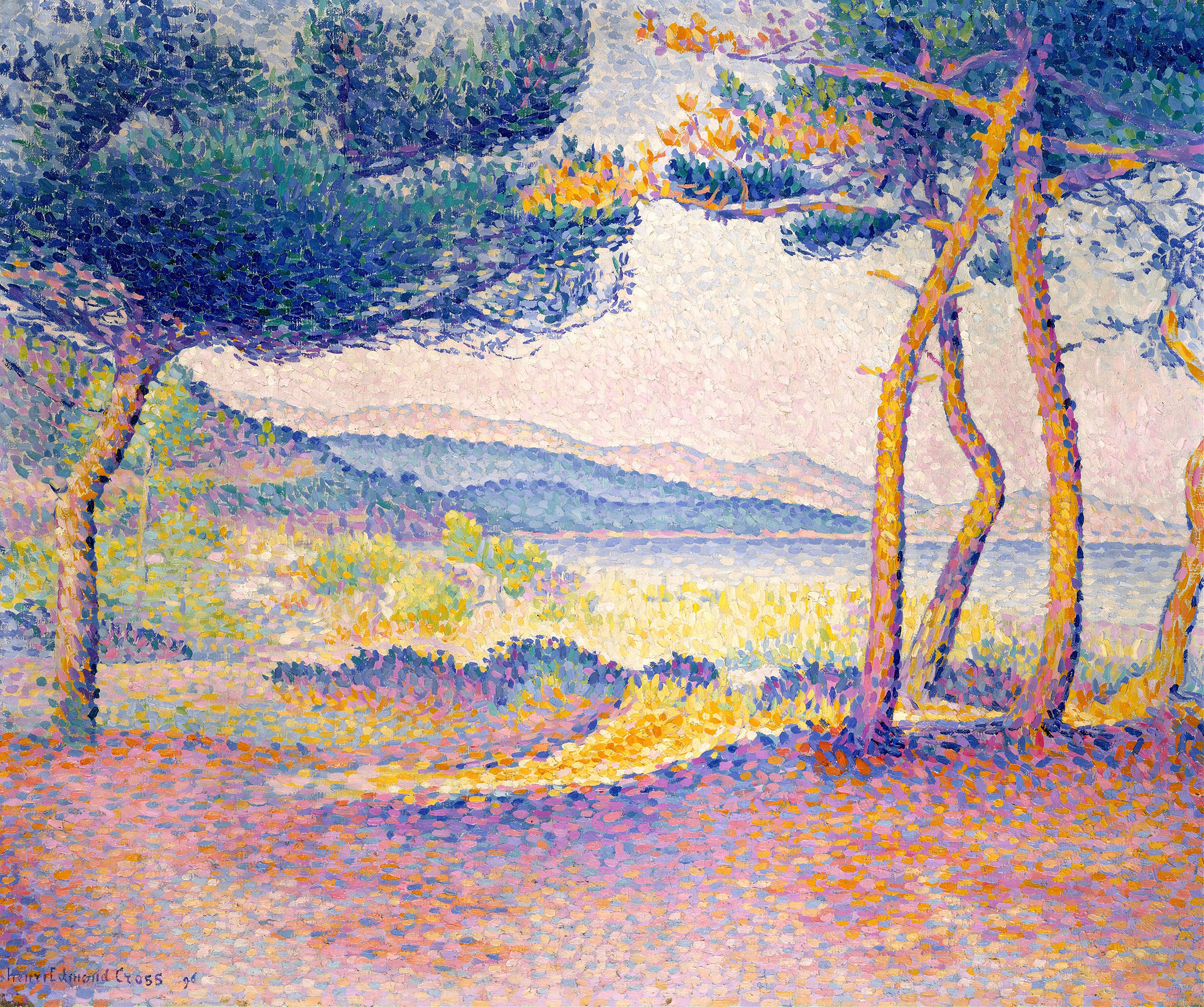
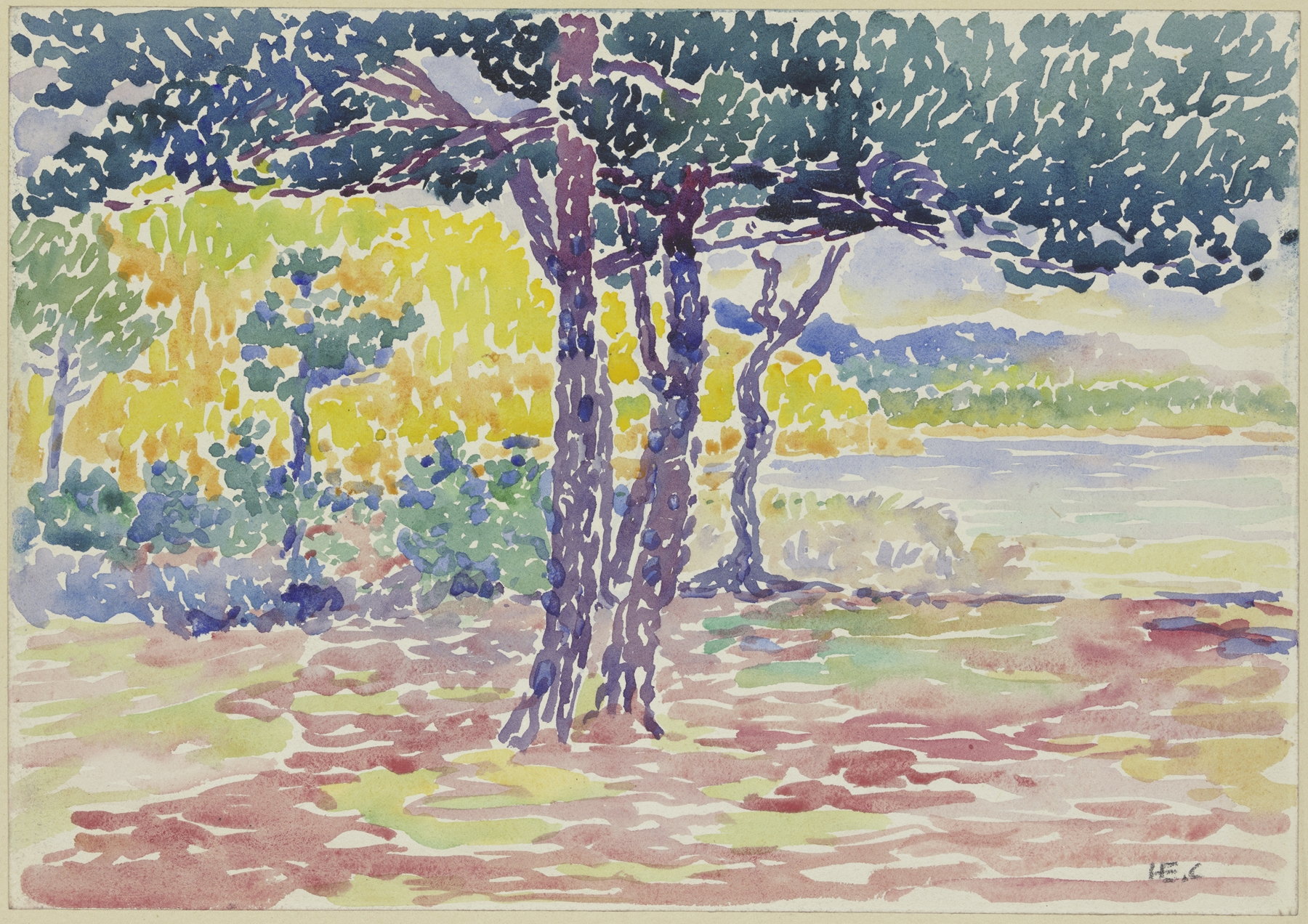
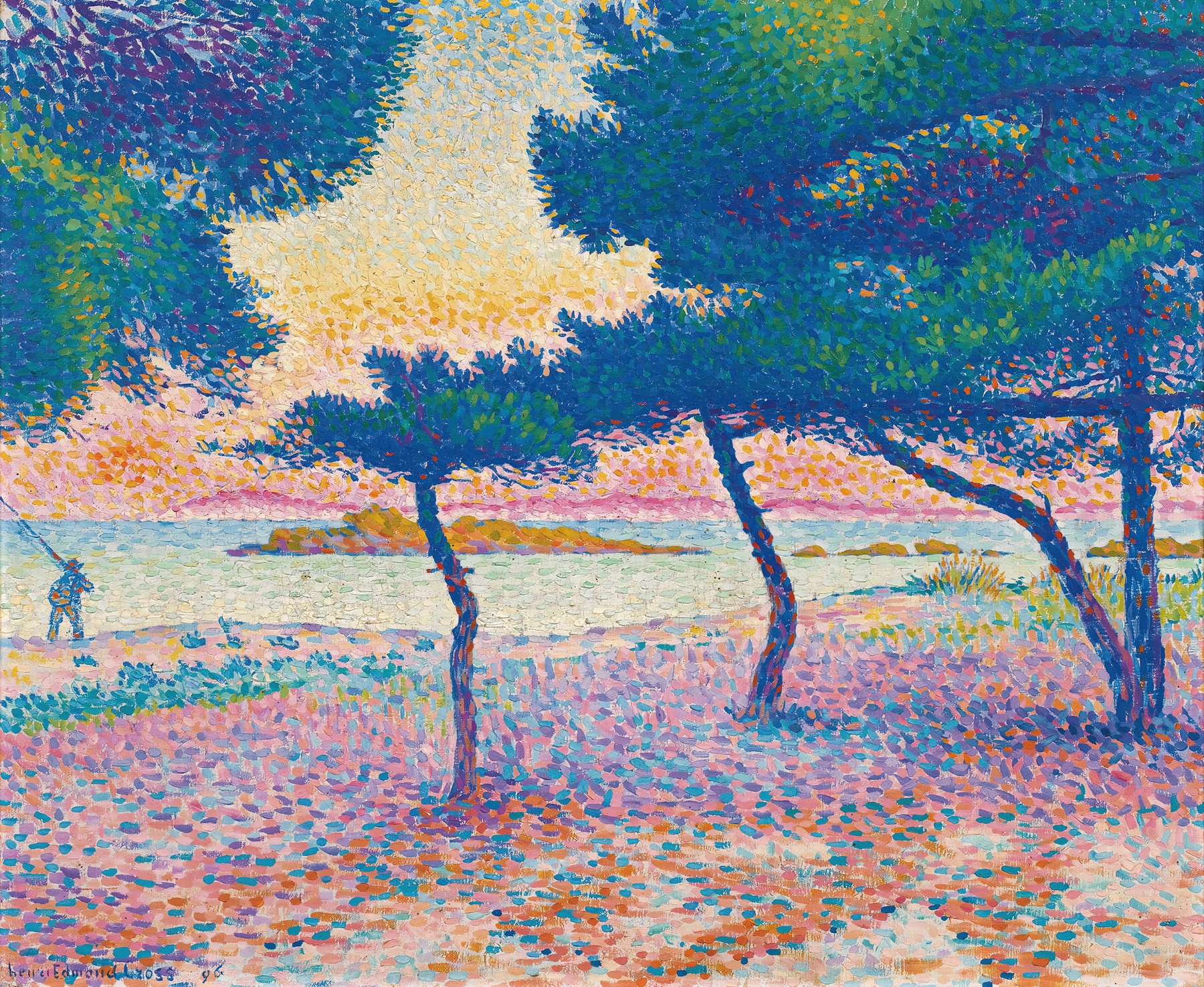
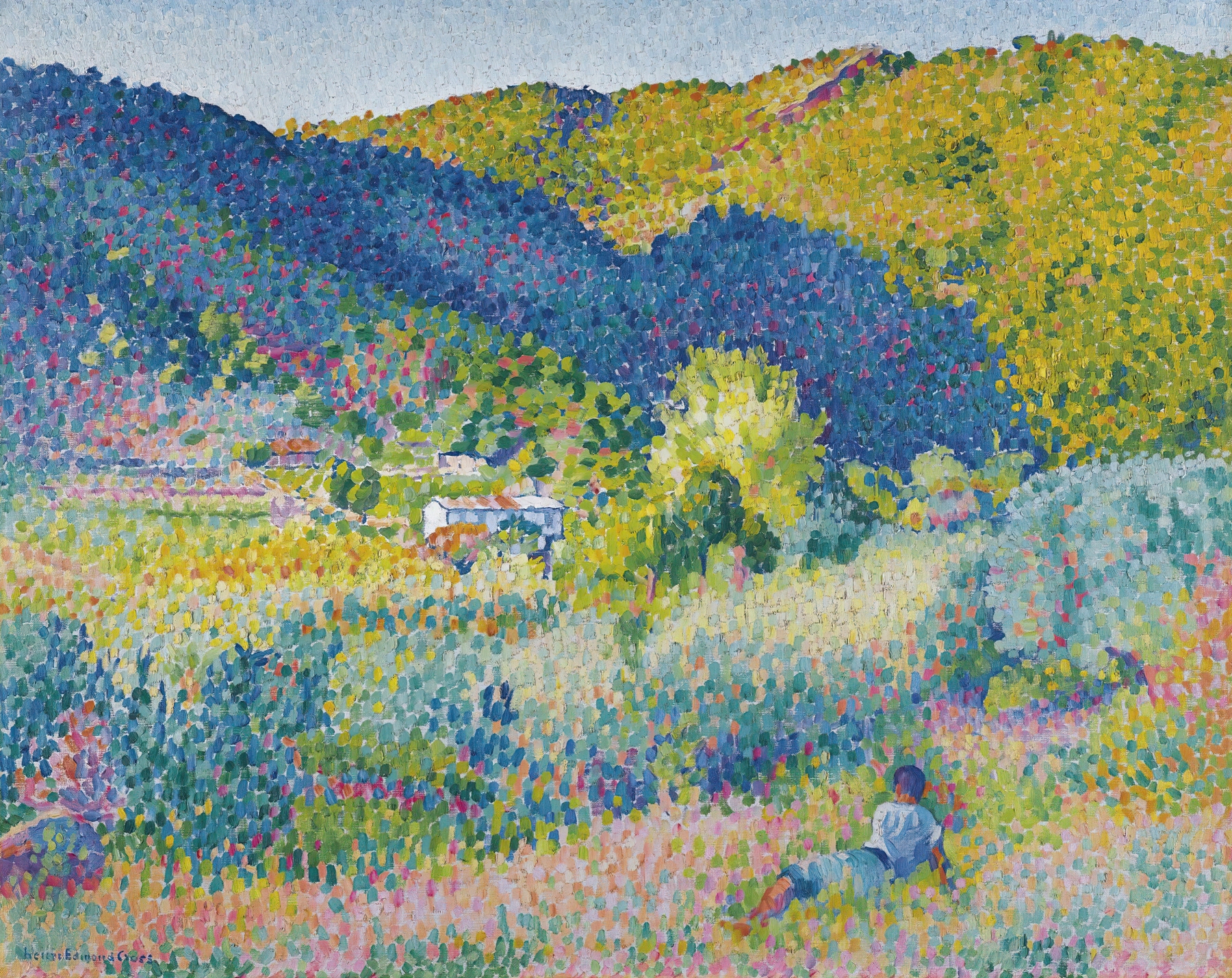
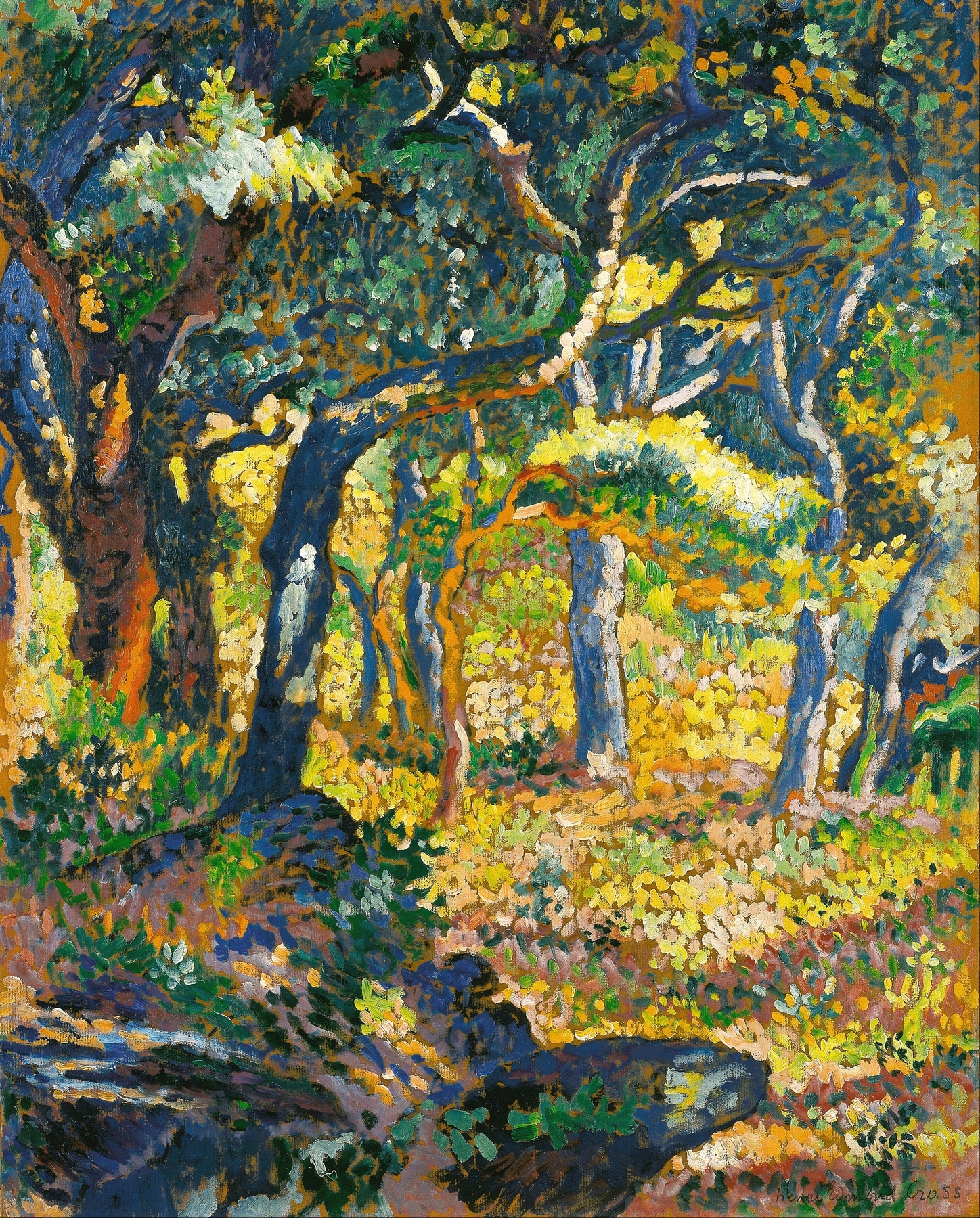
“Every brushstroke is a heartbeat remembered.” In Une clairière en Provence, Henri-Edmond Cross encapsulates the essence of loss, threading nostalgia through vibrant landscapes. The colors pulse with emotion, evoking a serene yet poignant memory that lingers in the mind long after viewing. Look to the center of the canvas, where a sun-drenched clearing beckons under a canopy of fluttering leaves. The interplay of light and shadow dances across the scene, casting an ethereal glow that highlights the delicate brushwork.
Notice how the rich greens of the foliage intertwine with warm earth tones, inviting the viewer to step into a moment caught between time and place, while soft hues of violet and blue cradle the edges, suggesting a lingering melancholy. Beneath its surface, the painting whispers of contrasts—the vibrancy of nature juxtaposed with the quiet ache of absence. Each stroke seems to echo the laughter and warmth of gatherings now turned into whispers of memory, exquisite yet fleeting. The distant horizon hints at an unfulfilled longing, as if the trees stand as guardians of lost moments, cradling the weight of what once was.
Cross created this piece during the late 19th century, a time of personal transformation and artistic evolution amidst the burgeoning movement of pointillism. Living in the picturesque landscapes of Provence, he sought to capture the beauty and emotional resonance of his surroundings. This period marked a deepened connection to nature and a shift in his artistic style, reflective of a world grappling with rapid change and the passage of time.