Ushibori — History & Analysis
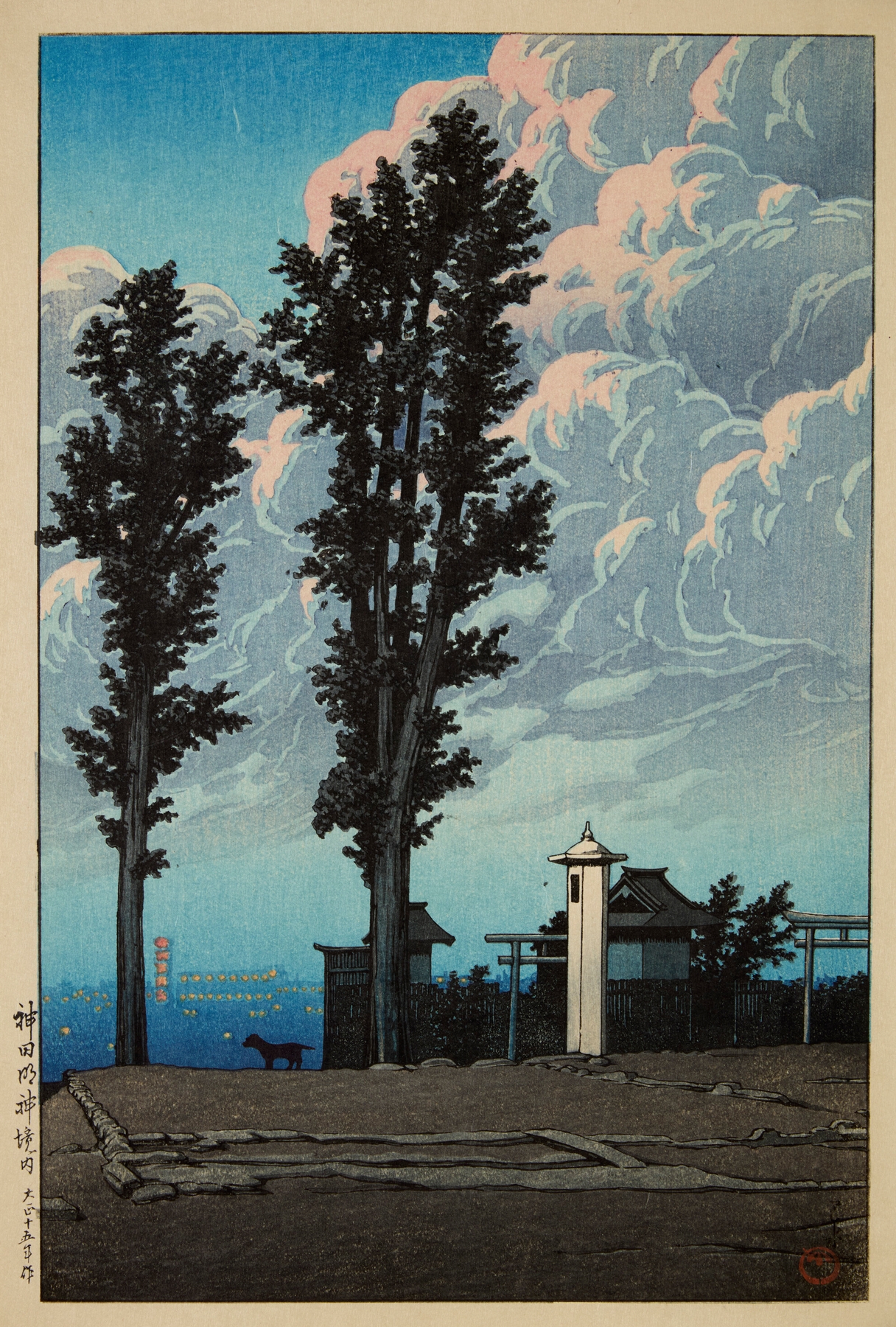
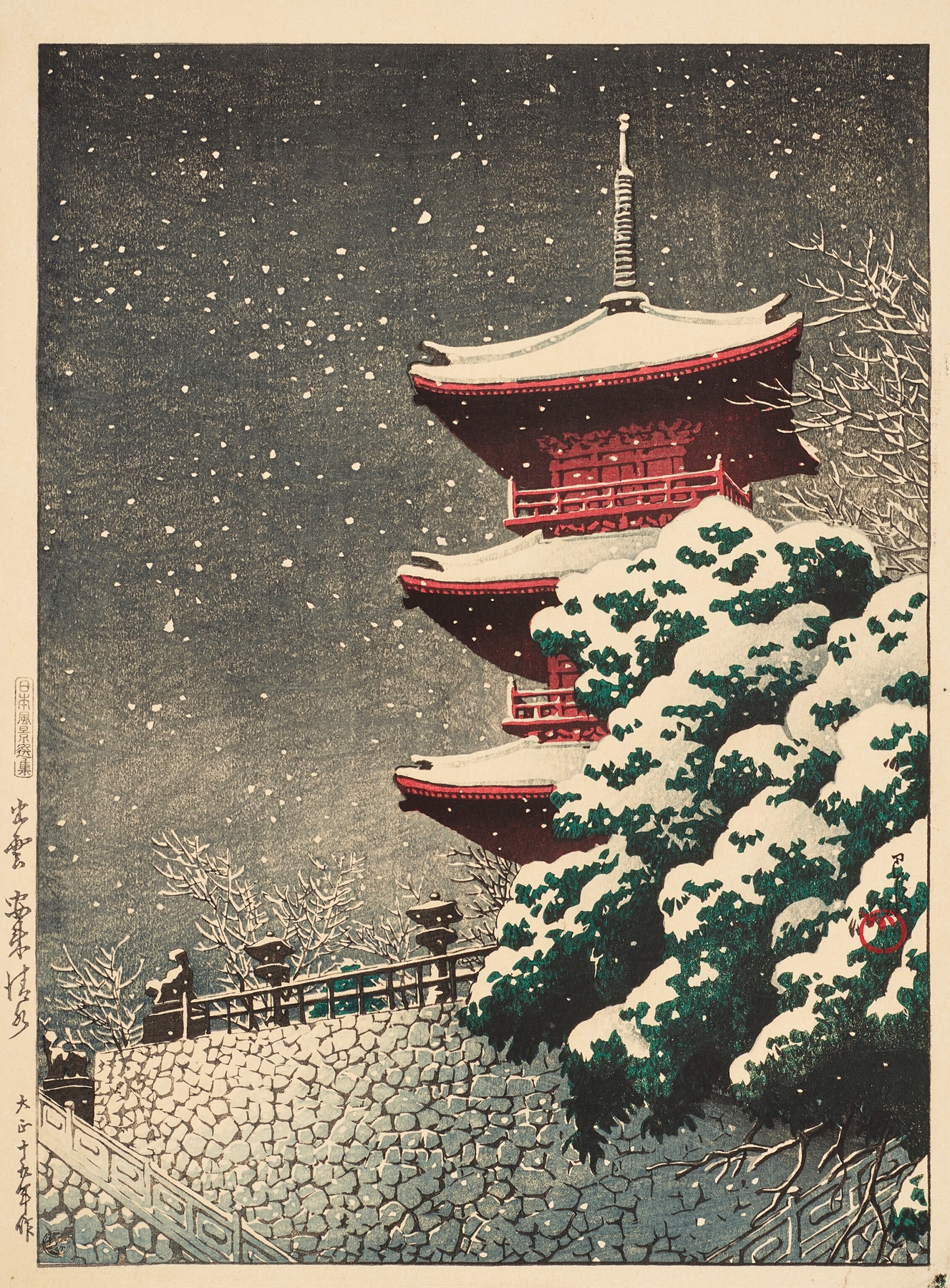
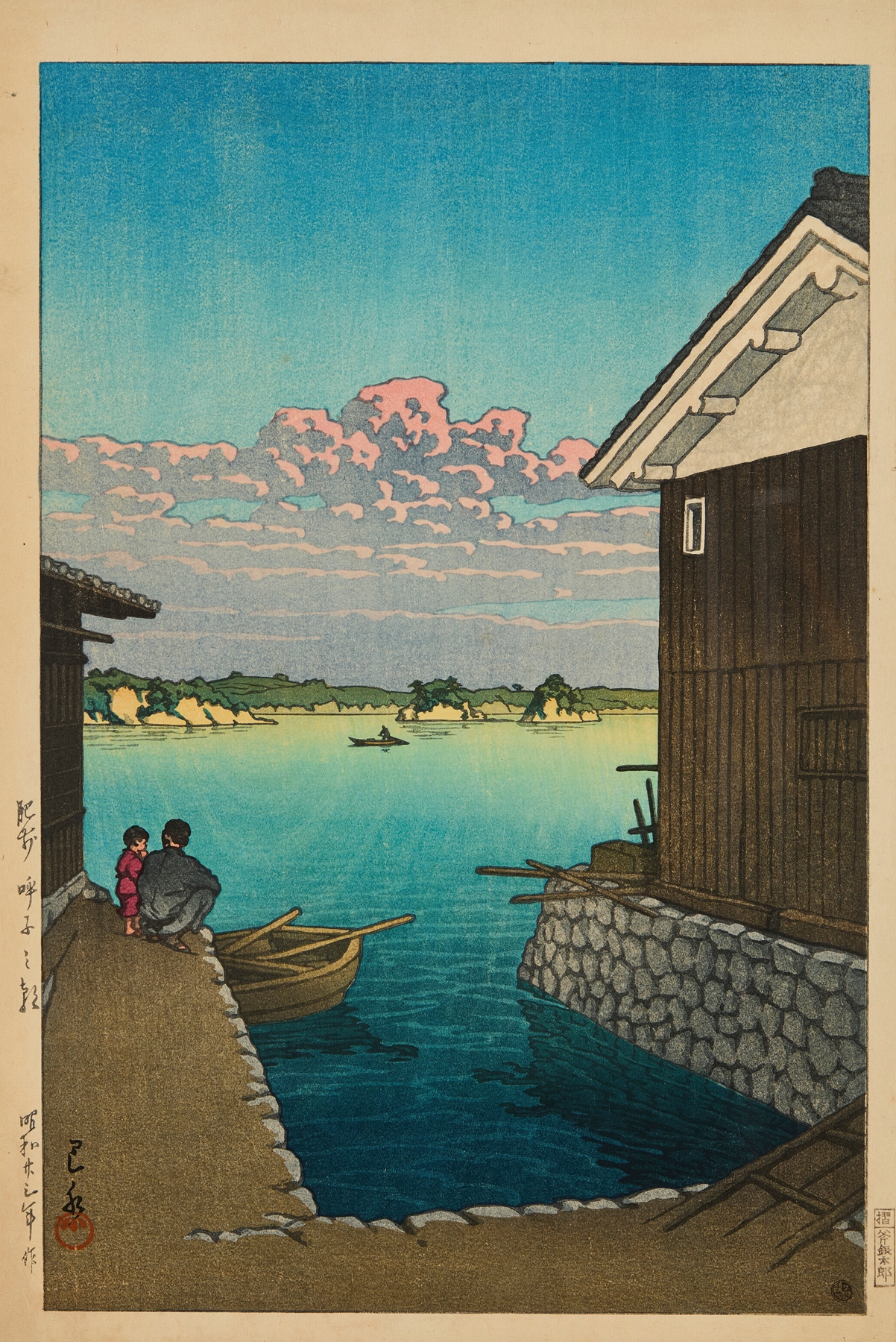
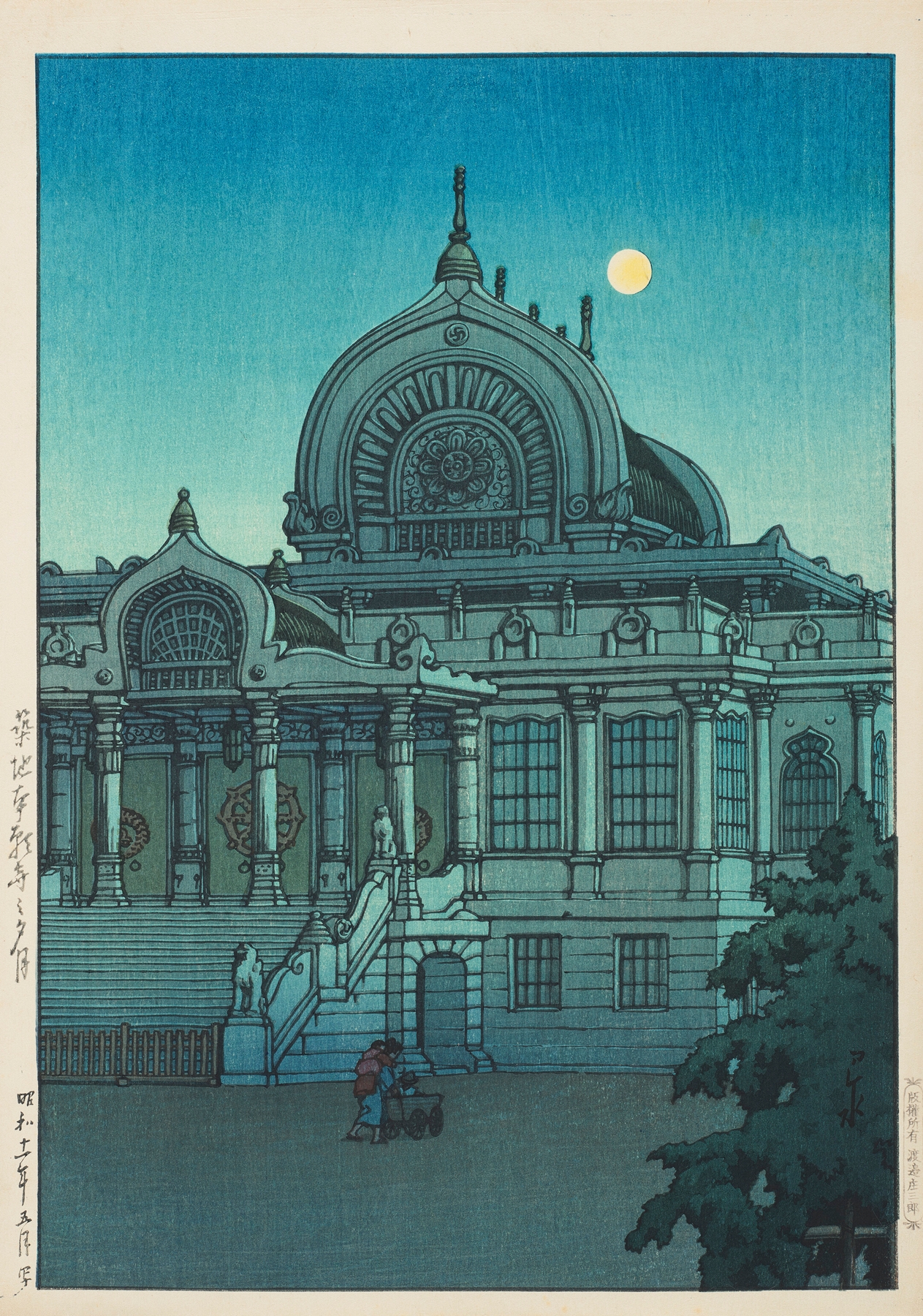
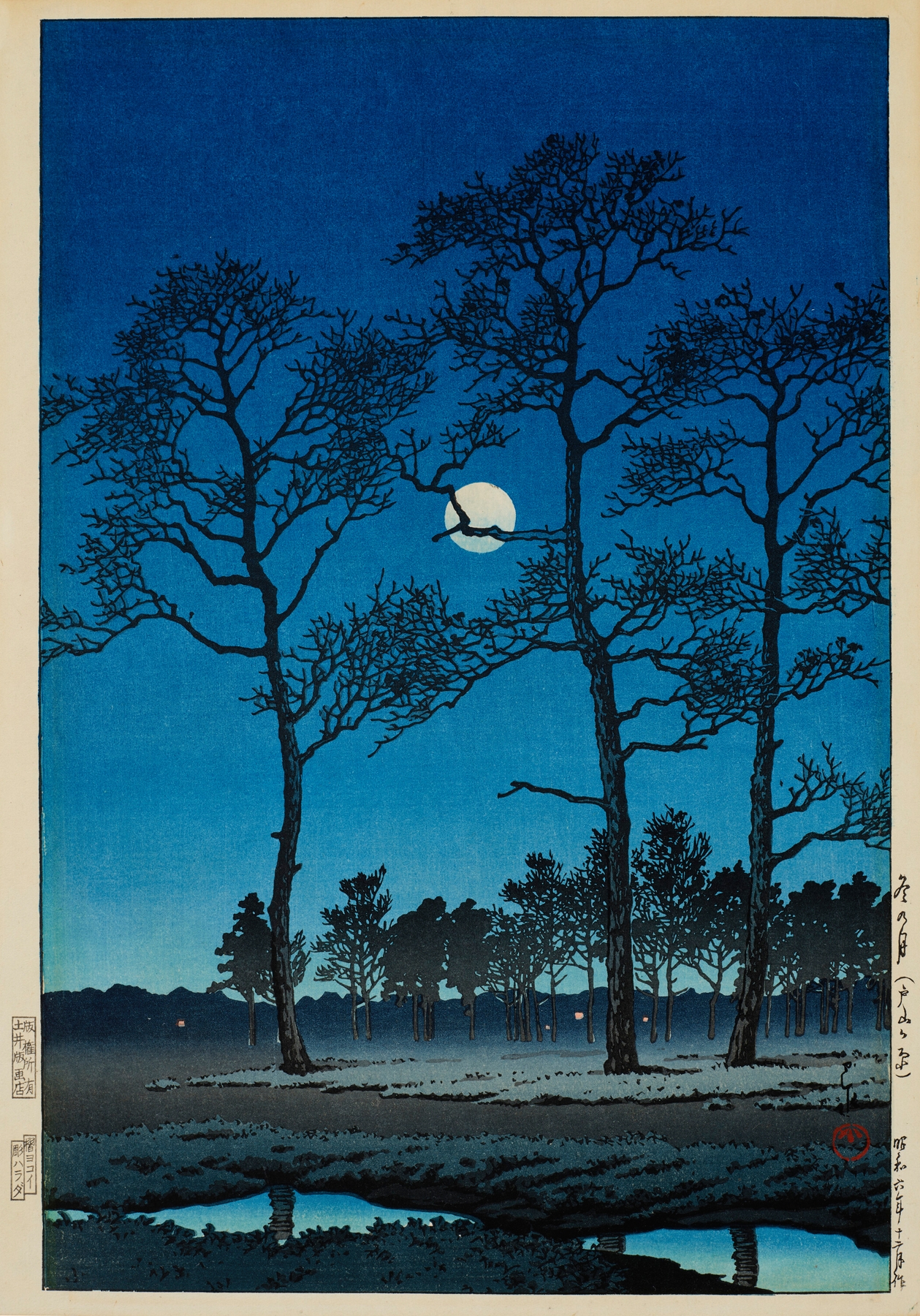
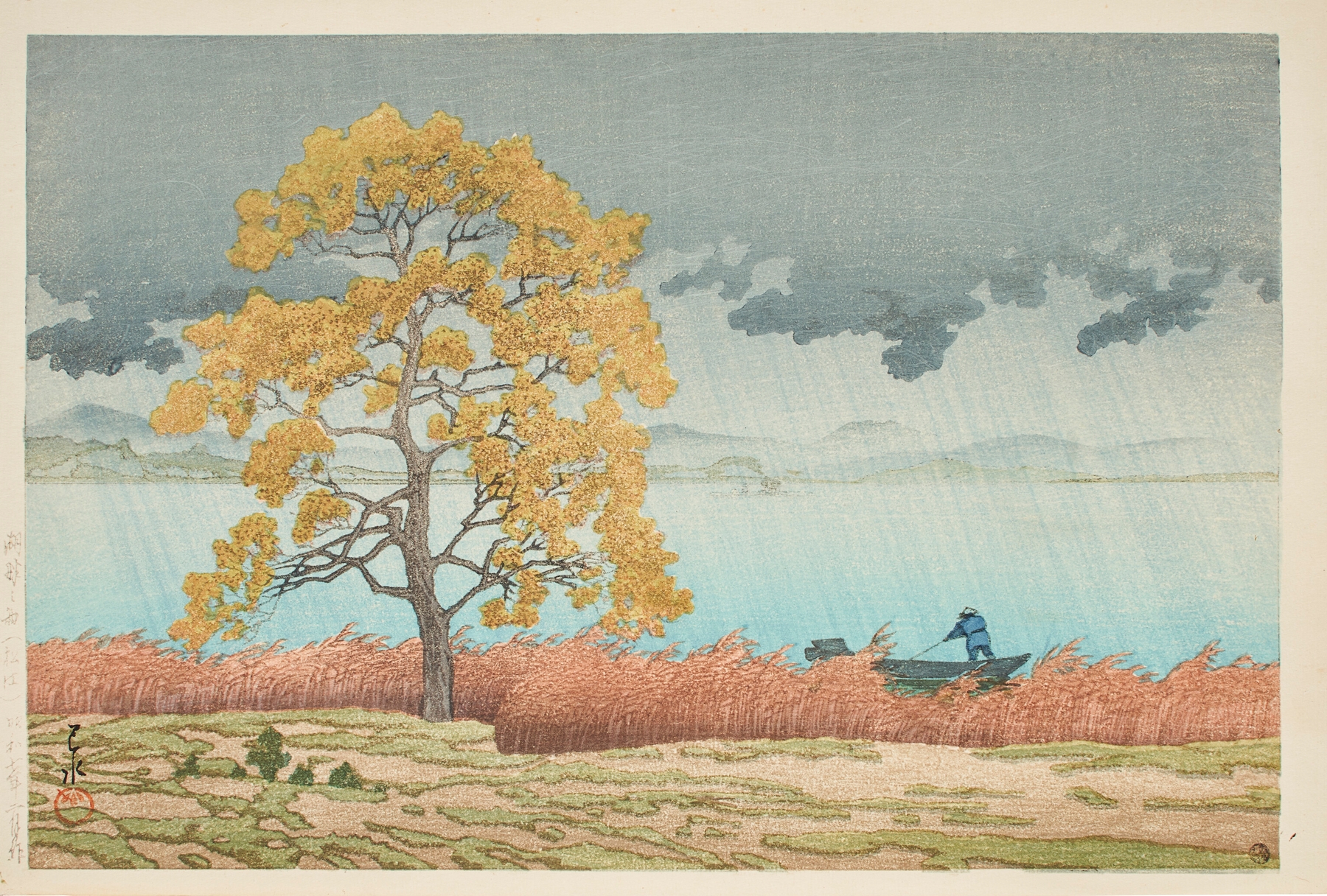
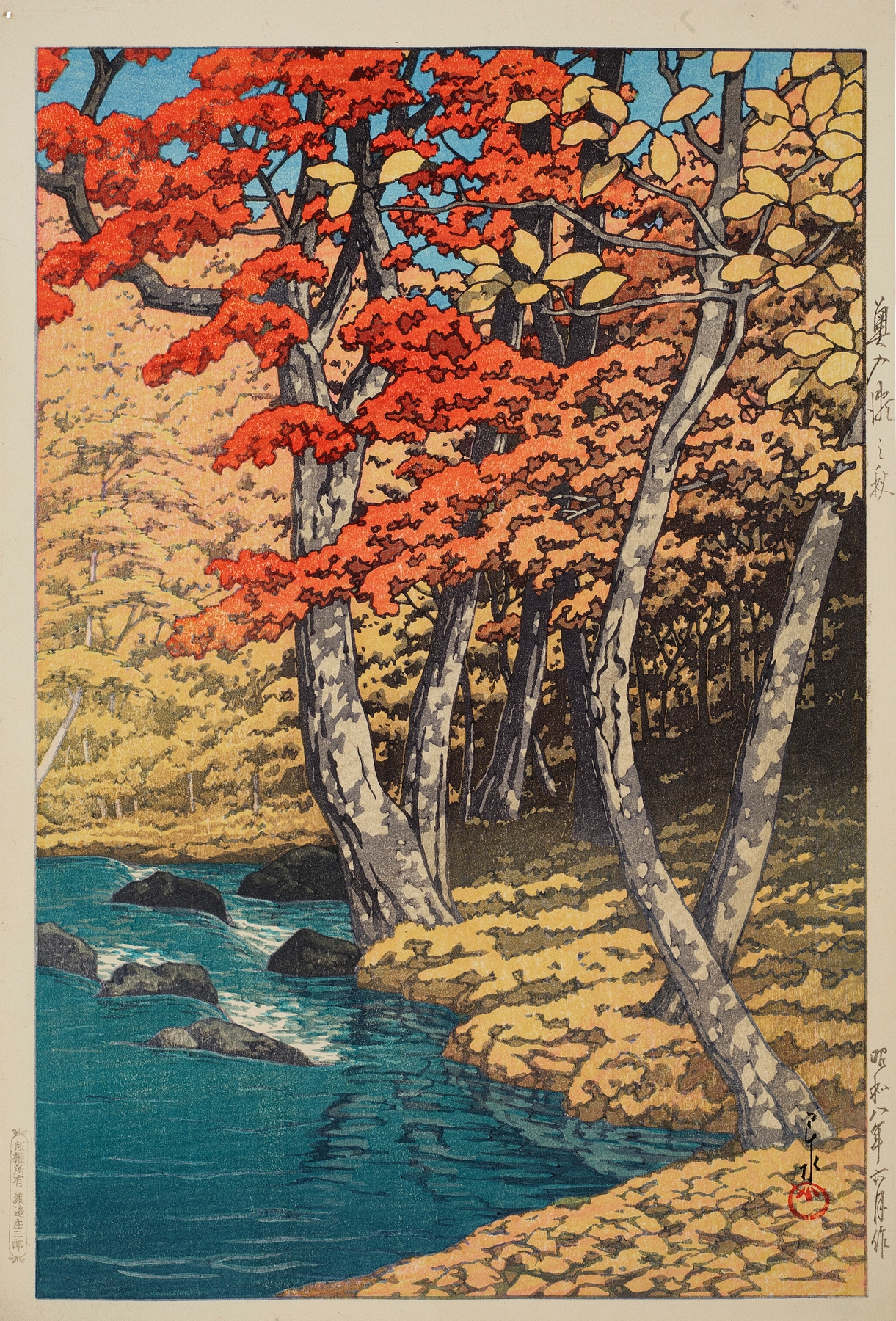
“Under the brush, chaos becomes grace.” In the delicate play of shadow and light, an intricate world unfolds. Focus on the soft gradations of blue and grey that envelop the landscape, where the gentle curves of the hills lead your gaze to the tranquil water’s edge. Notice how the trees, silhouetted against the shimmering lake, create a serene frame, inviting you to explore further. The subtle strokes convey movement, with rippling reflections mirroring the delicate clouds above, evoking a sense of harmony and peace.
Hidden within these tranquil scenes are whispers of the passage of time and nature's quiet persistence. The shadows cast by the trees suggest not just presence but the ephemeral nature of life, as if they're both a refuge and a reminder of what is transient. There is a tension between the vibrant hues and the soft darks, suggesting both solitude and connection, a balance where the viewer can contemplate their own existence amid nature’s vastness.
In 1930, Kawase Hasui painted this work during a time marked by a shift in Japanese art, as traditional styles began to merge with Western influences. Living in a post-war society, Hasui sought to capture the quiet beauty of his homeland, offering solace through his landscapes amidst the country's changing cultural landscape. His commitment to the Ukiyo-e tradition, while embracing modernity, positioned him as a pivotal figure in the shin-hanga movement, illustrating the delicate relationship between nature and humanity.