Valley with Fir (Shade on the Mountain) — History & Analysis
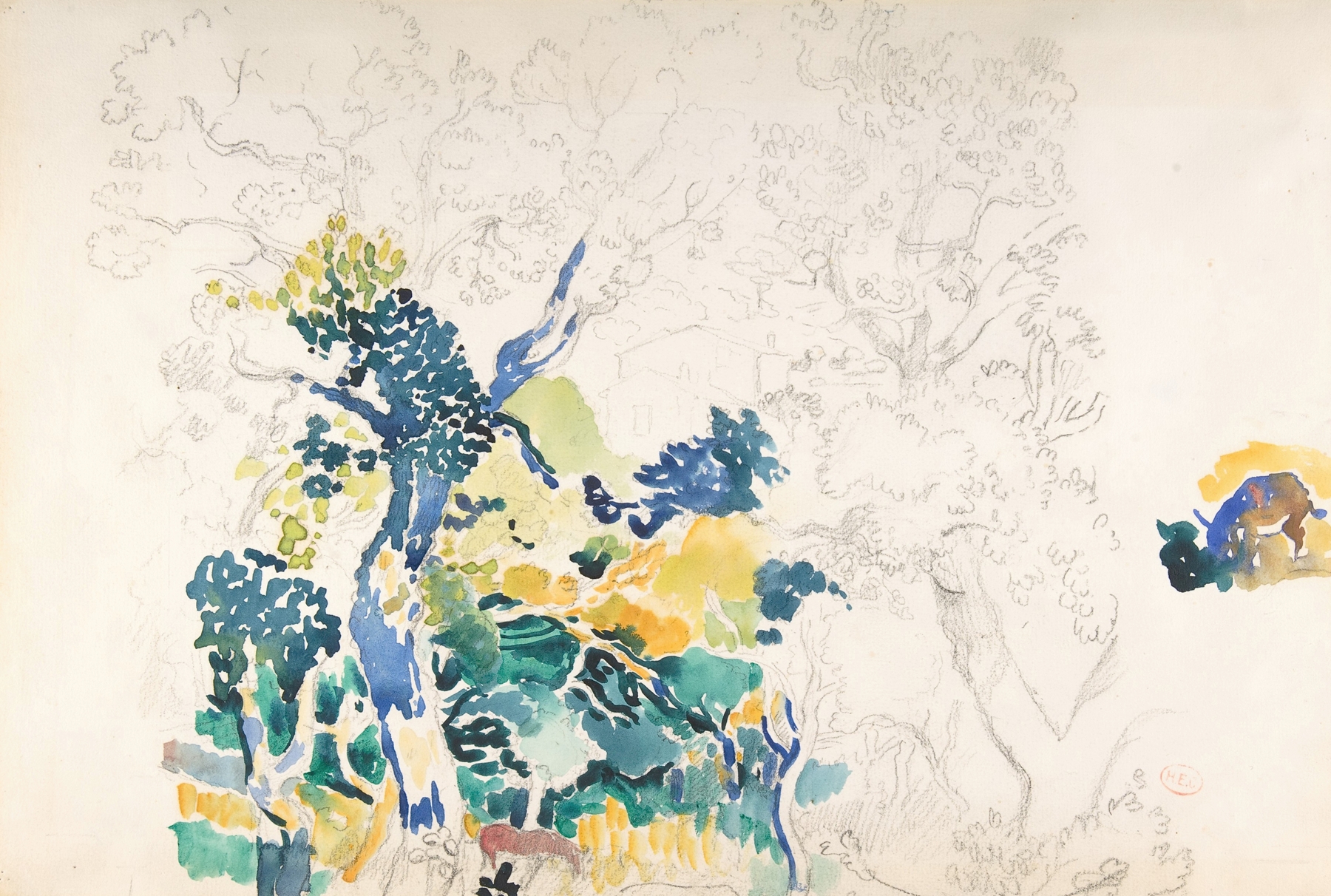
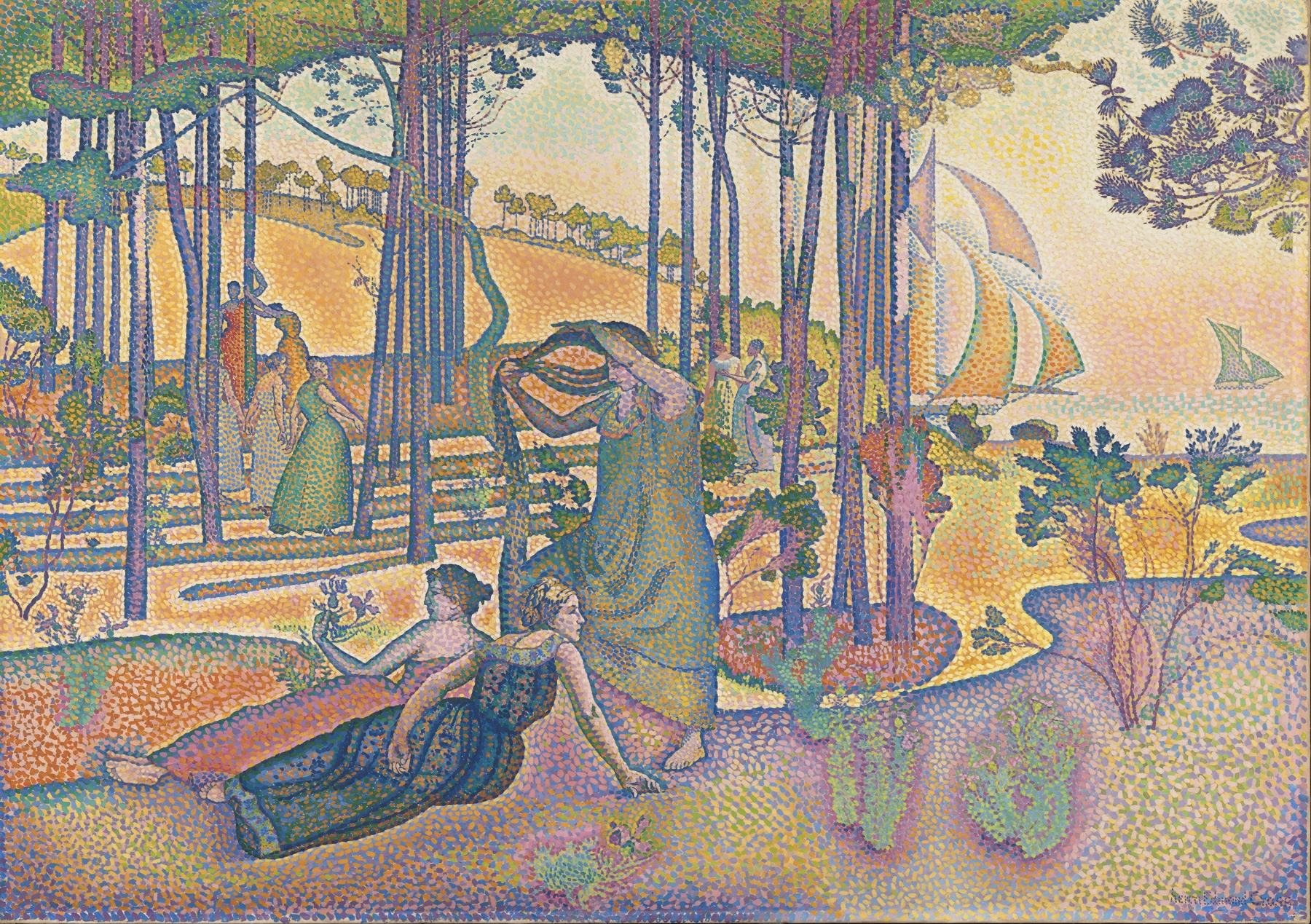
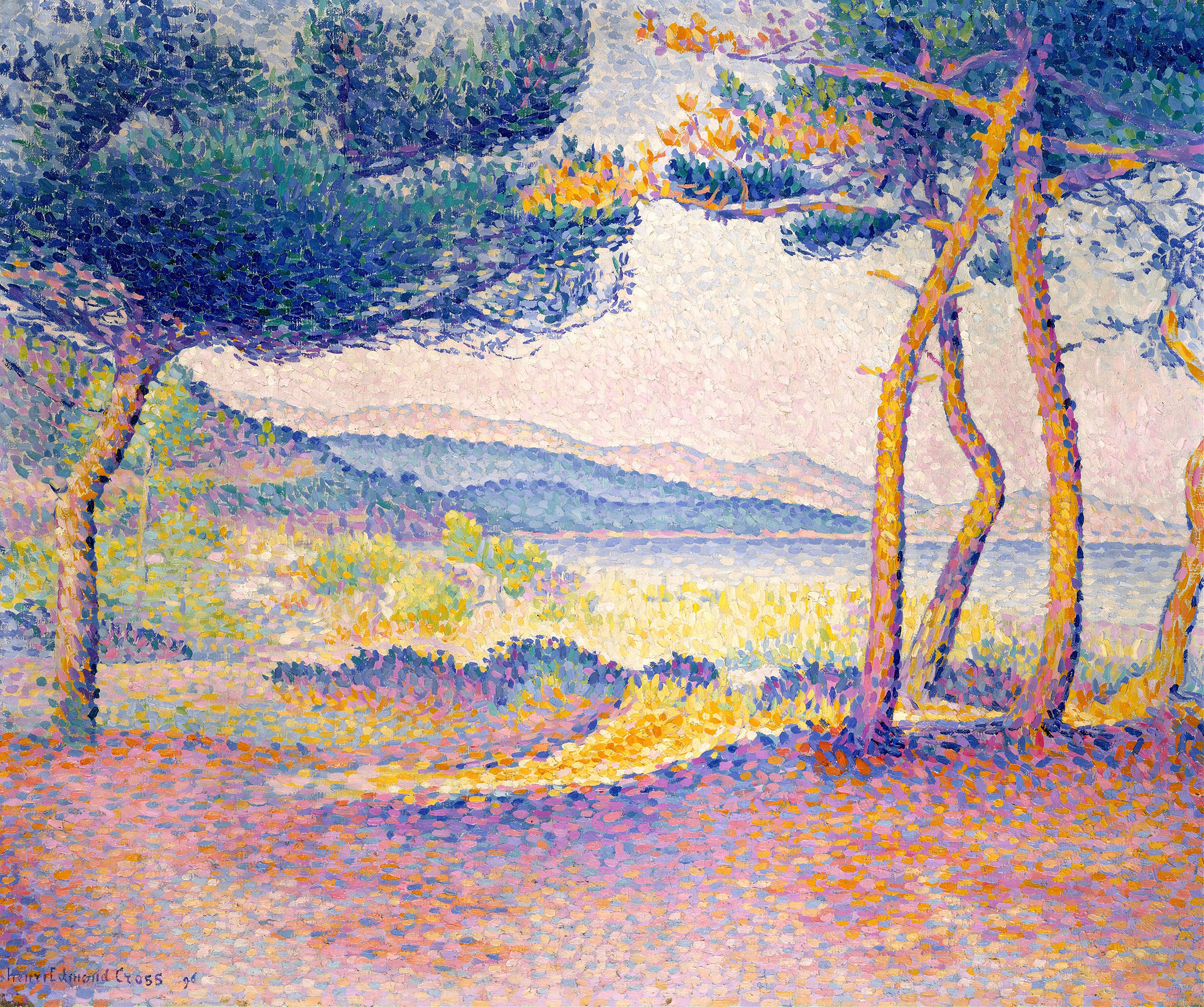
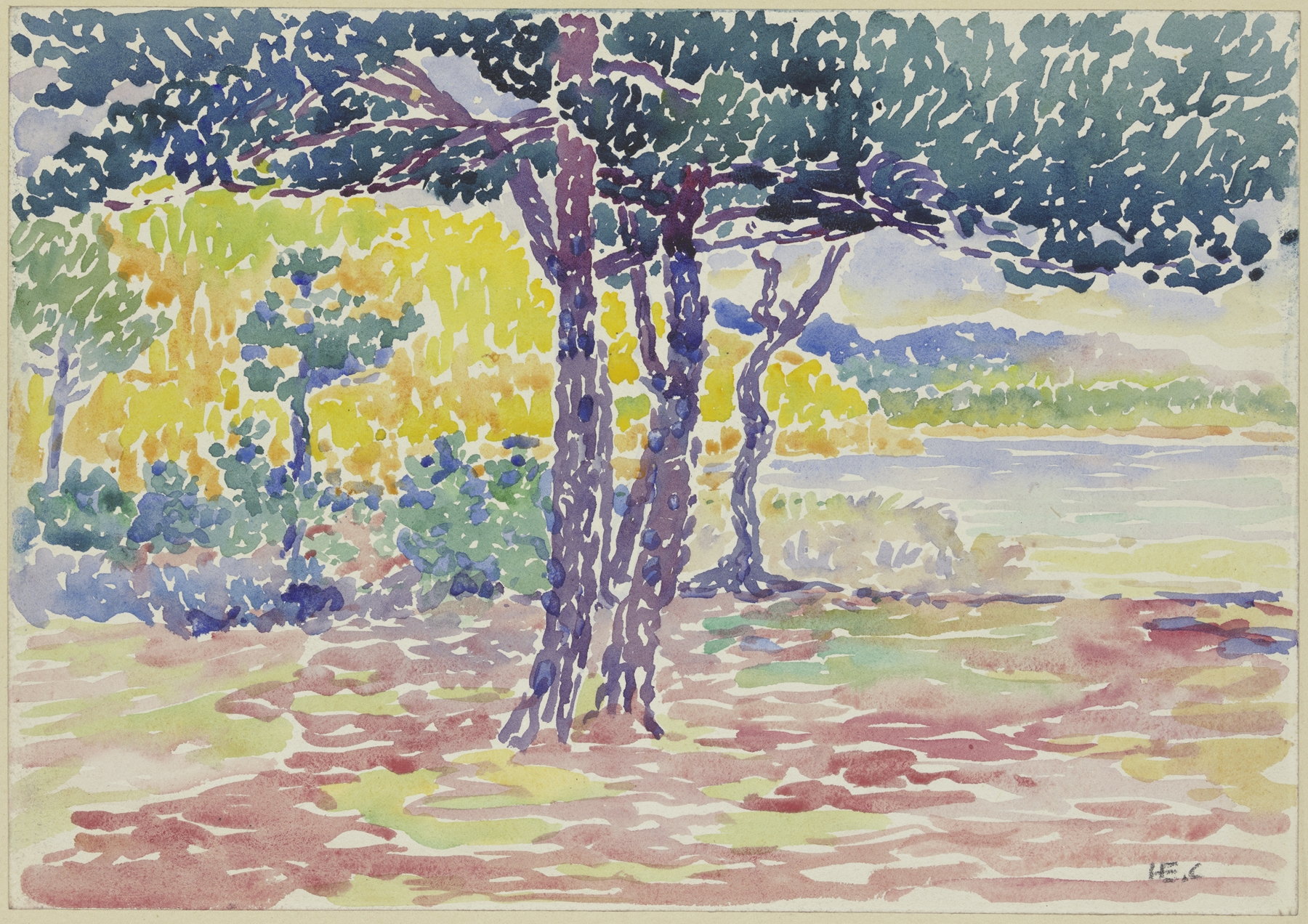
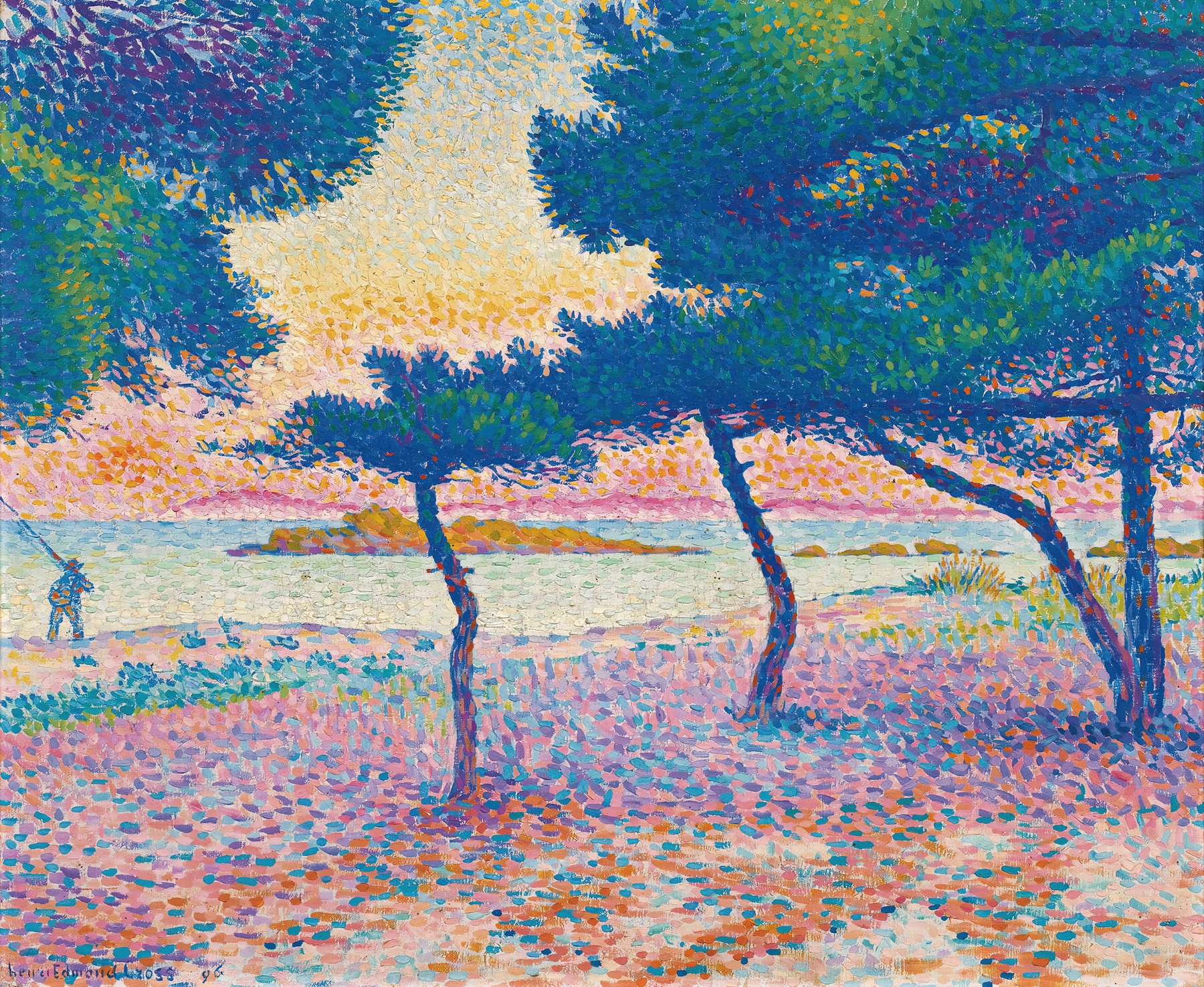
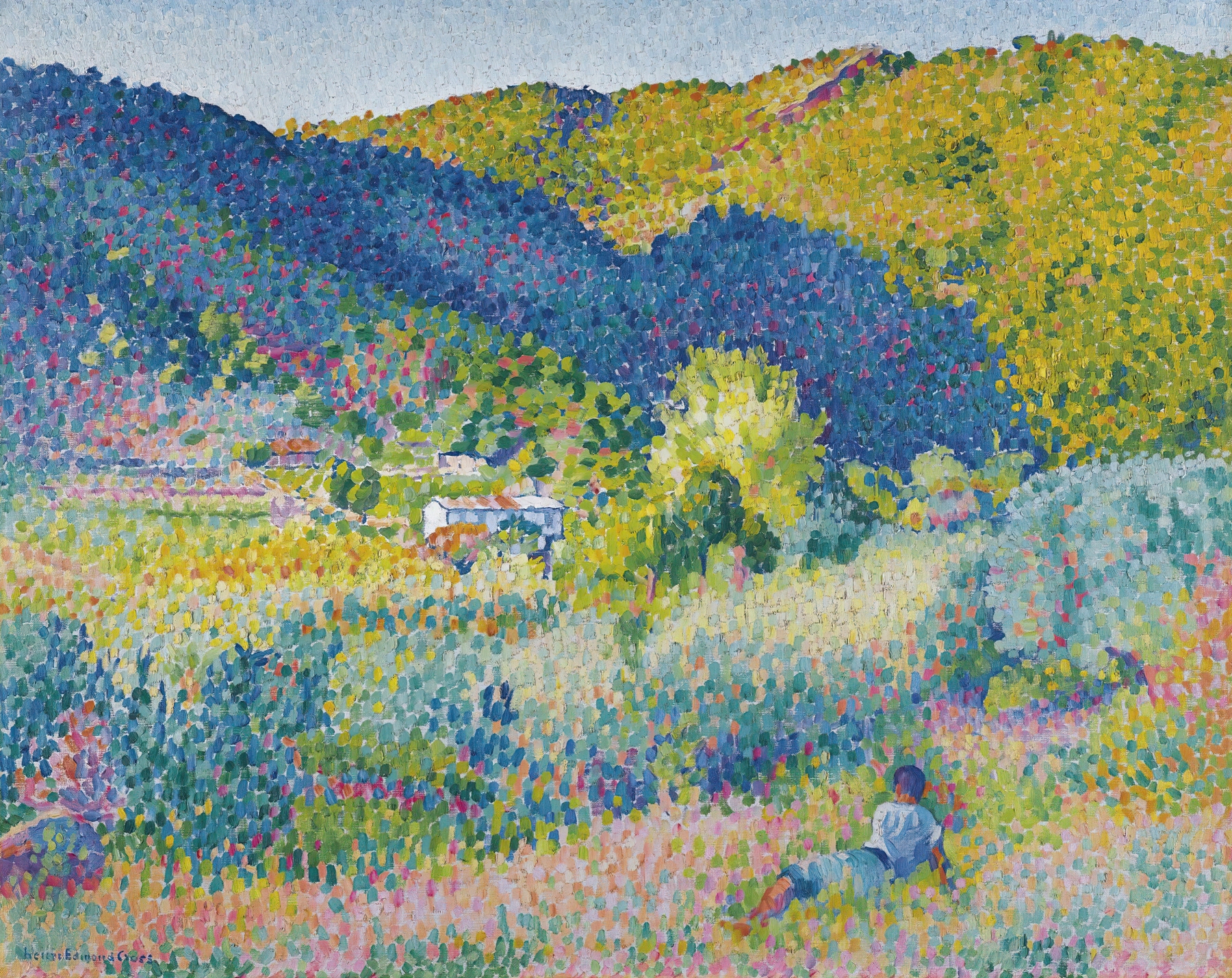
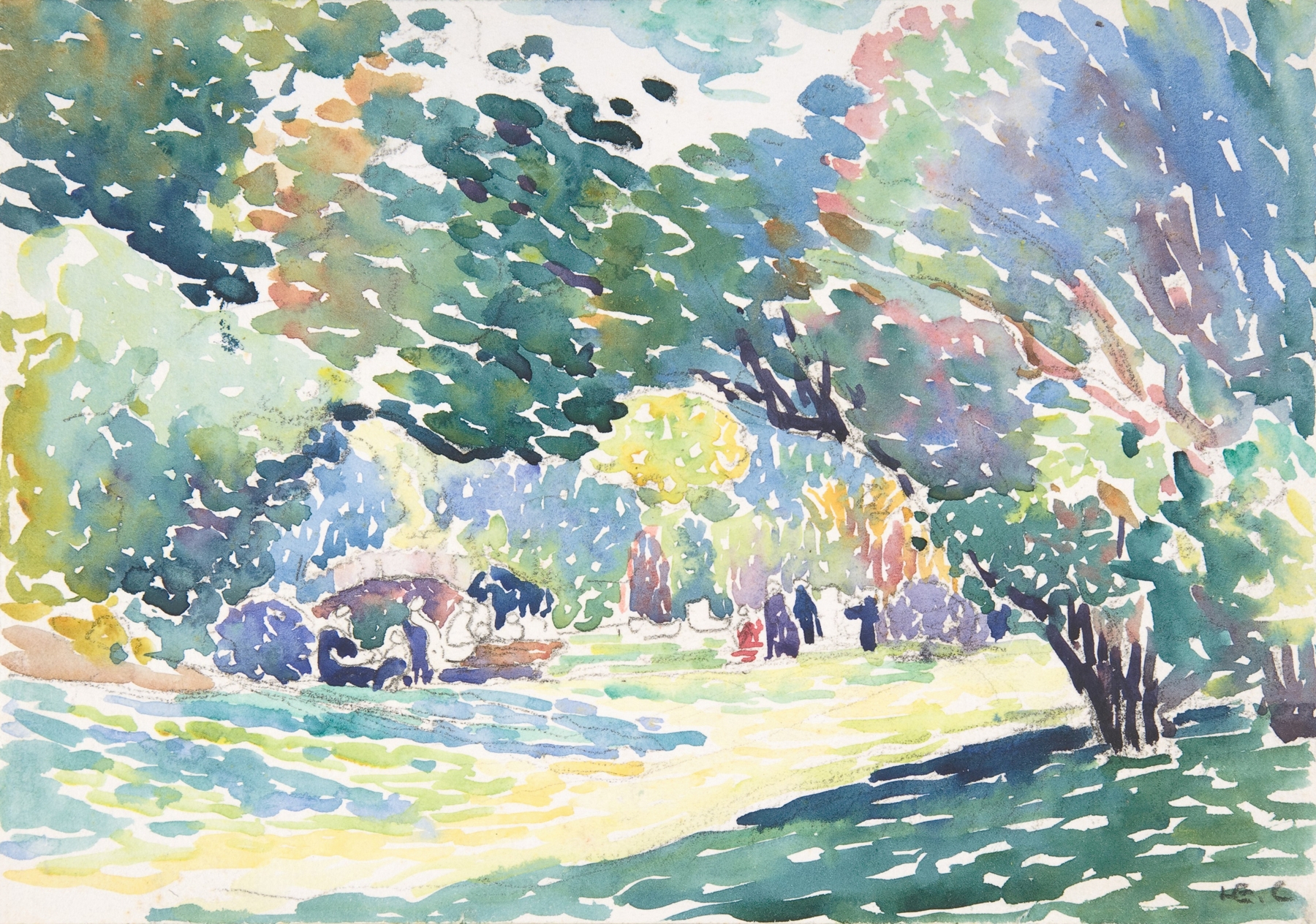
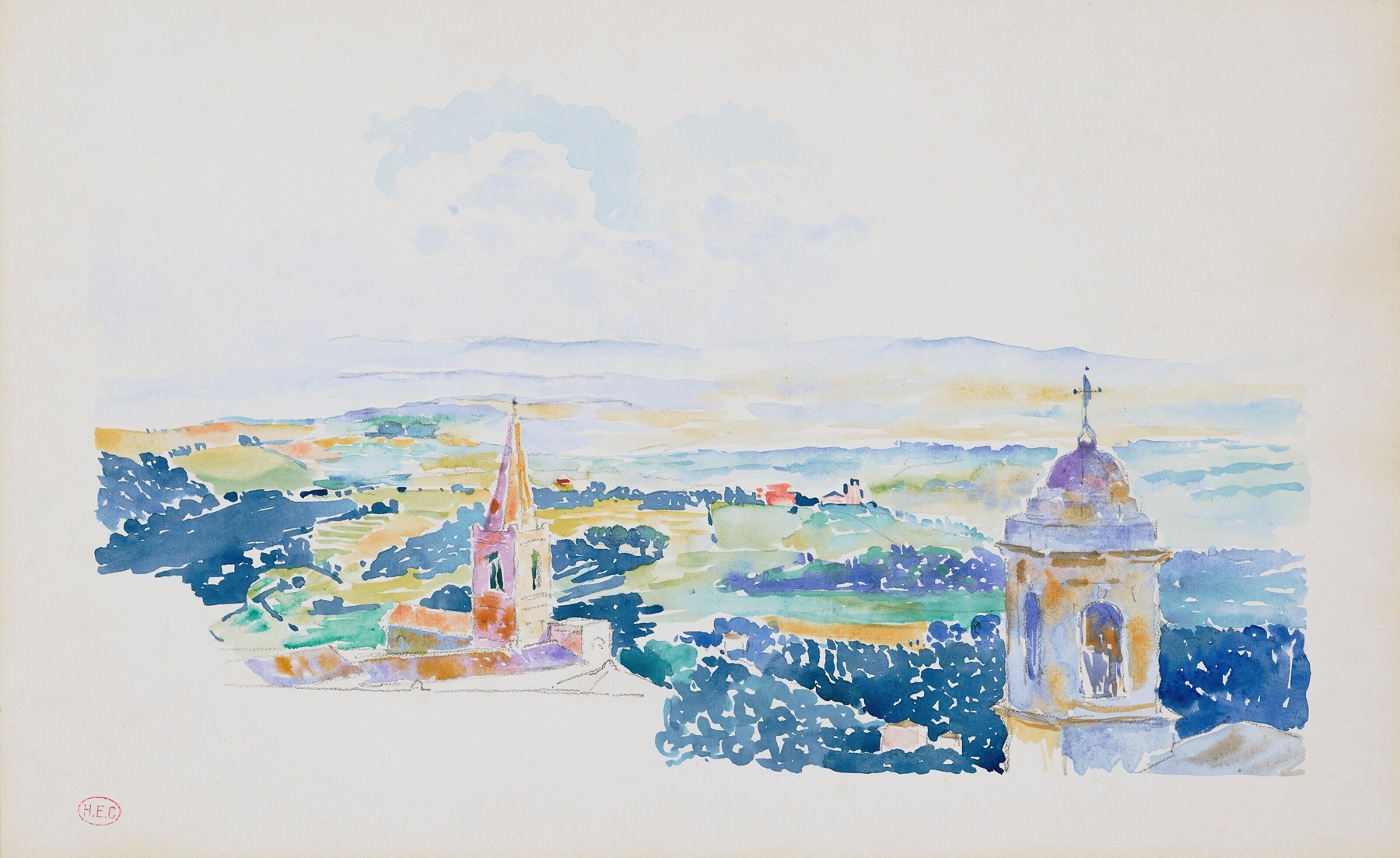
Could beauty survive in a century of chaos? In Valley with Fir (Shade on the Mountain), the answer emerges like a whisper through the brushstrokes, evoking a deep longing for tranquility amidst the turmoil of an ever-changing world. Look to the left, where verdant green firs rise majestically against the luminous backdrop of rolling hills. The dappled light dances across the canvas, revealing a delicate interplay between shadows and sunlit patches.
The artist's use of pointillism draws the eye across the landscape, inviting viewers to explore each dot of color that breathes life into the scene, harmonizing the palette of greens, blues, and soft earth tones. As you delve deeper, notice the subtle contrasts between the warm, inviting tones of the foreground and the cooler, more distant hues of the mountains. These variations create an emotional tension that speaks to the viewer's yearning for connection with nature. The serene valley beckons, yet hints at the impermanence of such beauty, suggesting a fleeting moment caught between the chaos of life and the serenity of the natural world.
Henri-Edmond Cross created this piece in 1909, during a period marked by significant artistic evolution in France. Post-Impressionism was flourishing, as artists sought new ways to express emotion and perception through color and form. Cross, influenced by the burgeoning movement, aimed to capture the essence of light and landscape, reflecting not only his own experiences but also the collective search for peace in a rapidly modernizing society.