Veduta with the Temple of Jove — History & Analysis
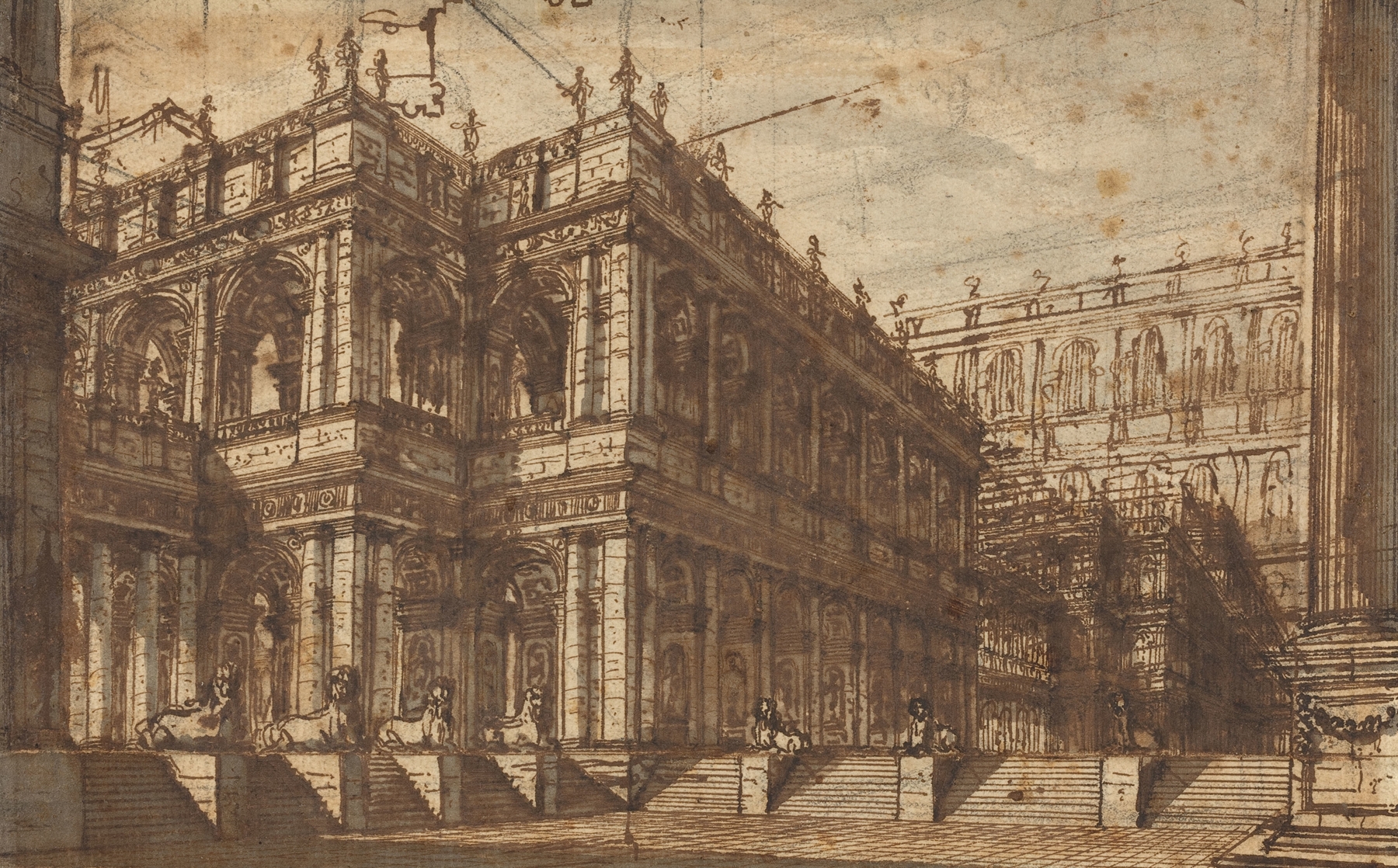
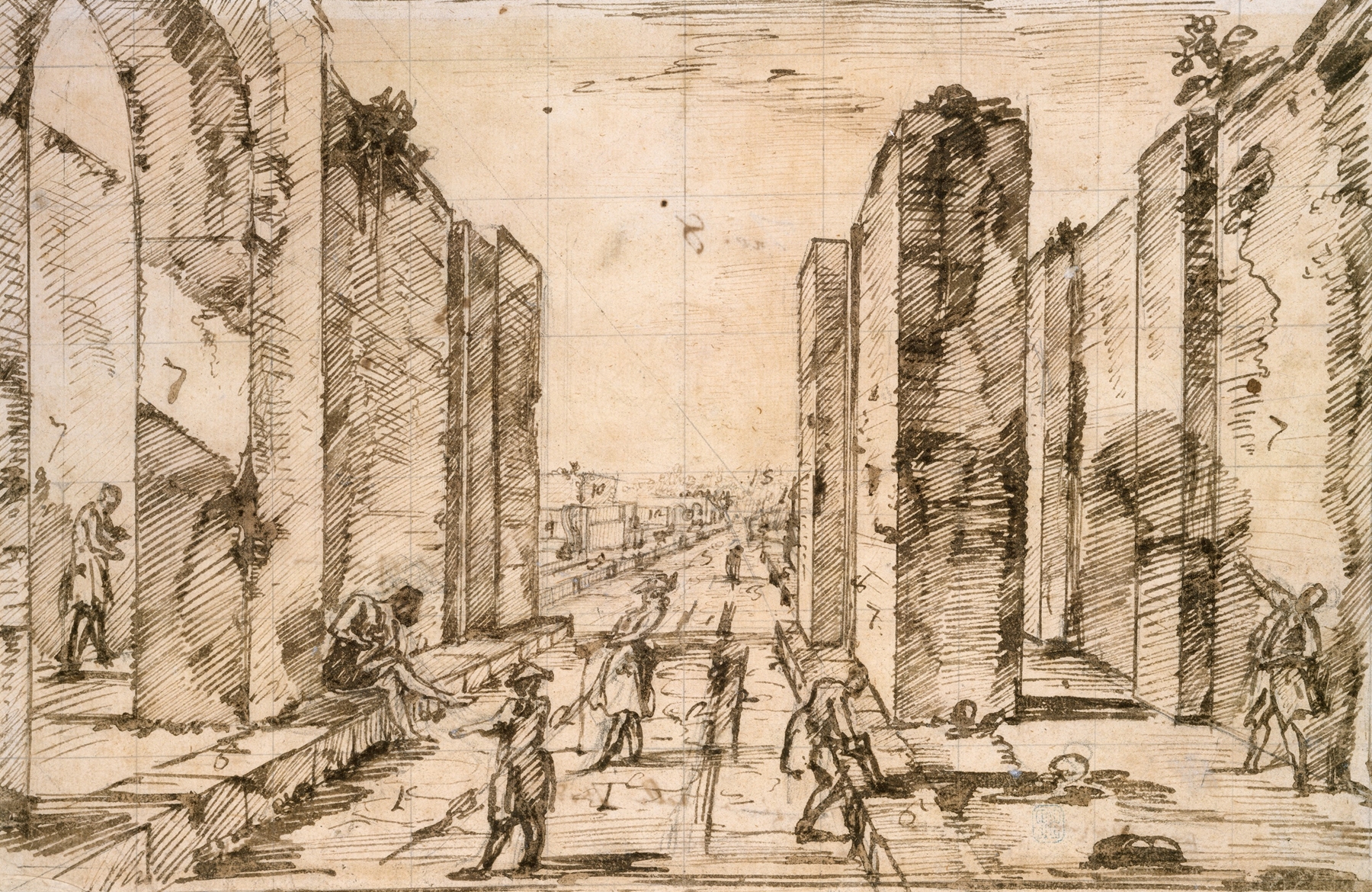
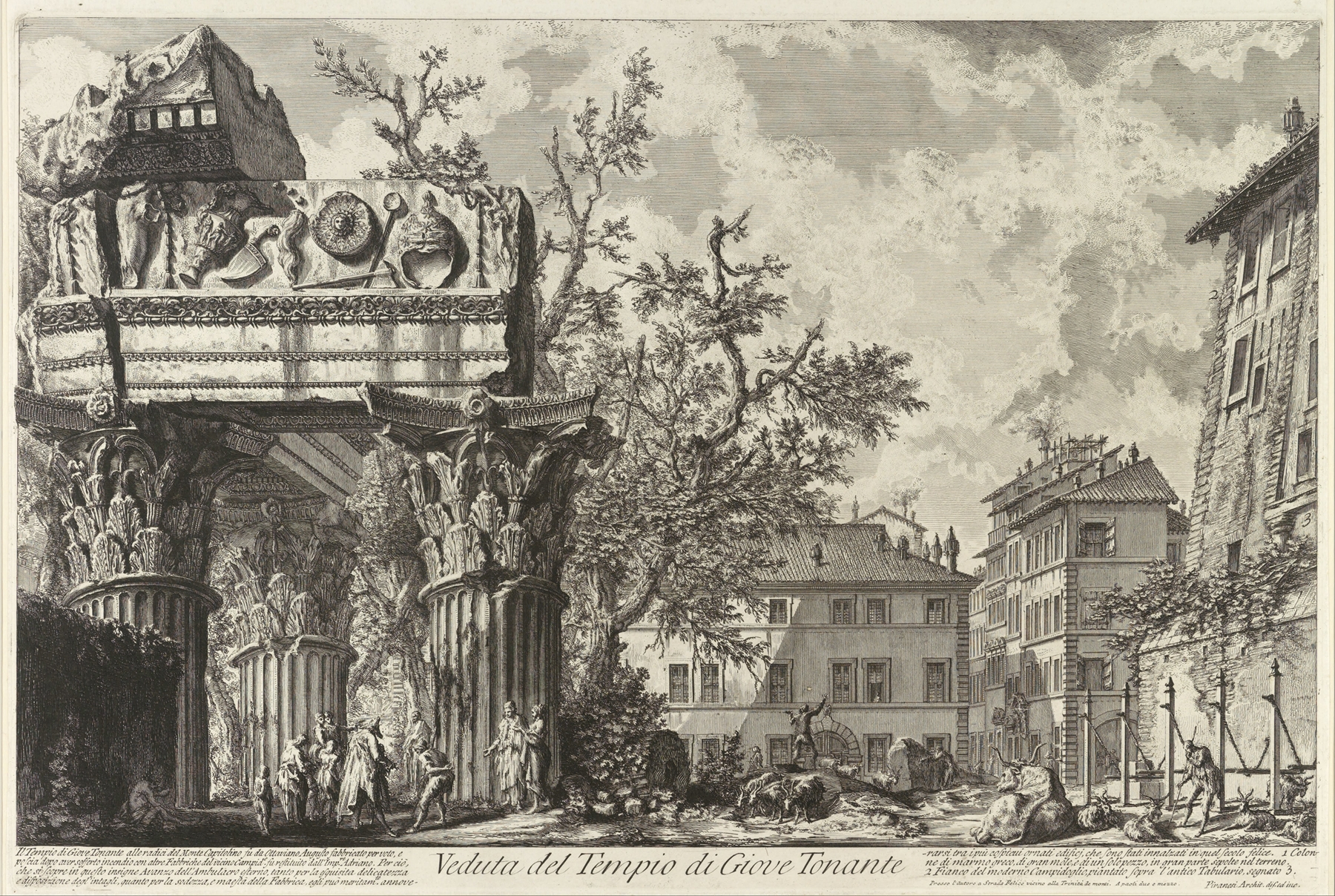
What if silence could speak through light? Giovanni Battista Piranesi captures this essence in Veduta with the Temple of Jove, where architectural grandeur whispers secrets of a bygone era. Look to the center where the Temple of Jove stands, its imposing columns reaching towards the sky. The play of light and shadow creates a striking contrast, highlighting the intricate details of the stonework while casting long shadows that evoke a sense of mystery.
The delicate etching technique reveals a world where every crack and crevice is a testament to both time and artistry, leading the viewer’s eye toward the temple’s majestic silhouette against a softly rendered sky. The artwork is not merely a depiction of ruins but a reflection on permanence and decay. The juxtaposition of the temple’s enduring structure with the surrounding desolate landscape speaks to the transient nature of human achievements. Small figures in the foreground appear dwarfed by the grandeur, illustrating the relationship between humanity and history, while the serene atmosphere invites contemplation on the weight of legacy and the silence that often accompanies it.
Piranesi created this work between 1750 and 1758 during a time when the European artistic community was deeply engaged in the exploration of antiquity. Living in Rome, he was influenced by the city’s rich history and the ruins that surrounded him, which inspired a new appreciation for classical architecture. This piece reflects not only his meticulous skill but also the broader cultural movement towards Neoclassicism, resonating with the fascination for the past that defines an entire era in art.