Venice, Santa Maria della Salute at Sunset — History & Analysis
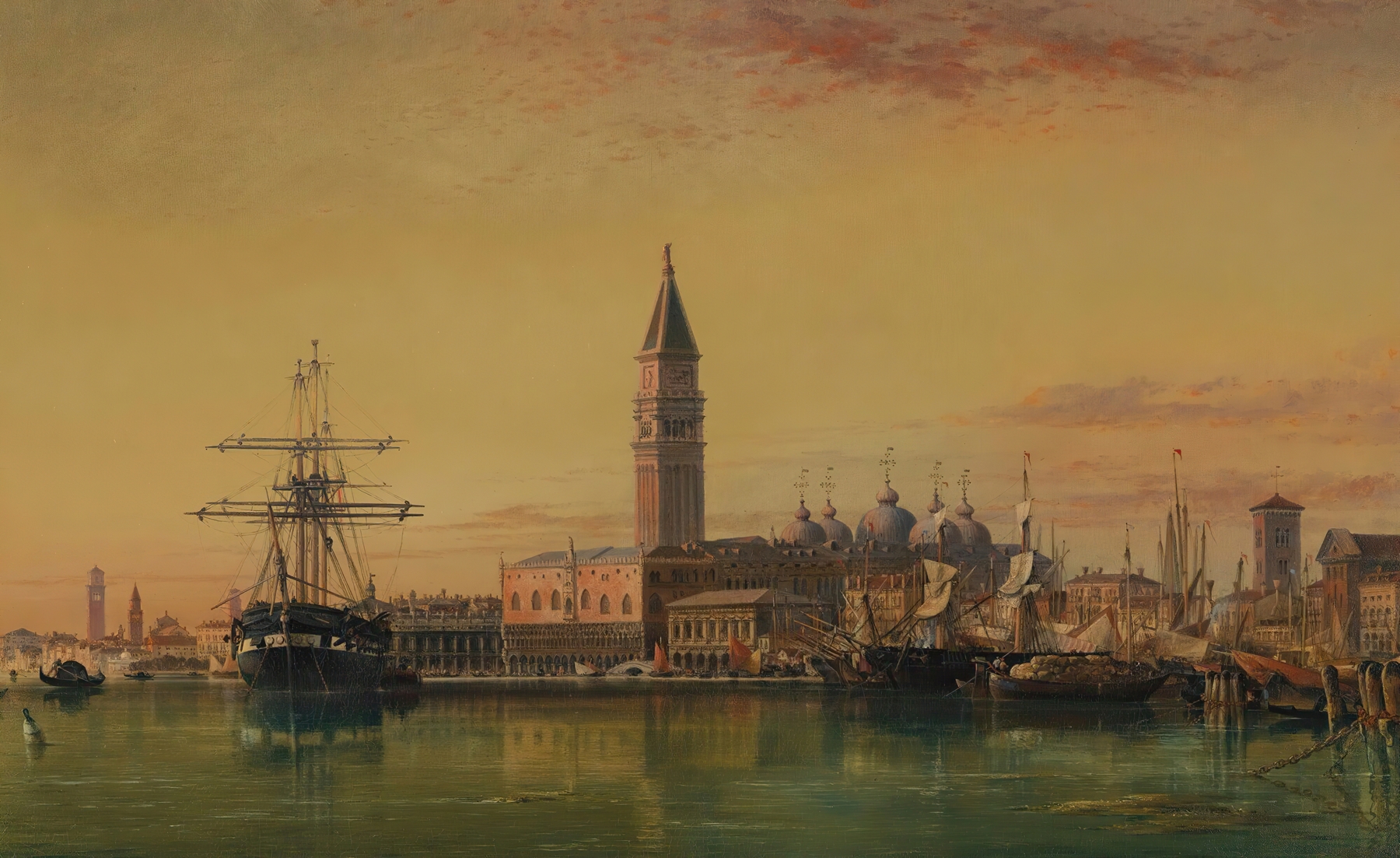
Did the painter know this moment would outlive them? In Venice, Santa Maria della Salute at Sunset, one can almost feel the soft embrace of twilight, a delicate whisper of light that transforms the skyline into a dreamlike vision. Look to the center, where the majestic dome of Santa Maria della Salute rises, bathed in the warm glow of the setting sun. The rich oranges and pinks blend seamlessly with the deepening blues of the sky, reflecting on the placid waters below. Notice how the brushstrokes capture the shimmering surface of the lagoon, each stroke alive with energy, urging us to explore further into the scene.
The balance between the architecture and the natural world evokes a sense of harmony, while the silhouetted gondolas hint at the city’s timeless dance of life. Yet, beneath this serene beauty lies an undercurrent of transience. The fleeting nature of the sunset reminds us of the impermanence of dreams and moments, encapsulated within the grandiosity of the church that stands as a guardian against time. The juxtaposition of the grand structure and the ephemeral light serves as a metaphor for human experience—forever striving toward something beautiful, even as it fades away.
The delicate play of light and shadow heightens this tension, inviting the viewer to contemplate their own journeys. In 1852, Edward William Cooke created this masterpiece while living in Venice, immersed in the romantic atmosphere of the city. The art world was rich with the influences of the Romantic and Impressionist movements, both of which celebrated nature and emotion. Cooke's work not only captures the essence of Venice but also reflects a broader fascination with light and color, marking a pivotal moment in the evolution of landscape painting.