Landschap met bruggetje en huis aan weg langs een water — History & Analysis
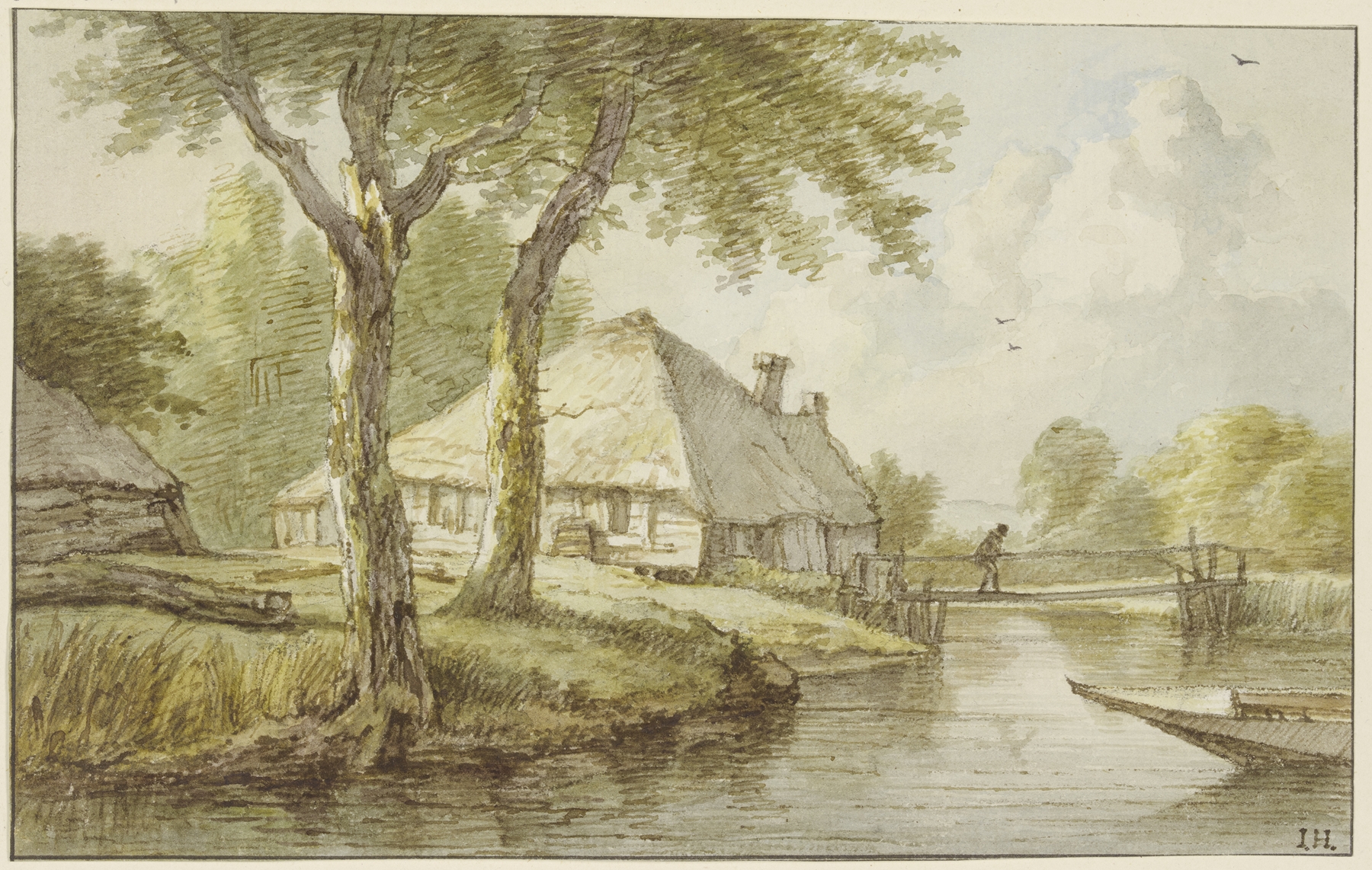
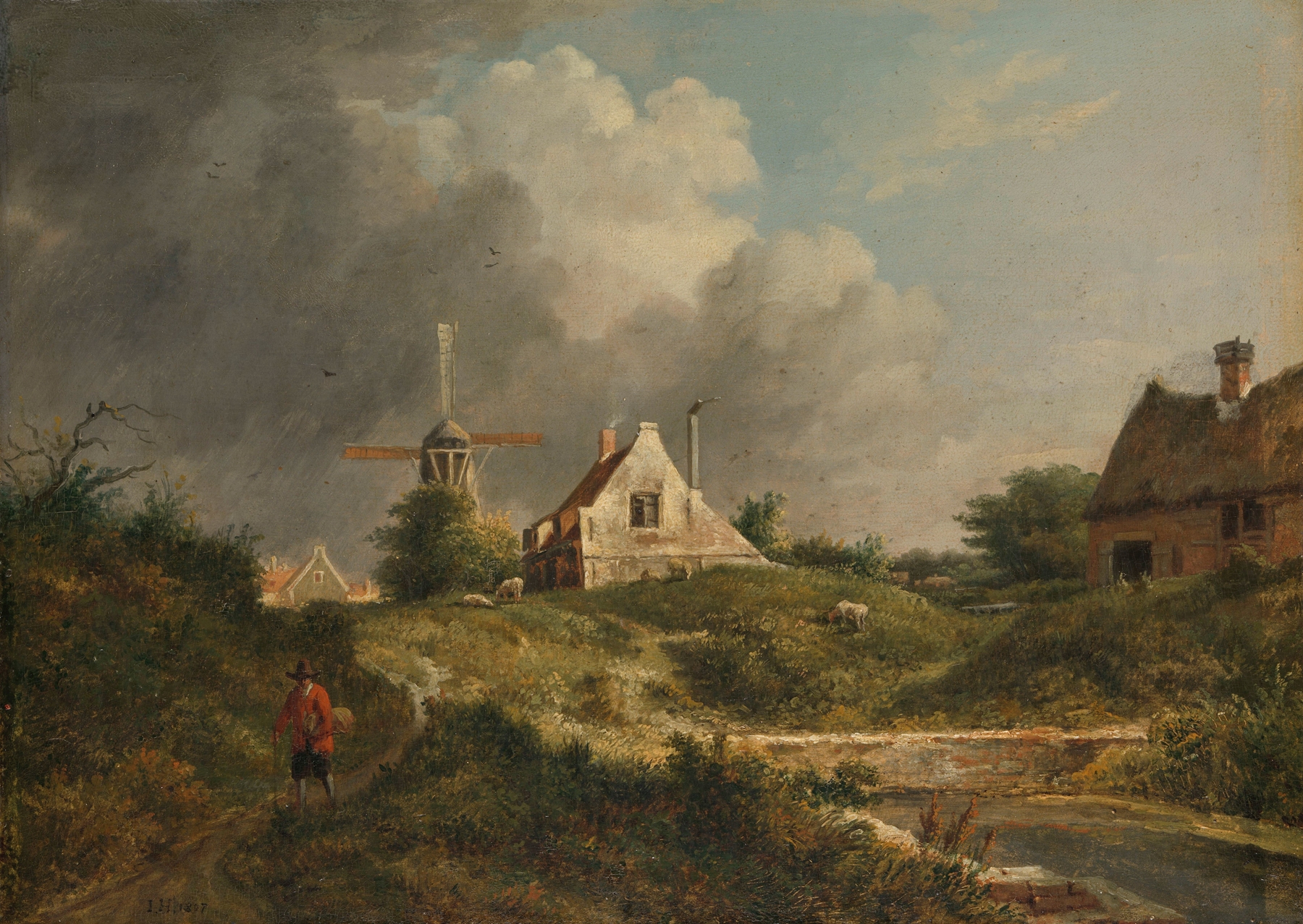
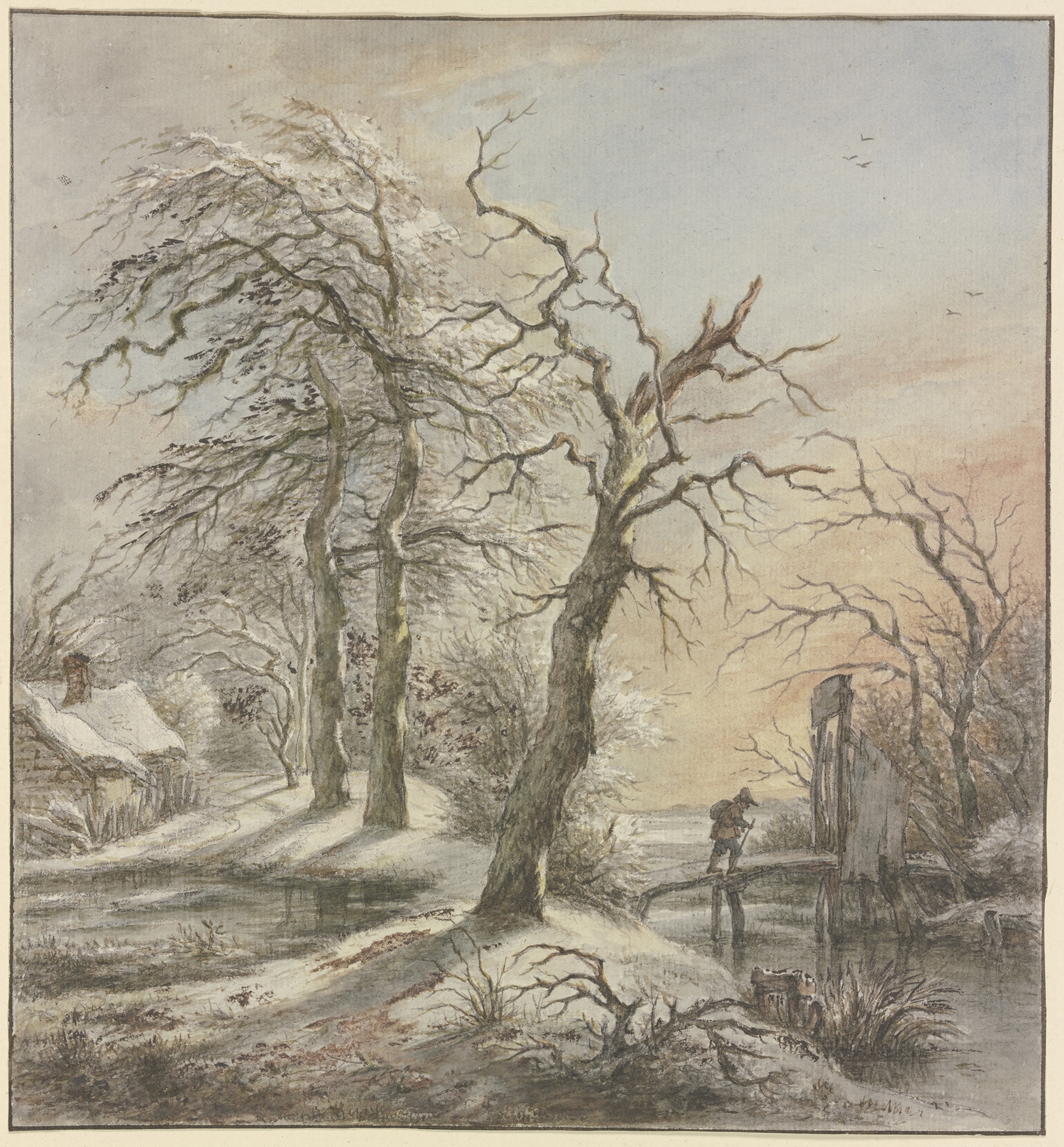
When did color learn to lie? In the quiet embrace of nature, shadows whisper secrets, blurring the lines between reality and illusion. Look to the left at the delicate bridge, arching gracefully over the stream. The muted greens and browns evoke a serene landscape, while the soft blue sky gently contrasts with the earthy tones. Notice how the light plays with the water’s surface, creating ripples that dance with reflections, as if nature herself is sketching a narrative.
The careful brushwork reveals the artist's meticulous attention to detail, inviting the viewer to linger longer within the tranquil scene. Beneath the surface, hidden tensions emerge. The bridge symbolizes a connection, yet it evokes the passage of time, hinting at transience and mortality. The house, nestled against the winding road, suggests human presence in a vast, unyielding nature — a reminder of fragility amid permanence.
Shadows deepen the emotional gravity, creating a sense of contemplation that stirs the viewer's soul, evoking both peace and an unsettling awareness of life's impermanence. Jan Hulswit created this work between 1776 and 1822, during a period when the Dutch art scene was navigating through the shifts of Romanticism. He spent his life in various regions of the Netherlands, capturing landscapes that reflected both the beauty and melancholy of rural life. This painting encapsulates his mastery in using light and shadow to convey deeper narratives, amidst a world that began to embrace new artistic ideologies.