Bucht vor Neapel mit Blick auf den Vesuv — History & Analysis
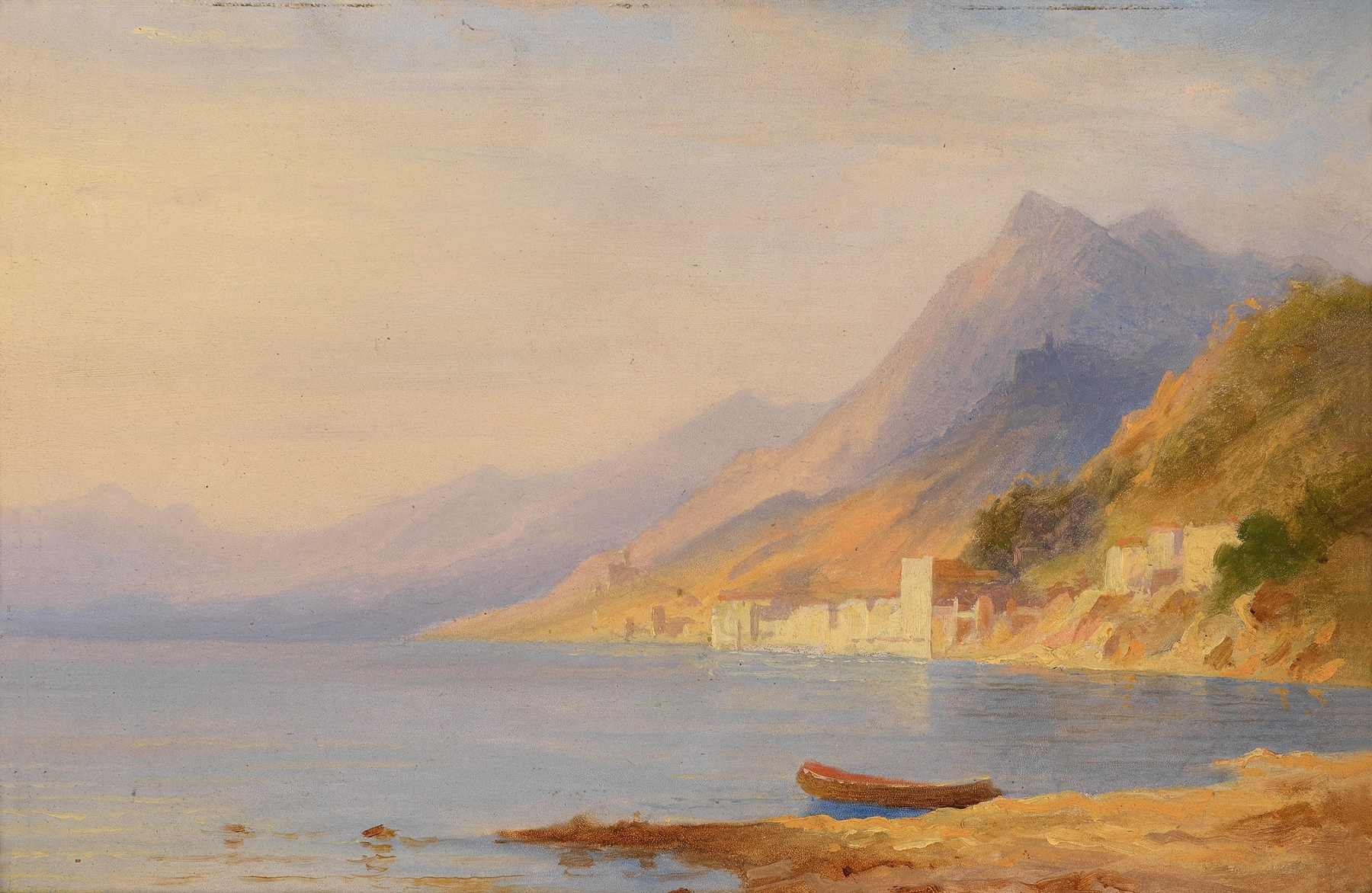
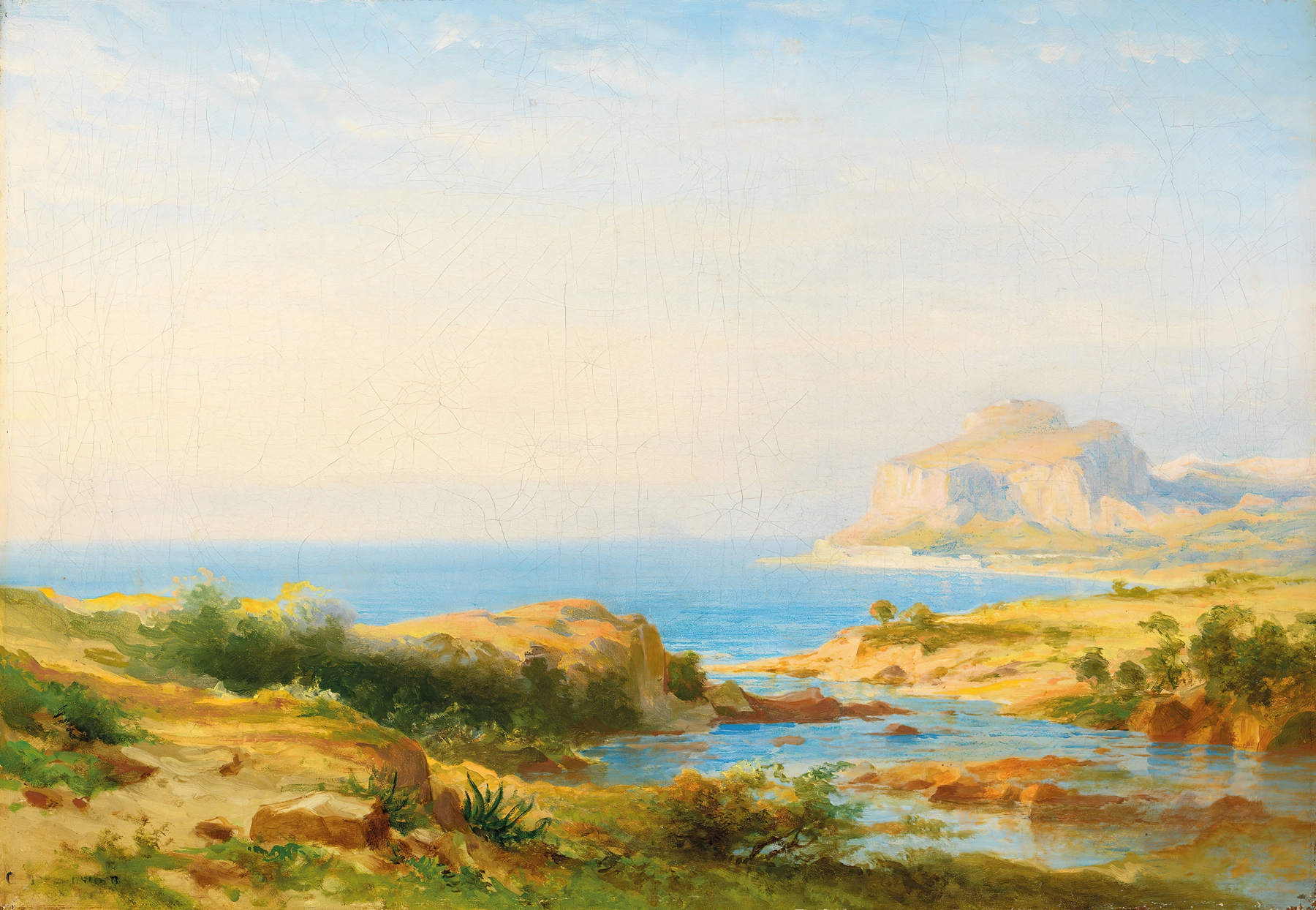
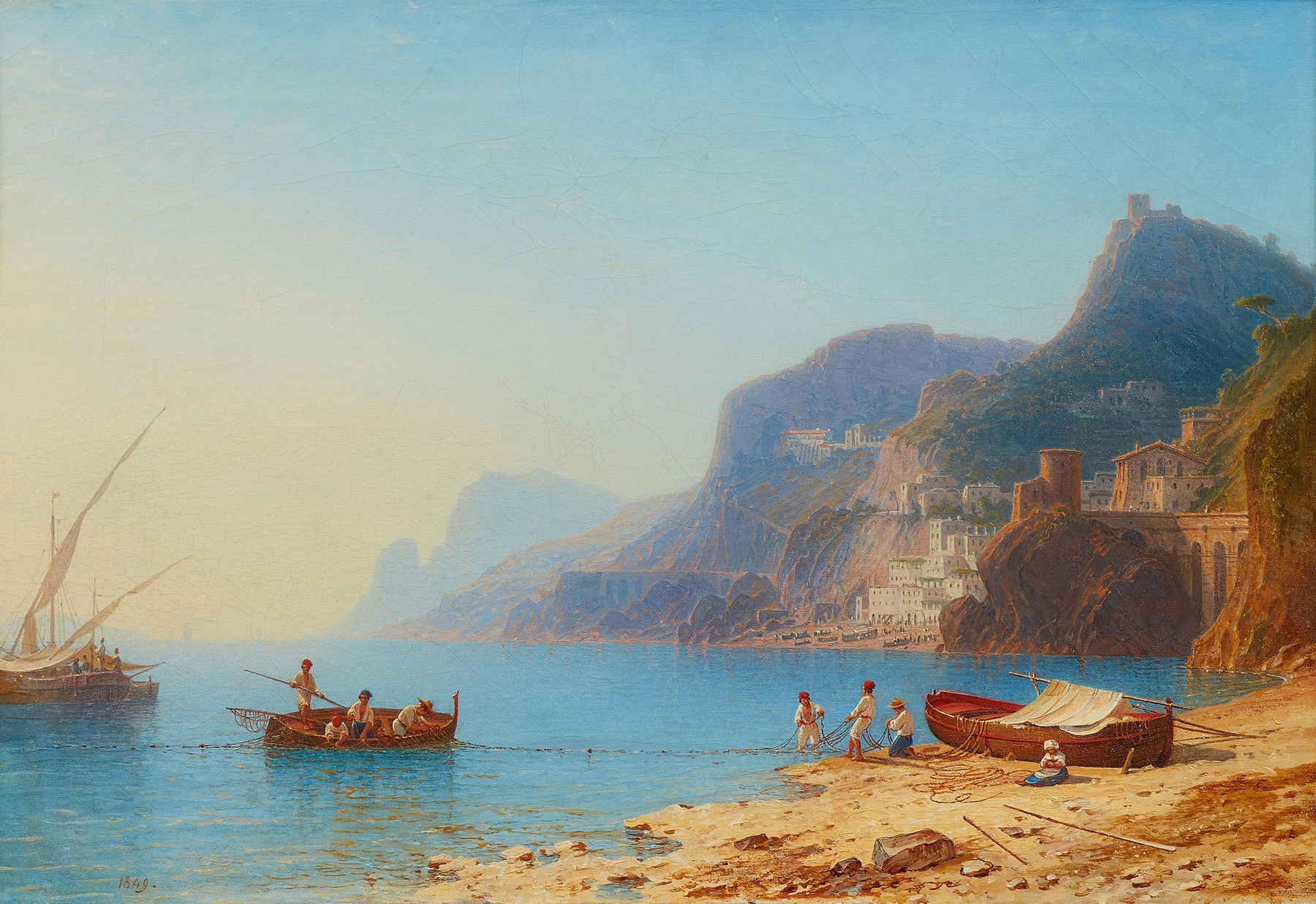
Is this a mirror — or a memory? The tranquil beauty of Bucht vor Neapel mit Blick auf den Vesuv invites a deep reflection on time and the fleeting nature of serenity. Look to the foreground, where gentle waves caress the shore, their delicate ripples mirroring the soft pastel hues of the sky. The composition draws your gaze toward the looming presence of Mount Vesuvius, a majestic silhouette against the fading light.
Notice how the artist masterfully employs soft brush strokes to blend the colors, creating a harmonious transition from the earthy tones of the land to the ethereal blues of the sea and sky. This interplay between land and water evokes a sense of peace, as if time itself has paused in this idyllic scene. Delve deeper, and you can sense the contrast between the calm waters and the formidable volcano, a symbol of both beauty and destruction. The serenity of the bay juxtaposed with Vesuvius’s grandeur reflects the duality of existence—how tranquility can coexist alongside potential chaos.
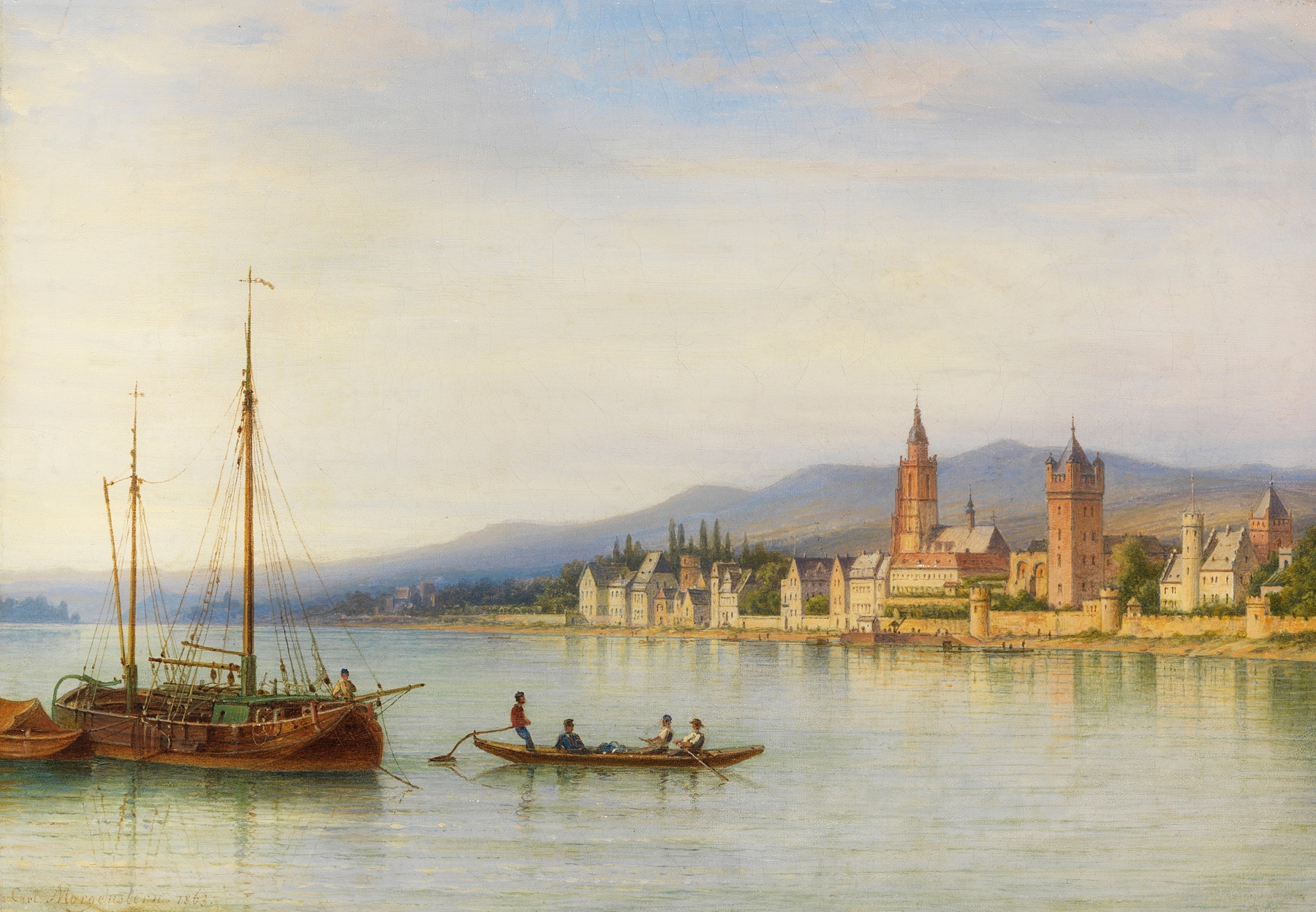
Small details, like the distant boats and the gentle ripples, enhance the atmosphere of quiet contemplation, inviting viewers to ponder the transient nature of human experience in this stunning landscape. In 1875, when this work was created, Carl Morgenstern was in the throes of artistic exploration in Naples, a city rich in history and culture. The Italian landscape offered new inspirations to many artists of the time, reflecting a broader movement toward capturing natural beauty. This painting is a testament to the Romantic era’s reverence for nature, harmonizing the artist's inner emotions with the external world around him.