View of the Khan’s Palace at Bakhchisarai, Crimea — History & Analysis
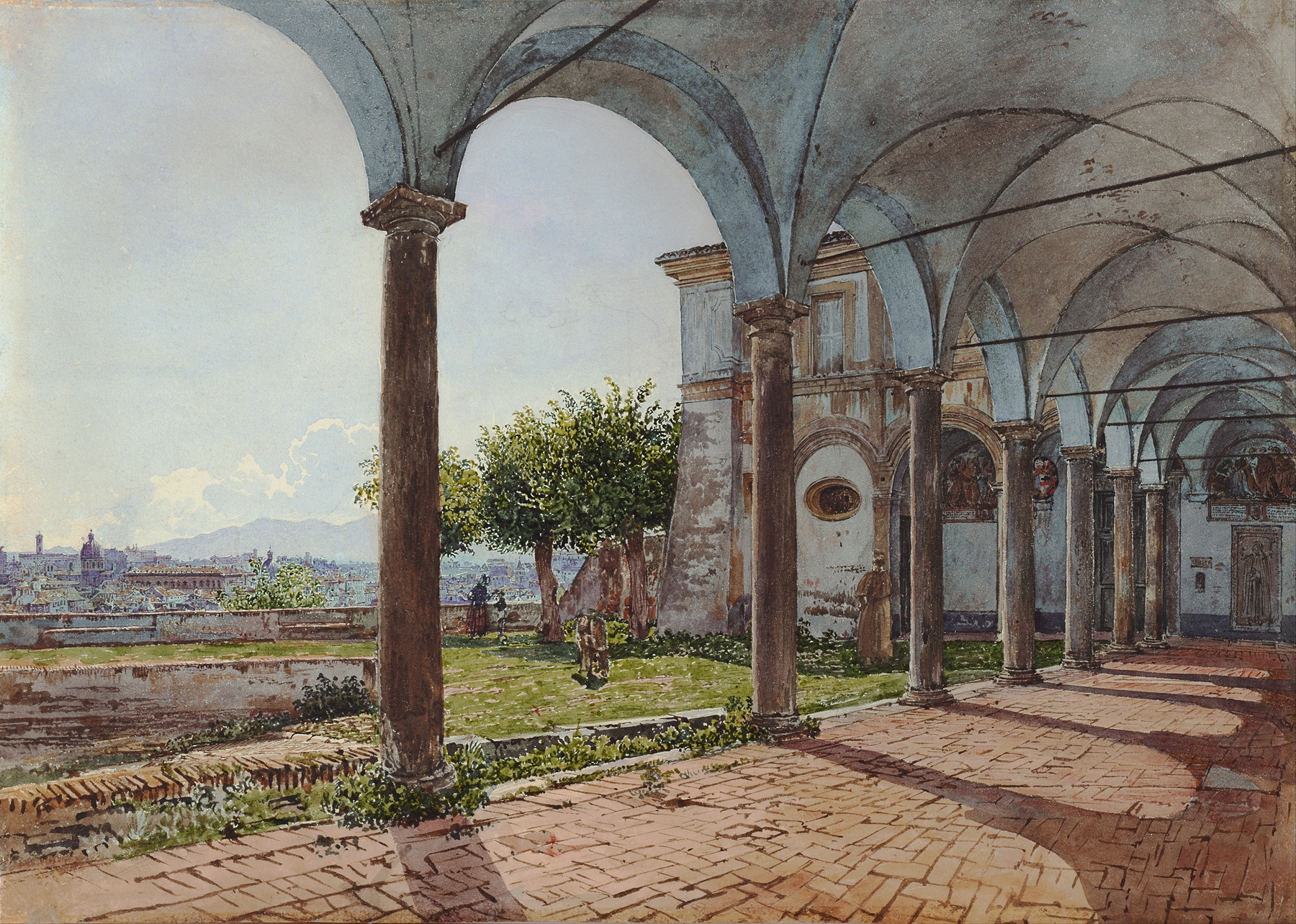
“Under the brush, chaos becomes grace.” In the quiet solitude of a distant land, the soft whisper of loneliness lingers in the air, yet beauty emanates from every stroke of the brush. The essence of longing intertwines with the grandeur of architecture, transforming mere stone into a vessel of emotion. Focus on the intricate details of the palace façade, where warm hues of ochre and gold dance beneath the gentle caress of sunlight. Notice how the light falls upon the ornate arches and delicate windows, illuminating the intricate carvings that hint at stories untold.
Look toward the lush greenery framing the scene, where vibrant greens contrast with the muted tones of the palace, leading the eye toward the distant mountains that cradle the landscape. Within this landscape lies a quiet tension; the opulence of the Khan's Palace stands in stark contrast to the emptiness that surrounds it. The vibrant colors evoke a sense of life, yet the stillness and solitude suggest an absence, a yearning for connection. Small details, such as the lone figure in the foreground, amplify this sense of loneliness, embodying the contemplative spirit of a magnificent yet isolated space.
Rudolf von Alt painted this scene in 1863 during his travels in Crimea, a time when the region was a melting pot of cultures and histories. Alt, a prominent Austrian landscape painter, sought to capture the beauty of his surroundings while reflecting the broader changes in Europe. The painting serves as a testament to his artistic journey, marking a moment when he was deeply influenced by the interplay of light and shadow, and the emotional resonance of place.