Virgin and Child with Saint Catherine of Alexandria — History & Analysis
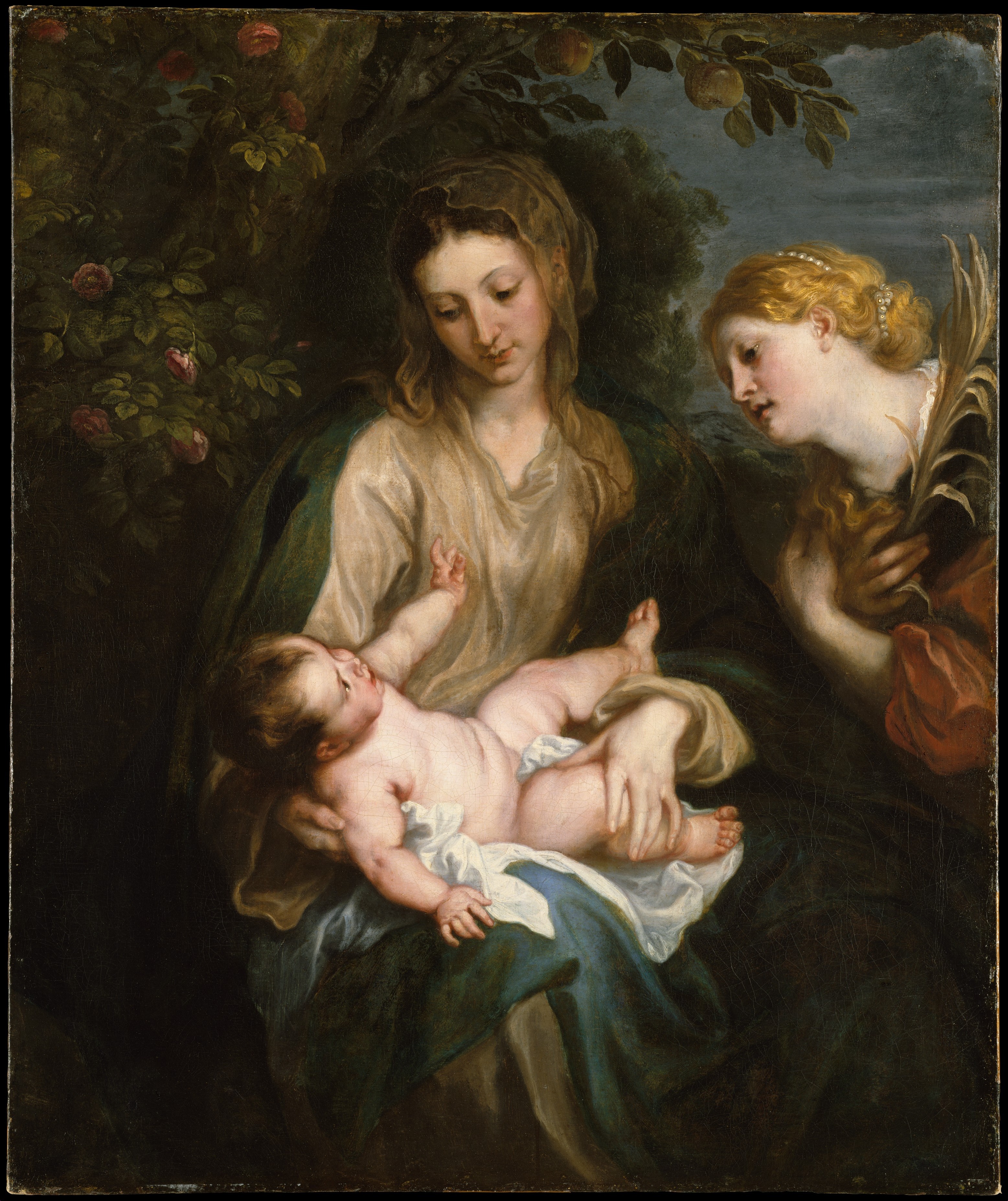
Did the painter know this moment would outlive them? In Virgin and Child with Saint Catherine of Alexandria, beauty transcends time, inviting us into a world where the sacred meets the intimate. The graceful figures breathe life into a tableau that whispers of devotion and maternal love, each glance and gesture steeped in divine significance. Look closely at the soft, luminous skin of the Virgin; the way it glows against the rich, dark background draws your attention immediately. Notice how the interplay of light and shadow accentuates the delicate features of the child, cradled tenderly in her arms.
The opulence of the fabric surrounding them — flowing drapery in deep blues and rich reds — enhances the emotional weight of the scene, creating a powerful contrast between the figures and their surroundings. Beneath the surface, the painting reveals a complex interplay of themes, such as innocence and wisdom. Saint Catherine is enshrined in her own elegance, embodying both strength and grace as she gazes upon the Virgin and Child. This connection hints at the balance between earthly beauty and spiritual enlightenment, suggesting that true strength often resides in vulnerability.
The subtle details — the roses symbolizing purity, the intricate halo, and the soft smile of the Virgin — all deepen the narrative of love and redemption. In 1630, during a period of artistic exploration and personal upheaval, the artist created this piece while in England, having fled the tumult of the European continent. As he navigated new opportunities, his work began to reflect both the influence of the Baroque style and his own evolving sensibilities toward portraiture and sacred themes. This painting stands as a radiant testament to his mastery, capturing the essence of a moment that resonates beyond its time.