Vue animée de la Madeleine — History & Analysis
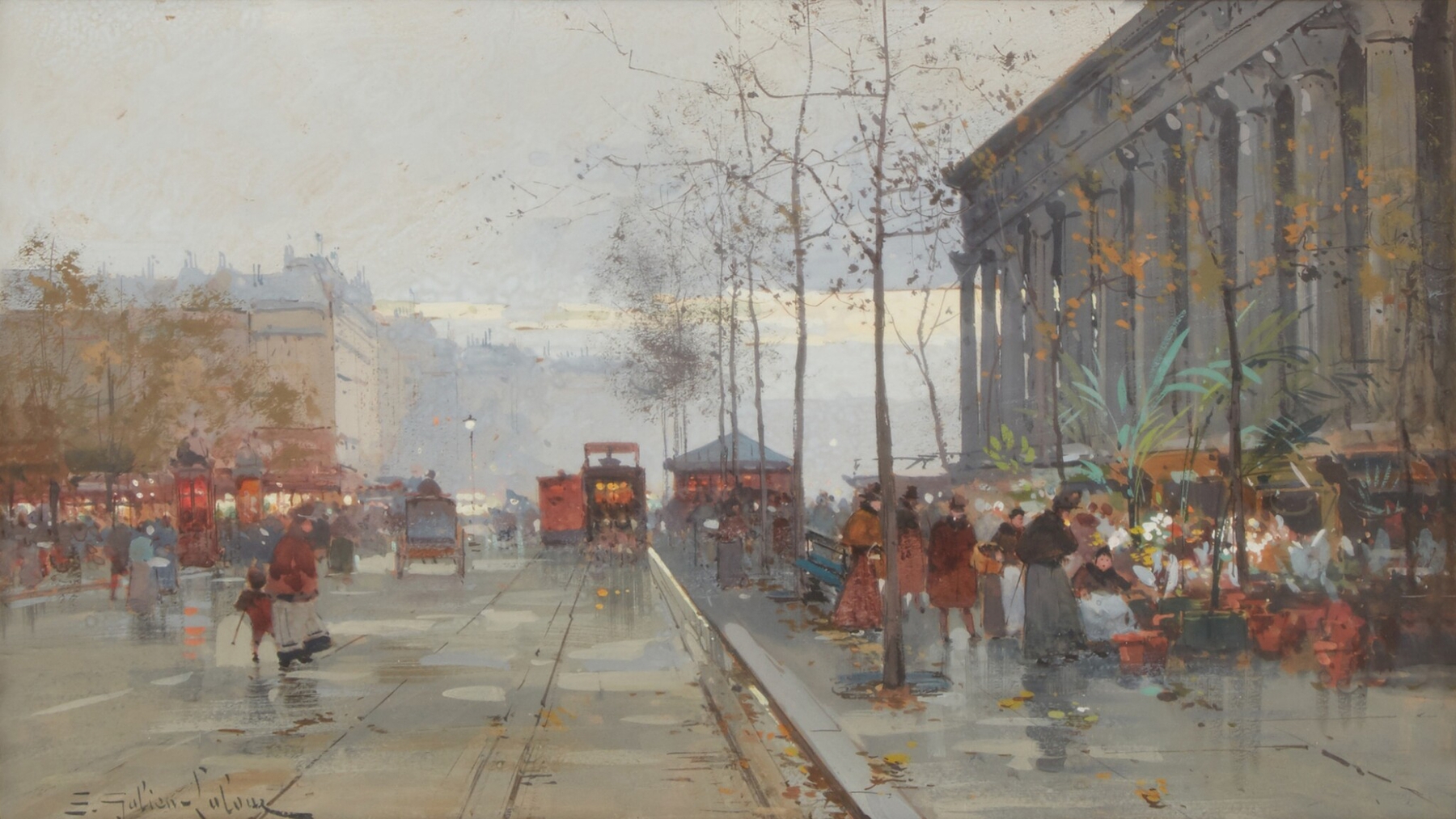
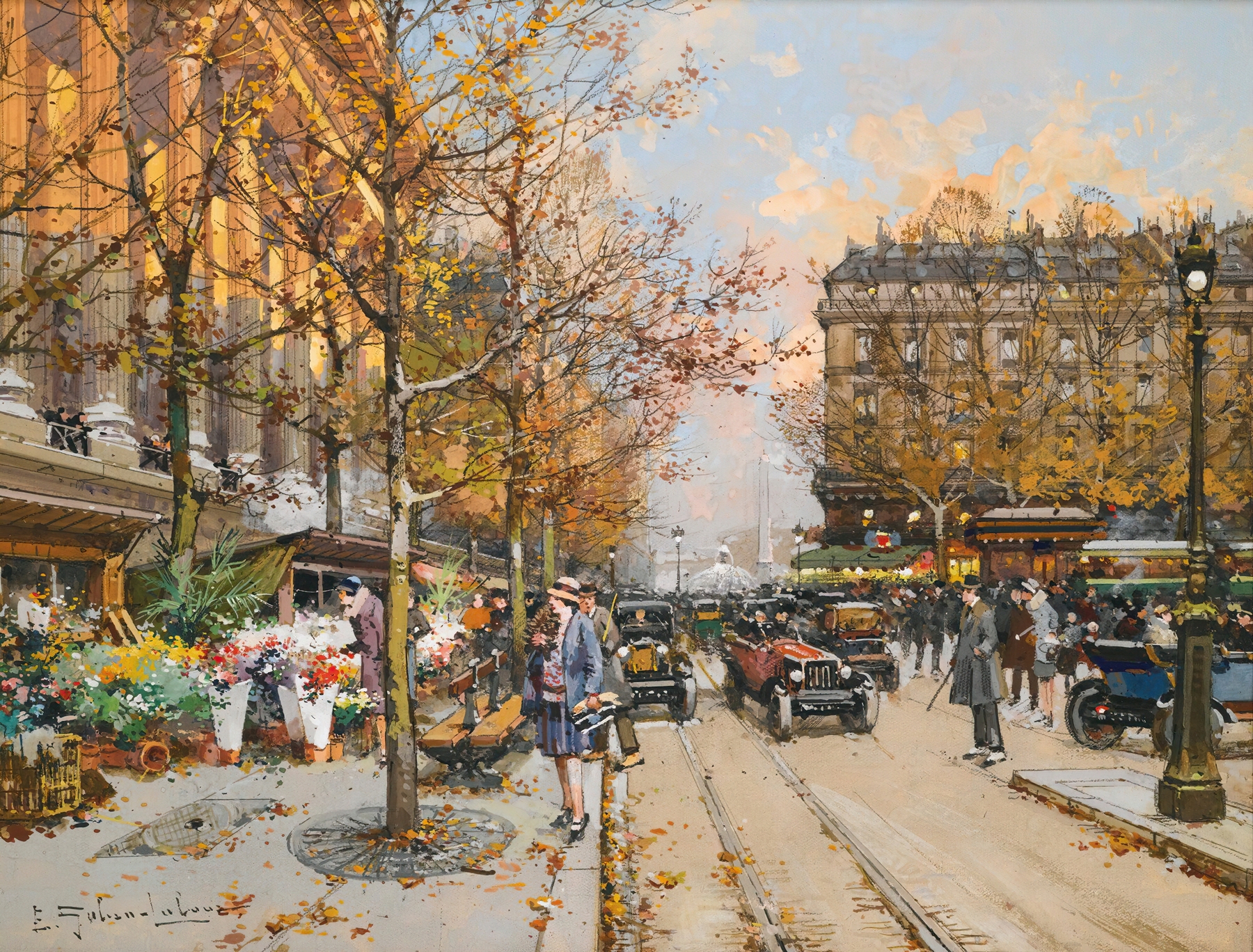
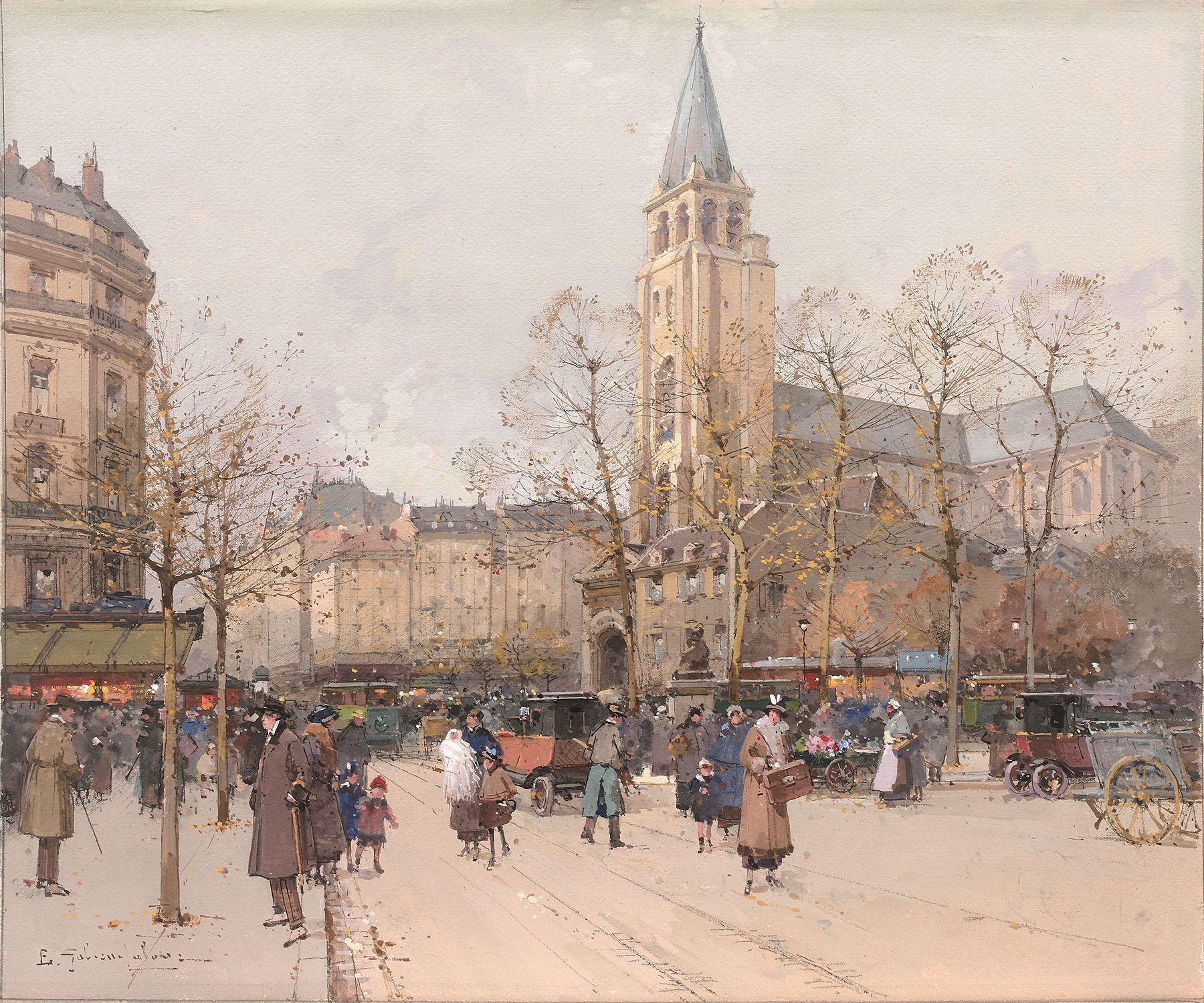
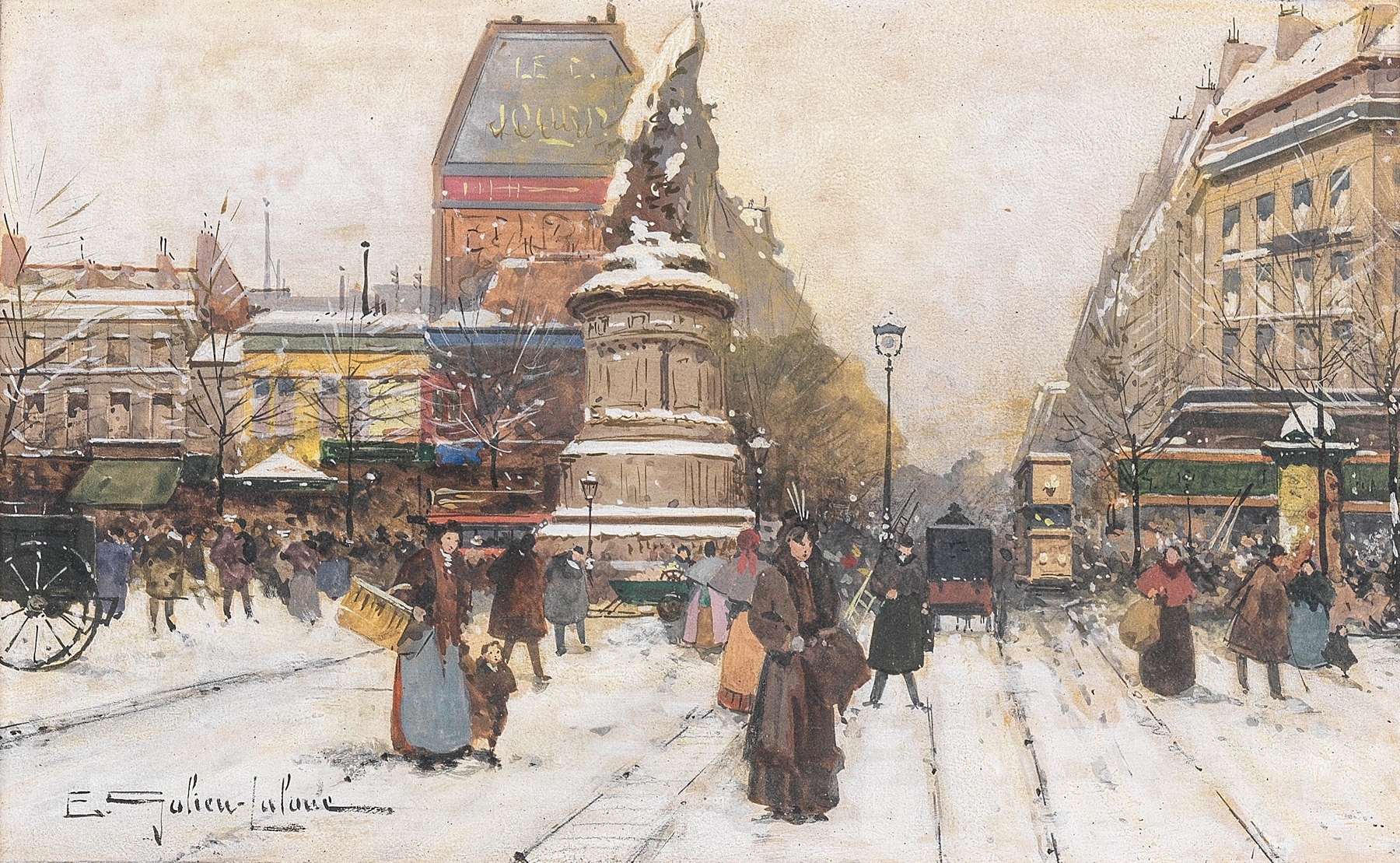
Did the painter know this moment would outlive them? The delicate transformation of time and place captured on canvas whispers of fleeting beauty and enduring legacy. Look to the foreground first, where the bustling streets of Paris come alive with a symphony of color. The soft brushstrokes lend a vibrant energy to the figures, each engaged in their own daily pursuits.
Notice how the warm sunlight bathes the scene, illuminating the impressive architecture of La Madeleine as it looms majestically in the background, its neoclassical columns standing firm against the ephemeral nature of the people below. As you gaze deeper, consider the contrasts at play: the stillness of the grand church against the animated life of the streets, the vibrancy of passerby cloaked in muted tones, and the transient nature of everyday life amidst immortal stone. Each detail, from the fluttering leaves to the shadowy recesses, hints at the passage of time—an invitation to reflect on the cycles of modern life and art. With every brushstroke, the artist invites us to consider what is remembered and what is lost.
Eugène Galien-Laloue painted this work during a period marked by rapid urban change in late 19th-century Paris. His commitment to capturing the essence of the city amidst transformation reveals his desire to immortalize its dynamic spirit. At a time when Impressionism was gaining prominence, he embraced the techniques of capturing light and movement, positioning himself as a vital chronicler of the city’s ever-evolving landscape.