Vue intérieure du Panthéon — History & Analysis
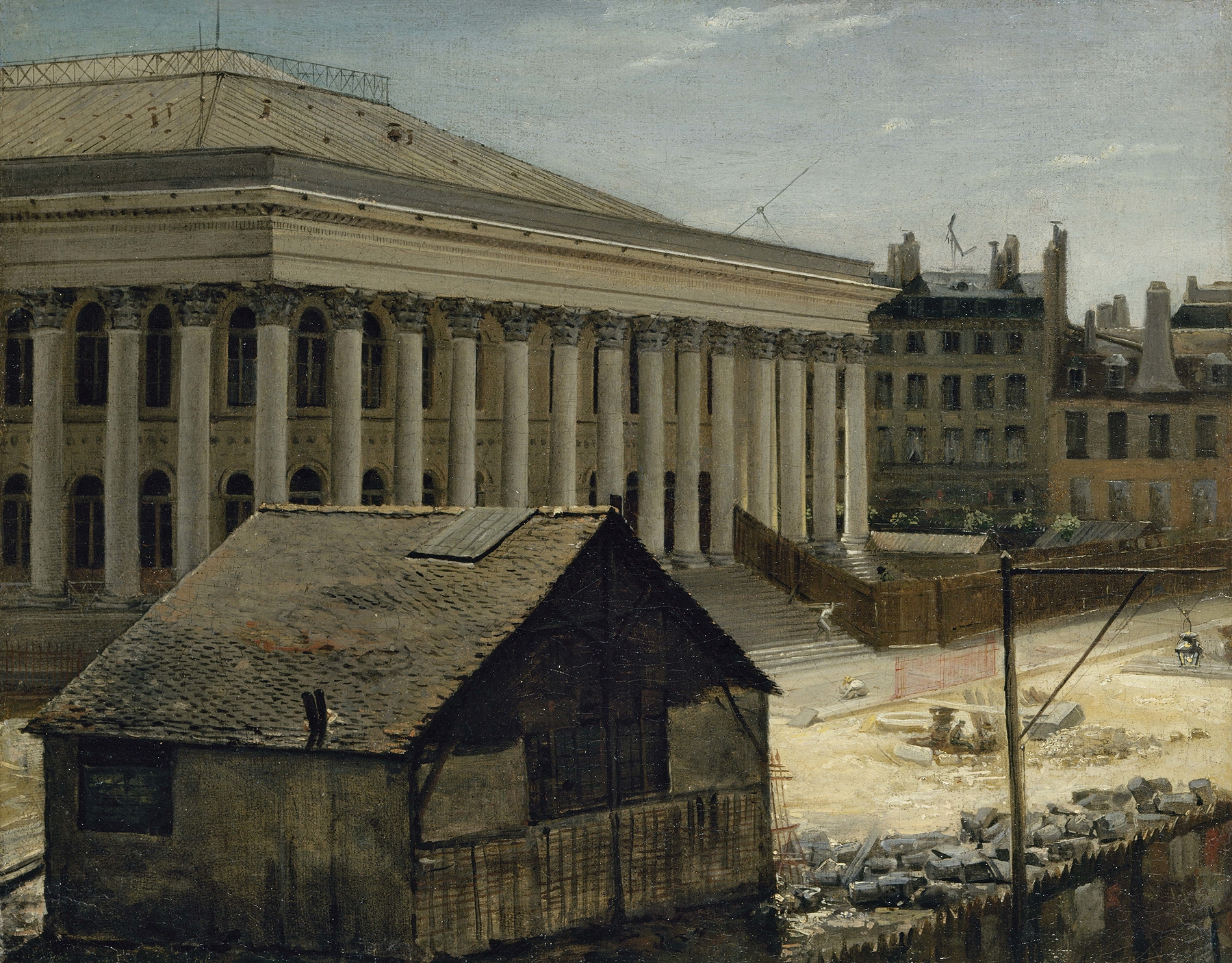
What if beauty was never meant to be finished? This notion pulses through the walls of the Pantheon, where the echoes of history intertwine with the present, creating an illusion of depth that enchants the viewer. Look to the foreground, where the intricate details of the grand pillars draw your gaze. Notice how the light filters through the dome, casting ethereal shadows that dance upon the polished stone.
Bouhot's careful rendering of texture, especially in the marble, invites you to run your fingers along the cold, smooth surfaces. The muted palette, dominated by warm creams and soft grays, lends a sense of tranquility and reverence to the vastness of the interior. Beneath its serene facade lies a tension between permanence and transience. The juxtaposition of the robust stone architecture against fleeting light creates a dialogue about time itself — how monuments endure while the world around them shifts.
The subtle play of light and shadow mirrors life's ephemerality, hinting at the fragility of human achievement amid the grandeur of creation. Created in 1810, this artwork reflects Bouhot's deep engagement with Neoclassicism, a style that was flourishing in Paris at the time. Living in a period of artistic revival, he captured not only the majesty of the Pantheon but also the era's evolving ideas on beauty and form. Bouhot's meticulous technique and dedication to realistic detail mark him as a significant figure in this pivotal moment of art history.