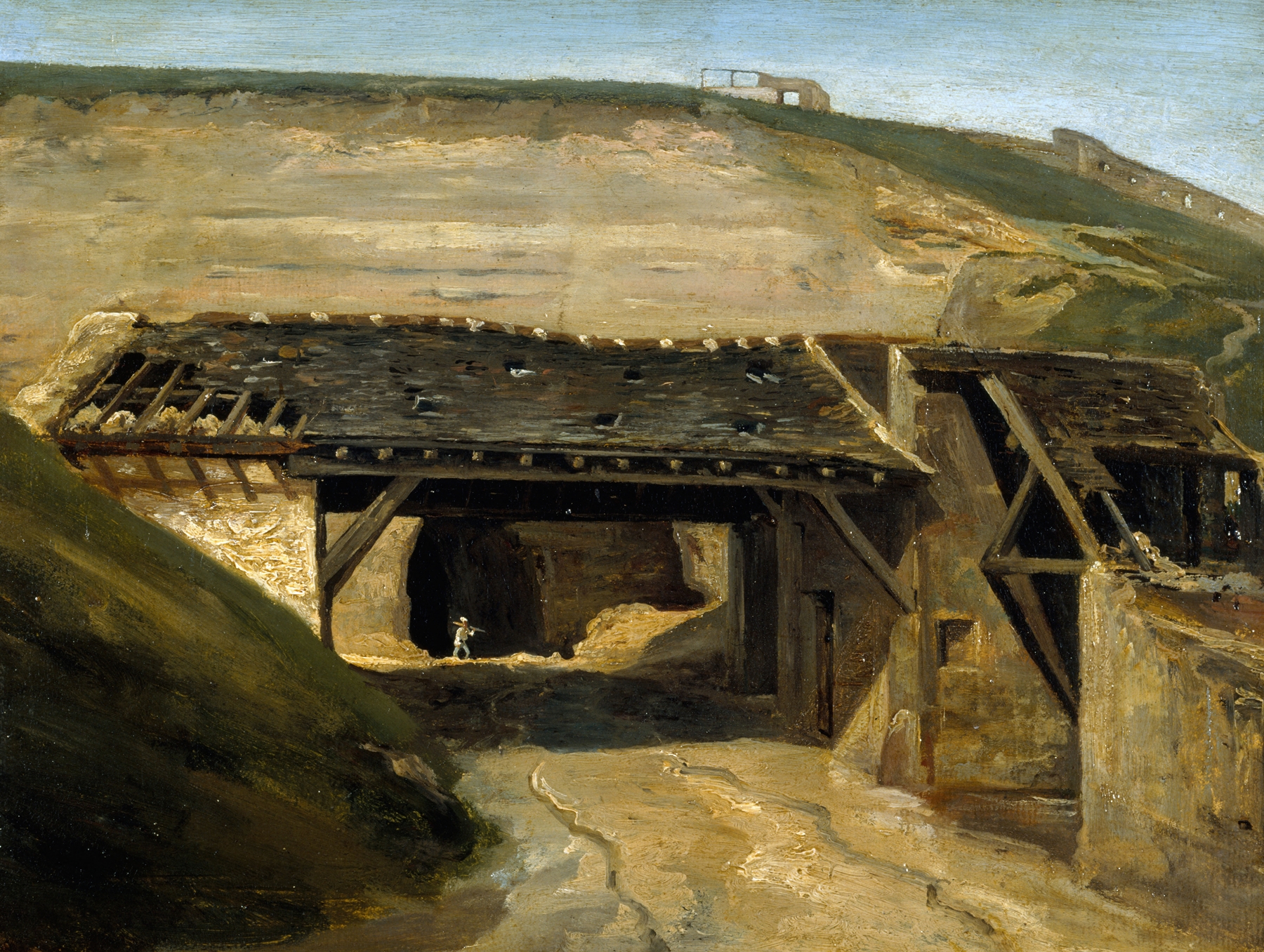
L’église de Montmartre, avec la tour du télégraphe Chappe. — History & Analysis
Who listens when art speaks of silence? In L’église de Montmartre, avec la tour du télégraphe Chappe, the emptiness resonates with unvoiced stories, echoing the solitude of a bygone era. Look to the center where the church stands proudly, its steeple reaching skyward amidst a backdrop of soft, muted hues. Notice how the gentle brushstrokes create a sense of depth, allowing the viewer to almost feel the cool air of Montmartre. The interplay of light and shadow gives life to the façade, enhancing the intricate details of the architecture while simultaneously invoking a sense of stillness.
The sparse foreground draws the eye upward, emphasizing the church's grandeur against the expansive sky. The contrast between the serene architecture and the delicate absence of people invites contemplation. Here, the absence of human figures speaks volumes, hinting at the depth of solitude within an urban landscape. The tower of the telegraph, a symbol of communication, stands as a silent witness to the bustling city around it, raising questions about connection in a world that often feels distant.
This tension between presence and absence creates an emotional landscape that resonates with anyone who has felt the weight of isolation. Etienne Bouhot painted this work in 1825, during a period when Paris was undergoing significant changes. As an artist devoted to capturing the essence of contemporary life, Bouhot was influenced by the Romantic movement's emphasis on emotion and individual experience. Living in Paris, he was surrounded by the burgeoning transformations of the city, and his work reflects a unique intersection of the personal and the historical, marking a moment of reflection in the face of rapid progress.