Vue présumée du jardin de Champrosay — History & Analysis
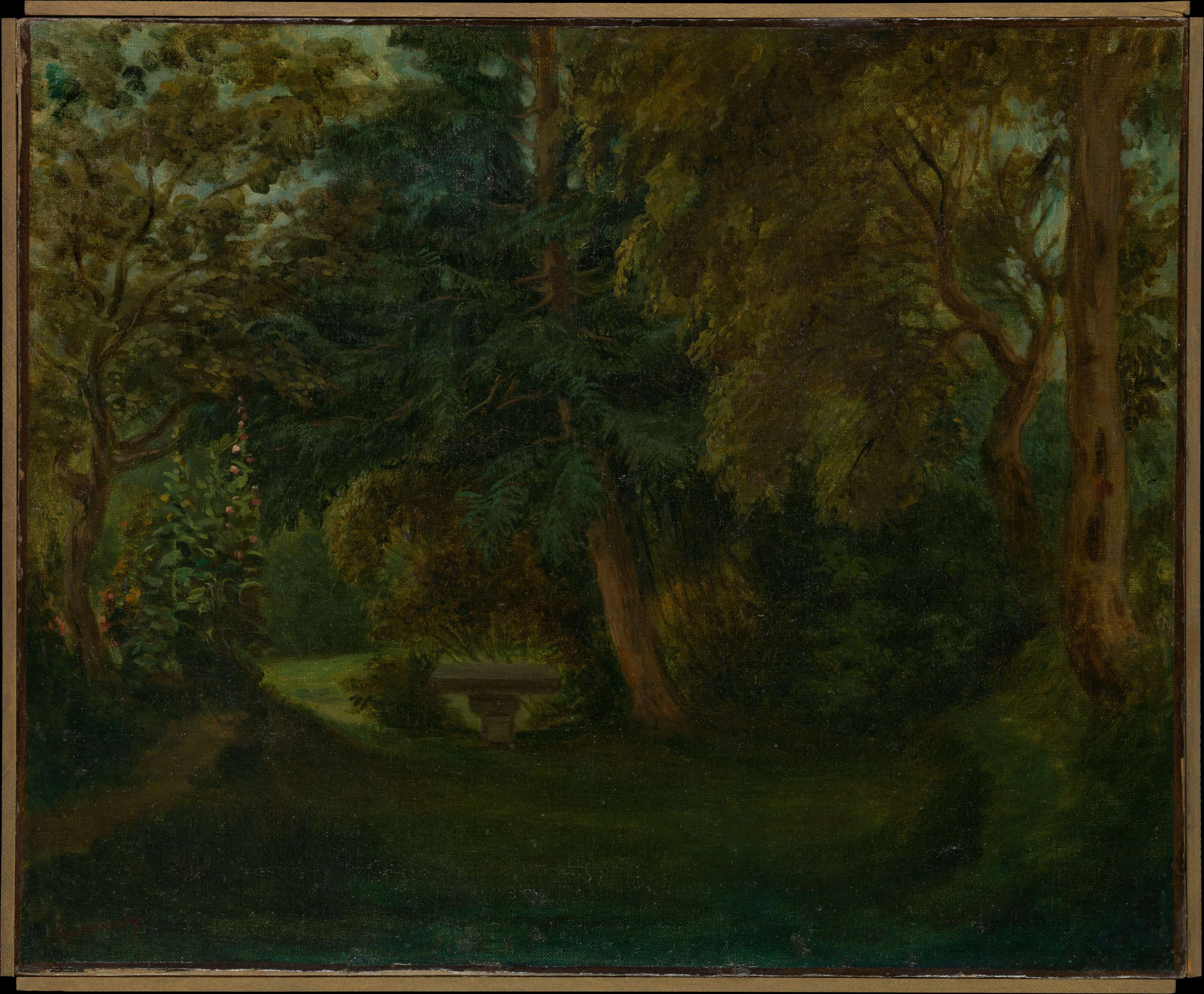
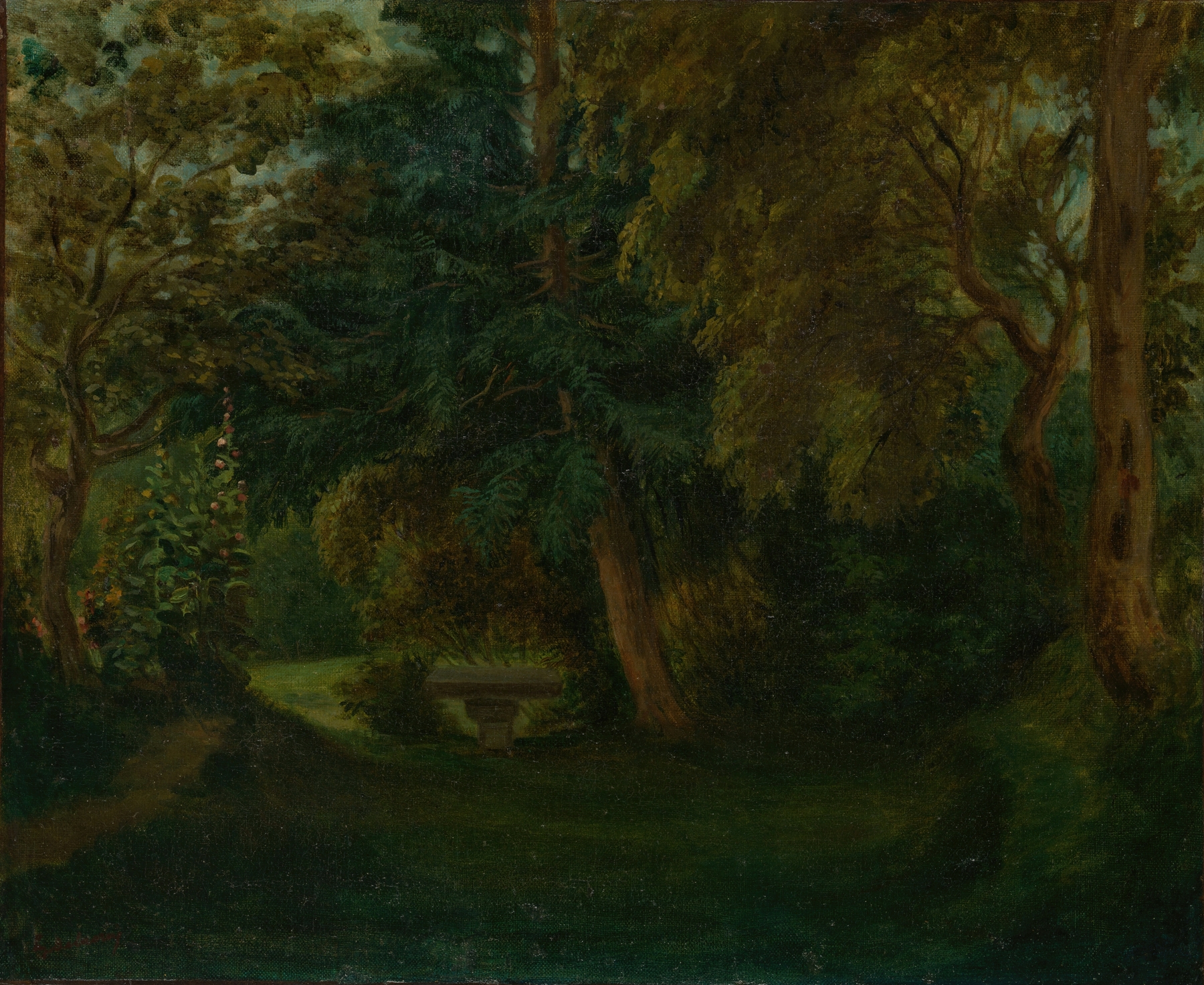
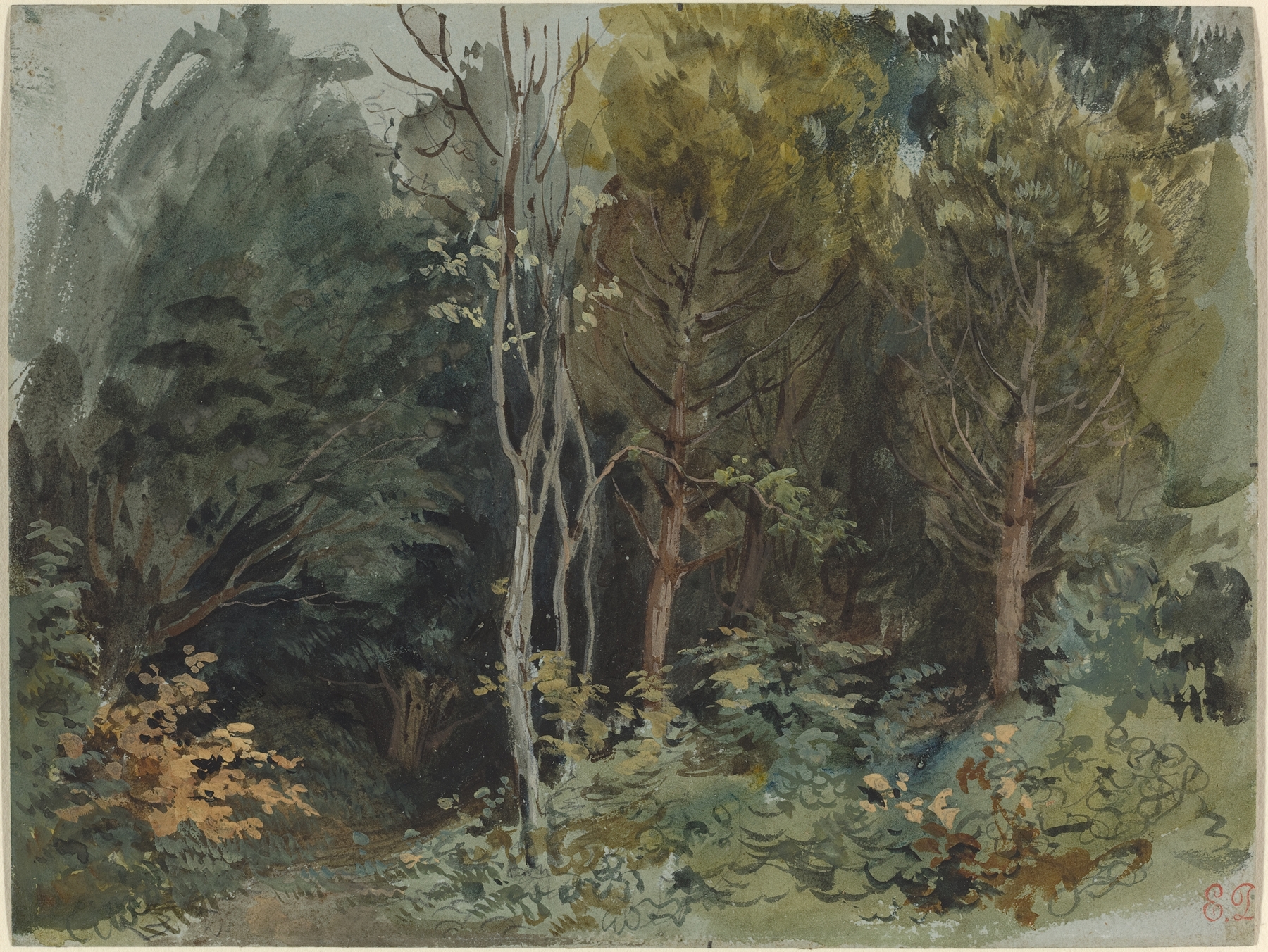
“Every silence here is a confession.” In a world awash with color and passion, the quietude of this garden unveils the tumult within. It is a moment suspended, where the beauty of nature contends with the underlying violence embedded in its very essence. Look to the left at the lush, verdant foliage that frames the composition, thick with life yet heavy with unspoken truths. Notice how the dappled sunlight dances across the leaves, creating a stark contrast against the dark shading of the earth below. The vibrant greens, tinged with hints of ochre and brown, evoke a sense of both serenity and a lurking danger, an invitation to explore yet a warning of what lies beneath the surface.
The brushwork feels both gentle and aggressive, capturing the duality of nature’s beauty and its ferocity. Delving deeper, one can discern the tension inherent in the scene: the juxtaposition of blooming flowers against the oppressive shadows that encroach upon them. Each petal seems to whisper tales of fragility, while the deep greens hint at suffocation and restraint. Is there a struggle for existence within this idyllic setting?
The serene facade belies a violent truth, suggesting that all beauty is born from conflict, whether in nature or within the human soul. Eugène Delacroix painted this piece during a time of profound change in France in the early 19th century. Influenced by Romanticism, which emphasized emotion and individualism, Delacroix sought to convey the intensity of human experiences through his work. As he experimented with color and light, he was concurrently navigating his own turbulent emotions, an artist poised between the realms of beauty and chaos, reflecting the very tensions that would later define his legacy.