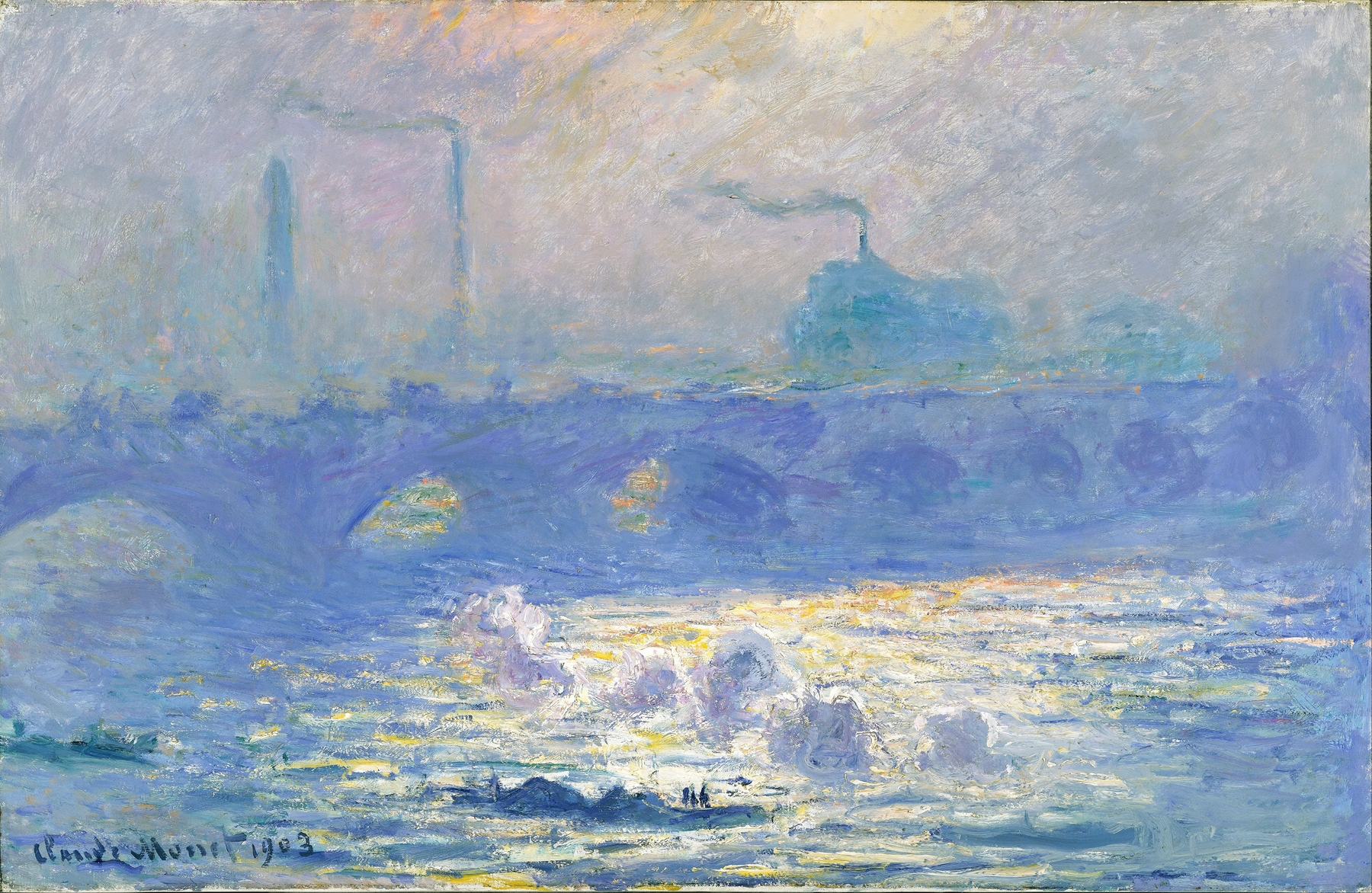
Waterloo Bridge — History & Analysis
“Under the brush, chaos becomes grace.” In Waterloo Bridge, silence drapes over the scene like a fog, inviting contemplation and serenity amidst the bustle of life. The muted palette whispers of a moment suspended in time, where colors blend seamlessly into one another, capturing the elusive beauty of a city at dawn. Look to the left at the ethereal hues of blue and violet that frame the bridge, drawing your gaze across the canvas. Notice how the light filters through the fog, casting a soft glow that envelops the structure and the water below.
The brushwork is both loose and deliberate, creating a rhythmic pattern that evokes the gentle lapping of the Thames against the banks, while the dappled reflections shimmer with an almost dreamlike quality. Beneath this tranquil surface, there is a tension between the solidity of the bridge and the ephemeral nature of the fog. The contrast between the warm shades enveloping the bridge and the cooler undertones of the water suggests a fleeting moment in time, a reminder of the transient nature of both light and life.
Each stroke of the brush captures the silence of an early morning, inviting the viewer to ponder the thoughts and stories hidden within the mist. Painted in 1903, this work emerged during a pivotal moment in Monet’s life, as he continued to explore the effects of light and atmosphere on everyday scenes in London. The artist was deeply influenced by the Impressionist movement, which sought to capture fleeting moments, and his time spent in the bustling yet quiet environment of the city informed this masterful rendition of a beloved landmark.